
BuddhistCatholicContemplativeEvangelicalGeneral ChristianHinduJewishLatter-day SaintMuslimNew VisionsProgressive Christian
Beliefs
- Buddhist
- Catholic
- Contemplative
- Evangelical
- General Christian
- Hindu
- Jewish
- Latter-day Saint
- More Voices
- Muslim
- New Visions
- Pagan
- Progressive Christian
Topics
- Religion News
- Food and Religion
- Sports and Religion
- Religious Art
- Religious Music and Entertainment
- Religious Events
- History and Religion
- Style and Religion
- Politics and Religion
- Women in Religion
- Recreation Outdoors and Religion
- Business Finance and Religion
- Careers Workplace and Religion
- Education and Religion
- Family Parenting and Religion
- Health Fitness and Religion
- Home and Religion
- Relationships and Religion
- Technology and Religion
- Travel and Religion
Columnists
- Buddhist Columnists
- Business Finance and Religion Columnists
- Careers Workplace and Religion Columnists
- Catholic Columnists
- Contemplative Columnists
- Education and Religion Columnists
- Evangelists Columnists
- Family Parenting and Religion Columnists
- General Christian Columnists
- Health Fitness and Religion Columnists
- Hindu Columnists
- History and Religion Columnists
- Home and Religion Columnists
- Jewish Columnists
- More Voices Columnists
- Latter Day Columnists
- Muslim Columnists
- New Visions Columnists
- Nonreligious Columnists
- Pagan Columnists
- Politics and Religion Columnists
- Progressive Columnists
- Recreation Outdoors and Religion Columnists
- Relationships and Religion Columnists
- Religion News Columnists
- Religious Art Columnists
- Religious Events Columnists
- Religious Music and Entertainment Columnists
- Sports and Religion Columnists
- Style and Religion Columnists
- Technology and Religion Columnists
- Travel and Religion Columnists
- Women in Religion Columnists
Resource Library
- 2026 Calendar
- Library of World Religions
- The 100 Most Holy Places on Earth
- Patheos Answers
- Podcasts
- Videos
- Faith Leaders Database
- Anglican Episcopalian
- Bahai
- Baptist
- Buddhism
- Christianity
- Confucianism
- Eastern Orthodoxy
- Hinduism
- Holiness and Pentecostal
- ISKCON
- Islam
- Judaism
- Lutheran
- Methodist
- The Church of Jesus Christ of Latter-day Saints
- New Age
- Paganism
- Presbytarian and Reformed
- Protestantism
- Religion Behind the Scenes
- Roman Catholic
- Scientology
- Shia Islam
- Sikhism
- Sufism
- Sunni Islam
- Taoism
- Zen
- See all religions
Research Tools
 Ad-Free & Subscriber Log-In Subscription Support
Follow Patheos 

- Trending:
- Advent
- |
- Forgiveness
- |
- Thanksgiving
- |
- Election
- |
- Seasonal Holidays
- |
- Marriage
 Theoblogy
- Home
- Progressive Christian
- Heaven Is (Not) Somewhere [Questions That Haunt]
Heaven Is (Not) Somewhere [Questions That Haunt]
Last updated on: March 13, 2015 at 4:49 pm by Tony Jones
Heaven Is (Not) Somewhere [Questions That Haunt] 2015-03-13T16:49:25-05:00 Tony Jones
Patheos Explore the world's faith through different perspectives on religion and spirituality! Patheos has the views of the prevalent religions and spiritualities of the world.
Today I respond to Bart Mitchell’s inaugural question to the Questions That Haunt Christianity series. Before I proffer my response, let me say that I am both humbled and astounded at the outpouring of responses to Bart’s question. I agree with many of your comments, and if I were a wiser man, I’d probably just copy and paste them here.
I’m also very grateful that Bart himself has been heavily engaged in the conversation. It’s not easy for a non-believer to repeatedly put himself in dialogue with committed believers, so it says a lot about Bart that he has. Now, without further adieu, my response.
Bart,
Thanks for your question. It’s a tricky one, and I’ll admit that it’s not one I’ve spent much time thinking about. Unlike the Christians that you seem to meet, I did not grow up in a version of Christianity that was preoccupied by the afterlife. Sure, we talked about it, but it really wasn’t the motivating force for our Christian faith.
Of course, I am familiar with Christians who are preoccupied with what happens after you die — they seem to think that their purpose, as one pastor told me, is “to depopulate hell and populate heaven.” I’m not one of those. But the recent spate of books about “after death” experiences shows that it’s not just Christians who wonder what happens when we die.
Even the popularity (and infamy) of Rob Bell‘s book, Love Wins, shows that many, many Christians are concerned with the same question that you, as a non-believer, are raising.
You asked a two-part question:
- How enjoyable would heaven be if my loved ones aren’t there?
- If everyone goes to heaven, why become a Christian?
For me, the second question is easier. Let’s take your premise that everyone goes to heaven — that’s called “universalism,” and the evangelical pollster George Barna says that 40% of Americans and up to one-third of evangelicals hold this view. Universalism as a Christian belief is becoming more popular, and some have even argued that it is not antithetical to an evangelical understanding of the Bible. So I think that more and more Christians will be asking your second question in coming years.
The fact that there are so many universalist Christians attests to the fact that Christianity is attractive, even without the promise of avoiding hell upon death. I think that’s the case because in the Christian faith, millions of people find something that they deeply desire: intimacy with God.
What Jesus offers is a connection to the divine that is unique amongst the varieties of religions in world history. I’ve got some experience with the other major religions in the world — even last month — and I can attest that they do not offer the same kind of relational intimacy to the divine that Christianity offers through Jesus of Nazareth. Only in Jesus did the one God fully inhabit a human being, and only in the resurrected Christ is that divine-human connection continued into eternity.
That may not be a compelling reason for you to cross the line into Christianity, but a lot of your fellow human beings desire a close relationship to the divine, and Christianity alone offers that, regardless of the question of an afterlife.
Now, regarding your first (and more difficult) question…
I will again begin by accepting your premise that, at face value, the Bible seems to indicate that some people will experience a blissful eternity in God’s presence, while others will be eternally tormented. (I don’t believe this, but I’ll deal with that below.) The traditional Christian response has been this: the bliss that you will experience in God’s presence will so overwhelm your senses that you won’t have the ability to experience sorrow at the absence of your loved ones.
The problem with this answer is, What kind of an eternal destiny is this?!? It doesn’t seem very attractive to me that I would spend eternity in a state most like a drug-induced coma — alive but with only one, univocal sensory experience.
And here’s where our understanding of heaven (and the premise of your question) starts to unravel. The Bible was written at a time and by persons who understood the cosmos in metaphysical categories that I wholeheartedly reject. I no more think that heaven is “up above us” and hell is “down below” than I think that the sun “rises” and “sets” every day. The biblical writers, and even Jesus, communicated about eternal realities using the language and idioms that they knew — that’s why, for instance, Jesus’ contemporaries thought a guy who was foaming at the mouth and chained up in the cemetery was infested with demons, while you and I would consider him mentally ill.
So what’s left to us is the task of interpretation. Or, to frame it as a question, Can I reject the Bible’s metaphysics without rejecting its message? That’s a bridge too far for many of your fellow atheists (although they have no problem accepting Plato’s wisdom while rejecting platonic metaphysics). But it’s not a bridge too far for me. The Bible’s overriding message trumps its quirky details. That’s why I can accept the overriding theme that God desires our worship without accepting the quirky detail that women should cover their heads in worship.
Honestly, it’s not much different from you appreciating the witty genius of Mark Twain, even though he repeatedly uses the odious word “nigger.” Twain was a man trapped in his time; so were Matthew, Mark, Luke, and John. And so was Jesus.
So the quest for a modern Christian is to find the transcendent truth in a text that is inevitably time-bound. And, as you’ve seen in the comments under your question, the words in the Bible about eternal torment of sinner is one of those quirky, time-bound details that many modern Christians are ready to abandon.
For me, the eternal future is almost completely shrouded in mystery. I don’t think there will be an eternally burning lake of fire, even though Jesus is quoted as mentioning that. Neither do I think there is a mansion, though he talked about that, too. In both cases, I think Jesus was using metaphorical language to make a point. I don’t know if eternity is another dimension or a re-creation of these dimensions in which I now exist. All I can assume, on faith, is that the nature of eternal existence will be in keeping with the nature of God — and the nature of God is ultimately good, loving, accepting, and gracious.
Thanks again for your question, Bart. I look forward to your response.
Previous Post

September 14, 2012
The Church and Culture: An Uneasy Alliance
Next Post
September 17, 2012 One More Post about Homeschooling
Browse Our Archives
Select a Category bible blogging books christianity in america church church history dissertation divorce Dog Training education emergent church essay family funny glbt jopa productions ministry minnesota movies music parenting philosophy politics Prayer publishing Questions That Haunt random same sex marriage speaking spirituality Teaching technology television theology Travels Uncategorized writing youth ministry
Select a Month January 2015 December 2014 November 2014 October 2014 September 2014 August 2014 July 2014 June 2014 May 2014 April 2014 March 2014 February 2014 January 2014 December 2013 November 2013 October 2013 September 2013 August 2013 July 2013 June 2013 May 2013 April 2013 March 2013 February 2013 January 2013 December 2012 November 2012 October 2012 September 2012 August 2012 July 2012 June 2012 May 2012 April 2012 March 2012 February 2012 January 2012 December 2011 November 2011 October 2011 September 2011 August 2011 July 2011 June 2011 May 2011 April 2011 March 2011 February 2011 January 2011 December 2010 November 2010 October 2010 September 2010 August 2010 July 2010 June 2010 May 2010 April 2010 March 2010 February 2010 January 2010 December 2009 November 2009 October 2009 September 2009 August 2009 July 2009 June 2009 May 2009 April 2009 March 2009 February 2009 January 2009 December 2008 November 2008 October 2008 September 2008 August 2008 July 2008 June 2008 May 2008 April 2008 March 2008 February 2008 January 2008 December 2007 November 2007 October 2007 September 2007 August 2007 July 2007 June 2007 May 2007 April 2007 March 2007 February 2007 January 2007 December 2006 November 2006 October 2006 September 2006 August 2006 June 2006 May 2006 March 2006 February 2006 January 2006 December 2005 November 2005 October 2005 September 2005 August 2005 June 2005 April 2005 March 2005 February 2005 January 2005 December 2004 November 2004 October 2004 August 2004 February 2004 January 2004
Follow Us!
TAKE THE
Religious Wisdom Quiz
Who wrote two letters known for emphasizing "truth" and "love"?
Select your answer to see how you score.
Paul James John Peter
Related posts from Theoblogy

New Date, Final Cover, Big News #DGKJ

No One's Heard of Paul Ricoeur
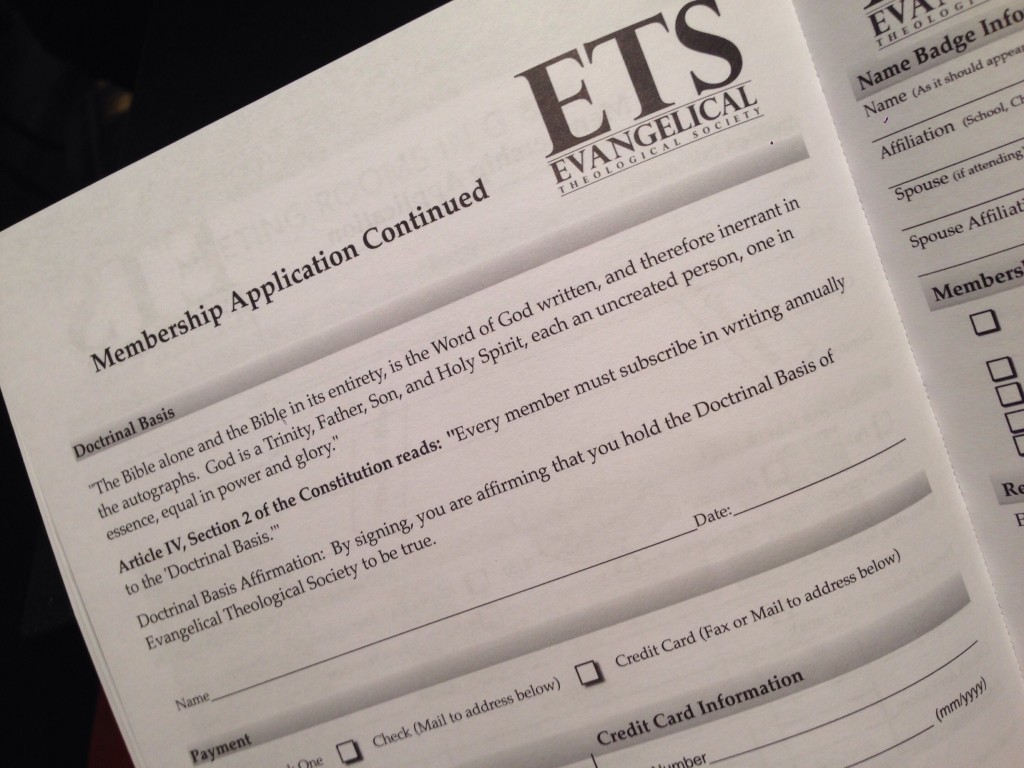
What Happened to Evangelical Theology? [#ETS2014 Liveblog]

TRENDING AT PATHEOS Progressive Christian

The Secret behind A Charlie Brown Thanksgiving
Where Franklin Sat at Charlie Brown's Thanksgiving Table Sparky was sticking to...

Bridging the Gap Between God and Man
From Far Off to the Ultimate Embrace “God is a Spirit: and...

Let Matthew 25 Guide You to a Greater...
With the crisp feel of fall in the air, our minds quickly...

Can a Chatbot Touch Your Soul?
Can a chatbot offer genuine spiritual counsel? One conversation brought me to...

Religion and Politics: How Should We Then Live?
Two cultural axioms get repeated in polite company. Don't mix religion and...

7 Things We Get Wrong About Giving Thanks
It's a time of year when many of us turn to the...
view all Progressive Christian blogs
Ad-Free & Subscriber Log-In Subscription Support
- About Us
- 2026 Calendar
- Videos
- Podcasts
- Library of World Religions
- Faith In Media Tracker
- Advertise With Us
- Write for Us
- Privacy Policy
- Terms of Service
- Do Not Sell My Data
- Contact Us
- Radiant Digital
- Manage Newsletter Subscriptions
- Unsubscribe From Notifications
- Sitemap
Copyright 2008-2026, Patheos, part of the Radiant Digital network of media brands. All rights reserved.
Subscription Support Ad-Free & Subscriber Log-In
Follow Patheos