
BuddhistCatholicContemplativeEvangelicalGeneral ChristianHinduJewishLatter-day SaintMuslimNew VisionsProgressive Christian
Beliefs
- Buddhist
- Catholic
- Contemplative
- Evangelical
- General Christian
- Hindu
- Jewish
- Latter-day Saint
- More Voices
- Muslim
- New Visions
- Pagan
- Progressive Christian
Topics
- Religion News
- Food and Religion
- Sports and Religion
- Religious Art
- Religious Music and Entertainment
- Religious Events
- History and Religion
- Style and Religion
- Politics and Religion
- Women in Religion
- Recreation Outdoors and Religion
- Business Finance and Religion
- Careers Workplace and Religion
- Education and Religion
- Family Parenting and Religion
- Health Fitness and Religion
- Home and Religion
- Relationships and Religion
- Technology and Religion
- Travel and Religion
Columnists
- Buddhist Columnists
- Business Finance and Religion Columnists
- Careers Workplace and Religion Columnists
- Catholic Columnists
- Contemplative Columnists
- Education and Religion Columnists
- Evangelists Columnists
- Family Parenting and Religion Columnists
- General Christian Columnists
- Health Fitness and Religion Columnists
- Hindu Columnists
- History and Religion Columnists
- Home and Religion Columnists
- Jewish Columnists
- More Voices Columnists
- Latter Day Columnists
- Muslim Columnists
- New Visions Columnists
- Nonreligious Columnists
- Pagan Columnists
- Politics and Religion Columnists
- Progressive Columnists
- Recreation Outdoors and Religion Columnists
- Relationships and Religion Columnists
- Religion News Columnists
- Religious Art Columnists
- Religious Events Columnists
- Religious Music and Entertainment Columnists
- Sports and Religion Columnists
- Style and Religion Columnists
- Technology and Religion Columnists
- Travel and Religion Columnists
- Women in Religion Columnists
Resource Library
- 2026 Calendar
- Library of World Religions
- The 100 Most Holy Places on Earth
- Patheos Answers
- Podcasts
- Videos
- Faith Leaders Database
- Anglican Episcopalian
- Bahai
- Baptist
- Buddhism
- Christianity
- Confucianism
- Eastern Orthodoxy
- Hinduism
- Holiness and Pentecostal
- ISKCON
- Islam
- Judaism
- Lutheran
- Methodist
- The Church of Jesus Christ of Latter-day Saints
- New Age
- Paganism
- Presbytarian and Reformed
- Protestantism
- Religion Behind the Scenes
- Roman Catholic
- Scientology
- Shia Islam
- Sikhism
- Sufism
- Sunni Islam
- Taoism
- Zen
- See all religions
Research Tools
 Ad-Free & Subscriber Log-In Subscription Support
Ad-Free & Subscriber Log-In Subscription Support
Follow Patheos 

- Trending:
- Forgiveness
- |
- Marriage
- |
- Consciousness
- |
- Death Penalty
- |
- Election
- |
- Halloween
 Theoblogy
- Home
- Progressive Christian
- A Better Atonement: Maybe I Was Wrong about Original Sin
A Better Atonement: Maybe I Was Wrong about Original Sin
Last updated on: March 13, 2015 at 4:51 pm by Tony Jones
A Better Atonement: Maybe I Was Wrong about Original Sin 2015-03-13T16:51:47-05:00 Tony Jones
Patheos Explore the world's faith through different perspectives on religion and spirituality! Patheos has the views of the prevalent religions and spiritualities of the world.
This week, as we prepare for Good Friday and Easter, we’ll have a post every morning about the atonement. Some will be by me, and some by guests. And don’t forget to check out the Storify and Tumbler, both tracking atonement this week. You can read all of the posts, and my past posts on this topic, here.
Today, Dallas Gingles challenges my argument that Original Sin is a doctrine, fabricated by Augustine, without biblical or rational justification. Regardless of silly quotes by GK Chesterton, I don’t buy it. But I thought I’d let Dallas provide a Nieburhrian counterpoint.
First, let me say thanks to Tony for the opportunity to guest post in this conversation about atonement and original sin. I’ve enjoyed the conversation, and I’m grateful to be a part of it.
I often hear theologians or pastors describing a conversation with a skeptical or hurt person who says, “I just can’t believe in a God who destroys lives, hates sinners, looks like the G.O.P,” or something similar. The minister responds, “I don’t believe in that God either.” Similarly, I don’t believe in the version of original sin that Tony doesn’t believe in in A Better Atonement. However, I do want to defend original sin.
The version of original sin that I want to affirm starts, like Tony’s, with St. Augustine. Unlike Tony, I want to locate the upshot of the doctrine, not in contrast to Pelagius, but in Augustine’s refutation of the Manicheans, and his political thought. Roughly put, the Manicheans believed that evil was a material substance in the world. The convoluted process by which evil was confronted and combated included the bowel movements of faithful believers.
Augustine’s account of evil as a privation—a no-thing—is a direct rebuttal to the idea that evil exists: is a “thing.” Humans will wrongly and humans love wrongly. In so doing they undo their being—they un-become, so to speak. This undoing is finally an undoing of human relations—of the Human City. As Jean Bethke Elshtain has noted, no one has recently captured this idea better than J.K. Rowling with her portrayal of the character of Voldemort.
At the turn of the 20th century, scientific (and social) optimism was the dominant ethos of European nations and the United States. Most Christians today know this movement from the phrase “what would Jesus do.” Simplistically put, the idea was that with new scientific discoveries and the ability to control outcomes, if Christians would just do what Jesus would do in their situation, evil would be eradicated.
Reinhold Niebuhr shattered this optimism and “rediscovered” original sin, and in so doing he returned to Augustine. For Niebuhr, “sin” names the fallen human state that both wills to be God (pride), and that—ironically—abdicates responsibility for human action (sensuality). Both are attempts to undo the proper relationship between God and self. It is this conception of the human situation that alone can explain the tyranny and injustice of a world of war. The response, Niebuhr insists, is a rediscovery of the grace of God that makes even our sins to praise God. But this, in turn, demands that Christians live responsible lives—both affirming their human nature, and accepting responsibility for it.
Robin Lovin, puts it this way:
Certain key ideas in [Niebuhr’s] understanding are easily summarized: The human being is both a finite, limited creature and an image of God. The final judgment on human history lies beyond history, and it falls equally on every particular human project, no matter how good or how evil that project may appear within history. Precisely because of that eschatological judgment, relative good and evil are real and make a difference within history.
We are human beings, and not God, Niebuhr told us. “We are responsible for making choices between greater and lesser evils, even when our Christian faith, illuminating the human scene, makes it quite apparent that there is no pure good in history, and probably no pure evil either. The fate of civilizations may depend upon these choices between systems of which some are more, others less just.”
Original sin is the name we give to warped desires. Because humans desire (or will) wrongly, we are in constant peril of willing our own destruction. Because of God’s mercy, we are under constant judgment that reveals this fallen state. Because of that revelation, we are cast back upon the grace that God has given us, and are sent out to live responsibly. Without such a conception, we risk self-justifying our desires, and mistaking the Triumph of the Will for good politics.
Dallas Gingles is a doctoral student in religious ethics at Southern Methodist University. His interests are peace and justice and the Pentecostal tradition. You can find him on his blog, G+. and on Twitter.
Previous Post

April 2, 2012
Reading Gagnon: Getting Ready [Scot]
Next Post
April 3, 2012 Reading Gagnon: Two More Prejudices [Scot]
Browse Our Archives
Select a Category bible blogging books christianity in america church church history dissertation divorce Dog Training education emergent church essay family funny glbt jopa productions ministry minnesota movies music parenting philosophy politics Prayer publishing Questions That Haunt random same sex marriage speaking spirituality Teaching technology television theology Travels Uncategorized writing youth ministry
Select a Month January 2015 December 2014 November 2014 October 2014 September 2014 August 2014 July 2014 June 2014 May 2014 April 2014 March 2014 February 2014 January 2014 December 2013 November 2013 October 2013 September 2013 August 2013 July 2013 June 2013 May 2013 April 2013 March 2013 February 2013 January 2013 December 2012 November 2012 October 2012 September 2012 August 2012 July 2012 June 2012 May 2012 April 2012 March 2012 February 2012 January 2012 December 2011 November 2011 October 2011 September 2011 August 2011 July 2011 June 2011 May 2011 April 2011 March 2011 February 2011 January 2011 December 2010 November 2010 October 2010 September 2010 August 2010 July 2010 June 2010 May 2010 April 2010 March 2010 February 2010 January 2010 December 2009 November 2009 October 2009 September 2009 August 2009 July 2009 June 2009 May 2009 April 2009 March 2009 February 2009 January 2009 December 2008 November 2008 October 2008 September 2008 August 2008 July 2008 June 2008 May 2008 April 2008 March 2008 February 2008 January 2008 December 2007 November 2007 October 2007 September 2007 August 2007 July 2007 June 2007 May 2007 April 2007 March 2007 February 2007 January 2007 December 2006 November 2006 October 2006 September 2006 August 2006 June 2006 May 2006 March 2006 February 2006 January 2006 December 2005 November 2005 October 2005 September 2005 August 2005 June 2005 April 2005 March 2005 February 2005 January 2005 December 2004 November 2004 October 2004 August 2004 February 2004 January 2004
Follow Us!
TAKE THE
Religious Wisdom Quiz
Complete the line from John 11, verse 35: "Jesus....."
Select your answer to see how you score.
Jesus waved Jesus answered Jesus spoke Jesus wept
Related posts from Theoblogy

New Date, Final Cover, Big News #DGKJ

No One's Heard of Paul Ricoeur
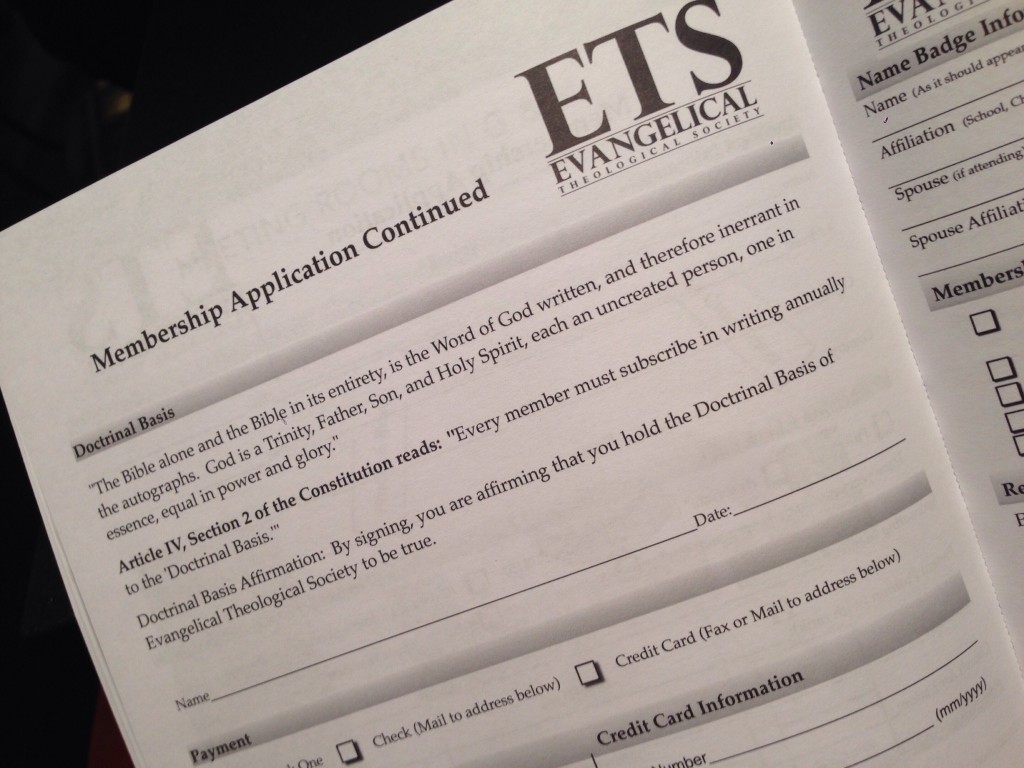
What Happened to Evangelical Theology? [#ETS2014 Liveblog]

TRENDING AT PATHEOS Progressive Christian

Why Christians Have a Sacred Duty to Vote:...
The Bible offers strong support for the sacred duty to vote. Here...

What Being a Modern-Day Apostle Means to Me
In my last column, I discussed the ins and outs of modern-day...

Did Ancient China Once Worship the God of...
Across human history, a common thread weaves through the origins of the...

Love Your Neighbor – Including Earth-Kin: Lev. 19,...
God’s command to love your neighbor means acting in an ethical and...

Lead a Church Study of “Jesus and Lao...
Guest writer Jack Thomas (The Irreverent Reverend) reflects on leading his church...

Principles for Understanding the Apostolic Ministry Today
Whenever people discover that my formal ministry title is "apostle," as in...
view all Progressive Christian blogs
Ad-Free & Subscriber Log-In Subscription Support
- About Us
- 2026 Calendar
- Videos
- Podcasts
- Library of World Religions
- Faith In Media Tracker
- Advertise With Us
- Write for Us
- Privacy Policy
- Terms of Service
- Do Not Sell My Data
- Contact Us
- Radiant Digital
- Manage Newsletter Subscriptions
- Unsubscribe From Notifications
- Sitemap
Copyright 2008-2026, Patheos. All rights reserved.
Subscription Support Ad-Free & Subscriber Log-In
Follow Patheos