
BuddhistCatholicContemplativeEvangelicalGeneral ChristianHinduJewishLatter-day SaintMuslimNew VisionsProgressive Christian
Beliefs
- Buddhist
- Catholic
- Contemplative
- Evangelical
- General Christian
- Hindu
- Jewish
- Latter-day Saint
- More Voices
- Muslim
- New Visions
- Pagan
- Progressive Christian
Topics
- Religion News
- Food and Religion
- Sports and Religion
- Religious Art
- Religious Music and Entertainment
- Religious Events
- History and Religion
- Style and Religion
- Politics and Religion
- Women in Religion
- Recreation Outdoors and Religion
- Business Finance and Religion
- Careers Workplace and Religion
- Education and Religion
- Family Parenting and Religion
- Health Fitness and Religion
- Home and Religion
- Relationships and Religion
- Technology and Religion
- Travel and Religion
Columnists
- Buddhist Columnists
- Business Finance and Religion Columnists
- Careers Workplace and Religion Columnists
- Catholic Columnists
- Contemplative Columnists
- Education and Religion Columnists
- Evangelists Columnists
- Family Parenting and Religion Columnists
- General Christian Columnists
- Health Fitness and Religion Columnists
- Hindu Columnists
- History and Religion Columnists
- Home and Religion Columnists
- Jewish Columnists
- More Voices Columnists
- Latter Day Columnists
- Muslim Columnists
- New Visions Columnists
- Nonreligious Columnists
- Pagan Columnists
- Politics and Religion Columnists
- Progressive Columnists
- Recreation Outdoors and Religion Columnists
- Relationships and Religion Columnists
- Religion News Columnists
- Religious Art Columnists
- Religious Events Columnists
- Religious Music and Entertainment Columnists
- Sports and Religion Columnists
- Style and Religion Columnists
- Technology and Religion Columnists
- Travel and Religion Columnists
- Women in Religion Columnists
Resource Library
- 2026 Calendar
- Library of World Religions
- The 100 Most Holy Places on Earth
- Patheos Answers
- Podcasts
- Videos
- Faith Leaders Database
- Anglican Episcopalian
- Bahai
- Baptist
- Buddhism
- Christianity
- Confucianism
- Eastern Orthodoxy
- Hinduism
- Holiness and Pentecostal
- ISKCON
- Islam
- Judaism
- Lutheran
- Methodist
- The Church of Jesus Christ of Latter-day Saints
- New Age
- Paganism
- Presbytarian and Reformed
- Protestantism
- Religion Behind the Scenes
- Roman Catholic
- Scientology
- Shia Islam
- Sikhism
- Sufism
- Sunni Islam
- Taoism
- Zen
- See all religions
Research Tools
 Ad-Free & Subscriber Log-In Subscription Support
Ad-Free & Subscriber Log-In Subscription Support
Follow Patheos 

- Trending:
- Forgiveness
- |
- Marriage
- |
- Consciousness
- |
- Death Penalty
- |
- Election
- |
- Halloween
 Theoblogy
- Home
- Progressive Christian
- A Better Atonement: When Atonement Begins
A Better Atonement: When Atonement Begins
Last updated on: March 13, 2015 at 4:51 pm by Tony Jones
A Better Atonement: When Atonement Begins 2015-03-13T16:51:48-05:00 Tony Jones
Patheos Explore the world's faith through different perspectives on religion and spirituality! Patheos has the views of the prevalent religions and spiritualities of the world.
This week, as we prepare for Good Friday and Easter, we’ll have a post every morning about the atonement. Some will be by me, and some by guests. And don’t forget to check out the Storify and Tumbler, both tracking atonement this week. You can read all of the posts, and my past posts on this topic, here.
This morning, Fuller Seminary professor Daniel Kirk . Be sure to check out Daniel’s new book, Jesus Have I Loved, but Paul?: A Narrative Approach to the Problem of Pauline Christianity.
Died for Our Sins
“Jesus died for our sins.” Often, the problem with this core piece of our common Christian confession is that we think we know what it means. And so we limit our understanding of the fullness of the atonement.
Hearing this confession, many of us immediately home in the problem of guilt. Jesus is the means God provides so that sin’s guilt might be forgiven.
This is one way that scripture talks about Jesus’ death. But even when speaking of forgiveness of sins, guilt isn’t always the Bible’s primary concern.
In Colossians 1 we read, “God rescued us from the dominion of darkness and transferred us to the kingdom of his beloved Son; in him we have redemption, the forgiveness of sins.”
Forgiveness is not merely about having guilt forgiven. Forgiveness becomes the means by which we are freed from an enslaving tyrant.
Freedom, living a life filled with the peace that comes from fulfilling our calling to faithfully submit to God’s own kingship, is not an add-on to the atonement. It is not a second step after our sins are forgiven.
When Jesus dies for our sins, he creates a free people, a rescued people, a body politic for the Kingdom of God.
To put it in terms of the Gospels: the atonement is not merely what Jesus does on the cross, but the rescue that fills up the pages of his life story.
Atonement begins when Jesus refuses to bow the knee to Satan in the desert. The dominion of darkness has met its match in one who will worship God alone.
Atonement begins when Jesus summons twelve followers. The scattered people of God will be called back together; the alienated and isolated will be a life-giving community.
Atonement begins when Jesus heals Peter’s feverish mother in law. The power of sickness and death will finally be beaten back by the hand of God.
Atonement begins when Jesus feeds 5,000 people in the middle of the desert. The world’s economy of lack is undone by God’s economy of abundance.
Atonement begins when Jesus casts out demons. The spiritual forces that enslave the people of the earth are being defeated; new life is breaking into the old.
But then comes the surprise.
In the face of all this glorious, wonder-working power of God, at work in Jesus, Peter can say only one thing: You are the Christ!
To this Jesus can only say, This is what it really means to be Christ: the Human One must be rejected and suffer and die—and then be raised up in glory.
The mystery of the atonement is that all the power and signs and wonders, showing us the that King of God’s kingdom is making all things new, cannot be fully realized except by the way of the cross.
This is the faith whose summons we must heed: to believe in the God who brings life out of death; to live into the economy of abundance that feeds 5,000 on five loaves; to trust that the call to take up our cross and follow Jesus is a vocation that will overflow in life to those for whose lives we have given our own.
This is the surprising freedom-space created for us by the atonement. It is the space to walk as Jesus walked, which is the road of power perfected, and reign consummated, in weakness.
The atonement is the freedom from sin bestowed on us that ushers us into the kingdom of the crucified king.
Daniel Kirk is New Testament professor at Fuller Seminary’s Northern California campus. He blogs daily at jrdkirk.com and is the author, most recently, of Jesus Have I Loved, but Paul? A Narrative Approach to the Problem of Pauline Christianity.
Previous Post

April 1, 2012
Journey from Palm Sunday to Easter
Next Post
April 2, 2012 Reading Gagnon: Getting Ready [Scot]
Browse Our Archives
Select a Category bible blogging books christianity in america church church history dissertation divorce Dog Training education emergent church essay family funny glbt jopa productions ministry minnesota movies music parenting philosophy politics Prayer publishing Questions That Haunt random same sex marriage speaking spirituality Teaching technology television theology Travels Uncategorized writing youth ministry
Select a Month January 2015 December 2014 November 2014 October 2014 September 2014 August 2014 July 2014 June 2014 May 2014 April 2014 March 2014 February 2014 January 2014 December 2013 November 2013 October 2013 September 2013 August 2013 July 2013 June 2013 May 2013 April 2013 March 2013 February 2013 January 2013 December 2012 November 2012 October 2012 September 2012 August 2012 July 2012 June 2012 May 2012 April 2012 March 2012 February 2012 January 2012 December 2011 November 2011 October 2011 September 2011 August 2011 July 2011 June 2011 May 2011 April 2011 March 2011 February 2011 January 2011 December 2010 November 2010 October 2010 September 2010 August 2010 July 2010 June 2010 May 2010 April 2010 March 2010 February 2010 January 2010 December 2009 November 2009 October 2009 September 2009 August 2009 July 2009 June 2009 May 2009 April 2009 March 2009 February 2009 January 2009 December 2008 November 2008 October 2008 September 2008 August 2008 July 2008 June 2008 May 2008 April 2008 March 2008 February 2008 January 2008 December 2007 November 2007 October 2007 September 2007 August 2007 July 2007 June 2007 May 2007 April 2007 March 2007 February 2007 January 2007 December 2006 November 2006 October 2006 September 2006 August 2006 June 2006 May 2006 March 2006 February 2006 January 2006 December 2005 November 2005 October 2005 September 2005 August 2005 June 2005 April 2005 March 2005 February 2005 January 2005 December 2004 November 2004 October 2004 August 2004 February 2004 January 2004
Follow Us!
TAKE THE
Religious Wisdom Quiz
Who prophesied about a locust plague and called for national repentance?
Select your answer to see how you score.
Joel Daniel Amos Micah
Related posts from Theoblogy

New Date, Final Cover, Big News #DGKJ

No One's Heard of Paul Ricoeur
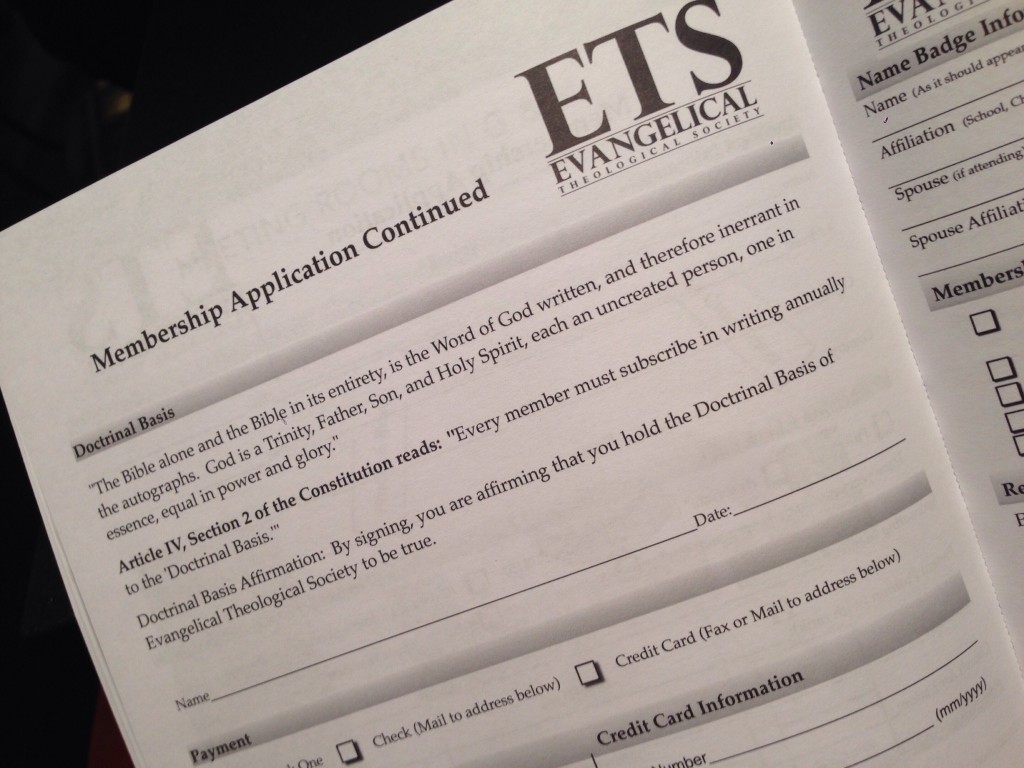
What Happened to Evangelical Theology? [#ETS2014 Liveblog]

TRENDING AT PATHEOS Progressive Christian

Why Christians Have a Sacred Duty to Vote:...
The Bible offers strong support for the sacred duty to vote. Here...

What Being a Modern-Day Apostle Means to Me
In my last column, I discussed the ins and outs of modern-day...

Did Ancient China Once Worship the God of...
Across human history, a common thread weaves through the origins of the...

Love Your Neighbor – Including Earth-Kin: Lev. 19,...
God’s command to love your neighbor means acting in an ethical and...

Lead a Church Study of “Jesus and Lao...
Guest writer Jack Thomas (The Irreverent Reverend) reflects on leading his church...

Principles for Understanding the Apostolic Ministry Today
Whenever people discover that my formal ministry title is "apostle," as in...
view all Progressive Christian blogs
Ad-Free & Subscriber Log-In Subscription Support
- About Us
- 2026 Calendar
- Videos
- Podcasts
- Library of World Religions
- Faith In Media Tracker
- Advertise With Us
- Write for Us
- Privacy Policy
- Terms of Service
- Do Not Sell My Data
- Contact Us
- Radiant Digital
- Manage Newsletter Subscriptions
- Unsubscribe From Notifications
- Sitemap
Copyright 2008-2026, Patheos. All rights reserved.
Subscription Support Ad-Free & Subscriber Log-In
Follow Patheos