
BuddhistCatholicContemplativeEvangelicalGeneral ChristianHinduJewishLatter-day SaintMuslimNew VisionsProgressive Christian
Beliefs
- Buddhist
- Catholic
- Contemplative
- Evangelical
- General Christian
- Hindu
- Jewish
- Latter-day Saint
- More Voices
- Muslim
- New Visions
- Pagan
- Progressive Christian
Topics
- Religion News
- Food and Religion
- Sports and Religion
- Religious Art
- Religious Music and Entertainment
- Religious Events
- History and Religion
- Style and Religion
- Politics and Religion
- Women in Religion
- Recreation Outdoors and Religion
- Business Finance and Religion
- Careers Workplace and Religion
- Education and Religion
- Family Parenting and Religion
- Health Fitness and Religion
- Home and Religion
- Relationships and Religion
- Technology and Religion
- Travel and Religion
Columnists
- Buddhist Columnists
- Business Finance and Religion Columnists
- Careers Workplace and Religion Columnists
- Catholic Columnists
- Contemplative Columnists
- Education and Religion Columnists
- Evangelists Columnists
- Family Parenting and Religion Columnists
- General Christian Columnists
- Health Fitness and Religion Columnists
- Hindu Columnists
- History and Religion Columnists
- Home and Religion Columnists
- Jewish Columnists
- More Voices Columnists
- Latter Day Columnists
- Muslim Columnists
- New Visions Columnists
- Nonreligious Columnists
- Pagan Columnists
- Politics and Religion Columnists
- Progressive Columnists
- Recreation Outdoors and Religion Columnists
- Relationships and Religion Columnists
- Religion News Columnists
- Religious Art Columnists
- Religious Events Columnists
- Religious Music and Entertainment Columnists
- Sports and Religion Columnists
- Style and Religion Columnists
- Technology and Religion Columnists
- Travel and Religion Columnists
- Women in Religion Columnists
Resource Library
- 2026 Calendar
- Library of World Religions
- The 100 Most Holy Places on Earth
- Patheos Answers
- Podcasts
- Videos
- Faith Leaders Database
- Anglican Episcopalian
- Bahai
- Baptist
- Buddhism
- Christianity
- Confucianism
- Eastern Orthodoxy
- Hinduism
- Holiness and Pentecostal
- ISKCON
- Islam
- Judaism
- Lutheran
- Methodist
- The Church of Jesus Christ of Latter-day Saints
- New Age
- Paganism
- Presbytarian and Reformed
- Protestantism
- Religion Behind the Scenes
- Roman Catholic
- Scientology
- Shia Islam
- Sikhism
- Sufism
- Sunni Islam
- Taoism
- Zen
- See all religions
Research Tools
 Ad-Free & Subscriber Log-In Subscription Support
Ad-Free & Subscriber Log-In Subscription Support
Follow Patheos 

- Trending:
- Forgiveness
- |
- Marriage
- |
- Consciousness
- |
- Death Penalty
- |
- Election
- |
- Halloween
 Theoblogy
- Home
- Progressive Christian
- A Better Atonement: Jesus Died with Trayvon
A Better Atonement: Jesus Died with Trayvon
Last updated on: March 13, 2015 at 4:51 pm by Tony Jones
A Better Atonement: Jesus Died with Trayvon 2015-03-13T16:51:51-05:00 Tony Jones
Patheos Explore the world's faith through different perspectives on religion and spirituality! Patheos has the views of the prevalent religions and spiritualities of the world.
Every Wednesday during Lent, I’m going to explore an alternatives to the penal substitutionary understanding of the atonement, the dominant theory of the atonement in my part of the (theological and geographical) world. You can read all of the posts, and my past posts on this topic, here. I’ve got an ebook on the subject as well.
This ebook is available now
“When God becomes man in Jesus of Nazareth, he not only enters into the finitude of man, but in his death on the cross also enters into the situation of man’s godforsakenness…He humbles himself and takes upon himself the eternal death of the godless and the godforsaken, so that all the godless and godforsaken can experience communion with him.”[i]
So writes Jürgen Moltmann at the climax of his groundbreaking book, The Crucified God. Growing up as a German humanist, Moltmann experienced the terror of war and imprisonment, and the love of God, during World War II. His subsequent career in theology has been indelibly shaped by that experience.
Common to human experience, Moltmann proposes, is the experience of godforsakenness. We’ve all felt it, that God has abandoned us, that there is no God. The Israelites felt it, and the Psalmist sang about it.
Of course, it is unthinkable that God would experience godforsakenness. How can a divine being experience his own absence? God is only able to do so because God’s very nature is trinitarian. In an act of ultimate solidarity with every human being who has ever existed, God voluntarily relinquished his godship, in part, in order to truly experience the human condition. And, as the early church hymn recorded in Philippians 2 states so eloquently, God was humbled even to the point of death on a cross.
Upon that cross, God himself in the person of Jesus of Nazareth echoes the Psalmist’s cry, “My God, my God, why have you forsaken me?” God himself experiences—and redeems—godforsakenness.
To explain his understanding of the atonement, Moltmann shares the story of Elie Wiesel. Standing in a crowd being forced to watch the hanging of an angel-faced child at Auschwitz, Wiesel heard someone ask, “For God’s sake, where is God?” “And from within me, I heard a voice answer,” Wiesel writes, “‘Where is He? This is where—hanging here from this gallows.’”[ii]
Reflecting on Wiesel’s statement, Moltmann writes,
If that is to be taken seriously, it must also be said that, like the cross of Christ, even Auschwitz is in God himself. Even Auschwitz is taken up into the grief of the Father, the surrender of the Son and the power of the Spirit…As Paul says in I Cor. 15, only with the resurrection of the dead, the murdered and the gassed, only with the healing of those in despair who bear lifelong wounds, only with the abolition of all rule and authority, only with the annihilation of death will the Son hand over the kingdom to the Father. Then God will turn his sorrow into eternal joy…God in Auschwitz and Auschwitz in the crucified God—that is the basis for a real hope which both embraces and overcomes the world, and the ground for a love which is stronger than death and can sustain death.[iii]
In this conception of the atonement, the reality of sin is not denied. Indeed, the consequences of sin are great. God has allowed humanity an almost limitless amount of freedom. Moltmann borrows from the Jewish tradition of Kabbalah to posit that God has withdrawn himself enough to make room for a creation that is other than God. But with that freedom come the chaos that eventuates with the experience of godforsakenness.
Further, sin has a social nature. We attempt to counteract our experience of godforsakenness by filling our lives with striving, often at the expense of others. This inexorably leads to wars, violence, oppression, and inequality. Jesus’ life, and particularly his death, show God’s ultimate solidarity with the marginalized and the oppressed—with those who most acutely experience godforsakenness.
In other words, Jesus was with Trayvon, lying on the sidewalk, with a bullet in his chest. If Trayvon was able to cry out to God–and even if he was not–Jesus was there, with him, dying.
The call for us who live is to identify with Christ’s suffering and death, much as he has identified with us. In his death, we are united with his suffering. And in identifying with his resurrection, we are raised to new life.
In the crucifixion, God opens the Trinity to us. The eternal love of the Trinity is made available to us in the ultimately humbling act of death on a cross, and our experience of godforsakenness is overcome, for we are now welcomed into the relation of Father, Son, and Holy Spirit.
[i] Jürgen Moltmann*, The Crucified God* (Minneapolis: Fortress, 1993), 276.
[ii] Elie Wiesel, Night (New York: Hill and Wang, 2006), p. 65. Originally published 1956.
[iii] Moltmann, 278.
Previous Post

March 27, 2012
Too Late for Emergent?
Next Post
March 28, 2012 Philip Clayton [Hearts] Emergent
Browse Our Archives
Select a Category bible blogging books christianity in america church church history dissertation divorce Dog Training education emergent church essay family funny glbt jopa productions ministry minnesota movies music parenting philosophy politics Prayer publishing Questions That Haunt random same sex marriage speaking spirituality Teaching technology television theology Travels Uncategorized writing youth ministry
Select a Month January 2015 December 2014 November 2014 October 2014 September 2014 August 2014 July 2014 June 2014 May 2014 April 2014 March 2014 February 2014 January 2014 December 2013 November 2013 October 2013 September 2013 August 2013 July 2013 June 2013 May 2013 April 2013 March 2013 February 2013 January 2013 December 2012 November 2012 October 2012 September 2012 August 2012 July 2012 June 2012 May 2012 April 2012 March 2012 February 2012 January 2012 December 2011 November 2011 October 2011 September 2011 August 2011 July 2011 June 2011 May 2011 April 2011 March 2011 February 2011 January 2011 December 2010 November 2010 October 2010 September 2010 August 2010 July 2010 June 2010 May 2010 April 2010 March 2010 February 2010 January 2010 December 2009 November 2009 October 2009 September 2009 August 2009 July 2009 June 2009 May 2009 April 2009 March 2009 February 2009 January 2009 December 2008 November 2008 October 2008 September 2008 August 2008 July 2008 June 2008 May 2008 April 2008 March 2008 February 2008 January 2008 December 2007 November 2007 October 2007 September 2007 August 2007 July 2007 June 2007 May 2007 April 2007 March 2007 February 2007 January 2007 December 2006 November 2006 October 2006 September 2006 August 2006 June 2006 May 2006 March 2006 February 2006 January 2006 December 2005 November 2005 October 2005 September 2005 August 2005 June 2005 April 2005 March 2005 February 2005 January 2005 December 2004 November 2004 October 2004 August 2004 February 2004 January 2004
Follow Us!
TAKE THE
Religious Wisdom Quiz
Who was struck dead for lying about money in the early church?
Select your answer to see how you score.
Simon the Sorcerer Nicodemus Demas Ananias and Sapphira
Related posts from Theoblogy

New Date, Final Cover, Big News #DGKJ

No One's Heard of Paul Ricoeur
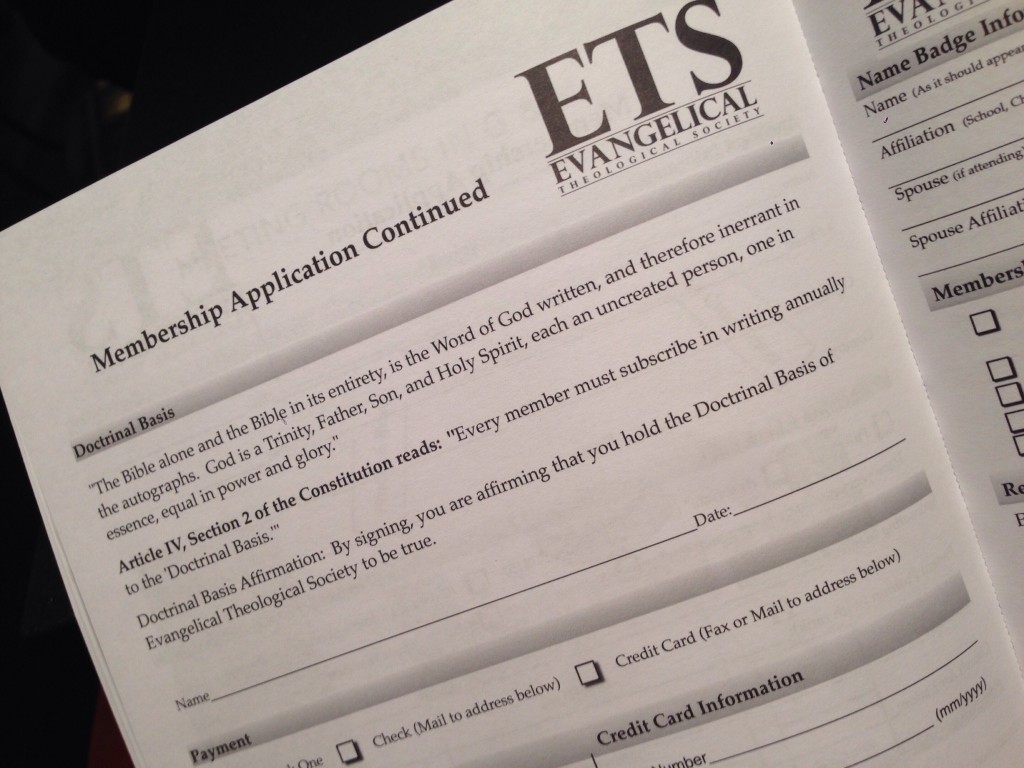
What Happened to Evangelical Theology? [#ETS2014 Liveblog]

TRENDING AT PATHEOS Progressive Christian

Why Christians Have a Sacred Duty to Vote:...
The Bible offers strong support for the sacred duty to vote. Here...

What Being a Modern-Day Apostle Means to Me
In my last column, I discussed the ins and outs of modern-day...

Did Ancient China Once Worship the God of...
Across human history, a common thread weaves through the origins of the...

Love Your Neighbor – Including Earth-Kin: Lev. 19,...
God’s command to love your neighbor means acting in an ethical and...

Lead a Church Study of “Jesus and Lao...
Guest writer Jack Thomas (The Irreverent Reverend) reflects on leading his church...

Principles for Understanding the Apostolic Ministry Today
Whenever people discover that my formal ministry title is "apostle," as in...
view all Progressive Christian blogs
Ad-Free & Subscriber Log-In Subscription Support
- About Us
- 2026 Calendar
- Videos
- Podcasts
- Library of World Religions
- Faith In Media Tracker
- Advertise With Us
- Write for Us
- Privacy Policy
- Terms of Service
- Do Not Sell My Data
- Contact Us
- Radiant Digital
- Manage Newsletter Subscriptions
- Unsubscribe From Notifications
- Sitemap
Copyright 2008-2026, Patheos. All rights reserved.
Subscription Support Ad-Free & Subscriber Log-In
Follow Patheos