
BuddhistCatholicContemplativeEvangelicalGeneral ChristianHinduJewishLatter-day SaintMuslimNew VisionsProgressive Christian
Beliefs
- Buddhist
- Catholic
- Contemplative
- Evangelical
- General Christian
- Hindu
- Jewish
- Latter-day Saint
- More Voices
- Muslim
- New Visions
- Pagan
- Progressive Christian
Topics
- Religion News
- Food and Religion
- Sports and Religion
- Religious Art
- Religious Music and Entertainment
- Religious Events
- History and Religion
- Style and Religion
- Politics and Religion
- Women in Religion
- Recreation Outdoors and Religion
- Business Finance and Religion
- Careers Workplace and Religion
- Education and Religion
- Family Parenting and Religion
- Health Fitness and Religion
- Home and Religion
- Relationships and Religion
- Technology and Religion
- Travel and Religion
Columnists
- Buddhist Columnists
- Business Finance and Religion Columnists
- Careers Workplace and Religion Columnists
- Catholic Columnists
- Contemplative Columnists
- Education and Religion Columnists
- Evangelists Columnists
- Family Parenting and Religion Columnists
- General Christian Columnists
- Health Fitness and Religion Columnists
- Hindu Columnists
- History and Religion Columnists
- Home and Religion Columnists
- Jewish Columnists
- More Voices Columnists
- Latter Day Columnists
- Muslim Columnists
- New Visions Columnists
- Nonreligious Columnists
- Pagan Columnists
- Politics and Religion Columnists
- Progressive Columnists
- Recreation Outdoors and Religion Columnists
- Relationships and Religion Columnists
- Religion News Columnists
- Religious Art Columnists
- Religious Events Columnists
- Religious Music and Entertainment Columnists
- Sports and Religion Columnists
- Style and Religion Columnists
- Technology and Religion Columnists
- Travel and Religion Columnists
- Women in Religion Columnists
Resource Library
- 2026 Calendar
- Library of World Religions
- The 100 Most Holy Places on Earth
- Patheos Answers
- Podcasts
- Videos
- Faith Leaders Database
- Anglican Episcopalian
- Bahai
- Baptist
- Buddhism
- Christianity
- Confucianism
- Eastern Orthodoxy
- Hinduism
- Holiness and Pentecostal
- ISKCON
- Islam
- Judaism
- Lutheran
- Methodist
- The Church of Jesus Christ of Latter-day Saints
- New Age
- Paganism
- Presbytarian and Reformed
- Protestantism
- Religion Behind the Scenes
- Roman Catholic
- Scientology
- Shia Islam
- Sikhism
- Sufism
- Sunni Islam
- Taoism
- Zen
- See all religions
Research Tools
 Ad-Free & Subscriber Log-In Subscription Support
Ad-Free & Subscriber Log-In Subscription Support
Follow Patheos 

- Trending:
- Forgiveness
- |
- Marriage
- |
- Consciousness
- |
- Death Penalty
- |
- Election
- |
- Halloween
 Theoblogy
- Home
- Progressive Christian
- Souls in Transition: Guest Post by Andrew Root
Souls in Transition: Guest Post by Andrew Root
Last updated on: March 13, 2015 at 5:03 pm by Tony Jones
Souls in Transition: Guest Post by Andrew Root 2015-03-13T17:03:27-05:00 Tony Jones
Patheos Explore the world's faith through different perspectives on religion and spirituality! Patheos has the views of the prevalent religions and spiritualities of the world.
Andrew Root
Andrew Root is professor of youth and family ministry at Luther Seminary. He’s written many books and often speaks on issues related to youth ministry. He’s also going to be in conversation with Kenda Dean of Princeton at an upcoming event: FirstThird: Theological Dialogues on the First Third of Life, March 1-3 in St. Paul.
Andy wrote me and asked to guest post regarding my ongoing interaction with Chris Smith’s new book, Souls in Transition. Here’s what he thinks:
I have been thinking about Tony’s youth ministry post from the other day—the bell curve one. I think he is right in a descriptive sense. Christian Smith reveals that a majority of young people are conventional in their faith—happy to uncritically follow their parents faith/religious commitments. I also think he is right that Tony’s book and Chap Clark’s speak of distinct young people on the fringes.
I don’t think Tony gives himself enough credit. Postmodern Youth Ministry is not only descriptive (as Smith’s study is—that’s his job as sociologist) but is also prescriptive (Smith adds some of this in his “Unscientific Postscript,” thought the very title shows that his project is not meant to be prescriptive). Tony does this prescription by presenting a theological/pragmatic critique from postmodern theory.
And I would add that while Clark’s book has much merit, it runs the risk of being sensationalism; whether he falls into this trap or not (I think he may avoid it) evangelicals have tended to see culture as hostile and its hostility as the fuel for ministry (i.e., the world is really bad, we need to save our kids from it).
It is no wonder then that Smith’s findings made Clark uncomfortable (as he asserted in the LA Times). They not only contradict his own findings (though I never thought they did as much as Clark did), but more importantly they oppose a core interpretive moral code that Clark (and much of evangelicalism) holds to—the interpretive code that the world is a negative and a dangerous place, meaning youth ministry is about saving kids from the negative world and acidic culture that hurts them. Youth ministry then is about actions that save/rescue kids from the world of hurt (and often the saved-ness is objectified by young people looking and acting conventional).
For Smith to assert that a majority of kids are conventional and that conventionality is not correlated with commitment, but benign affirmation, potentially strikes at the very core of the theological identity for Clark and how he imagines ministry—no wonder Clark was negative (but that’s just my interpretation).
What’s more interesting is to push this point further. If youth ministry is really about saving kids from the acidic culture (which is bad) then youth ministry can easily slide into the wing of the church that ushers kids into conventionality. In other words, youth ministry is doing a good job when kids act and look conventional (happily religious). It could be argued that it was this driving need in light of a new radical youth culture in the 1970s that motivated parents to financially support a youth worker in their local congregation (not just at the denominational level)—they wanted someone with the expertise to make their kids conventionally religious kids (that showed this by being “good”).
Smith’s study is profound (and Tony’s is helpful in this vein as well), because he shows us that conventionality does NOT equal spiritual maturity, depth, or discipleship—that conventionality can itself be acidic. (That is probably more dramatic than Smith would assert, but I actually believe it can, that religious conventionality may be as much an enemy to young people encountering the act of God in Jesus Christ as R-rated movies and Jersey Shore). Smith’s study points to the fact that we can actually make our kids conventional and yet they are moral therapeutic deists. These realities may have made the evangelical sensibility uncomfortable (BTW, while evangelicals were working hard to pass on conventional faith to their children, mainline liberals had their thumbs up their you-know-whats, so there are no heroes here).
Now, all that said, what is not discussed in that post is what to do with this descriptive reality, with the acidic conventionality. It may then be that the challenge for youth ministry and the church as a whole is to pop the bubble of conventionality; this may be the best way to engage young people (and yes this is risky, but the problem with the church and youth ministry is that it lacks the risk of encountering our raw humanity).
This is why in my own projects I have tried to work two major elements, the power of relationality as encountering the humanity of the young person and the theology of the cross as the theological invitation to seek for God next to our own and young people’s yearning, doubting, and suffering humanity — in those locations where convention is shown to be a hollow idol that has no mouth to speak or hands to move. In other words, I think the way to break the numbing conventionality is to engage young people around seeking for a God made known in the most unconventional of realities (especially for a deity) in the cross—to follow the early Reformation and look for a God that reveals Godself in suffering, death and the opposite of all religious conventionality. The cross is the invitation to seek for God up against our most haunting realities, next to our despair, questions, and fear—all things conventional faith is supposed to solve in a cutely wrapped religious package. On Doug Pagitt’s radio show we discussed just this a couple weeks ago. (I actually make a case for this congregation-wide in a new book.)
Previous Post

January 19, 2010
My Long Strange Trip with Larry Norman
Next Post
January 20, 2010 Memorize Bible Verses as You Aim Your Rifle!
Browse Our Archives
Select a Category bible blogging books christianity in america church church history dissertation divorce Dog Training education emergent church essay family funny glbt jopa productions ministry minnesota movies music parenting philosophy politics Prayer publishing Questions That Haunt random same sex marriage speaking spirituality Teaching technology television theology Travels Uncategorized writing youth ministry
Select a Month January 2015 December 2014 November 2014 October 2014 September 2014 August 2014 July 2014 June 2014 May 2014 April 2014 March 2014 February 2014 January 2014 December 2013 November 2013 October 2013 September 2013 August 2013 July 2013 June 2013 May 2013 April 2013 March 2013 February 2013 January 2013 December 2012 November 2012 October 2012 September 2012 August 2012 July 2012 June 2012 May 2012 April 2012 March 2012 February 2012 January 2012 December 2011 November 2011 October 2011 September 2011 August 2011 July 2011 June 2011 May 2011 April 2011 March 2011 February 2011 January 2011 December 2010 November 2010 October 2010 September 2010 August 2010 July 2010 June 2010 May 2010 April 2010 March 2010 February 2010 January 2010 December 2009 November 2009 October 2009 September 2009 August 2009 July 2009 June 2009 May 2009 April 2009 March 2009 February 2009 January 2009 December 2008 November 2008 October 2008 September 2008 August 2008 July 2008 June 2008 May 2008 April 2008 March 2008 February 2008 January 2008 December 2007 November 2007 October 2007 September 2007 August 2007 July 2007 June 2007 May 2007 April 2007 March 2007 February 2007 January 2007 December 2006 November 2006 October 2006 September 2006 August 2006 June 2006 May 2006 March 2006 February 2006 January 2006 December 2005 November 2005 October 2005 September 2005 August 2005 June 2005 April 2005 March 2005 February 2005 January 2005 December 2004 November 2004 October 2004 August 2004 February 2004 January 2004
Follow Us!
TAKE THE
Religious Wisdom Quiz
True or False: Peter preached the first sermon after Pentecost, leading to 3,000 conversions.
Select your answer to see how you score.
FALSE TRUE
Related posts from Theoblogy

New Date, Final Cover, Big News #DGKJ

No One's Heard of Paul Ricoeur
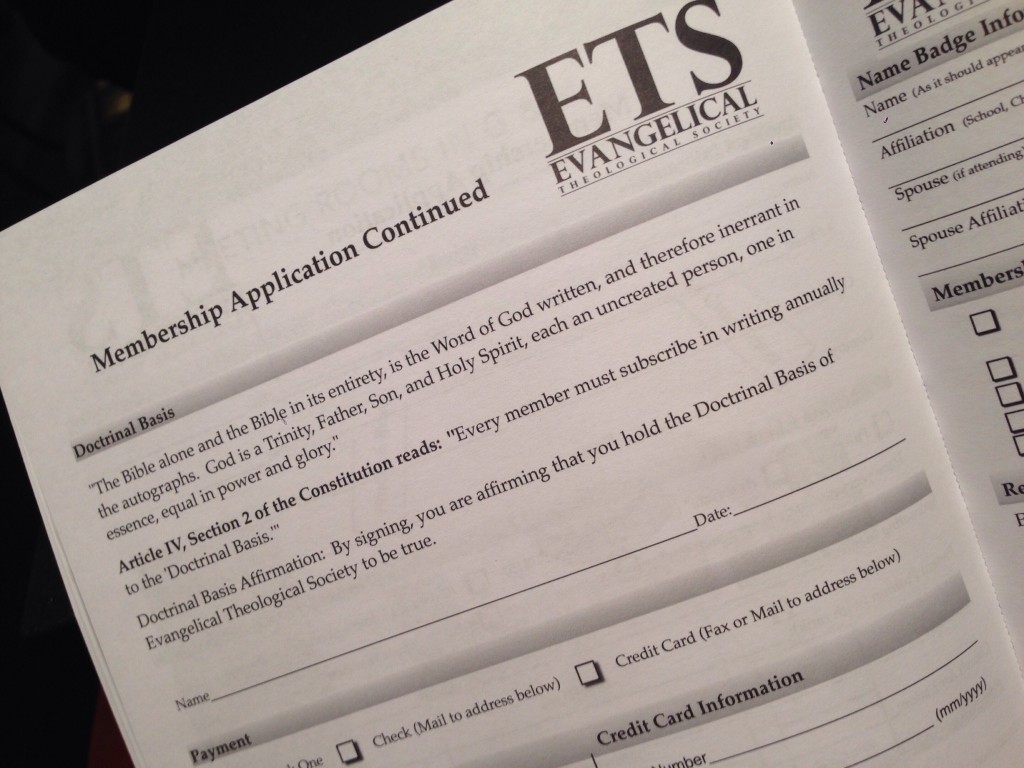
What Happened to Evangelical Theology? [#ETS2014 Liveblog]

TRENDING AT PATHEOS Progressive Christian

Why Christians Have a Sacred Duty to Vote:...
The Bible offers strong support for the sacred duty to vote. Here...

What Being a Modern-Day Apostle Means to Me
In my last column, I discussed the ins and outs of modern-day...

Did Ancient China Once Worship the God of...
Across human history, a common thread weaves through the origins of the...

Love Your Neighbor – Including Earth-Kin: Lev. 19,...
God’s command to love your neighbor means acting in an ethical and...

Lead a Church Study of “Jesus and Lao...
Guest writer Jack Thomas (The Irreverent Reverend) reflects on leading his church...

Principles for Understanding the Apostolic Ministry Today
Whenever people discover that my formal ministry title is "apostle," as in...
view all Progressive Christian blogs
Ad-Free & Subscriber Log-In Subscription Support
- About Us
- 2026 Calendar
- Videos
- Podcasts
- Library of World Religions
- Faith In Media Tracker
- Advertise With Us
- Write for Us
- Privacy Policy
- Terms of Service
- Do Not Sell My Data
- Contact Us
- Radiant Digital
- Manage Newsletter Subscriptions
- Unsubscribe From Notifications
- Sitemap
Copyright 2008-2026, Patheos. All rights reserved.
Subscription Support Ad-Free & Subscriber Log-In
Follow Patheos