
BuddhistCatholicContemplativeEvangelicalGeneral ChristianHinduJewishLatter-day SaintMuslimNew VisionsProgressive Christian
Beliefs
- Buddhist
- Catholic
- Contemplative
- Evangelical
- General Christian
- Hindu
- Jewish
- Latter-day Saint
- More Voices
- Muslim
- New Visions
- Pagan
- Progressive Christian
Topics
- Religion News
- Food and Religion
- Sports and Religion
- Religious Art
- Religious Music and Entertainment
- Religious Events
- History and Religion
- Style and Religion
- Politics and Religion
- Women in Religion
- Recreation Outdoors and Religion
- Business Finance and Religion
- Careers Workplace and Religion
- Education and Religion
- Family Parenting and Religion
- Health Fitness and Religion
- Home and Religion
- Relationships and Religion
- Technology and Religion
- Travel and Religion
Columnists
- Buddhist Columnists
- Business Finance and Religion Columnists
- Careers Workplace and Religion Columnists
- Catholic Columnists
- Contemplative Columnists
- Education and Religion Columnists
- Evangelists Columnists
- Family Parenting and Religion Columnists
- General Christian Columnists
- Health Fitness and Religion Columnists
- Hindu Columnists
- History and Religion Columnists
- Home and Religion Columnists
- Jewish Columnists
- More Voices Columnists
- Latter Day Columnists
- Muslim Columnists
- New Visions Columnists
- Nonreligious Columnists
- Pagan Columnists
- Politics and Religion Columnists
- Progressive Columnists
- Recreation Outdoors and Religion Columnists
- Relationships and Religion Columnists
- Religion News Columnists
- Religious Art Columnists
- Religious Events Columnists
- Religious Music and Entertainment Columnists
- Sports and Religion Columnists
- Style and Religion Columnists
- Technology and Religion Columnists
- Travel and Religion Columnists
- Women in Religion Columnists
Resource Library
- 2026 Calendar
- Library of World Religions
- The 100 Most Holy Places on Earth
- Patheos Answers
- Podcasts
- Videos
- Faith Leaders Database
- Anglican Episcopalian
- Bahai
- Baptist
- Buddhism
- Christianity
- Confucianism
- Eastern Orthodoxy
- Hinduism
- Holiness and Pentecostal
- ISKCON
- Islam
- Judaism
- Lutheran
- Methodist
- The Church of Jesus Christ of Latter-day Saints
- New Age
- Paganism
- Presbytarian and Reformed
- Protestantism
- Religion Behind the Scenes
- Roman Catholic
- Scientology
- Shia Islam
- Sikhism
- Sufism
- Sunni Islam
- Taoism
- Zen
- See all religions
Research Tools
 Ad-Free & Subscriber Log-In Subscription Support
Ad-Free & Subscriber Log-In Subscription Support
Follow Patheos 

- Trending:
- Forgiveness
- |
- Marriage
- |
- Consciousness
- |
- Death Penalty
- |
- Election
- |
- Halloween
 Theoblogy
- Home
- Progressive Christian
- Original Sin: The Genesis of a Doctrine
Original Sin: The Genesis of a Doctrine
Last updated on: March 13, 2015 at 5:06 pm by Tony Jones
Original Sin: The Genesis of a Doctrine 2015-03-13T17:06:13-05:00 Tony Jones
Patheos Explore the world's faith through different perspectives on religion and spirituality! Patheos has the views of the prevalent religions and spiritualities of the world.
The Original Sin Series
Intro–Intuition–Definition–Genesis–Jesus-Paul-Augustine-Calvin-Conclusion
Let me start with some throat-clearing. At least one friend and not a few commenters were bothered by the fact that I wrote about my own intuition before I started reflection on the biblical passages at play. One friend told me that, as a self-proclaimed Protestant, I should begin with the Bible, where Protestants always begin.
Firstly, don’t read too much into my decision to write about my intuition first. It has something to do with the fact that I was pressed for time on Monday. Further, I was trying to be a bit autobiographical, in both the introduction and intuition posts. This blog is not particularly a place for forensic arguments, like, say, my dissertation will be. Instead, it’s a place for more personal, impassioned writing.
Secondly, and I’ve been very clear on this point here and elsewhere, I do not think it possible to “begin with the Bible.” We always begin with our own hermeneutical assumptions. Always. No exceptions. A human being cannot escape her/his own hermeneutical horizon. You are encased in it, just as you are encased in your own skin. There’s no escape.
Does this mean that I reject the Lutheran formula of sola scriptura? Well, insofar as sola scriptura is naive to everyone’s interpretive biases, yes. I don’t think I can actually rely on scripture alone. I am always also reliant upon my own reason to interpret and apply scriptural truth (this just in, Tony Jones believes in scriptural truth!). (Just a side question here: Doesn’t sola mean “alone”? As in, all-by-itself-with-nothing-else? How, then, can there be five solas? Is that not logically incoherent?)
So, I might approach the Bible differently than you do. So be it.
Now, on to Genesis!
Let’s begin by looking at what the text really says:
Now, it probably won’t surprise many for me to confess that I don’t think the creation of the cosmos really happened in quite the way it is described in either this creation narrative, or the one preceding it in Genesis 1:1 – 2:3. But my belief that the cosmos is 12-16 billion years old does not mean that I don’t consider the Genesis account true. Quite to the contrary, I do consider it true. (Truth and factuality are not the same.) So, let’s deal with it’s truth.
Adam and Eve are forbidden to eat the fruit of the Tree of Life by God, and bidden to eat it by the serpent. Eve listens to the latter and passes the fruit to her partner. He partakes as well. God discovers their disobedience, and they must pay the consequences.
First, let us note that there are a couple catching phrases in the narrative. One is that the serpent tells Eve that fruit will allow her to know “good and evil,” and Eve decides to eat the fruit, in part, because it was “desirable for gaining wisdom.”
“Then the eyes of both of them were opened,” they became ashames of their nakedness, sewed themselves fig-leaf garments, and thus there choise was discovered by God.
There are all sorts of interesting interpretive points to be made, but since we’re focusing on the doctrine of Original Sin, let’s focus on the consequences of their actions. Because of their fruity indulgence, A&E become aware and ashamed of their nakedness. And God, in turn, lays the smack down on them: the woman will have pain in childbirth and be subservient to the man; the man will toil to bring food from the earth; they are cast out of the garden; and they will both die.
In the biblical account, this is surely the orginal sin. And I think it’s clear that it is meant to be paradigmatic of the human condition. Given the choice, the passage seems to teach, each of us would choose the fruit that opens our eyes rather than trusting God who tells us we don’t need our eyes opened.
But is this Original Sin? That is, is there anything in the passage that says that A&E might have not chosen to eat the fruit? Or, more to the point of the Western theological notion of Original Sin, that the consequences of their sin has been passed down to every subsequent human via the act of intercourse (thus exempting only Jesus if Nazareth from this inheritence)? Is there something in the passage that would lead us to believe that, as we learned yesterday, this is an “inherited spiritual disease or defect in human nature”?
Based on 1) My own hermeneutical position that this story is truthful in that it is paradigmatic as opposed to factual, and 2) Nothing in the biblical narrative indicates that A&E were changed at the genetic level that would infect subsequent generations, I’ll conclude this: The account of the original sin in Genesis 3 teaches us a lot about the state of human nature, our freedom to know right from wrong, and our proclivity to not necessarily trust God. But it does not teach that the sin of Adam and Eve is responsible for the sins of subsequent generations.
Your thoughts?
Previous Post

January 29, 2009
Comment of the Day
Next Post
January 29, 2009 I'll Be Watching Haggard Tonight
Browse Our Archives
Select a Category bible blogging books christianity in america church church history dissertation divorce Dog Training education emergent church essay family funny glbt jopa productions ministry minnesota movies music parenting philosophy politics Prayer publishing Questions That Haunt random same sex marriage speaking spirituality Teaching technology television theology Travels Uncategorized writing youth ministry
Select a Month January 2015 December 2014 November 2014 October 2014 September 2014 August 2014 July 2014 June 2014 May 2014 April 2014 March 2014 February 2014 January 2014 December 2013 November 2013 October 2013 September 2013 August 2013 July 2013 June 2013 May 2013 April 2013 March 2013 February 2013 January 2013 December 2012 November 2012 October 2012 September 2012 August 2012 July 2012 June 2012 May 2012 April 2012 March 2012 February 2012 January 2012 December 2011 November 2011 October 2011 September 2011 August 2011 July 2011 June 2011 May 2011 April 2011 March 2011 February 2011 January 2011 December 2010 November 2010 October 2010 September 2010 August 2010 July 2010 June 2010 May 2010 April 2010 March 2010 February 2010 January 2010 December 2009 November 2009 October 2009 September 2009 August 2009 July 2009 June 2009 May 2009 April 2009 March 2009 February 2009 January 2009 December 2008 November 2008 October 2008 September 2008 August 2008 July 2008 June 2008 May 2008 April 2008 March 2008 February 2008 January 2008 December 2007 November 2007 October 2007 September 2007 August 2007 July 2007 June 2007 May 2007 April 2007 March 2007 February 2007 January 2007 December 2006 November 2006 October 2006 September 2006 August 2006 June 2006 May 2006 March 2006 February 2006 January 2006 December 2005 November 2005 October 2005 September 2005 August 2005 June 2005 April 2005 March 2005 February 2005 January 2005 December 2004 November 2004 October 2004 August 2004 February 2004 January 2004
Follow Us!
TAKE THE
Religious Wisdom Quiz
Who dreamed of a ladder reaching to heaven?
Select your answer to see how you score.
Jacob Joseph Simeon Isaac
Related posts from Theoblogy

New Date, Final Cover, Big News #DGKJ

No One's Heard of Paul Ricoeur
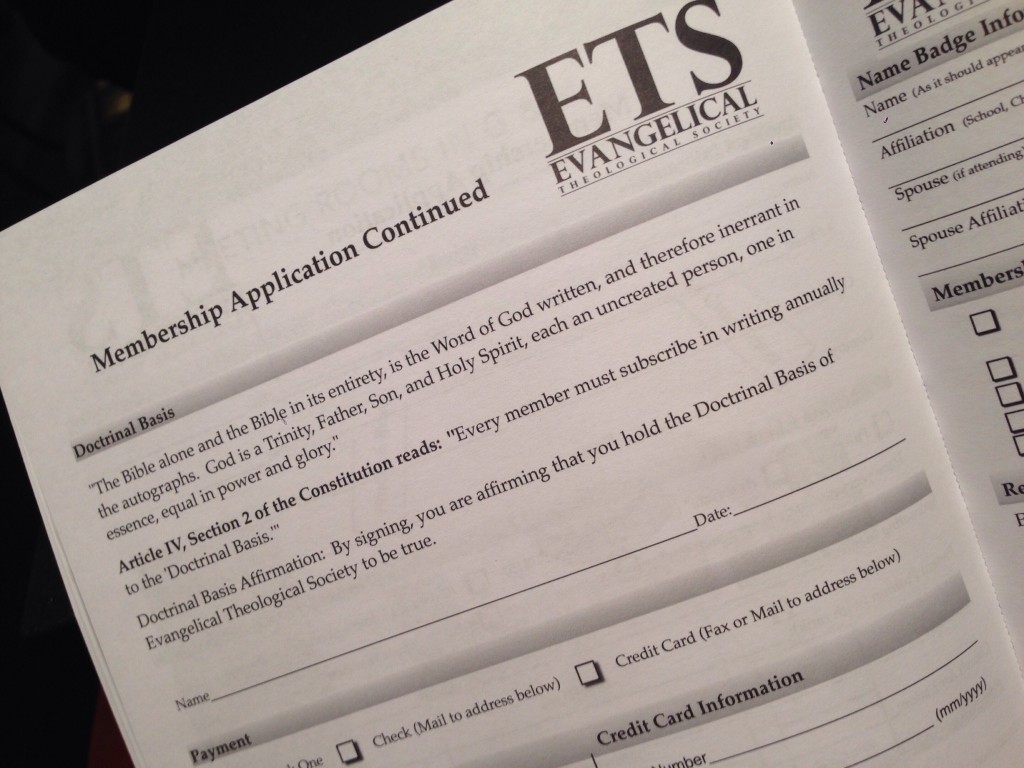
What Happened to Evangelical Theology? [#ETS2014 Liveblog]

TRENDING AT PATHEOS Progressive Christian

Why Christians Have a Sacred Duty to Vote:...
The Bible offers strong support for the sacred duty to vote. Here...

What Being a Modern-Day Apostle Means to Me
In my last column, I discussed the ins and outs of modern-day...

Did Ancient China Once Worship the God of...
Across human history, a common thread weaves through the origins of the...

Love Your Neighbor – Including Earth-Kin: Lev. 19,...
God’s command to love your neighbor means acting in an ethical and...

Lead a Church Study of “Jesus and Lao...
Guest writer Jack Thomas (The Irreverent Reverend) reflects on leading his church...

Principles for Understanding the Apostolic Ministry Today
Whenever people discover that my formal ministry title is "apostle," as in...
view all Progressive Christian blogs
Ad-Free & Subscriber Log-In Subscription Support
- About Us
- 2026 Calendar
- Videos
- Podcasts
- Library of World Religions
- Faith In Media Tracker
- Advertise With Us
- Write for Us
- Privacy Policy
- Terms of Service
- Do Not Sell My Data
- Contact Us
- Radiant Digital
- Manage Newsletter Subscriptions
- Unsubscribe From Notifications
- Sitemap
Copyright 2008-2026, Patheos. All rights reserved.
Subscription Support Ad-Free & Subscriber Log-In
Follow Patheos