
BuddhistCatholicContemplativeEvangelicalGeneral ChristianHinduJewishLatter-day SaintMuslimNew VisionsProgressive Christian
Beliefs
- Buddhist
- Catholic
- Contemplative
- Evangelical
- General Christian
- Hindu
- Jewish
- Latter-day Saint
- More Voices
- Muslim
- New Visions
- Pagan
- Progressive Christian
Topics
- Religion News
- Food and Religion
- Sports and Religion
- Religious Art
- Religious Music and Entertainment
- Religious Events
- History and Religion
- Style and Religion
- Politics and Religion
- Women in Religion
- Recreation Outdoors and Religion
- Business Finance and Religion
- Careers Workplace and Religion
- Education and Religion
- Family Parenting and Religion
- Health Fitness and Religion
- Home and Religion
- Relationships and Religion
- Technology and Religion
- Travel and Religion
Columnists
- Buddhist Columnists
- Business Finance and Religion Columnists
- Careers Workplace and Religion Columnists
- Catholic Columnists
- Contemplative Columnists
- Education and Religion Columnists
- Evangelists Columnists
- Family Parenting and Religion Columnists
- General Christian Columnists
- Health Fitness and Religion Columnists
- Hindu Columnists
- History and Religion Columnists
- Home and Religion Columnists
- Jewish Columnists
- More Voices Columnists
- Latter Day Columnists
- Muslim Columnists
- New Visions Columnists
- Nonreligious Columnists
- Pagan Columnists
- Politics and Religion Columnists
- Progressive Columnists
- Recreation Outdoors and Religion Columnists
- Relationships and Religion Columnists
- Religion News Columnists
- Religious Art Columnists
- Religious Events Columnists
- Religious Music and Entertainment Columnists
- Sports and Religion Columnists
- Style and Religion Columnists
- Technology and Religion Columnists
- Travel and Religion Columnists
- Women in Religion Columnists
Resource Library
- 2026 Calendar
- Library of World Religions
- The 100 Most Holy Places on Earth
- Patheos Answers
- Podcasts
- Videos
- Faith Leaders Database
- Anglican Episcopalian
- Bahai
- Baptist
- Buddhism
- Christianity
- Confucianism
- Eastern Orthodoxy
- Hinduism
- Holiness and Pentecostal
- ISKCON
- Islam
- Judaism
- Lutheran
- Methodist
- The Church of Jesus Christ of Latter-day Saints
- New Age
- Paganism
- Presbytarian and Reformed
- Protestantism
- Religion Behind the Scenes
- Roman Catholic
- Scientology
- Shia Islam
- Sikhism
- Sufism
- Sunni Islam
- Taoism
- Zen
- See all religions
Research Tools
 Ad-Free & Subscriber Log-In Subscription Support
Ad-Free & Subscriber Log-In Subscription Support
Follow Patheos 

- Trending:
- Forgiveness
- |
- Marriage
- |
- Consciousness
- |
- Death Penalty
- |
- Election
- |
- Halloween
 Theoblogy
- Home
- Progressive Christian
- No Pragmatic Downside? (Keith)
No Pragmatic Downside? (Keith)
Last updated on: March 13, 2015 at 5:07 pm by Guest Contributor
No Pragmatic Downside? (Keith) 2015-03-13T17:07:41-05:00 Guest Contributor
Patheos Explore the world's faith through different perspectives on religion and spirituality! Patheos has the views of the prevalent religions and spiritualities of the world.
This post will be a quick explanation of what originally got me thinking about the pragmatics of belief in traditional doctrines of hell and also of why I think it’s valuable to discuss the issue.
For about 10 years now, I’ve had a scriptural defense of universalism, “Universalism and the Bible,” posted on my web site. It’s drawn a considerable number of readers, and, over the years, many of them have written to me concerning it. Though the page was originally on the New Testament case for universalism, much of the e-mail was not. So, in the summer of 2003, I added a couple of appendices to the web page in response to the e-mail I received: In addition to one appendix on philosophical worries some people had about squaring certain universalist views with human free will, I also added one on the “pragmatics” of universalism, leaving the body of the web page — the part before the new appendices — as it was.
Much of the e-mail I received that I classified as being broadly about “pragmatic” matters consisted of warnings concerning the dangers of universalism. Here I’m not thinking about those e-mails that argued that the traditional doctrine of hell, rather than universalism, is what is clearly taught in the Bible, and that it is dangerous to promote unBiblical positions. I got plenty of those messages, too, but didn’t count those as “pragmatic” warnings. I’m instead thinking of those messages that warned of bad effects that believing in universalism might have on those who would hold such a belief — usually effects on the morality of people’s actions or on their motivation for engaging in, promoting, or being responsive to evangelism. For my response to the some of these worries, see the relevant appendix to U&B, but my present concern is something that often accompanied such warnings: claims to the effect that there is no pragmatic downside to the traditional doctrine of hell. Many reasoned roughly as follows:
If people accept universalism or some other unsuitably “nice” view about the ultimate fate of humankind, there is a pronounced danger that holding such a belief will have this & that bad effect on them. On the other hand, there is no pragmatic downside to suitably horrific views on what the ultimate fate of at least much of humankind will be, like the traditional doctrine of hell. So we should be safe, and accept and teach the latter. If it turns out that God actually will, through Christ, eventually reconcile unto Himself all people, let’s let that be a pleasant surprise, and, in the meantime, accept and promote the safer view, since there is no cost to doing so.
Now, I should quickly add that I don’t think it’s wise to let pragmatic considerations govern which views one accepts. And neither do many who accept the traditional doctrine of hell. Many accept that doctrine because they believe (mistakenly, in my opinion) that it’s what’s taught in the Bible.
What I have my eye on, though, is the thought that there is no pragmatic downside to believing in the traditional doctrine of hell, or other horrific views of the ultimate fate of much of humankind. That thought, of course, can be held by someone who doesn’t let pragmatics govern what views they accept. And it seems to be a very common thought.
And, in many cases, deeply mistaken.
“In many cases”: One of the first things that has to be said in a discussion of “the” pragmatics of a belief as hot (sorry for the pun!) as is belief in the traditional doctrine of hell, is what great variation there can be from one individual to another. Some seem barely affected by such a belief — to the shock of others who are profoundly affected by the same belief — whether the profound effect is to crush them or to motivate them to heroic and costly acts of evangelism.
My main purpose in discussing the pragmatics of hell is to bring to people’s attention the profound effects belief in the traditional doctrine of hell can have on some people. Those who aren’t themselves so profoundly shaken (for better or for worse) can easily fail to appreciate these effects. Where the effects are negative, my purpose in calling attention to them here is not to advocate that those beliefs be abandoned. (Again, I’m not a big fan of letting pragmatics govern one’s acceptances.) Rather, I hope that people might begin to think about what might be done about some of these harmful effects. Those who accept, and will continue to accept, the traditional doctrine of hell may still do well to think about how to address some of the crushing effects the belief has on some. At least being aware of the possibility of the belief’s crushing effects might improve their dealings with some people.
I wish there were serious studies on the effects of such beliefs on people that I knew about and could refer you to. (If anyone knows of such studies, I’d love to hear of them.) I’ve been in contact with a friend of mine who is a Christian psychologist, and who seems interested in looking into the matter. I’ll let people know if anything comes of that. In the meantime, I’ll be here posting some more anecdotal accounts I’ve come across in the hopes of at least getting people thinking about the issue.
Previous Post

December 29, 2008
The Pragmatics of Belief in Hell (Keith DeRose)
Next Post
December 30, 2008 Probably Parenting (Carla Barnhill)
Browse Our Archives
Select a Category bible blogging books christianity in america church church history dissertation divorce Dog Training education emergent church essay family funny glbt jopa productions ministry minnesota movies music parenting philosophy politics Prayer publishing Questions That Haunt random same sex marriage speaking spirituality Teaching technology television theology Travels Uncategorized writing youth ministry
Select a Month January 2015 December 2014 November 2014 October 2014 September 2014 August 2014 July 2014 June 2014 May 2014 April 2014 March 2014 February 2014 January 2014 December 2013 November 2013 October 2013 September 2013 August 2013 July 2013 June 2013 May 2013 April 2013 March 2013 February 2013 January 2013 December 2012 November 2012 October 2012 September 2012 August 2012 July 2012 June 2012 May 2012 April 2012 March 2012 February 2012 January 2012 December 2011 November 2011 October 2011 September 2011 August 2011 July 2011 June 2011 May 2011 April 2011 March 2011 February 2011 January 2011 December 2010 November 2010 October 2010 September 2010 August 2010 July 2010 June 2010 May 2010 April 2010 March 2010 February 2010 January 2010 December 2009 November 2009 October 2009 September 2009 August 2009 July 2009 June 2009 May 2009 April 2009 March 2009 February 2009 January 2009 December 2008 November 2008 October 2008 September 2008 August 2008 July 2008 June 2008 May 2008 April 2008 March 2008 February 2008 January 2008 December 2007 November 2007 October 2007 September 2007 August 2007 July 2007 June 2007 May 2007 April 2007 March 2007 February 2007 January 2007 December 2006 November 2006 October 2006 September 2006 August 2006 June 2006 May 2006 March 2006 February 2006 January 2006 December 2005 November 2005 October 2005 September 2005 August 2005 June 2005 April 2005 March 2005 February 2005 January 2005 December 2004 November 2004 October 2004 August 2004 February 2004 January 2004
Follow Us!
TAKE THE
Religious Wisdom Quiz
What is the "Great Schism" in Christian history?
Select your answer to see how you score.
Division between Eastern and Western churches Catholic-Protestant split Crusades Council of Trent
Related posts from Theoblogy

New Date, Final Cover, Big News #DGKJ

No One's Heard of Paul Ricoeur
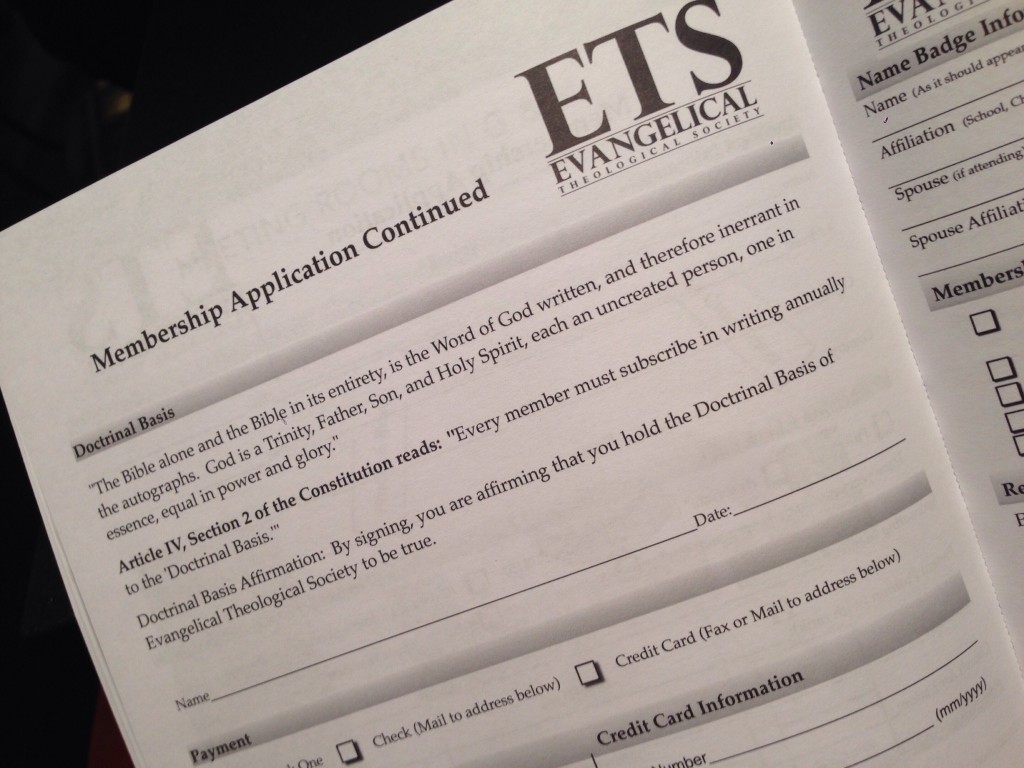
What Happened to Evangelical Theology? [#ETS2014 Liveblog]

TRENDING AT PATHEOS Progressive Christian

Why Christians Have a Sacred Duty to Vote:...
The Bible offers strong support for the sacred duty to vote. Here...

What Being a Modern-Day Apostle Means to Me
In my last column, I discussed the ins and outs of modern-day...

Did Ancient China Once Worship the God of...
Across human history, a common thread weaves through the origins of the...

Love Your Neighbor – Including Earth-Kin: Lev. 19,...
God’s command to love your neighbor means acting in an ethical and...

Lead a Church Study of “Jesus and Lao...
Guest writer Jack Thomas (The Irreverent Reverend) reflects on leading his church...

Principles for Understanding the Apostolic Ministry Today
Whenever people discover that my formal ministry title is "apostle," as in...
view all Progressive Christian blogs
Ad-Free & Subscriber Log-In Subscription Support
- About Us
- 2026 Calendar
- Videos
- Podcasts
- Library of World Religions
- Faith In Media Tracker
- Advertise With Us
- Write for Us
- Privacy Policy
- Terms of Service
- Do Not Sell My Data
- Contact Us
- Radiant Digital
- Manage Newsletter Subscriptions
- Unsubscribe From Notifications
- Sitemap
Copyright 2008-2026, Patheos. All rights reserved.
Subscription Support Ad-Free & Subscriber Log-In
Follow Patheos