
BuddhistCatholicContemplativeEvangelicalGeneral ChristianHinduJewishLatter-day SaintMuslimNew VisionsProgressive Christian
Beliefs
- Buddhist
- Catholic
- Contemplative
- Evangelical
- General Christian
- Hindu
- Jewish
- Latter-day Saint
- More Voices
- Muslim
- New Visions
- Pagan
- Progressive Christian
Topics
- Religion News
- Food and Religion
- Sports and Religion
- Religious Art
- Religious Music and Entertainment
- Religious Events
- History and Religion
- Style and Religion
- Politics and Religion
- Women in Religion
- Recreation Outdoors and Religion
- Business Finance and Religion
- Careers Workplace and Religion
- Education and Religion
- Family Parenting and Religion
- Health Fitness and Religion
- Home and Religion
- Relationships and Religion
- Technology and Religion
- Travel and Religion
Columnists
- Buddhist Columnists
- Business Finance and Religion Columnists
- Careers Workplace and Religion Columnists
- Catholic Columnists
- Contemplative Columnists
- Education and Religion Columnists
- Evangelists Columnists
- Family Parenting and Religion Columnists
- General Christian Columnists
- Health Fitness and Religion Columnists
- Hindu Columnists
- History and Religion Columnists
- Home and Religion Columnists
- Jewish Columnists
- More Voices Columnists
- Latter Day Columnists
- Muslim Columnists
- New Visions Columnists
- Nonreligious Columnists
- Pagan Columnists
- Politics and Religion Columnists
- Progressive Columnists
- Recreation Outdoors and Religion Columnists
- Relationships and Religion Columnists
- Religion News Columnists
- Religious Art Columnists
- Religious Events Columnists
- Religious Music and Entertainment Columnists
- Sports and Religion Columnists
- Style and Religion Columnists
- Technology and Religion Columnists
- Travel and Religion Columnists
- Women in Religion Columnists
Resource Library
- 2026 Calendar
- Library of World Religions
- The 100 Most Holy Places on Earth
- Patheos Answers
- Podcasts
- Videos
- Faith Leaders Database
- Anglican Episcopalian
- Bahai
- Baptist
- Buddhism
- Christianity
- Confucianism
- Eastern Orthodoxy
- Hinduism
- Holiness and Pentecostal
- ISKCON
- Islam
- Judaism
- Lutheran
- Methodist
- The Church of Jesus Christ of Latter-day Saints
- New Age
- Paganism
- Presbytarian and Reformed
- Protestantism
- Religion Behind the Scenes
- Roman Catholic
- Scientology
- Shia Islam
- Sikhism
- Sufism
- Sunni Islam
- Taoism
- Zen
- See all religions
Research Tools
 Ad-Free & Subscriber Log-In Subscription Support
Ad-Free & Subscriber Log-In Subscription Support
Follow Patheos 

- Trending:
- Forgiveness
- |
- Marriage
- |
- Consciousness
- |
- Death Penalty
- |
- Election
- |
- Halloween
 Theoblogy
- Home
- Progressive Christian
- Letters, We Get Letters…
Letters, We Get Letters…
Last updated on: March 13, 2015 at 5:09 pm by Tony Jones
Letters, We Get Letters… 2015-03-13T17:09:41-05:00 Tony Jones
Patheos Explore the world's faith through different perspectives on religion and spirituality! Patheos has the views of the prevalent religions and spiritualities of the world.
In the spirit of Scot McKnight, I publish this very thoughtful email that I received yesterday. I reprint it with permission, and anonymously.
Hey, Tony. I stumbled across your blog this morning.
The Wheaton post is fascinating.
I do find it continually surprising to note how persons embedded in large social structures—whether they be referred to as political, economic, or religious—are, more often than not, incognizant of the actual history of social causation involved in the formation of the structures.
As you indicate in your post, the vicissitudes are at the very least apparent and perhaps actual in many cases. Such is the ambiguity of trying to analyze social causation. I do think that this kind of recognition is the cause of many headaches; in my opinion, these are good headaches to experience, because they invite a kind of dazzled wonder at the complex relationships between human history and God’s action within history (including his ability to act despite human foibles, many of which historically have been labeled as “orthodox”!).
This attitude of dazzled wonder, however, does not sit well with strong dogmatism, and strong dogmatism is often associated with undisclosed and perhaps even sub rosa commitments to something like Cartesian certainty as criterial for either knowledge or even for responsible believing. Obviously, I think this is a mistake, but I do think that it’s a fairly ubiquitous assumption that is articulated at least in one way by the ferocious commitments to a doctrine of inerrancy. It’s interesting to see something like that being extended to whatever authorities in the church are taken to be the correct interpreters of Scripture. To the degree that they handle Scripture rightly, they inherit a kind of inerrancy and the authority that is attached to that (cf. B.B. Warfield).
I think at least these two things (i.e., (a) this kind of commitment in the paragraph immediately above and (b) the compartmentalizing of the various social forces that actually played a role in the formation of structures such as religious groups, schools of interpretation, and the victorious councils) combine with a third commitment, namely, what I’ll call the “theological high road,” which asserts something like God is in control of all that. The trick is that “all that” is left totally unspecified and largely unexamined. So, it’s incredibly easy to agree with that proposition since there isn’t a whole lot of conceptual depth to the content, especially if one has already epistemically ceded one’s believings and criteria for responsible believing to the chosen authority, whatever it might be. I think this makes it really easy to sanitize one’s view of the vicissitudes (isn’t that a great word?) involved in any activity under the sun that involves divine action.
Challenging this is tantamount to challenging existentially deep commitments that maintain a type of status quo that is comfortable for those defined within the status quo as “orthodox,” which, if one even merely considers the lexical meaning of the term, is all about epistemology. It is ironic that the very meaning of “orthodox,” that should invite perennial conversations about epistemology (though not necessarily using that particular term of art) has the practical effect, at least today, of shutting down those kinds of more interesting conversations.
Hence the reactions you and others in the stream may provoke…
I do think that you and others in the stream will have to work harder on distinguishing (i) the kinds of conversations you would like to see in the contemporary religious scene and (ii) mere historicizing of the Christian story in such a way that denies its distinctiveness.
(Whether distinctiveness implies (soteriological) exclusivity is an entirely different discussion that is also subject to conflation.)
I think the worry that critics have is that (i) may collapse into (ii), and the less careful critics probably already just assume that (i) and (ii) have been conflated in the work of the emergents/emerging.
Previous Post

April 4, 2008
Vacation Repost 7: Death to Homeschooling!
Next Post
April 5, 2008 Vacation Repost 8: What Makes Me Faint
Browse Our Archives
Select a Category bible blogging books christianity in america church church history dissertation divorce Dog Training education emergent church essay family funny glbt jopa productions ministry minnesota movies music parenting philosophy politics Prayer publishing Questions That Haunt random same sex marriage speaking spirituality Teaching technology television theology Travels Uncategorized writing youth ministry
Select a Month January 2015 December 2014 November 2014 October 2014 September 2014 August 2014 July 2014 June 2014 May 2014 April 2014 March 2014 February 2014 January 2014 December 2013 November 2013 October 2013 September 2013 August 2013 July 2013 June 2013 May 2013 April 2013 March 2013 February 2013 January 2013 December 2012 November 2012 October 2012 September 2012 August 2012 July 2012 June 2012 May 2012 April 2012 March 2012 February 2012 January 2012 December 2011 November 2011 October 2011 September 2011 August 2011 July 2011 June 2011 May 2011 April 2011 March 2011 February 2011 January 2011 December 2010 November 2010 October 2010 September 2010 August 2010 July 2010 June 2010 May 2010 April 2010 March 2010 February 2010 January 2010 December 2009 November 2009 October 2009 September 2009 August 2009 July 2009 June 2009 May 2009 April 2009 March 2009 February 2009 January 2009 December 2008 November 2008 October 2008 September 2008 August 2008 July 2008 June 2008 May 2008 April 2008 March 2008 February 2008 January 2008 December 2007 November 2007 October 2007 September 2007 August 2007 July 2007 June 2007 May 2007 April 2007 March 2007 February 2007 January 2007 December 2006 November 2006 October 2006 September 2006 August 2006 June 2006 May 2006 March 2006 February 2006 January 2006 December 2005 November 2005 October 2005 September 2005 August 2005 June 2005 April 2005 March 2005 February 2005 January 2005 December 2004 November 2004 October 2004 August 2004 February 2004 January 2004
Follow Us!
TAKE THE
Religious Wisdom Quiz
I am a ladder reaching to heaven with angels ascending and descending. What am I?
Select your answer to see how you score.
Heaven's gate The way to God Jacob's ladder A vision
Related posts from Theoblogy

New Date, Final Cover, Big News #DGKJ

No One's Heard of Paul Ricoeur
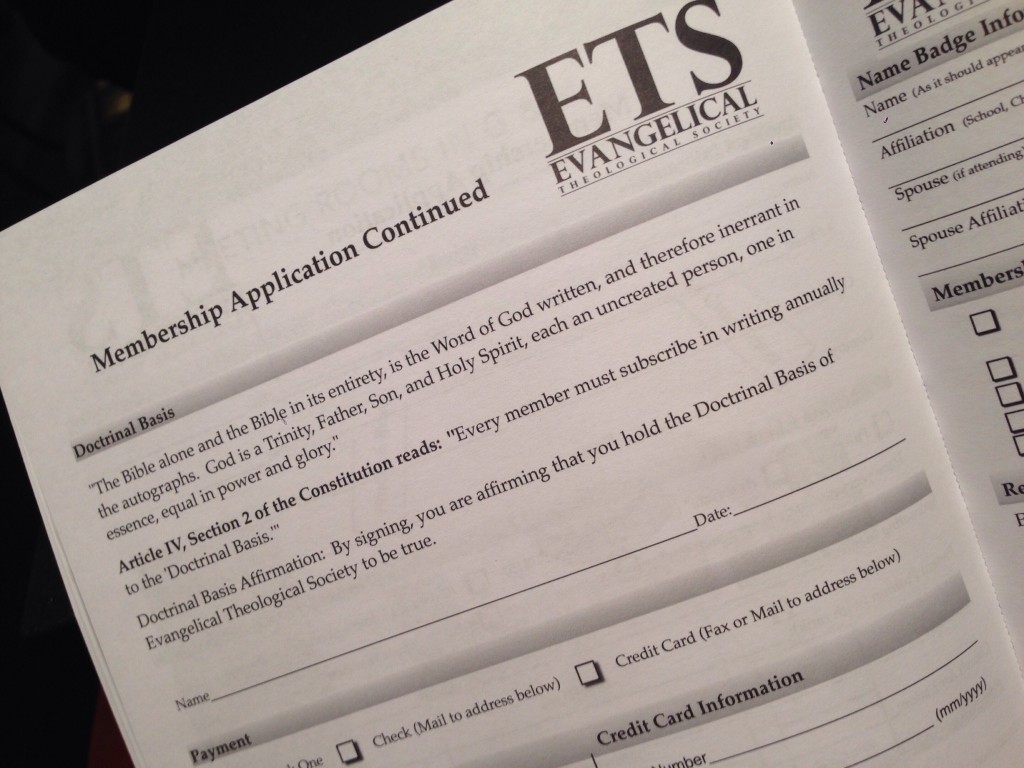
What Happened to Evangelical Theology? [#ETS2014 Liveblog]

TRENDING AT PATHEOS Progressive Christian

Why Christians Have a Sacred Duty to Vote:...
The Bible offers strong support for the sacred duty to vote. Here...

What Being a Modern-Day Apostle Means to Me
In my last column, I discussed the ins and outs of modern-day...

Did Ancient China Once Worship the God of...
Across human history, a common thread weaves through the origins of the...

Love Your Neighbor – Including Earth-Kin: Lev. 19,...
God’s command to love your neighbor means acting in an ethical and...

Lead a Church Study of “Jesus and Lao...
Guest writer Jack Thomas (The Irreverent Reverend) reflects on leading his church...

Principles for Understanding the Apostolic Ministry Today
Whenever people discover that my formal ministry title is "apostle," as in...
view all Progressive Christian blogs
Ad-Free & Subscriber Log-In Subscription Support
- About Us
- 2026 Calendar
- Videos
- Podcasts
- Library of World Religions
- Faith In Media Tracker
- Advertise With Us
- Write for Us
- Privacy Policy
- Terms of Service
- Do Not Sell My Data
- Contact Us
- Radiant Digital
- Manage Newsletter Subscriptions
- Unsubscribe From Notifications
- Sitemap
Copyright 2008-2026, Patheos. All rights reserved.
Subscription Support Ad-Free & Subscriber Log-In
Follow Patheos