
BuddhistCatholicContemplativeEvangelicalGeneral ChristianHinduJewishLatter-day SaintMuslimNew VisionsProgressive Christian
Beliefs
- Buddhist
- Catholic
- Contemplative
- Evangelical
- General Christian
- Hindu
- Jewish
- Latter-day Saint
- More Voices
- Muslim
- New Visions
- Pagan
- Progressive Christian
Topics
- Religion News
- Food and Religion
- Sports and Religion
- Religious Art
- Religious Music and Entertainment
- Religious Events
- History and Religion
- Style and Religion
- Politics and Religion
- Women in Religion
- Recreation Outdoors and Religion
- Business Finance and Religion
- Careers Workplace and Religion
- Education and Religion
- Family Parenting and Religion
- Health Fitness and Religion
- Home and Religion
- Relationships and Religion
- Technology and Religion
- Travel and Religion
Columnists
- Buddhist Columnists
- Business Finance and Religion Columnists
- Careers Workplace and Religion Columnists
- Catholic Columnists
- Contemplative Columnists
- Education and Religion Columnists
- Evangelists Columnists
- Family Parenting and Religion Columnists
- General Christian Columnists
- Health Fitness and Religion Columnists
- Hindu Columnists
- History and Religion Columnists
- Home and Religion Columnists
- Jewish Columnists
- More Voices Columnists
- Latter Day Columnists
- Muslim Columnists
- New Visions Columnists
- Nonreligious Columnists
- Pagan Columnists
- Politics and Religion Columnists
- Progressive Columnists
- Recreation Outdoors and Religion Columnists
- Relationships and Religion Columnists
- Religion News Columnists
- Religious Art Columnists
- Religious Events Columnists
- Religious Music and Entertainment Columnists
- Sports and Religion Columnists
- Style and Religion Columnists
- Technology and Religion Columnists
- Travel and Religion Columnists
- Women in Religion Columnists
Resource Library
- 2026 Calendar
- Library of World Religions
- The 100 Most Holy Places on Earth
- Patheos Answers
- Podcasts
- Videos
- Faith Leaders Database
- Anglican Episcopalian
- Bahai
- Baptist
- Buddhism
- Christianity
- Confucianism
- Eastern Orthodoxy
- Hinduism
- Holiness and Pentecostal
- ISKCON
- Islam
- Judaism
- Lutheran
- Methodist
- The Church of Jesus Christ of Latter-day Saints
- New Age
- Paganism
- Presbytarian and Reformed
- Protestantism
- Religion Behind the Scenes
- Roman Catholic
- Scientology
- Shia Islam
- Sikhism
- Sufism
- Sunni Islam
- Taoism
- Zen
- See all religions
Research Tools
 Ad-Free & Subscriber Log-In Subscription Support
Ad-Free & Subscriber Log-In Subscription Support
Follow Patheos 

- Trending:
- Forgiveness
- |
- Marriage
- |
- Consciousness
- |
- Death Penalty
- |
- Election
- |
- Halloween
 Grace Pending
- Home
- Catholic
- “Hell Is Other People” – Or, Where Bishop-Elect Barron And Jean-Paul Sartre Intersect
“Hell Is Other People” – Or, Where Bishop-Elect Barron And Jean-Paul Sartre Intersect
Last updated on: August 19, 2015 at 7:54 pm by Tom Zampino
“Hell Is Other People” – Or, Where Bishop-Elect Barron And Jean-Paul Sartre Intersect 2015-08-19T19:54:33-05:00 Tom Zampino
Patheos Explore the world's faith through different perspectives on religion and spirituality! Patheos has the views of the prevalent religions and spiritualities of the world.
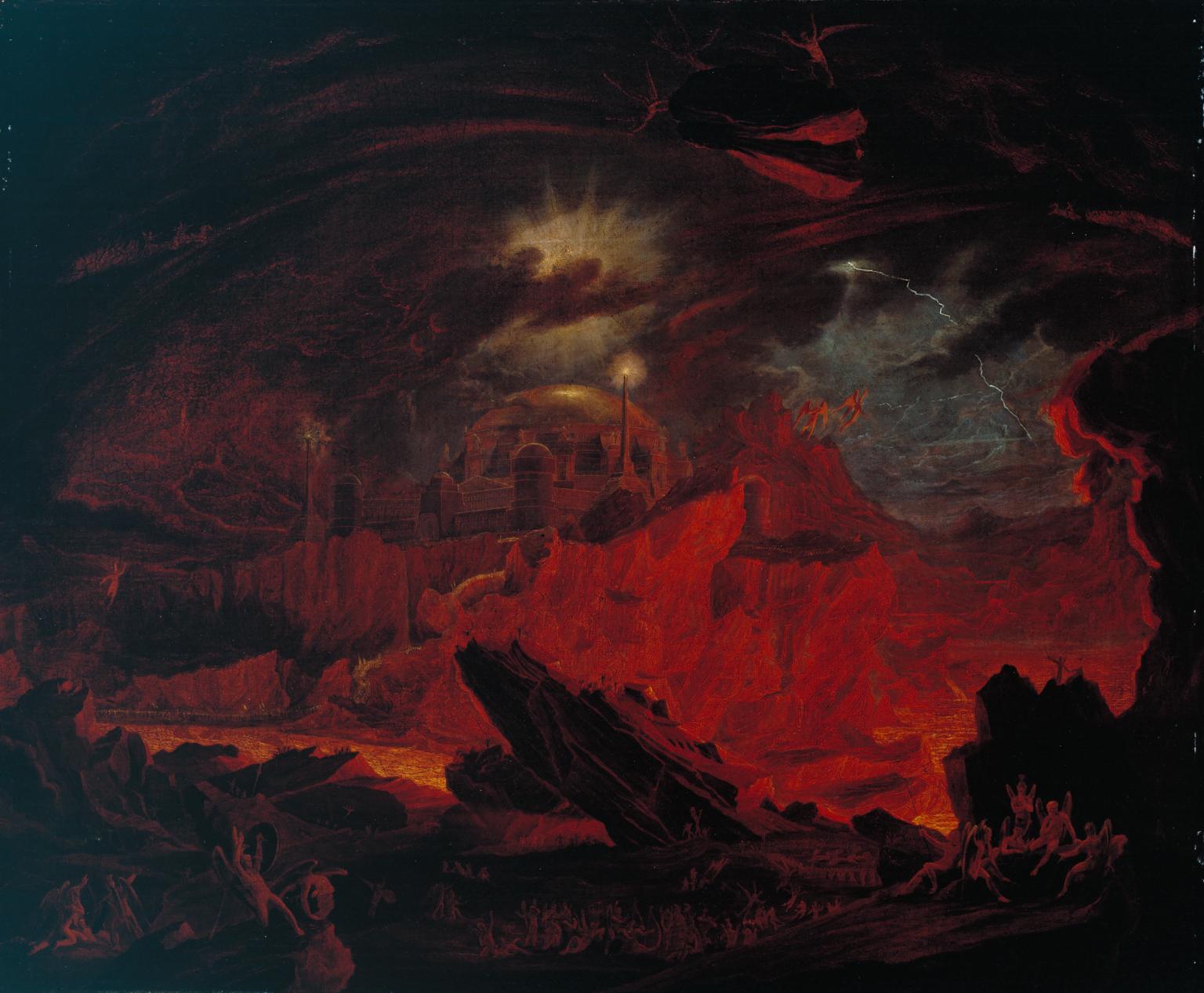
Like most of you, back in either high school or college, I was assigned to read Jean-Paul Sartre’s No Exit.
Sartre’s works were, of course, used as a basic introduction to existentialism.
Not having spent much additional time in the study of philosophy beyond that, I for one would be hard pressed to impart even a basic working knowledge of what existentialism actually entails – beyond, that is, what I might be able to dig up after some quick Google research (which, by the way, can be a pretty effective tool of learning).
Nevertheless, if there is one take away from No Exit that we are still likely to remember it’s Sartre’s infamous, condemning observation that
“Hell” is other people
I recently ran across two different resources which, at first blush, might seem as if they would have nothing at all philosophically in common with one another.
But, bear with me, I believe that they do intersect.
The first is this video by Bishop-Elect Robert Barron on why a supposedly all-good, all loving God would condemn people to hell:
The second is this blog post dissecting the meaning of Sartre’s famous line, mentioned above, and entitled The Most Famous Thing Jean-Paul Sartre Never Said, written by Kirk Woodward.
Let’s start with Woodward.
Here’s what Woodward quoted from a talk given by Sartre himself in 1965:
“Hell is other people” has always been misunderstood. It has been thought that what I meant by that was that our relations with other people are always poisoned, that they are invariably hellish relations. But what I really mean is something totally different. I mean that if relations with someone else are twisted, vitiated, then that other person can only be hell. Why? Because. . . when we think about ourselves, when we try to know ourselves . . . we use the knowledge of us which other people already have. We judge ourselves with the means other people have and have given us for judging ourselves.
Into whatever I say about myself someone else’s judgment always enters. Into whatever I feel within myself someone else’s judgment enters. . . . But that does not at all mean that one cannot have relations with other people. It simply brings out the capital importance of all other people for each one of us.
Woodward then observed that
The Other, Sartre says in the quotation, is that by which we define ourselves, and the punishment of his three characters is that they will only ever be able to define themselves through the distorting mirrors of other people who reflect them badly, while at the same time they see themselves reflected badly in others as well.
Woodward then developed his theme:
Sartre does not really play with traditional ideas about why people might go to hell. There are perfectly good reasons for these people to be there . . .
But Sartre makes it clear that actions alone are not the only reasons the characters of the play find themselves in hell. They are damned in their essences. . . . But there is even a further element in Sartre’s presentation of hell, one that makes its presence felt at the very beginning of the play – in the set design . . . The furniture echoes the dialogue – it feels superficial even when it is ornate.
And then he drove his point home:
In other words, the characters are in hell because they are trivial, pretentious people. This is Sartre’s satiric point: they are in hell because they are petty-bourgeois.
Their concern for the world goes only as far as the extent to which the world services their needs.
When it doesn’t adequately cater to their desires, they blame the world and the people in it – that is, they say that “hell is other people.”
Au contraire, the people in No Exit are in hell because they themselves made the decisions that put them there. [Emphasis added]
These characters – like us – have free will. And they alone have made a final and definitive choice, one for which they remain totally responsible.
And God is nowhere in this picture:
In blaming “other people” the characters in the play, Sartre says, are pointing fingers in the wrong direction. Why should the world be responsible for the actions of any of us?
Who should I blame for what I am except myself?
Now, let’s quickly cut back to Bishop-Elect Barron.
Barron explains that the biblical depictions of hell necessarily flow from two doctrines that most of us would be loathe to deny:
First, God is love.
Not that he has love, or that he gives love.
But that he is love.
Second, humans have been given the gift of free will. Once you recognize that, you have to acknowledge the possibility of the abuse of that freedom. That is the nature of freedom.
But you cannot, says Bishop-Elect Barron, conceptually hold on to these last two precepts without also holding out the possibility of hell. For we are always free to say yes – or no – to our deepest eternal purpose, to our best selves, to God.
Our no would mean that we have paid greatest heed to our deepest earthly desires – desires which may well resist or reject the things of God.
That resistance, through our freedom to choose, can lead to suffering, to torment, and – theologically speaking – to something that we might well describe as an everlasting fire, forever aflame in our souls.
Barron put it this way:
Hell would be that final and definitive NO! to God’s love uttered from the depth of one’s soul.
Barron rejects the notion that God sends or condemns anyone to hell merely because of their earthly mistakes, or because God is a vengeful, spiteful, harsh, exacting, source of power.
No, people send themselves off into this state by their own definitive and final refusal to accept God’s eternal and divine love.
Quoting C.S. Lewis, Barron concludes that the door to hell is always locked from the inside. The door, in other words, has been locked by us and we were given the key!
We cast ourselves in, away from divine love.
And it is by our own choice, not His.
Barron makes one final, very important point (which has sometimes been misinterpreted): the Church does not oblige us to believe that anyone is actually in hell at this moment.
We just don’t know. Not yet anyway.
But if anyone is there, it’s because of their own insistence on being there.
Now, as Woodward observed about Sartre above (in a somewhat parallel consideration):
Why should the world be responsible for the actions of any of us?
Who should I blame for what I am except myself?
Freedom, in both world-views, is the potential source of our greatest happiness, as well our own worst self-condemnation.
Ultimately, whether one places one’s trust fully in God, or in one’s own earthly desires and prowess, freedom in the here and now may well one day deliver us to a place, measured back to us, by the definitive paths that we have chosen here.
Perhaps something to keep in mind as we start each day anew.
Peace
UPDATE: LarryD at Acts of the Apostasy has much more here concerning Bishop-Elect Barron’s “Reasonable Hope” that hell is actually empty. Don’t miss it!
Image Credit: Wikimedia Commons, Fallen Angels In Hell, Public Domain

Next Post
August 20, 2015 Fulton Sheen: "Believe The Incredible And You Can Do The Impossible"
Browse Our Archives
Select a Category Belief Changes Evil Faith Guest Post Jenner Laudato si Lawyers Life Prayer Priesthood Reviews Uncategorized
Select a Month April 2016 March 2016 February 2016 January 2016 December 2015 November 2015 October 2015 September 2015 August 2015 July 2015 June 2015 May 2015 April 2015 March 2015 February 2015 January 2015 December 2014 November 2014 October 2014 September 2014 August 2014
Follow Us!
TAKE THE
Religious Wisdom Quiz
How do you show your love for God?
Select your answer to see how you score.
Looking Forward to Heaven Keeping His Commandments All of these Prayer
Related posts from Grace Pending


Learning To Trust In The Day, Trusting To...

Thomas Merton And Bad Theology: Purposefully Pitting Ourselves,...

Elizabeth Scalia's Latest Book: "Little Sins Mean A...
TRENDING AT PATHEOS Catholic

Creation, Preservation, and Teleology in Catholic Theology
As I write this, it is very early Monday morning. Like millions...

The Parable Of The Sower And The Word...
One of Christ’s most famous parables is that of the sower who...

Rejecting Doom: Christian Hope And Human Action
Christianity is a religion of hope. We are to have hope and...

Why I Choose the Eucharist Over the Sermon
Choose the Eucharist, Not the Sermon What are we supposed to get...

5 Design Elements Found in Spiritually Rooted Homes
Putting Spirituality Into Home Decor Our homes are more than our living...

Credo: A Story of God Told with the...
About 10 years ago, I began to imagine a personal "Credo" that...
view all Catholic blogs
Ad-Free & Subscriber Log-In Subscription Support
- About Us
- 2026 Calendar
- Videos
- Podcasts
- Library of World Religions
- Faith In Media Tracker
- Advertise With Us
- Write for Us
- Privacy Policy
- Terms of Service
- Do Not Sell My Data
- Contact Us
- Radiant Digital
- Manage Newsletter Subscriptions
- Unsubscribe From Notifications
- Sitemap
Copyright 2008-2026, Patheos. All rights reserved.
Subscription Support Ad-Free & Subscriber Log-In
Follow Patheos