
BuddhistCatholicContemplativeEvangelicalGeneral ChristianHinduJewishLatter-day SaintMuslimNew VisionsProgressive Christian
Beliefs
- Buddhist
- Catholic
- Contemplative
- Evangelical
- General Christian
- Hindu
- Jewish
- Latter-day Saint
- More Voices
- Muslim
- New Visions
- Pagan
- Progressive Christian
Topics
- Religion News
- Food and Religion
- Sports and Religion
- Religious Art
- Religious Music and Entertainment
- Religious Events
- History and Religion
- Style and Religion
- Politics and Religion
- Women in Religion
- Recreation Outdoors and Religion
- Business Finance and Religion
- Careers Workplace and Religion
- Education and Religion
- Family Parenting and Religion
- Health Fitness and Religion
- Home and Religion
- Relationships and Religion
- Technology and Religion
- Travel and Religion
Columnists
- Buddhist Columnists
- Business Finance and Religion Columnists
- Careers Workplace and Religion Columnists
- Catholic Columnists
- Contemplative Columnists
- Education and Religion Columnists
- Evangelists Columnists
- Family Parenting and Religion Columnists
- General Christian Columnists
- Health Fitness and Religion Columnists
- Hindu Columnists
- History and Religion Columnists
- Home and Religion Columnists
- Jewish Columnists
- More Voices Columnists
- Latter Day Columnists
- Muslim Columnists
- New Visions Columnists
- Nonreligious Columnists
- Pagan Columnists
- Politics and Religion Columnists
- Progressive Columnists
- Recreation Outdoors and Religion Columnists
- Relationships and Religion Columnists
- Religion News Columnists
- Religious Art Columnists
- Religious Events Columnists
- Religious Music and Entertainment Columnists
- Sports and Religion Columnists
- Style and Religion Columnists
- Technology and Religion Columnists
- Travel and Religion Columnists
- Women in Religion Columnists
Resource Library
- 2026 Calendar
- Library of World Religions
- The 100 Most Holy Places on Earth
- Patheos Answers
- Podcasts
- Videos
- Faith Leaders Database
- Anglican Episcopalian
- Bahai
- Baptist
- Buddhism
- Christianity
- Confucianism
- Eastern Orthodoxy
- Hinduism
- Holiness and Pentecostal
- ISKCON
- Islam
- Judaism
- Lutheran
- Methodist
- The Church of Jesus Christ of Latter-day Saints
- New Age
- Paganism
- Presbytarian and Reformed
- Protestantism
- Religion Behind the Scenes
- Roman Catholic
- Scientology
- Shia Islam
- Sikhism
- Sufism
- Sunni Islam
- Taoism
- Zen
- See all religions
Research Tools
 Ad-Free & Subscriber Log-In Subscription Support
Ad-Free & Subscriber Log-In Subscription Support
Follow Patheos 

- Trending:
- Forgiveness
- |
- Marriage
- |
- Consciousness
- |
- Death Penalty
- |
- Election
- |
- Halloween
 Grace Pending
- Home
- Catholic
- The President, The Prison Visit, and The Urgent Priority
The President, The Prison Visit, and The Urgent Priority
Last updated on: July 17, 2015 at 5:45 pm by Tom Zampino
The President, The Prison Visit, and The Urgent Priority 2015-07-17T17:45:05-05:00 Tom Zampino
Patheos Explore the world's faith through different perspectives on religion and spirituality! Patheos has the views of the prevalent religions and spiritualities of the world.
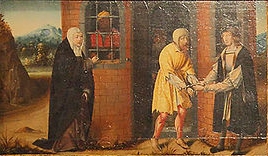
I was naked and you clothed me, I was sick and you visited me, I was in prison and you came to me. Matthew 25:36
It may not exactly have been a Matthew 25 moment, but it certainly brings to mind one of Christ’s required corporal works of mercy. And this one was undertaken not without some risk, psychological if not political.
It was, after all, both an historic opportunity as well as a contemplative, if not a humbling, one:
In becoming the first occupant of his high office to visit a federal [medium security] correctional facility [located in El Reno, OK], Mr. Obama could not help reflecting on what might have been. After all, as a young man, he smoked marijuana and tried cocaine. But he did not end up with a prison term lasting decades.
As it turns out, Mr. Obama noted, there is a fine line between president and prisoner. “There but for the grace of God,” Mr. Obama said somberly after his tour. “And that, I think, is something that we all have to think about.”
For obvious security reasons, the prison visit was necessarily choreographed:
The president was brought to Cell Block B, which had been emptied for the occasion, its usual occupants moved to other buildings. The only inmates Mr. Obama saw during his visit were six nonviolent drug offenders who were selected to have a 45-minute conversation with him at a round table.
But it nevertheless remained authentic:
The six seemed to make an impression. “When they describe their youth and their childhood, these are young people who made mistakes that aren’t that different than the mistakes I made and the mistakes that a lot of you guys made,” Mr. Obama said afterward. “The difference is they did not have the kinds of support structures, the second chances, the resources that would allow them to survive those mistakes.”
The President further observed that
“Every single one of them emphasized the fact that they had done something wrong, they are prepared to take responsibility for it, but they also urged us to think about how society could’ve reached them earlier on in life to keep them out of trouble.”
Mr. Obama undertook this visit to highlight recent bi-partisan Congressional efforts to overhaul the criminal justice system – a system that has been plagued by massive over-crowding, disproportionately excessive sentences for what are generally non-violent, first-time offenses, and what are often perfunctory efforts at rehabilitation and re-integration back into the community.
Certainly, the President found common cause with Oklahoma’s recently re-elected, conservative governor, Mary Fallin, who herself has urged prison reform:
The governor also advocated what she calls smart on crime initiatives, like Remerge, that offers treatment over incarceration for non-violent offenders with drug abuse and alcohol problems.“They need treatment; they need supervision; and they need to be returned to their communities as sober adults ready to support themselves and their families.”
In fact, the President went out of his way to praise Oklahoma’s educational and job-training programs for prisoners, but then rightly noted:
“The question is not only how do we make sure that we sustain those programs here in the prison . . . [b]ut how do we make sure that those same kinds of institutional supports are there for kids and teenagers before they get into the criminal justice system.”
Importantly, the President emphasized that those incarcerated for violent crimes such as murder, rape, and assault are not necessarily a part of his sentencing reform priority:
“There are people who need to be in prison, and I don’t have tolerance for violent criminals,” Mr. Obama said. “Many of them may have made mistakes, but we need to keep our communities safe.”
The President’s call for reform is in many ways consistent with Catholic teaching – certainly as laid out in the USCCB’s seminal report Responsibility, Rehabilitation, and Restoration: A Catholic Perspective on Crime and Criminal Justice (2000):
We are guided by the paradoxical Catholic teaching on crime and punishment: We will not tolerate the crime and violence that threatens the lives and dignity of our sisters and brothers, and we will not give up on those who have lost their way. We seek both justice and mercy. Working together, we believe our faith calls us to protect public safety, promote the common good, and restore community. We believe a Catholic ethic of responsibility, rehabilitation, and restoration can become the foundation for the necessary reform of our broken criminal justice system. (Emphasis added)
The USCCB notes this, from St. John Paul II, by way of introduction:
We are still a long way from the time when our conscience can be certain of having done everything possible to prevent crime and to control it effectively so that it no longer does harm and, at the same time, to offer to those who commit crimes a way of redeeming themselves and making a positive return to society. If all those in some way involved in the problem tried to . . . develop this line of thought, perhaps humanity as a whole could take a great step forward in creating a more serene and peaceful society.”
At least one commentator on the USCCB’s report has noted that any effort at reform must take into account the pain and suffering caused to the victims of these crimes, who all too often get lost in the process:
Human dignity focuses the morally concerned person on the victim of crime and the offender, but also on those involved in various roles within the criminal justice process. The bishops call for strong support to make the justice system more responsive to the concerns of victims who too often are neglected in the process or their anger and pain is exploited to support punitive policies.
Moreover
Attention must be paid to [the victims’] needs of healing and compassion, inclusion in the proceedings against their offenders, and the help of the faith community in recovering their dignity as they search for genuine justice. The bishops urge the widespread adoption of “innovative programs of restorative justice that provide the opportunity for mediation between victims and offenders and offer restitution for crimes committed.”
Any reform of the criminal justice system must, first and foremost, center upon the needs of the victims of crime and their families, showering them with all of the compassion, concern, dignity, and recompense required for their complete healing.
They deserve nothing less.
At the same time, we are all called to be mindful of the underlying humanity of all people – even of criminals who have caused this pain and suffering. We are called to be agents both of justice and mercy – remembering, always, that we too are the fallen, we too are in need of constant forgiveness, yet we too are equally loved.
Punishment, incarceration where appropriate, and full recompense must be demanded of all those who inflict pain upon others.
But so, too, is love and mercy demanded from us:
Forgive us our trespasses as we forgive those who trespass against us
This may well be, as St. John Paul II observed, the only true path to peace, security, and serenity.
Finally, readers of this blog, and of my own personal Facebook page, know that I am a consistent and often harsh critic of this President. I remain constantly wary not only of his priorities, but also of the implementation of them.
But I stand with him here, in this call for prison and sentencing reform.
I believe that our Catholic faith – which often challenges us far beyond anything that we are comfortable with – demands nothing less from us.
The President deserves credit for this critical undertaking.
Peace
UPDATE: This from Elizabeth Scalia wherein we are both fully in accord.
Image Credit Here, via Wikimedia Commons (cropped): karinvogt

Previous Post
July 15, 2015
Joy Is The Salve That Can Heal The Wounds Of Those Most Vulnerable
Next Post

July 19, 2015 Too Late Have I Loved You - St. Augustine
Browse Our Archives
Select a Category Belief Changes Evil Faith Guest Post Jenner Laudato si Lawyers Life Prayer Priesthood Reviews Uncategorized
Select a Month April 2016 March 2016 February 2016 January 2016 December 2015 November 2015 October 2015 September 2015 August 2015 July 2015 June 2015 May 2015 April 2015 March 2015 February 2015 January 2015 December 2014 November 2014 October 2014 September 2014 August 2014
Follow Us!
TAKE THE
Religious Wisdom Quiz
What was the profession of Peter and Andrew?
Select your answer to see how you score.
Priests Tax collectors Fishermen Carpenters
Related posts from Grace Pending


Learning To Trust In The Day, Trusting To...

Thomas Merton And Bad Theology: Purposefully Pitting Ourselves,...

Elizabeth Scalia's Latest Book: "Little Sins Mean A...
TRENDING AT PATHEOS Catholic

The Parable Of The Sower And The Word...
One of Christ’s most famous parables is that of the sower who...

Rejecting Doom: Christian Hope And Human Action
Christianity is a religion of hope. We are to have hope and...

Why I Choose the Eucharist Over the Sermon
Choose the Eucharist, Not the Sermon What are we supposed to get...

5 Design Elements Found in Spiritually Rooted Homes
Putting Spirituality Into Home Decor Our homes are more than our living...

Credo: A Story of God Told with the...
About 10 years ago, I began to imagine a personal "Credo" that...

The Anatomy of Divine Revelation in Catholic Thought
The claim that God has made Himself known to human beings is...
view all Catholic blogs
Ad-Free & Subscriber Log-In Subscription Support
- About Us
- 2026 Calendar
- Videos
- Podcasts
- Library of World Religions
- Faith In Media Tracker
- Advertise With Us
- Write for Us
- Privacy Policy
- Terms of Service
- Do Not Sell My Data
- Contact Us
- Radiant Digital
- Manage Newsletter Subscriptions
- Unsubscribe From Notifications
- Sitemap
Copyright 2008-2026, Patheos. All rights reserved.
Subscription Support Ad-Free & Subscriber Log-In
Follow Patheos