
BuddhistCatholicContemplativeEvangelicalGeneral ChristianHinduJewishLatter-day SaintMuslimNew VisionsProgressive Christian
Beliefs
- Buddhist
- Catholic
- Contemplative
- Evangelical
- General Christian
- Hindu
- Jewish
- Latter-day Saint
- More Voices
- Muslim
- New Visions
- Pagan
- Progressive Christian
Topics
- Religion News
- Food and Religion
- Sports and Religion
- Religious Art
- Religious Music and Entertainment
- Religious Events
- History and Religion
- Style and Religion
- Politics and Religion
- Women in Religion
- Recreation Outdoors and Religion
- Business Finance and Religion
- Careers Workplace and Religion
- Education and Religion
- Family Parenting and Religion
- Health Fitness and Religion
- Home and Religion
- Relationships and Religion
- Technology and Religion
- Travel and Religion
Columnists
- Buddhist Columnists
- Business Finance and Religion Columnists
- Careers Workplace and Religion Columnists
- Catholic Columnists
- Contemplative Columnists
- Education and Religion Columnists
- Evangelists Columnists
- Family Parenting and Religion Columnists
- General Christian Columnists
- Health Fitness and Religion Columnists
- Hindu Columnists
- History and Religion Columnists
- Home and Religion Columnists
- Jewish Columnists
- More Voices Columnists
- Latter Day Columnists
- Muslim Columnists
- New Visions Columnists
- Nonreligious Columnists
- Pagan Columnists
- Politics and Religion Columnists
- Progressive Columnists
- Recreation Outdoors and Religion Columnists
- Relationships and Religion Columnists
- Religion News Columnists
- Religious Art Columnists
- Religious Events Columnists
- Religious Music and Entertainment Columnists
- Sports and Religion Columnists
- Style and Religion Columnists
- Technology and Religion Columnists
- Travel and Religion Columnists
- Women in Religion Columnists
Resource Library
- 2026 Calendar
- Library of World Religions
- The 100 Most Holy Places on Earth
- Patheos Answers
- Podcasts
- Videos
- Faith Leaders Database
- Anglican Episcopalian
- Bahai
- Baptist
- Buddhism
- Christianity
- Confucianism
- Eastern Orthodoxy
- Hinduism
- Holiness and Pentecostal
- ISKCON
- Islam
- Judaism
- Lutheran
- Methodist
- The Church of Jesus Christ of Latter-day Saints
- New Age
- Paganism
- Presbytarian and Reformed
- Protestantism
- Religion Behind the Scenes
- Roman Catholic
- Scientology
- Shia Islam
- Sikhism
- Sufism
- Sunni Islam
- Taoism
- Zen
- See all religions
Research Tools
 Ad-Free & Subscriber Log-In Subscription Support
Ad-Free & Subscriber Log-In Subscription Support
Follow Patheos 

- Trending:
- Forgiveness
- |
- Marriage
- |
- Consciousness
- |
- Death Penalty
- |
- Election
- |
- Halloween
 Grace Pending
- Home
- Catholic
- Genesis Is Not Science
Genesis Is Not Science
Last updated on: July 29, 2015 at 11:46 am by Tom Zampino
Genesis Is Not Science 2015-07-29T11:46:29-05:00 Tom Zampino
Patheos Explore the world's faith through different perspectives on religion and spirituality! Patheos has the views of the prevalent religions and spiritualities of the world.
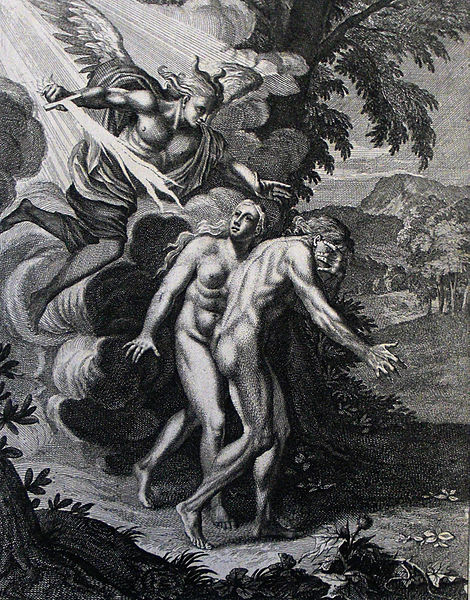
The point has been made numerous times over, but it’s always good to circle back to it.
The biblical story of creation was never meant to be a scientific explanation of how we got here. Rather, the author of Genesis uses rich symbolic and poetic language to define and circumscribe man’s relationship to the divine from the beginning of time.
The Catechism of the Catholic Church states it thusly:
362 The human person, created in the image of God, is a being at once corporeal and spiritual. The biblical account expresses this reality in symbolic language when it affirms that “then the LORD God formed man of dust from the ground, and breathed into his nostrils the breath of life; and man became a living being.” Man, whole and entire, is therefore willed by God. [Emphasis added].
Bishop-Elect Robert Barron directly alludes to this in the video embedded below, wherein he also reminds us that we have been loved into existence through God’s will.
The creation story reveals much about who we are, and even why we are. But it tells us not much of anything about our scientific origins – the how we are.
It wasn’t meant to.
I’m working my way right now through The Theology of the Body for Beginners, by Christopher West – a very brief introduction to the voluminous work of St. John Paul II on the same topic.
Here’s what caught my eye and which inclined me towards undertaking this very brief post this morning:
Consider the difference for a woman when her optometrist looks in her eyes and when her husband or boyfriend does so. The scientist is looking at her cornea and records scientific facts. The lover is looking at her soul and proclaims something more poetic and inspired (we hope). Does the scientist “disprove” the lover? No. These are simply two perspectives on the same reality. The author of Genesis wasn’t a scientist, but a lover inspired by God to proclaim the spiritual mysteries at the origin of the world and of mankind.
The biblical writer as a lover.
A lover, divinely inspired, who reveals to us certain fundamental truths, invoking symbolic and beautiful language to stir up both our imagination and our awe.
This, to me, is a perfectly succinct, perfectly apt understanding as to how and why Adam and Eve became our transcendent spiritual ancestors, if not our direct genetic ones.
Genesis is clearly not science. But it remains, nonetheless, truth. Science and the biblical account of creation have never been in conflict.
The biblical use of symbolic language makes the creation account no less real, no less important, no less critical to understanding our relationship to the heavens above.
Peace
Image Credit: Wikimedia Commons

Previous Post

July 26, 2015
Did You Ever Fall In Love? Therein Lies Your Faith.
Next Post

July 30, 2015 5 Comparisons: A Very Brief Political/Sociological Quiz
Browse Our Archives
Select a Category Belief Changes Evil Faith Guest Post Jenner Laudato si Lawyers Life Prayer Priesthood Reviews Uncategorized
Select a Month April 2016 March 2016 February 2016 January 2016 December 2015 November 2015 October 2015 September 2015 August 2015 July 2015 June 2015 May 2015 April 2015 March 2015 February 2015 January 2015 December 2014 November 2014 October 2014 September 2014 August 2014
Follow Us!
TAKE THE
Religious Wisdom Quiz
In 3 John, what does John say he has no greater joy than?
Select your answer to see how you score.
Serving the church Seeing souls saved Preaching the gospel Hearing that his children are walking in the truth
Related posts from Grace Pending


Learning To Trust In The Day, Trusting To...

Thomas Merton And Bad Theology: Purposefully Pitting Ourselves,...

Elizabeth Scalia's Latest Book: "Little Sins Mean A...
TRENDING AT PATHEOS Catholic

Rejecting Doom: Christian Hope And Human Action
Christianity is a religion of hope. We are to have hope and...

It’s What Comes From Within Which Matters
One of the most difficult things for us to understand is why...

Why I Choose the Eucharist Over the Sermon
Choose the Eucharist, Not the Sermon What are we supposed to get...

5 Design Elements Found in Spiritually Rooted Homes
Putting Spirituality Into Home Decor Our homes are more than our living...

Credo: A Story of God Told with the...
About 10 years ago, I began to imagine a personal "Credo" that...

The Anatomy of Divine Revelation in Catholic Thought
The claim that God has made Himself known to human beings is...
view all Catholic blogs
Ad-Free & Subscriber Log-In Subscription Support
- About Us
- 2026 Calendar
- Videos
- Podcasts
- Library of World Religions
- Faith In Media Tracker
- Advertise With Us
- Write for Us
- Privacy Policy
- Terms of Service
- Do Not Sell My Data
- Contact Us
- Radiant Digital
- Manage Newsletter Subscriptions
- Unsubscribe From Notifications
- Sitemap
Copyright 2008-2026, Patheos. All rights reserved.
Subscription Support Ad-Free & Subscriber Log-In
Follow Patheos