
BuddhistCatholicContemplativeEvangelicalGeneral ChristianHinduJewishLatter-day SaintMuslimNew VisionsProgressive Christian
Beliefs
- Buddhist
- Catholic
- Contemplative
- Evangelical
- General Christian
- Hindu
- Jewish
- Latter-day Saint
- More Voices
- Muslim
- New Visions
- Pagan
- Progressive Christian
Topics
- Religion News
- Food and Religion
- Sports and Religion
- Religious Art
- Religious Music and Entertainment
- Religious Events
- History and Religion
- Style and Religion
- Politics and Religion
- Women in Religion
- Recreation Outdoors and Religion
- Business Finance and Religion
- Careers Workplace and Religion
- Education and Religion
- Family Parenting and Religion
- Health Fitness and Religion
- Home and Religion
- Relationships and Religion
- Technology and Religion
- Travel and Religion
Columnists
- Buddhist Columnists
- Business Finance and Religion Columnists
- Careers Workplace and Religion Columnists
- Catholic Columnists
- Contemplative Columnists
- Education and Religion Columnists
- Evangelists Columnists
- Family Parenting and Religion Columnists
- General Christian Columnists
- Health Fitness and Religion Columnists
- Hindu Columnists
- History and Religion Columnists
- Home and Religion Columnists
- Jewish Columnists
- More Voices Columnists
- Latter Day Columnists
- Muslim Columnists
- New Visions Columnists
- Nonreligious Columnists
- Pagan Columnists
- Politics and Religion Columnists
- Progressive Columnists
- Recreation Outdoors and Religion Columnists
- Relationships and Religion Columnists
- Religion News Columnists
- Religious Art Columnists
- Religious Events Columnists
- Religious Music and Entertainment Columnists
- Sports and Religion Columnists
- Style and Religion Columnists
- Technology and Religion Columnists
- Travel and Religion Columnists
- Women in Religion Columnists
Resource Library
- 2026 Calendar
- Library of World Religions
- The 100 Most Holy Places on Earth
- Patheos Answers
- Podcasts
- Videos
- Faith Leaders Database
- Anglican Episcopalian
- Bahai
- Baptist
- Buddhism
- Christianity
- Confucianism
- Eastern Orthodoxy
- Hinduism
- Holiness and Pentecostal
- ISKCON
- Islam
- Judaism
- Lutheran
- Methodist
- The Church of Jesus Christ of Latter-day Saints
- New Age
- Paganism
- Presbytarian and Reformed
- Protestantism
- Religion Behind the Scenes
- Roman Catholic
- Scientology
- Shia Islam
- Sikhism
- Sufism
- Sunni Islam
- Taoism
- Zen
- See all religions
Research Tools
 Ad-Free & Subscriber Log-In Subscription Support
Ad-Free & Subscriber Log-In Subscription Support
Follow Patheos 

- Trending:
- Forgiveness
- |
- Marriage
- |
- Consciousness
- |
- Death Penalty
- |
- Election
- |
- Halloween
 Grace Pending
- Home
- Catholic
- When Life Overwhelms
When Life Overwhelms
Last updated on: June 3, 2015 at 10:25 am by Tom Zampino
When Life Overwhelms 2015-06-03T10:25:27-05:00 Tom Zampino
Patheos Explore the world's faith through different perspectives on religion and spirituality! Patheos has the views of the prevalent religions and spiritualities of the world.
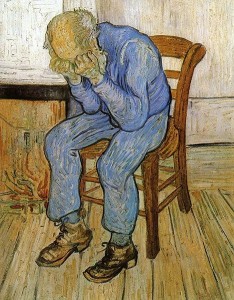
It’s not something that I particularly wish to dwell upon.
But it’s unavoidable. It’s pervasive.
And it’s real.
It touches each of us in some way. Sometimes measured in smaller or larger degrees of connectedness to others, sometimes reaching down and disemboweling the remains of our own lacerated core.
This isn’t at all about the ordinary sadness that we sometimes feel when life disappoints, or when our emotions sometimes get away from us, seemingly infused with a life of their own.
No.
For some, there are always valleys but never mountains. One depression following closely upon the heels of the next.
Morning carries with it no freedom.
There will be no relief from the day’s worries and anxieties. No relief even from the physical and mental exhaustion of simply waking up.
Dawn’s only promise is yet another day of bondage.
The financially fortunate can sometimes find relief – therapy, meds, already in-place support systems.
But those aren’t enough, in and of themselves.
Not by any stretch.
Indeed, affluence or fame can often inflame the hopelessness while supplying easier access to the very means by which to end it. We have witnessed all too many youthful suicides recently: Sawyer Sweeten (19) and Peter Cronkite (22) come easily to mind. But only God knows how many others. Others whose names we will never know. Souls whose suffering may have finally ended, but only with a cry that was smothered by a raging silence.
Three things have particularly brought this dreaded topic to mind.
First, the excellent and moving post about depression entitled The Cold Reboot of the Soul at God and the Machine by fellow Patheos blogger Tom McDonald. If you haven’t yet read it, I invite you to do so right now, even before you finish here. Also, my attention has been directed to this other, excellent post by the same author concerning a long-ago family suicide that reverberates even today. It is poignant and compelling. Please don’t miss it.
Second, this recent audio podcast heard on Relevant Radio’s A Closer Look with host Sheila Liaugminas. The topic was this book, A Catholic Guide to Depression, by Dr. Aaron Kheriaty. I’m reading it now, but the linked podcast discussion is both excellent and well worth your time. Dr. Kheriaty takes a common-sense approach to depression and its alleviation in the context of our Catholic faith. Some of that discussion directly sparked a few of the observations made here.
Third, and closer-to-home, personal reflections and observations over which many hours of intercessory prayer for relief have risen up, and which no doubt will continue for some time to come.
Now, whether that relief (should it ever come to pass) ultimately makes earthly sense – or whether it will merely initiates another cycle of torment and doubt – I haven’t a clue. But I will clutch at faith with two eager hands for as long as blood flows through them.
Here is the point of all this.
There remains much confusion about the Church’s moral teaching on suicide and the fate of our loved ones. I aim to tackle that here, however briefly, by turning to the Catechism of the Catholic Church.
Many of those left behind, for example, doubly grieve, once for the loss itself, and once again over the fear of an all but certain condemnation that awaits that poor, tortured soul.
But the Church – as it is on all matters of life and death – is clear, concise, and compassionate.
First, some clarity:
2280 Everyone is responsible for his life before God who has given it to him. It is God who remains the sovereign Master of life. We are obliged to accept life gratefully and preserve it for his honor and the salvation of our souls. We are stewards, not owners, of the life God has entrusted to us. It is not ours to dispose of.
2281 Suicide contradicts the natural inclination of the human being to preserve and perpetuate his life. It is gravely contrary to the just love of self.
Suicide, by definition, is neither in accord with God’s sovereignty, nor minimally cognizant of the preciousness of the gift bestowed.
Moreover:
2282 If suicide is committed with the intention of setting an example, especially to the young, it also takes on the gravity of scandal. Voluntary co-operation in suicide is contrary to the moral law.
Much news has recently been made surrounding the public suicides of certain young people, clearly undertaken as a way of setting an example for others. The Church teaches that such an undertaking is itself contrary to the moral law.
But here’s the key, one that I trust will offer those left behind some hope mixed with a huge infusion of renewed faith.
2282 continues:
Grave psychological disturbances, anguish, or grave fear of hardship, suffering, or torture can diminish the responsibility of the one committing suicide.
Diminished capacity – a legal concept which one might be hard pressed to not find in such circumstances – may well alleviate all of the tortured soul’s moral culpability:
2283 We should not despair of the eternal salvation of persons who have taken their own lives. By ways known to him alone, God can provide the opportunity for salutary repentance. The Church prays for persons who have taken their own lives.
We should not despair for there is always hope, even when there is no longer life.
But now re-read and carefully reflect upon these words, for they are essential to understanding who our God truly is – a God of innumerable chances, a God of love:
By ways known to him alone, God can provide the opportunity for salutary repentance.
I dare say that those very words can provide an extraordinary amount of comfort.
Now whether the person taken from us has fallen by his own hand, or, more broadly, whether we grieve over any deceased spouse, child, or parent who might have rejected a lifetime of chances to turn away from the lures of this fallen world, we cannot know what ultimately touched their heart. Nor can we know the many opportunities of grace offered them, including, especially, that final one.
Could anyone have ever foreseen the penitent criminal, crucified alongside Christ, thereafter crossing the threshold of eternal life enrobed as Saint Dismas?
It’s foolish to second guess God’s eternal plans.
It always is.
May God grant us freedom from ever experiencing the terror of a loved one’s suicide.
But trust that God does not easily give up on any one of us.
If you or a loved one are in grave despair, I urge you now to seek immediate assistance from a qualified practitioner. Pray and trust, but don’t fail to act.
Finally, I pray that whatever amount of faith has been measured out to you is enough to overwhelm whatever despair surrounds you.
Peace
Image Credit Here: Old Man in Sorrow (On The Threshold Of Eternity), by Van Gogh, via Wikimedia Commons, Public Domain

Previous Post

April 25, 2015
5 Ways That The Church Is Really All About The "Yes"
Next Post

May 10, 2015 That Thin Blue Line of Love (Updated)
Browse Our Archives
Select a Category Belief Changes Evil Faith Guest Post Jenner Laudato si Lawyers Life Prayer Priesthood Reviews Uncategorized
Select a Month April 2016 March 2016 February 2016 January 2016 December 2015 November 2015 October 2015 September 2015 August 2015 July 2015 June 2015 May 2015 April 2015 March 2015 February 2015 January 2015 December 2014 November 2014 October 2014 September 2014 August 2014
Follow Us!
TAKE THE
Religious Wisdom Quiz
What is the Christian response to being wronged?
Select your answer to see how you score.
Revenge Gossip Hold a grudge Forgive
Related posts from Grace Pending


Learning To Trust In The Day, Trusting To...

Thomas Merton And Bad Theology: Purposefully Pitting Ourselves,...

Elizabeth Scalia's Latest Book: "Little Sins Mean A...
TRENDING AT PATHEOS Catholic

Rejecting Doom: Christian Hope And Human Action
Christianity is a religion of hope. We are to have hope and...

It’s What Comes From Within Which Matters
One of the most difficult things for us to understand is why...

Why I Choose the Eucharist Over the Sermon
Choose the Eucharist, Not the Sermon What are we supposed to get...

5 Design Elements Found in Spiritually Rooted Homes
Putting Spirituality Into Home Decor Our homes are more than our living...

Credo: A Story of God Told with the...
About 10 years ago, I began to imagine a personal "Credo" that...

The Anatomy of Divine Revelation in Catholic Thought
The claim that God has made Himself known to human beings is...
view all Catholic blogs
Ad-Free & Subscriber Log-In Subscription Support
- About Us
- 2026 Calendar
- Videos
- Podcasts
- Library of World Religions
- Faith In Media Tracker
- Advertise With Us
- Write for Us
- Privacy Policy
- Terms of Service
- Do Not Sell My Data
- Contact Us
- Radiant Digital
- Manage Newsletter Subscriptions
- Unsubscribe From Notifications
- Sitemap
Copyright 2008-2026, Patheos. All rights reserved.
Subscription Support Ad-Free & Subscriber Log-In
Follow Patheos