
BuddhistCatholicContemplativeEvangelicalGeneral ChristianHinduJewishLatter-day SaintMuslimNew VisionsProgressive Christian
Beliefs
- Buddhist
- Catholic
- Contemplative
- Evangelical
- General Christian
- Hindu
- Jewish
- Latter-day Saint
- More Voices
- Muslim
- New Visions
- Pagan
- Progressive Christian
Topics
- Religion News
- Food and Religion
- Sports and Religion
- Religious Art
- Religious Music and Entertainment
- Religious Events
- History and Religion
- Style and Religion
- Politics and Religion
- Women in Religion
- Recreation Outdoors and Religion
- Business Finance and Religion
- Careers Workplace and Religion
- Education and Religion
- Family Parenting and Religion
- Health Fitness and Religion
- Home and Religion
- Relationships and Religion
- Technology and Religion
- Travel and Religion
Columnists
- Buddhist Columnists
- Business Finance and Religion Columnists
- Careers Workplace and Religion Columnists
- Catholic Columnists
- Contemplative Columnists
- Education and Religion Columnists
- Evangelists Columnists
- Family Parenting and Religion Columnists
- General Christian Columnists
- Health Fitness and Religion Columnists
- Hindu Columnists
- History and Religion Columnists
- Home and Religion Columnists
- Jewish Columnists
- More Voices Columnists
- Latter Day Columnists
- Muslim Columnists
- New Visions Columnists
- Nonreligious Columnists
- Pagan Columnists
- Politics and Religion Columnists
- Progressive Columnists
- Recreation Outdoors and Religion Columnists
- Relationships and Religion Columnists
- Religion News Columnists
- Religious Art Columnists
- Religious Events Columnists
- Religious Music and Entertainment Columnists
- Sports and Religion Columnists
- Style and Religion Columnists
- Technology and Religion Columnists
- Travel and Religion Columnists
- Women in Religion Columnists
Resource Library
- 2026 Calendar
- Library of World Religions
- The 100 Most Holy Places on Earth
- Patheos Answers
- Podcasts
- Videos
- Faith Leaders Database
- Anglican Episcopalian
- Bahai
- Baptist
- Buddhism
- Christianity
- Confucianism
- Eastern Orthodoxy
- Hinduism
- Holiness and Pentecostal
- ISKCON
- Islam
- Judaism
- Lutheran
- Methodist
- The Church of Jesus Christ of Latter-day Saints
- New Age
- Paganism
- Presbytarian and Reformed
- Protestantism
- Religion Behind the Scenes
- Roman Catholic
- Scientology
- Shia Islam
- Sikhism
- Sufism
- Sunni Islam
- Taoism
- Zen
- See all religions
Research Tools
 Ad-Free & Subscriber Log-In Subscription Support
Ad-Free & Subscriber Log-In Subscription Support
Follow Patheos 

- Trending:
- Forgiveness
- |
- Marriage
- |
- Consciousness
- |
- Death Penalty
- |
- Election
- |
- Halloween
 Grace Pending
- Home
- Catholic
- Faith And The Social Contract
Faith And The Social Contract
Last updated on: June 3, 2015 at 10:22 am by Tom Zampino
Faith And The Social Contract 2015-06-03T10:22:56-05:00 Tom Zampino
Patheos Explore the world's faith through different perspectives on religion and spirituality! Patheos has the views of the prevalent religions and spiritualities of the world.
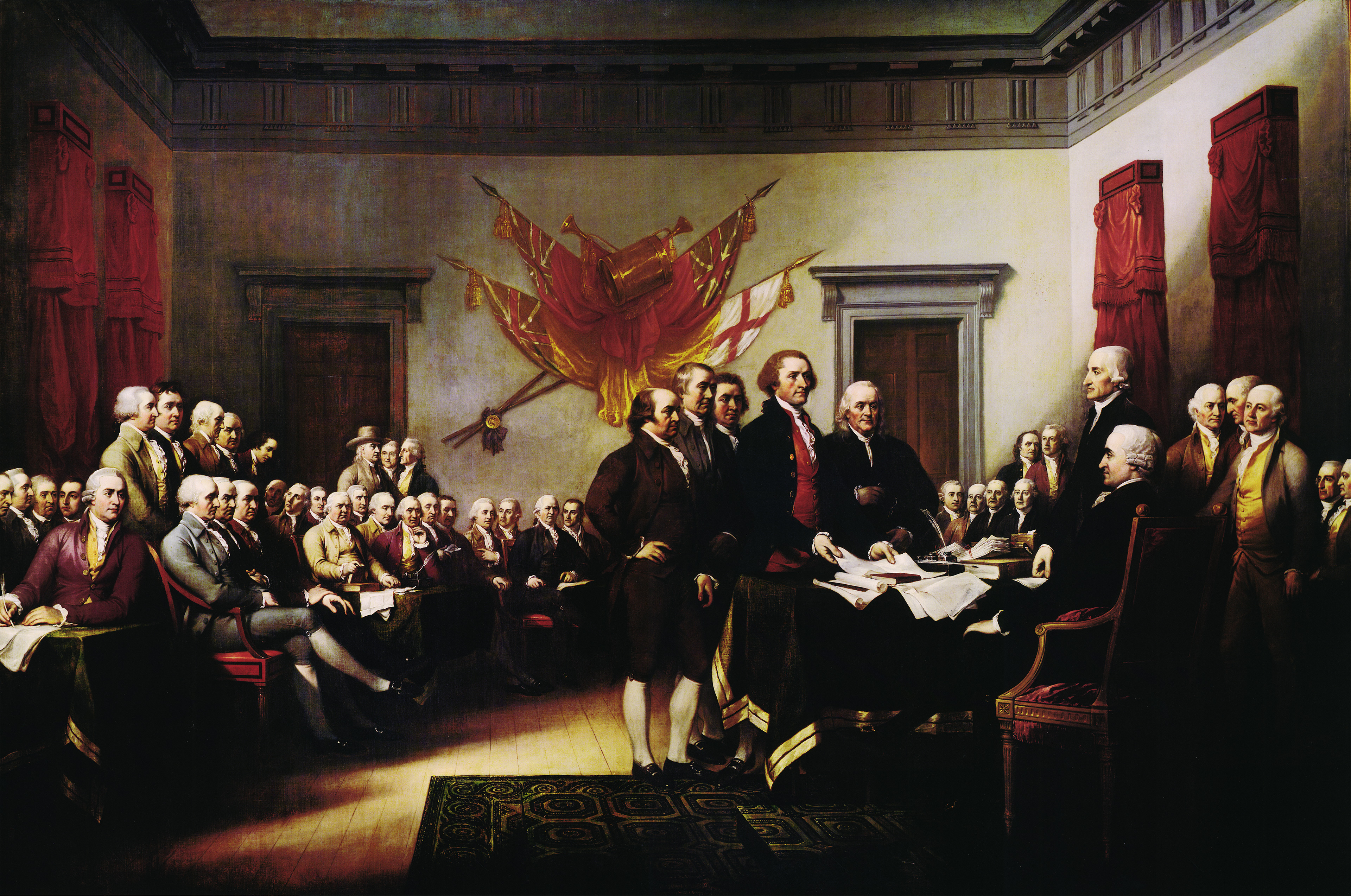
“From the standpoint of religious freedom, you might say it’s a choice between the Little Sisters and Big Brother. I’m going with the Little Sisters” – Jeb Bush, Liberty University Commencement Speech
Say what you will about Jeb Bush (and much can be said), with those words last week he neatly framed the increasingly caustic debate over religious freedom – especially religious freedom as expressed in the public square.
Actually, to label it a “debate” is to engage in an act of generosity, if not outright self-deception.
We may well be in the throes of the final act, one in which the public exercise of constitutionally enshrined rights now immediately triggers social, political, and economic upheavals far too great for any one individual to bear.
Where shaming compels our silence, and silence demands our conformity, conformity will only draw us closer towards tyranny.
“I expect to die in bed, my successor will die in prison and his successor will die a martyr in the public square. His successor will pick up the shards of a ruined society and slowly help rebuild civilization, as the church has done so often in human history” – the late Cardinal Francis George
As we rapidly approach a tipping point of secularization, from which we may never return, we would do well to turn our attention, now, to those cultural, constitutional, and, especially, religious principles that have secured for us – with some glaring and disturbing exceptions – freedom, liberty, and the dignity of the human person.
What will happen now as public faith turns ever inward? Or if all faith-value considerations are effectively, if not legally, banned from the market place of ideas? What if only a few are left standing to brave the consequences?
“Secularism works until you run out of other people’s faith” – Dr. Robert Jeffress, The Kelly File, May 15, 2015
I have been thinking more and more about this in the context of recent Court decisions, such as the ACA case involving the Little Sisters of the Poor, and the soon-to-be-decided SSM cases, such as Obergefell v. Hodges.
What is the role of the private citizen whose public conduct is generally informed by his faith? Is silence always to be expected? Is grudging acquiescence always to be demanded? Or is open – even hostile – opposition ever permissible?
As in all such matters, I turn first to the Catechism of the Catholic Church (CCC) for any wisdom that it may impart.
And, as in all such matters, guidance for the faithful is readily found.
First, we must understand that the Church recognizes all legitimate governmental authority, which all citizens – including the faithful – are expected to obey for the sake of the common good:
1897 Human society can be neither well-ordered nor prosperous unless it has some people invested with legitimate authority to preserve its institutions and to devote themselves as far as is necessary to work and care for the good of all. By “authority” one means the quality by virtue of which persons or institutions make laws and give orders to men and expect obedience from them.
1898 Every human community needs an authority to govern it.The foundation of such authority lies in human nature. It is necessary for the unity of the state. Its role is to ensure as far as possible the common good of the society.
This authority, required by the moral order, derives solely from God. Therefore whoever resists the authorities resists what God has appointed. Those who resist will “incur judgment.” (1899)
Due honor and respect towards those in authority is expected, and such is expected to be given in gratitude and with good will. (1900)
Moreover, as Pope St. Clement taught,* our prayers for those who exercise authority over us are also expected. (1900)
But this legitimate authority does not exist, alone, in a vacuum:
1902 Authority does not derive its moral legitimacy from itself. It must not behave in a despotic manner, but must act for the common good as a “moral force based on freedom and a sense of responsibility”
And so now the key to understanding our public role:
1903 Authority is exercised legitimately only when it seeks the common good of the group concerned and if it employs morally licit means to attain it. If rulers were to enact unjust laws or take measures contrary to the moral order, such arrangements would not be binding in conscience. In such a case, authority breaks down completely and results in shameful abuse (emphasis added).
The Church therefore recognizes, in some instances, power is exercised so egregiously, so despotically, that the conscience of the faithful is shocked, and the common good destroyed.
It is in those times when silence is the true enemy of the common good, and when acquiescence only plunges our hearts into deadly darkness.
Now, the common good, as the CCC holds: 1) presupposes respect for the person and, in the name of the common good, public authorities are bound to respect the fundamental and inalienable rights of the human person (1907), 2) requires the social well-being and development of the group itself (1908), and 3) requires peace, that is, the stability and security of a just order (1909).
When the common good is threatened by the failure of the authorities to respect the fundamental and inalienable rights of the human person, that authority has opened itself up to a legitimate, and highly-charged, moral challenge. For the common good can be destroyed by an over-reaching threat to the few.
We, as Catholics, are of course obliged to respect and honor all authority, even when we find ourselves in complete and total disagreement.
But we are never obliged to remain silent in the face of threats to the conscience as informed by our faith.
In fact, we must willingly and courageously take a stand in the public square as we stand our ground, seek to persuade, and endeavor to turn hearts and minds.
That is always honorable. That is always worthy of respect. That is always just.
And we have available to us many political and moral weapons with which to do so.
We can argue, we can petition, we can make demands, and we can run for office (as I did). Most importantly, we can pray without ceasing.
I am certain that the next few months will provide us with plenty of opportunities to do just that.
So let’s move forward, together, with wisdom, courage, and love.
Peace
- Grant to them, Lord, health, peace, concord, and stability, so that they may exercise without offense the sovereignty that you have given them. Master, heavenly King of the ages, you give glory, honor, and power over the things of earth to the sons of men. Direct, Lord, their counsel, following what is pleasing and acceptable in your sight, so that by exercising with devotion and in peace and gentleness the power that you have given to them, they may find favor with you” – Pope St. Clement.
Image: Wikimedia Commons, Public Domain
Previous Post

May 10, 2015
That Thin Blue Line of Love (Updated)
Next Post

May 20, 2015 10 Surprising Things You Can Be Even If You’re Catholic
Browse Our Archives
Select a Category Belief Changes Evil Faith Guest Post Jenner Laudato si Lawyers Life Prayer Priesthood Reviews Uncategorized
Select a Month April 2016 March 2016 February 2016 January 2016 December 2015 November 2015 October 2015 September 2015 August 2015 July 2015 June 2015 May 2015 April 2015 March 2015 February 2015 January 2015 December 2014 November 2014 October 2014 September 2014 August 2014
Follow Us!
TAKE THE
Religious Wisdom Quiz
What was the primary marriage arrangement type?
Select your answer to see how you score.
Bride selection Love marriage Divine intervention Arranged by families
Related posts from Grace Pending


Learning To Trust In The Day, Trusting To...

Thomas Merton And Bad Theology: Purposefully Pitting Ourselves,...

Elizabeth Scalia's Latest Book: "Little Sins Mean A...
TRENDING AT PATHEOS Catholic

The Parable Of The Sower And The Word...
One of Christ’s most famous parables is that of the sower who...

Rejecting Doom: Christian Hope And Human Action
Christianity is a religion of hope. We are to have hope and...

Why I Choose the Eucharist Over the Sermon
Choose the Eucharist, Not the Sermon What are we supposed to get...

5 Design Elements Found in Spiritually Rooted Homes
Putting Spirituality Into Home Decor Our homes are more than our living...

Credo: A Story of God Told with the...
About 10 years ago, I began to imagine a personal "Credo" that...

The Anatomy of Divine Revelation in Catholic Thought
The claim that God has made Himself known to human beings is...
view all Catholic blogs
Ad-Free & Subscriber Log-In Subscription Support
- About Us
- 2026 Calendar
- Videos
- Podcasts
- Library of World Religions
- Faith In Media Tracker
- Advertise With Us
- Write for Us
- Privacy Policy
- Terms of Service
- Do Not Sell My Data
- Contact Us
- Radiant Digital
- Manage Newsletter Subscriptions
- Unsubscribe From Notifications
- Sitemap
Copyright 2008-2026, Patheos. All rights reserved.
Subscription Support Ad-Free & Subscriber Log-In
Follow Patheos