
BuddhistCatholicContemplativeEvangelicalGeneral ChristianHinduJewishLatter-day SaintMuslimNew VisionsProgressive Christian
Beliefs
- Buddhist
- Catholic
- Contemplative
- Evangelical
- General Christian
- Hindu
- Jewish
- Latter-day Saint
- More Voices
- Muslim
- New Visions
- Pagan
- Progressive Christian
Topics
- Religion News
- Food and Religion
- Sports and Religion
- Religious Art
- Religious Music and Entertainment
- Religious Events
- History and Religion
- Style and Religion
- Politics and Religion
- Women in Religion
- Recreation Outdoors and Religion
- Business Finance and Religion
- Careers Workplace and Religion
- Education and Religion
- Family Parenting and Religion
- Health Fitness and Religion
- Home and Religion
- Relationships and Religion
- Technology and Religion
- Travel and Religion
Columnists
- Buddhist Columnists
- Business Finance and Religion Columnists
- Careers Workplace and Religion Columnists
- Catholic Columnists
- Contemplative Columnists
- Education and Religion Columnists
- Evangelists Columnists
- Family Parenting and Religion Columnists
- General Christian Columnists
- Health Fitness and Religion Columnists
- Hindu Columnists
- History and Religion Columnists
- Home and Religion Columnists
- Jewish Columnists
- More Voices Columnists
- Latter Day Columnists
- Muslim Columnists
- New Visions Columnists
- Nonreligious Columnists
- Pagan Columnists
- Politics and Religion Columnists
- Progressive Columnists
- Recreation Outdoors and Religion Columnists
- Relationships and Religion Columnists
- Religion News Columnists
- Religious Art Columnists
- Religious Events Columnists
- Religious Music and Entertainment Columnists
- Sports and Religion Columnists
- Style and Religion Columnists
- Technology and Religion Columnists
- Travel and Religion Columnists
- Women in Religion Columnists
Resource Library
- 2026 Calendar
- Library of World Religions
- The 100 Most Holy Places on Earth
- Patheos Answers
- Podcasts
- Videos
- Faith Leaders Database
- Anglican Episcopalian
- Bahai
- Baptist
- Buddhism
- Christianity
- Confucianism
- Eastern Orthodoxy
- Hinduism
- Holiness and Pentecostal
- ISKCON
- Islam
- Judaism
- Lutheran
- Methodist
- The Church of Jesus Christ of Latter-day Saints
- New Age
- Paganism
- Presbytarian and Reformed
- Protestantism
- Religion Behind the Scenes
- Roman Catholic
- Scientology
- Shia Islam
- Sikhism
- Sufism
- Sunni Islam
- Taoism
- Zen
- See all religions
Research Tools
 Ad-Free & Subscriber Log-In Subscription Support
Ad-Free & Subscriber Log-In Subscription Support
Follow Patheos 

- Trending:
- Forgiveness
- |
- Marriage
- |
- Consciousness
- |
- Death Penalty
- |
- Election
- |
- Halloween
 Grace Pending
- Home
- Catholic
- A *catholic* Mass For Peace
A *catholic* Mass For Peace
Last updated on: June 3, 2015 at 10:30 am by Tom Zampino
A *catholic* Mass For Peace 2015-06-03T10:30:34-05:00 Tom Zampino
Patheos Explore the world's faith through different perspectives on religion and spirituality! Patheos has the views of the prevalent religions and spiritualities of the world.
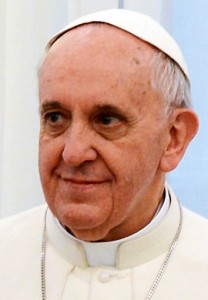 The Nicene Creed each week reminds us that when we invoke our Catholic (n.) faith, we declare unity with the church in its all-embracing oneness – our catholic (adj.) existence. As Father Robert Barron has made clear on occasion, the word catholic, traced back from the Greek, means something along the lines of “according to the whole.” Another translation would be closer to “throughout the whole.”
Although the word catholic is often used today to denote a church which is universal, there is some authority for the notion that the Church fathers, indoctrinated in Latin, intentionally chose the Greek word katholikos when crafting the Nicene Creed, instead of the more direct Latin word universalis, in order to highlight an important distinction.
Where a universal church might be thought of as one which has set exclusive boundaries between itself and the outside world (“constantly concerned about who is in and who is out” of that bounded universe), a katholikos church would ultimately be considered more
inclusive because it is to be found without separation from, but instead exists as part of the world and society. Those who talk about the church as in the world and not apart from it, follow in the pathway of the Second Vatican Council’s document Gaudium et Spes, “The Pastoral Constitution of the Church in the World.”
And so it is this more inclusive, second definition – katholikos – to which I now turn as I describe the The Armed Man concert I attended today at a Unitarian Congregation in Manhasset, New York – where I had the pleasure of listening to my wife participate in the chorus.
The Armed Man, A Mass For Peace, composed by Karl Jenkins in 1999 for the new millennium, was commissioned by the Royal Armouries Museum, and was dedicated to the victims of Kosovo.
It is
essentially an anti-war piece and is based on the Catholic Mass, which Jenkins combines with other sources . . . The Armed Man charts the growing menace of a descent into war, interspersed with moments of reflection; shows the horrors that war brings; and ends with the hope for peace in a new millennium, when “sorrow, pain and death can be overcome.”
Interestingly – and ironically – the piece was first released on September 10, 2001.
The piece incorporates an Islamic Call to Prayers, the writings of Rudyard Kipling, Alfred Lord Tennyson, Jonathan Swift, and Sankichi Toge (a poet and a survivor of the atomic bombing of Hiroshima), and includes excerpts from the Ordinary of the Mass, the Psalms, and Revelation.
It is, in short, a catholic prayer for peace, for it is a call for peace in this world, for all peoples, for all times, in all places.
From the words of Kryrie (familiar to all Catholics, Kyrie eleison, Christie eleison, Kyrie eleison – “Lord Have Mercy, Christ Have Mercy, Lord Have Mercy”), to Agnus Dei, to Sanctus, to Benedictus, one could easily feel transported in time, in place, and in being.
Yet, the piece connects us all.
For we are all part of every man, every woman, every child.
And we exist within every political sub-division, under every economic order, and throughout every era.
We are one.
While the concert I attended is not yet available on video, I’ve inserted just below a YouTube version of Kyrie that you might enjoy – The London Philharmonic Orchestra, 2009:
In light of the increasing troubles, wars and rumors of wars, the message of The Armed Man remains timely.
It is perhaps even more timely today than it was when it was composed in a pre-September 11 era.
If you are interested, here is a complete version available on YouTube – The Northeastern Spring Choir Concert, April 2014, Boston:
Peace
Photo Image Credit: Flyer from The Unitarian Universalist Congregation at Shelter Rock, Manhasset, NY
Previous Post
April 12, 2015
Favor and Knowledge Still Test Our Faith: 10 Biblical Examples
Next Post

April 25, 2015 5 Ways That The Church Is Really All About The "Yes"
Browse Our Archives
Select a Category Belief Changes Evil Faith Guest Post Jenner Laudato si Lawyers Life Prayer Priesthood Reviews Uncategorized
Select a Month April 2016 March 2016 February 2016 January 2016 December 2015 November 2015 October 2015 September 2015 August 2015 July 2015 June 2015 May 2015 April 2015 March 2015 February 2015 January 2015 December 2014 November 2014 October 2014 September 2014 August 2014
Follow Us!
TAKE THE
Religious Wisdom Quiz
What is the last book of the Old Testament?
Select your answer to see how you score.
Micah Malachi Zechariah Haggai
Related posts from Grace Pending


Learning To Trust In The Day, Trusting To...

Thomas Merton And Bad Theology: Purposefully Pitting Ourselves,...

Elizabeth Scalia's Latest Book: "Little Sins Mean A...
TRENDING AT PATHEOS Catholic

Rejecting Doom: Christian Hope And Human Action
Christianity is a religion of hope. We are to have hope and...

It’s What Comes From Within Which Matters
One of the most difficult things for us to understand is why...

Why I Choose the Eucharist Over the Sermon
Choose the Eucharist, Not the Sermon What are we supposed to get...

5 Design Elements Found in Spiritually Rooted Homes
Putting Spirituality Into Home Decor Our homes are more than our living...

Credo: A Story of God Told with the...
About 10 years ago, I began to imagine a personal "Credo" that...

The Anatomy of Divine Revelation in Catholic Thought
The claim that God has made Himself known to human beings is...
view all Catholic blogs
Ad-Free & Subscriber Log-In Subscription Support
- About Us
- 2026 Calendar
- Videos
- Podcasts
- Library of World Religions
- Faith In Media Tracker
- Advertise With Us
- Write for Us
- Privacy Policy
- Terms of Service
- Do Not Sell My Data
- Contact Us
- Radiant Digital
- Manage Newsletter Subscriptions
- Unsubscribe From Notifications
- Sitemap
Copyright 2008-2026, Patheos. All rights reserved.
Subscription Support Ad-Free & Subscriber Log-In
Follow Patheos