
BuddhistCatholicContemplativeEvangelicalGeneral ChristianHinduJewishLatter-day SaintMuslimNew VisionsProgressive Christian
Beliefs
- Buddhist
- Catholic
- Contemplative
- Evangelical
- General Christian
- Hindu
- Jewish
- Latter-day Saint
- More Voices
- Muslim
- New Visions
- Pagan
- Progressive Christian
Topics
- Religion News
- Food and Religion
- Sports and Religion
- Religious Art
- Religious Music and Entertainment
- Religious Events
- History and Religion
- Style and Religion
- Politics and Religion
- Women in Religion
- Recreation Outdoors and Religion
- Business Finance and Religion
- Careers Workplace and Religion
- Education and Religion
- Family Parenting and Religion
- Health Fitness and Religion
- Home and Religion
- Relationships and Religion
- Technology and Religion
- Travel and Religion
Columnists
- Buddhist Columnists
- Business Finance and Religion Columnists
- Careers Workplace and Religion Columnists
- Catholic Columnists
- Contemplative Columnists
- Education and Religion Columnists
- Evangelists Columnists
- Family Parenting and Religion Columnists
- General Christian Columnists
- Health Fitness and Religion Columnists
- Hindu Columnists
- History and Religion Columnists
- Home and Religion Columnists
- Jewish Columnists
- More Voices Columnists
- Latter Day Columnists
- Muslim Columnists
- New Visions Columnists
- Nonreligious Columnists
- Pagan Columnists
- Politics and Religion Columnists
- Progressive Columnists
- Recreation Outdoors and Religion Columnists
- Relationships and Religion Columnists
- Religion News Columnists
- Religious Art Columnists
- Religious Events Columnists
- Religious Music and Entertainment Columnists
- Sports and Religion Columnists
- Style and Religion Columnists
- Technology and Religion Columnists
- Travel and Religion Columnists
- Women in Religion Columnists
Resource Library
- 2026 Calendar
- Library of World Religions
- The 100 Most Holy Places on Earth
- Patheos Answers
- Podcasts
- Videos
- Faith Leaders Database
- Anglican Episcopalian
- Bahai
- Baptist
- Buddhism
- Christianity
- Confucianism
- Eastern Orthodoxy
- Hinduism
- Holiness and Pentecostal
- ISKCON
- Islam
- Judaism
- Lutheran
- Methodist
- The Church of Jesus Christ of Latter-day Saints
- New Age
- Paganism
- Presbytarian and Reformed
- Protestantism
- Religion Behind the Scenes
- Roman Catholic
- Scientology
- Shia Islam
- Sikhism
- Sufism
- Sunni Islam
- Taoism
- Zen
- See all religions
Research Tools
 Ad-Free & Subscriber Log-In Subscription Support
Ad-Free & Subscriber Log-In Subscription Support
Follow Patheos 

- Trending:
- Forgiveness
- |
- Marriage
- |
- Consciousness
- |
- Death Penalty
- |
- Election
- |
- Halloween
 Grace Pending
- Home
- Catholic
- One Observation On Lent: What Do We Worship?
One Observation On Lent: What Do We Worship?
Last updated on: February 21, 2015 at 10:27 pm by Tom Zampino
One Observation On Lent: What Do We Worship? 2015-02-21T22:27:46-05:00 Tom Zampino
Patheos Explore the world's faith through different perspectives on religion and spirituality! Patheos has the views of the prevalent religions and spiritualities of the world.
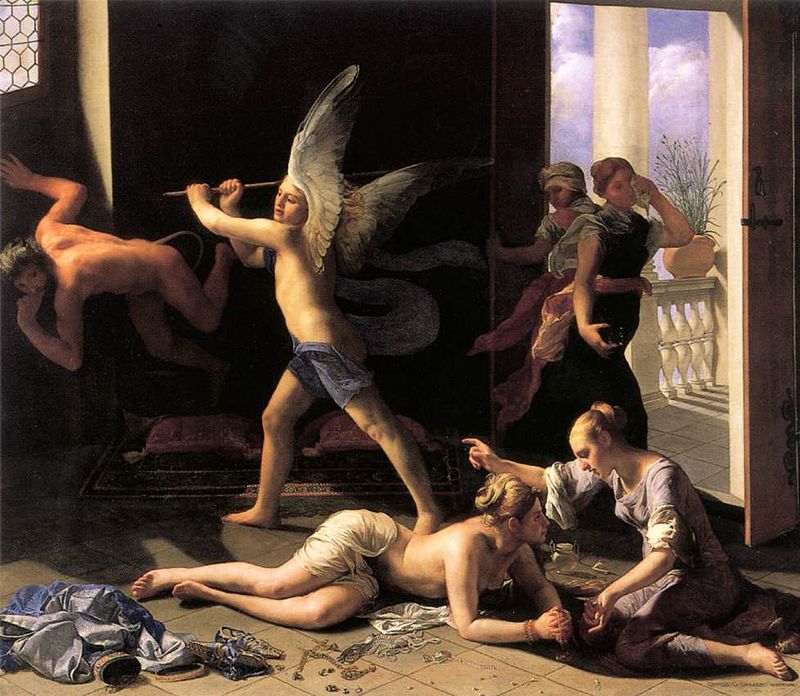
Well, the first of my 40 days of Lent didn’t start off on the right foot.
I mean, look, I didn’t even fast on Ash Wednesday (I forgot). I almost ate meat this Friday before I realized it at the last possible moment (wait, chicken is considered meat, right?). And I’ve yet to figure out how I’m going to dedicate this time to something – anything – that will help me better reflect upon what this period before Easter is supposed to be all about (but I’m thinking . . . I’m thinking).
Yes, I’m not quite there yet.
But I did run across something today that made me start to put a few things into perspective.
Things about the meaning of Lent. The meaning of Easter. The purpose of it all.
I was re-watching the first part of Father Robert Barron’s DVD series, Priest, Prophet, King.
Something that Father Barron spoke about that I must have missed the first time that I’d watched.
He talked first about worship – which is a word derived from the Old English worthship, meaning, in this context, the giving of ourselves over to the one thing that we most highly value, the one pursuit that we consider most important in or about our lives.
Father Barron then quoted famed Protestant theologian Paul Tillich:
All you really need to know about someone you can learn from asking one question: “What do you worship?”
The question really is: what are they giving themselves over to? What are they striving for? What are they spending their time praising?
I think that Tillich’s question is an important one to ask of ourselves.
For if we answer it honestly – which for some of us cannot be done without a good deal of quiet reflection – we may well discover things about ourselves that we’d prefer to leave hidden.
Someone once said that if you want to know what you most value, look at your checkbook and take note of where your money goes.
Well, that comes up just a bit short for two reasons.
First, because a lot of us no longer use checkbooks. Most, if not all, of our financial transactions are now electronic – but obviously the concept remains the same.
More to the point, however, such an examination tells us next to nothing about how we spend our time, or on what we spend our entire lives pursuing.
Obviously, except for a very small number of us, we all need to spend a great deal of time earning a living. Sleep, meals, and obligations caring for others – children, parents, even spouses – cut deeply into any remaining time we have.
But there’s an amount of time, whether it’s a couple of hours a week, or even just a handful of minutes during the day, that we have some control over. (If not, we may need to immediately re-prioritize because it probably means that we are thisclosetoburningout.)
So how do we spend our free time?
Watching mindless television? Getting lost in music? Reading, physical exercise, or some other activity that focuses our attention inward?
Now, none of these are inherently problematic in and of themselves, of course. Some even add a necessary balance that help us to both de-stress and renew.
But have we come to worship these things? Have we given ourselves fully over to them? Have they become so essential that they now compel our attention away from the things that truly matter? Have they become our false idols as Elizabeth Scalia has written about?
Pride. Massive ego. The unbridled pursuit of money. Extraordinary vanity. The casual, sometimes hateful, dismissal of the poor, the homeless, the infirm, the elderly.
Such things might well remind us of Hollywood, or Wall Street, or our throwaway culture.
But those aren’t the only places where such massively misdirected values have taken hold.
No. For these same values have now infiltrated our very hearts, our minds, our souls. And we must find them praiseworthy on some level – or else why would they flourish so?
Father Barron again:
Bad worship leads to a disintegration of the self. Right worship leads to a beautiful soul.
Everything within scripture, Father Barron teaches, is about leading us back to a world that existed prior to the fall. To a time when right praise alone dominated the landscape.
That’s what Cross is ultimately all about.
Keep this in mind though: God doesn’t need our right praise.
We do.
For, as Father Barron has observed, engaging in right praise aligns us to Him, it reconciles us to Him, and it works to restore the ideal state that existed prior to the fall (he refers to this as an “Edenizing”).
And, he suggests, it leads to a properly integrated self, a well-ordered soul, and, ultimately, a well-ordered cosmos.
Now, in the days of the temple, man’s attempt at reconciliation also required one other thing – some sort of sacrifice.
But then entered Calvary. And that upended history.
After Calvary, no sacrifice could ever be deemed more worthy. And none are ever again necessary.
So after the Cross, only one task remains. And this period of Lent is the perfect time during which to undertake it:
A setting aside of sufficient time each and every day to engage in right praise.
That is, sufficient time for prayer. For contemplation. For gratitude. For love.
In that way, we can finally begin to reorient our gaze, our thoughts, our words, our pursuits – yes, our worship – back to the Cross.
In so doing, we just may be privileged to, once again, wander back into the land of Eden.
And be met there with open arms.
Peace
Image Credit (Wikimedia Commons, Public Domain): Guido Cagnacci’s “Martha Rebuking Mary For Her Vanity“

Previous Post

February 16, 2015
The 21 Martyrs of ISIS
Next Post
March 1, 2015 Not Surprisingly, Francis Is Catholic
Browse Our Archives
Select a Category Belief Changes Evil Faith Guest Post Jenner Laudato si Lawyers Life Prayer Priesthood Reviews Uncategorized
Select a Month April 2016 March 2016 February 2016 January 2016 December 2015 November 2015 October 2015 September 2015 August 2015 July 2015 June 2015 May 2015 April 2015 March 2015 February 2015 January 2015 December 2014 November 2014 October 2014 September 2014 August 2014
Follow Us!
TAKE THE
Religious Wisdom Quiz
What Christian group believes in baptism for the dead?
Select your answer to see how you score.
Latter-day Saints Anglicans Presbyterians Pentecostals
Related posts from Grace Pending


Learning To Trust In The Day, Trusting To...

Thomas Merton And Bad Theology: Purposefully Pitting Ourselves,...

Elizabeth Scalia's Latest Book: "Little Sins Mean A...
TRENDING AT PATHEOS Catholic

Rejecting Doom: Christian Hope And Human Action
Christianity is a religion of hope. We are to have hope and...

It’s What Comes From Within Which Matters
One of the most difficult things for us to understand is why...

Why I Choose the Eucharist Over the Sermon
Choose the Eucharist, Not the Sermon What are we supposed to get...

5 Design Elements Found in Spiritually Rooted Homes
Putting Spirituality Into Home Decor Our homes are more than our living...

Credo: A Story of God Told with the...
About 10 years ago, I began to imagine a personal "Credo" that...

The Anatomy of Divine Revelation in Catholic Thought
The claim that God has made Himself known to human beings is...
view all Catholic blogs
Ad-Free & Subscriber Log-In Subscription Support
- About Us
- 2026 Calendar
- Videos
- Podcasts
- Library of World Religions
- Faith In Media Tracker
- Advertise With Us
- Write for Us
- Privacy Policy
- Terms of Service
- Do Not Sell My Data
- Contact Us
- Radiant Digital
- Manage Newsletter Subscriptions
- Unsubscribe From Notifications
- Sitemap
Copyright 2008-2026, Patheos. All rights reserved.
Subscription Support Ad-Free & Subscriber Log-In
Follow Patheos