
BuddhistCatholicContemplativeEvangelicalGeneral ChristianHinduJewishLatter-day SaintMuslimNew VisionsProgressive Christian
Beliefs
- Buddhist
- Catholic
- Contemplative
- Evangelical
- General Christian
- Hindu
- Jewish
- Latter-day Saint
- More Voices
- Muslim
- New Visions
- Pagan
- Progressive Christian
Topics
- Religion News
- Food and Religion
- Sports and Religion
- Religious Art
- Religious Music and Entertainment
- Religious Events
- History and Religion
- Style and Religion
- Politics and Religion
- Women in Religion
- Recreation Outdoors and Religion
- Business Finance and Religion
- Careers Workplace and Religion
- Education and Religion
- Family Parenting and Religion
- Health Fitness and Religion
- Home and Religion
- Relationships and Religion
- Technology and Religion
- Travel and Religion
Columnists
- Buddhist Columnists
- Business Finance and Religion Columnists
- Careers Workplace and Religion Columnists
- Catholic Columnists
- Contemplative Columnists
- Education and Religion Columnists
- Evangelists Columnists
- Family Parenting and Religion Columnists
- General Christian Columnists
- Health Fitness and Religion Columnists
- Hindu Columnists
- History and Religion Columnists
- Home and Religion Columnists
- Jewish Columnists
- More Voices Columnists
- Latter Day Columnists
- Muslim Columnists
- New Visions Columnists
- Nonreligious Columnists
- Pagan Columnists
- Politics and Religion Columnists
- Progressive Columnists
- Recreation Outdoors and Religion Columnists
- Relationships and Religion Columnists
- Religion News Columnists
- Religious Art Columnists
- Religious Events Columnists
- Religious Music and Entertainment Columnists
- Sports and Religion Columnists
- Style and Religion Columnists
- Technology and Religion Columnists
- Travel and Religion Columnists
- Women in Religion Columnists
Resource Library
- 2026 Calendar
- Library of World Religions
- The 100 Most Holy Places on Earth
- Patheos Answers
- Podcasts
- Videos
- Faith Leaders Database
- Anglican Episcopalian
- Bahai
- Baptist
- Buddhism
- Christianity
- Confucianism
- Eastern Orthodoxy
- Hinduism
- Holiness and Pentecostal
- ISKCON
- Islam
- Judaism
- Lutheran
- Methodist
- The Church of Jesus Christ of Latter-day Saints
- New Age
- Paganism
- Presbytarian and Reformed
- Protestantism
- Religion Behind the Scenes
- Roman Catholic
- Scientology
- Shia Islam
- Sikhism
- Sufism
- Sunni Islam
- Taoism
- Zen
- See all religions
Research Tools
 Ad-Free & Subscriber Log-In Subscription Support
Ad-Free & Subscriber Log-In Subscription Support
Follow Patheos 

- Trending:
- Forgiveness
- |
- Marriage
- |
- Consciousness
- |
- Death Penalty
- |
- Election
- |
- Halloween
 Biblical Words and World
- Home
- Evangelical
- Seek the Welfare of the City
Seek the Welfare of the City
Last updated on: July 5, 2018 at 5:18 am by Tom Hobson
Seek the Welfare of the City 2018-07-04T14:15:58-05:00 Tom Hobson
Patheos Explore the world's faith through different perspectives on religion and spirituality! Patheos has the views of the prevalent religions and spiritualities of the world.
Jeremiah 29:7 gives the exiles from Judah a message from God: “Seek the welfare of the city where I have sent you into exile.” Who would have imagined how faithfully those exiles would take that message and put it into action?
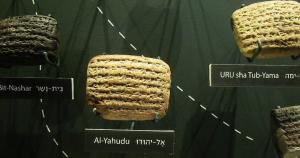
Tablets from the Babylonian town of Al-Yahudu (“City of Judah”) confirm that the Jews did what God told them to do in Jeremiah 29:7. Photo by עמית אבידן [CC BY-SA 4.0 (https://creativecommons.org/licenses/by-sa/4.0)], from Wikimedia Commons, cropped.
Recently, scholars have published a pile of clay tablets, written in Babylonian, but which contain business documents written by exiles from Judah with specific dates on them, from the period just after the Persians took over Babylon. (https://en.wikipedia.org/wiki/Al-Yahudu_Tablets) In the space of 75 years, these exiles from Judah have gone from ditch diggers to become landowners and moneylenders. We already knew about the Jewish business men known as the Murashu brothers of Nippur. But these new tablets are from a town called Al-Yahudu: “City of Judah.”
Who could have made this up? Here we have a town full of former exiles from Judah who have climbed the economic ladder, who have named their town after their homeland. They’re doing business in the Babylonian language, they’re using Babylonian contract law with each other, but their names are Hebrew names. You may not recognize the name Yarim-Yama, but what if I told you that was the Babylonian way to spell “Jeremiah”?
The tablets from Al-Yahudu are full of familiar names like Haggai, Zechariah, Zedekiah, Berechiah, Hananiah, Jonathan, and 70 other names that contain the name of the God of Israel! One of those names even takes the name Belshazzar and replaces the pagan god Bel with the sacred name of God! These Jews have made their home in Babylon, and are deeply involved in the welfare of Al-Yahudu and the other towns where they have settled.
Now, how did we get here? It all goes back to Jeremiah’s letter to the exiles in 594 BCE. Around the end of 595, there was an attempted coup in Babylon. Some of the kings who serve the king of Babylon meet to decide whether or not to pile on to the revolution. Zedekiah king of Judah decides not to rebel (yet!). So he sends a diplomatic letter to King Nebuchadnezzar to reassure him of his loyalty.
Meanwhile, God tells Jeremiah to write a letter to the exiles from Judah and mail it in the diplomatic mailbag. God tells Jeremiah to tell the exiles: Don’t join the revolution! And don’t listen to those so-called prophets in Babylon who say you’re going home in two years! What they’re telling you is not just a debatable opinion on which we can agree to disagree. It is a “falsehood.” “I did not send them,” says the Lord. Public opinion may have demanded the promise of a short exile, but God says that claim is a flat-out lie.
God then directs Jeremiah to give the exiles some revolutionary advice, advice that totally contradicts the position of the so-called prophets in Babylon. “Seek the welfare / well-being / shalom of the city where I have exiled you, and pray to the Lord on its behalf, for in its welfare, you will find your welfare.” Seek the shalom of the Babylonian regime who ripped you out of your homeland, and pray for their welfare and not for their downfall. (That’s a switch from the grief-stricken cry in Psalm 137, where the singer calls on God to pay Babylon back for what they did to Jerusalem.) Don’t join the revolution. Only as Babylon thrives will you thrive.
Jeremiah had been told by God not to pray for his own people. Jeremiah 7:16: “Therefore do not pray for this people, nor lift up a cry or prayer for them, nor make intercession to me; for I will not hear you.” (See also Jeremiah 11:14 and 14:11.) Don’t pray for your own people?! But now God commands them to pray for Babylon! That’s definitely love of enemies in action.
God is telling the readers of Jeremiah’s letter to settle down in Babylon, because they will die in exile. It will be 55 years before Cyrus conquers Babylon and tells the Jews they can go home. It will be another 15 years after that before they make the move. So: you can put your life on hold, which means you’ll be choosing to throw it all away. Or, you can choose to go on with your life and maximize your time on earth and make your home where God has placed you, even if it’s not where you would have chosen.
God insists that rebellion against Babylon is not an option. But God is not calling them to cave in and surrender, either. God calls for them to get involved in the welfare of Babylon.
Today, more than at any time since the days of ancient Rome, we who follow Jesus have become exiles in a world that gives God’s word the Italian salute. To some extent (like the exiles in Babylon), our own failures and mistakes may be part of the reason we are here. But we shouldn’t wait around expecting God to magically deliver us. Neither should we surrender and join the flash mob that has taken our society captive. Now is always the right time to get our act together and make the most of our time in exile, as Jeremiah calls his people to do.
Now is not the time to use the brute-force tactics of our captors. That didn’t work for the exiles of Jeremiah’s day, where the rebels ended up as the main course at Nebuchadnezzar’s barbecue. Neither did the early Christians overcome the Romans that way. What God calls us to do is what the Babylonian exiles did and what the early church did: seek the welfare of the city where God had sent them into exile, and pray to the Lord on its behalf. The Babylonian exiles became an indispensable part of their community. And in the process, they earned street credibility for Israel’s God.
Seeking the welfare of our community in a world that is hostile to our faith is not for the squeamish. It’s not for the half-hearted or cynical or bewildered or angry or dispirited. And we can’t let resistance or resignation or resentment get in our way. I don’t claim to be the veteran or the expert on how to do it. But I can see that God wants me to get over my attitude problem with being an exile and dig in for the long haul.
Just as Mao went on his famous “Long March” of exile before he came back to take over mainland China, God has assigned us to a “Long March” of our own. We may not live to see our efforts rewarded on earth. But God says, Don’t put your life on hold. Don’t wish for another life, where obedience is easy. Invest yourself in your place of exile, because in its welfare, you will find your welfare. God says in Jeremiah 29:11, “For surely I know the plans I have for you, says the Lord, plans for welfare and not for harm, to give you a future and a hope.”
Previous Post

July 2, 2018
First Century America
Next Post

July 9, 2018 Theology by the Polls: Ten Billion Flies Can't Be Wrong!
Browse Our Archives
Select a Category Biblical ethic Biblical word studies Biblical world Creation Historical Jesus Uncategorized
Select a Month July 2018 June 2018 May 2018 April 2018 March 2018 February 2018 January 2018 December 2017 November 2017 October 2017 September 2017 August 2017 July 2017
Follow Us!
TAKE THE
Religious Wisdom Quiz
What does 1 Peter say believers are being built into?
Select your answer to see how you score.
God's temple A spiritual house Living stones A holy nation
Books by This Author Books by Tom Hobson
Related posts from Biblical Words and World

Musonius Rufus, Women's Equality, and the New Testament


TRENDING AT PATHEOS Evangelical

Long before this Lectio Divina, Psalm 130 - the song - started...

What About the Trees? Another Living Parable
After I finished writing the last article about falling leaves as a...

Why Classical Education Is a Conversation, Not a...
Come and Read: Joy in Classical Education When I was a little...

Falling Leaves: A Living Parable on Letting Go
I’ve spent the vast majority of my life in the southeast corner...

Cornell University has received a great deal of negative publicity and intense...

Several years ago, I sat across from a couple whose marriage appeared...
view all Evangelical blogs
Ad-Free & Subscriber Log-In Subscription Support
- About Us
- 2026 Calendar
- Videos
- Podcasts
- Library of World Religions
- Faith In Media Tracker
- Advertise With Us
- Write for Us
- Privacy Policy
- Terms of Service
- Do Not Sell My Data
- Contact Us
- Radiant Digital
- Manage Newsletter Subscriptions
- Unsubscribe From Notifications
- Sitemap
Copyright 2008-2026, Patheos. All rights reserved.
Subscription Support Ad-Free & Subscriber Log-In
Follow Patheos