
BuddhistCatholicContemplativeEvangelicalGeneral ChristianHinduJewishLatter-day SaintMuslimNew VisionsProgressive Christian
Beliefs
- Buddhist
- Catholic
- Contemplative
- Evangelical
- General Christian
- Hindu
- Jewish
- Latter-day Saint
- More Voices
- Muslim
- New Visions
- Pagan
- Progressive Christian
Topics
- Religion News
- Food and Religion
- Sports and Religion
- Religious Art
- Religious Music and Entertainment
- Religious Events
- History and Religion
- Style and Religion
- Politics and Religion
- Women in Religion
- Recreation Outdoors and Religion
- Business Finance and Religion
- Careers Workplace and Religion
- Education and Religion
- Family Parenting and Religion
- Health Fitness and Religion
- Home and Religion
- Relationships and Religion
- Technology and Religion
- Travel and Religion
Columnists
- Buddhist Columnists
- Business Finance and Religion Columnists
- Careers Workplace and Religion Columnists
- Catholic Columnists
- Contemplative Columnists
- Education and Religion Columnists
- Evangelists Columnists
- Family Parenting and Religion Columnists
- General Christian Columnists
- Health Fitness and Religion Columnists
- Hindu Columnists
- History and Religion Columnists
- Home and Religion Columnists
- Jewish Columnists
- More Voices Columnists
- Latter Day Columnists
- Muslim Columnists
- New Visions Columnists
- Nonreligious Columnists
- Pagan Columnists
- Politics and Religion Columnists
- Progressive Columnists
- Recreation Outdoors and Religion Columnists
- Relationships and Religion Columnists
- Religion News Columnists
- Religious Art Columnists
- Religious Events Columnists
- Religious Music and Entertainment Columnists
- Sports and Religion Columnists
- Style and Religion Columnists
- Technology and Religion Columnists
- Travel and Religion Columnists
- Women in Religion Columnists
Resource Library
- 2026 Calendar
- Library of World Religions
- The 100 Most Holy Places on Earth
- Patheos Answers
- Podcasts
- Videos
- Faith Leaders Database
- Anglican Episcopalian
- Bahai
- Baptist
- Buddhism
- Christianity
- Confucianism
- Eastern Orthodoxy
- Hinduism
- Holiness and Pentecostal
- ISKCON
- Islam
- Judaism
- Lutheran
- Methodist
- The Church of Jesus Christ of Latter-day Saints
- New Age
- Paganism
- Presbytarian and Reformed
- Protestantism
- Religion Behind the Scenes
- Roman Catholic
- Scientology
- Shia Islam
- Sikhism
- Sufism
- Sunni Islam
- Taoism
- Zen
- See all religions
Research Tools
 Ad-Free & Subscriber Log-In Subscription Support
Ad-Free & Subscriber Log-In Subscription Support
Follow Patheos 

- Trending:
- Forgiveness
- |
- Marriage
- |
- Consciousness
- |
- Death Penalty
- |
- Election
- |
- Halloween
 Biblical Words and World
- Home
- Evangelical
- What’s the Difference Between Spirit and Soul?
What’s the Difference Between Spirit and Soul?
Last updated on: July 4, 2018 at 3:49 pm by Tom Hobson
What’s the Difference Between Spirit and Soul? 2018-07-04T15:49:02-05:00 Tom Hobson
Patheos Explore the world's faith through different perspectives on religion and spirituality! Patheos has the views of the prevalent religions and spiritualities of the world.
Pentecost is the perfect time to explore the use of the word “spirit” in the New Testament. Our journey will prove to be more complicated than we may have imagined, but at least we can sort out where the meaning of the word is clear, and where the word’s meaning is too debatable to insist that we always know exactly which sense is intended.
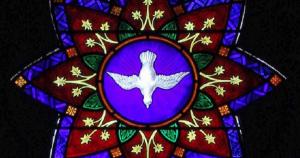
“Holy Spirit 31.” Photo by Waiting For the Word. Attribution 2.0 Generic (CC BY 2.0) via Wikimedia Commons, cropped.
The Greek word pneuma comes from the verb pneō, “to blow,” from which we get the triple meaning “wind / breath / spirit,” the meanings that Jesus plays on in John 3:8: “The pneuma blows where it wills, and you hear the sound of it, but do not know where it comes from or where it goes. So it is with everyone who is born of the pneuma.”
Is it the “breath” or “spirit” of life from God that is meant in Revelation 11:11 and 13:15? Here we see that the word can be notoriously imprecise, because sometimes it simply refers to elements of the non-material sphere, but sometimes it refers to the non-material element in a human personality or an animal, and sometimes it refers to specific personal beings. When the risen Jesus appears in Luke 24:37-39, “spirit” means “ghost” of a dead person (see also 1 Peter 3:19).
In 2 Thessalonians 2:8, we are told that Jesus will destroy the Lawless One with the “breath” of his mouth. But when he dies on the cross, and we are told that he gave up his pneuma (Matthew 27:50, John 19:30), which could mean either that his life functions quit, or that the non-material part of him departed. The “spirit” is what one surrenders when one dies (Luke 23:46, Acts 7:59), and the return of which constitutes resurrection (Luke 8:55). In John 11:33, the “spirit” is the seat of one’s emotions: Jesus is “deeply disturbed in the spirit.” (We find a similar use in Mark 2:8 and 8:12, John 13:21, and 2 Corinthians 2:13.)
While a psychē always belongs to a body, or once did so, spirits are often disembodied, and must enter a body from outside thereof. Both angels and demons may be described as “spirits.” 1 John 4:1 says “Test the spirits, whether they are from God.” Paul writes in 2 Thessalonians 2:2 that believers should not be misled by a “spirit” which claims that the day of the Lord has already come. Paul also complains in 2 Corinthians 11:4 that his readers are too willing to receive a different “spirit” from the one they received earlier. That’s why one of the spiritual gifts in 1 Corinthians 12:10 is the ability to distinguish between spirits.
By contrast with pneuma, the Hebrew Bible term ruach is only used twice in the plural to refer to personal beings; the other seven plural uses are references to the “four winds.” Ruach is seen in Ezekiel 37:9 to have the same triple potential meaning as pneuma. We have a similar puzzle in both languages in Genesis 1:2: was it the “Spirit,” “wind,” or “breath” of God that was hovering over the waters of creation?
“Spirit” also has a figurative meaning. “Blessed are the poor in [the realm of] spirit.” (Matthew 5:3) Galatians 6:1 speaks of correcting a fallen believer “in a spirit of gentleness” (same expression in 1 Corinthians 4:20). The same figurative meaning is found in Revelation 19:10, “The testimony of Jesus is the spirit of prophecy.” Several times in Revelation (1:10, 4:1, 17:3, 21:10), John says he was literally “in spirit.” The lack of the Greek article “the” when John uses this expression may or may not point us to the meaning “in the spirit world” rather than under strong influence of the divine Spirit. Similarly, Paul tells the Colossians that although he is absent in body, he is with them “in spirit” (Colossians 2:5 – see also 1 Corinthians 5:3-5).
Sometimes soul and spirit are used as synonyms (Luke 1:46-47), but sometimes they clearly speak of different components of a human being. “May your spirit and soul and body be kept sound and blameless” (1 Thessalonians 5:23) – how do we distinguish the first two? What is the “dividing point between soul and spirit” in Hebrews 4:12? Hebrews may be referring to “spirit” as the presence of the Holy Spirit inside a believer, but if Paul means the Holy Spirit in his prayer for the Thessalonians, why or how does the Spirit within them need to be kept “sound and blameless”? Perhaps he means not to grieve or drive the Spirit out of their lives. (Ephesians 4:30)
When New Testament writers intend to contrast the two dimensions, they always contrast “spirit” and body rather than “soul” and body. James 2:26 states that “the body without the spirit is dead.” In 1 Corinthians 7:34, the unmarried woman worries about “how to be holy in body and spirit,” while in 2 Corinthians 7:1, Paul urges his readers to put away “every defilement of body and spirit.” Jesus says to his slumbering followers in Gethsemane, “The spirit is willing, but the flesh is weak.” (Matthew 26:41)
God is Spirit (John 4:24). What that means: God does not have a material body. Mormon authorities would disagree. In the official Latter Day Saint scriptures, Doctrine and Covenants 130:22 states that “The Father has a body of flesh and bones as tangible as man’s.” This belief is central to the whole of LDS theology. Our belief that God is Spirit and not flesh (which makes the Incarnation of Jesus so astounding) makes a huge difference. The fact that God is Spirit is one of the foundational attributes of God.
The Hebrew scriptures speak of the “Spirit of God.” Moses yearns that God would put his Spirit upon all of God’s people (Numbers 11:29). God then promises through the prophet Joel to pour out his Spirit upon all flesh (Joel 2:28). But the New Testament names this “spirit” as the Holy Spirit, in a way probably not intended in the few such occurrences of this expression in the Hebrew Bible (Psalm 51:11). The pouring out of this Spirit on all believers, not just a privileged few, is the fulfillment of Joel’s prophecy that we celebrate at Pentecost.
Ultimately, the New Testament brings us to understand that God’s Spirit is not merely an aspect of God like the voice or mind of God, but is also worthy of worship, not as another deity, but as one of three persons who together are one God (Matthew 28:19, 2 Corinthians 13:13). The Holy Spirit is the One through whom God and Jesus dwell within every believer. The Holy Spirit is the One who empowers us to live a holy life (Romans 8:1-13), and who leads us into all truth (John 16:13). No one ever set out to invent this triune understanding of God, but the whole of God’s word, inspired by God’s Spirit, compelled us to this conclusion.
Previous Post

May 14, 2018
Soul or Life? The Double Meaning of Psychē
Next Post

May 21, 2018 Back to the Second Century: Echoes of Modern Heresy
Browse Our Archives
Select a Category Biblical ethic Biblical word studies Biblical world Creation Historical Jesus Uncategorized
Select a Month July 2018 June 2018 May 2018 April 2018 March 2018 February 2018 January 2018 December 2017 November 2017 October 2017 September 2017 August 2017 July 2017
Follow Us!
TAKE THE
Religious Wisdom Quiz
On the day of God, what is to become of the earth?
Select your answer to see how you score.
It will freeze It will be burned up It will continue as it always has It will explode
Books by This Author Books by Tom Hobson
Related posts from Biblical Words and World

Words I Never Heard in the Bible

Be Ye Perfect? What Does Jesus Mean?

Soul or Life? The Double Meaning of Psychē

Iron Age Super Mom: Woman of Valor
TRENDING AT PATHEOS Evangelical

How the author of the world's best hymn...
I've been working with John Newton for a while now. This makes...

Long before this Lectio Divina, Psalm 130 - the song - started...

What About the Trees? Another Living Parable
After I finished writing the last article about falling leaves as a...

Why Classical Education Is a Conversation, Not a...
Come and Read: Joy in Classical Education When I was a little...

Falling Leaves: A Living Parable on Letting Go
I’ve spent the vast majority of my life in the southeast corner...

Cornell University has received a great deal of negative publicity and intense...
view all Evangelical blogs
Ad-Free & Subscriber Log-In Subscription Support
- About Us
- 2026 Calendar
- Videos
- Podcasts
- Library of World Religions
- Faith In Media Tracker
- Advertise With Us
- Write for Us
- Privacy Policy
- Terms of Service
- Do Not Sell My Data
- Contact Us
- Radiant Digital
- Manage Newsletter Subscriptions
- Unsubscribe From Notifications
- Sitemap
Copyright 2008-2026, Patheos. All rights reserved.
Subscription Support Ad-Free & Subscriber Log-In
Follow Patheos