
BuddhistCatholicContemplativeEvangelicalGeneral ChristianHinduJewishLatter-day SaintMuslimNew VisionsProgressive Christian
Beliefs
- Buddhist
- Catholic
- Contemplative
- Evangelical
- General Christian
- Hindu
- Jewish
- Latter-day Saint
- More Voices
- Muslim
- New Visions
- Pagan
- Progressive Christian
Topics
- Religion News
- Food and Religion
- Sports and Religion
- Religious Art
- Religious Music and Entertainment
- Religious Events
- History and Religion
- Style and Religion
- Politics and Religion
- Women in Religion
- Recreation Outdoors and Religion
- Business Finance and Religion
- Careers Workplace and Religion
- Education and Religion
- Family Parenting and Religion
- Health Fitness and Religion
- Home and Religion
- Relationships and Religion
- Technology and Religion
- Travel and Religion
Columnists
- Buddhist Columnists
- Business Finance and Religion Columnists
- Careers Workplace and Religion Columnists
- Catholic Columnists
- Contemplative Columnists
- Education and Religion Columnists
- Evangelists Columnists
- Family Parenting and Religion Columnists
- General Christian Columnists
- Health Fitness and Religion Columnists
- Hindu Columnists
- History and Religion Columnists
- Home and Religion Columnists
- Jewish Columnists
- More Voices Columnists
- Latter Day Columnists
- Muslim Columnists
- New Visions Columnists
- Nonreligious Columnists
- Pagan Columnists
- Politics and Religion Columnists
- Progressive Columnists
- Recreation Outdoors and Religion Columnists
- Relationships and Religion Columnists
- Religion News Columnists
- Religious Art Columnists
- Religious Events Columnists
- Religious Music and Entertainment Columnists
- Sports and Religion Columnists
- Style and Religion Columnists
- Technology and Religion Columnists
- Travel and Religion Columnists
- Women in Religion Columnists
Resource Library
- 2026 Calendar
- Library of World Religions
- The 100 Most Holy Places on Earth
- Patheos Answers
- Podcasts
- Videos
- Faith Leaders Database
- Anglican Episcopalian
- Bahai
- Baptist
- Buddhism
- Christianity
- Confucianism
- Eastern Orthodoxy
- Hinduism
- Holiness and Pentecostal
- ISKCON
- Islam
- Judaism
- Lutheran
- Methodist
- The Church of Jesus Christ of Latter-day Saints
- New Age
- Paganism
- Presbytarian and Reformed
- Protestantism
- Religion Behind the Scenes
- Roman Catholic
- Scientology
- Shia Islam
- Sikhism
- Sufism
- Sunni Islam
- Taoism
- Zen
- See all religions
Research Tools
 Ad-Free & Subscriber Log-In Subscription Support
Ad-Free & Subscriber Log-In Subscription Support
Follow Patheos 

- Trending:
- Forgiveness
- |
- Marriage
- |
- Consciousness
- |
- Death Penalty
- |
- Election
- |
- Halloween
 Biblical Words and World
- Home
- Evangelical
- Iron Age Super Mom: Woman of Valor
Iron Age Super Mom: Woman of Valor
Last updated on: July 4, 2018 at 3:44 pm by Tom Hobson
Iron Age Super Mom: Woman of Valor 2018-07-04T15:44:19-05:00 Tom Hobson
Patheos Explore the world's faith through different perspectives on religion and spirituality! Patheos has the views of the prevalent religions and spiritualities of the world.
“A woman of valor, who can find?” (Proverbs 31:10) The Hebrew word ḥayil (pronounce with a rough h like in “Hanukkah”) used in this verse is a rich value word, used 245 times in the Hebrew Bible. It is a word so broad that its meaning must be dictated by its context. It can mean monetary value. It can refer to the values of physical or military strength. It can mean “valor” in the sense of moral or personal worth.
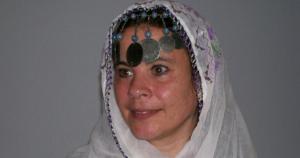
The great theologian Catherine Hobson exemplifies the woman of valor/worth in Proverbs 31. Photo: Tom Hobson.
The Iron Age Super Mom of Proverbs 31 is called a woman of ḥayil. The rest of that chapter spells out all the ways in which she is deemed to be a woman of valor or worth: brains, managerial skill, physical fitness, economic savvy, industriousness, moral wisdom, compassion, and love. At the end of the chapter (31:29), we find the expression to “do valiantly” (‘asah ḥayil), found also in places such as Numbers 24:18 (subject: Israel) and Psalm 118:15 (subject: God). Iron Age Super Mom does more “valiantly” than any woman who can compare to her.
Ruth has a similar reputation among Bethlehem’s leaders as a “woman of ḥayil” (Ruth 3:11, translated as “worthy” or “virtuous”); she is admired not only for her unselfish devotion to Naomi, but her courage to follow Israel’s God and to trust God to provide, while being willing to work hard to make it happen. Boaz himself is described as a gibbor- ḥayil (Ruth 2:1), which means “warrior of valor” throughout Joshua and Judges, but here in a peaceful context is usually translated “man of great wealth.” Likewise, in Ruth 4:11, Naomi’s friends’ wish for Boaz and Ruth is that they do/make ḥayil (prosper, achieve wealth, or “do valiantly”, the same phrase as in Proverbs 31:29).
Ḥayil is often used as a military word. We find dozens of references to gibbore- ḥayil (warriors of valor) and anshe- ḥayil (men of valor), where the emphasis is on military might and courage. In dozens of additional verses, the word means “army”, a collection of power or force (Exodus 14:4 – “Pharaoh and all his ḥayil”). In 2 Chronicles 14:8, the word is used two different ways: once to mean “army,” and once to mean “valor” (!). In Psalm 33:17, we are told that a war horse cannot save by the greatness of its ḥayil. And of course, God can wield ḥayil that can overpower any human military power (Psalm 59:11).
Less often, ḥayil is used to mean other kinds of strength. In Genesis 47:6, Pharaoh says to Jacob about his sons, “If you have any men of ḥayil (competence or capability?) among them, put them in charge of my livestock.” Similarly, Moses is advised to find men of ḥayil capable to decide cases that do not require his personal attention, a job that would not require muscle (see also 1 Chronicle 9:13). In a different sense, Isaiah 5:22 jokes about those who are “men of ḥayil (= heroes) in mixing malt liquor.”
The expression “to gird on ḥayil” is unspecific as to whether it refers to strength, courage, endurance, or what exactly (1 Samuel 2:4; Psalm 18:33, 18:40). Similarly unspecific are Habakkuk 3:19, “YHWH my Lord is my ḥayil,” and the famous line in Zechariah 4:16, “Not by ḥayil, not by koḥ (physical might), but by my Spirit, says the Lord.” It is likewise unclear what kind of strength is meant where King Lemuel’s mother says to her son, “Give not your ḥayil to women” (Proverbs 31:4). Joel 2:22 even tells us that the fig tree and the vine shall yield their ḥayil (richness or fruitfulness?).
But there are specific verses where ḥayil undoubtedly means “wealth,” particularly in Job and in poetry. In 1 Kings 10:2, the Queen of Sheba comes with “a very great ḥayil.” Is this an army, or is it more likely a display or collection of wealth? The author goes on to presumably specify the answer: “camels bearing spices and very much gold and precious stones.” When Zechariah predicts that the ḥayil of all nations shall be gathered, he specifies wealth as what he means: “gold, silver, and garments in great abundance” (Zechariah 14:14). In Deuteronomy 8:17-18, Moses warns Israel not to say “the might of my own hand has earned me this ḥayil,” because God is “the one who gives you the power to earn ḥayil.” Psalm 62:10: “If ḥayil increases, do not set your heart on it.”
Watch what ḥayil is paired with, if you want proof as to where ḥayil means “wealth.” It is paired with “treasure” in Isaiah 30:6, Jeremiah 15:13 and 17:3, it is paired with “profit/gain” in Micah 4:13, it is paired with “spoil/plunder” in Isaiah 8:4, and it is paired with “abundance of riches” in Psalm 49:6. Zephaniah 1:13 says “their ḥayil shall become plunder.” Psalm 49:11 declares that people “die and leave their ḥayil to others.” “Wealth” is the meaning that makes the most sense in these examples.
Ḥayil – a most versatile word, the quintessential value word, covering a wide range of both what we humans value, and of what God values! It is a fitting adjective to describe Iron Age Super Mom, and all who are like her today. May God grant us to value what God values in Scripture: courage and strength to withstand dangerous threats, wealth (where dollars can provide for tangible human needs), heroic love, and faith to ultimately trust in God rather than in fallible earthly weapons or resources.
Previous Post

May 7, 2018
Jesus' Ascension: What Difference Does It Make?
Next Post

May 14, 2018 Soul or Life? The Double Meaning of Psychē
Browse Our Archives
Select a Category Biblical ethic Biblical word studies Biblical world Creation Historical Jesus Uncategorized
Select a Month July 2018 June 2018 May 2018 April 2018 March 2018 February 2018 January 2018 December 2017 November 2017 October 2017 September 2017 August 2017 July 2017
Follow Us!
TAKE THE
Religious Wisdom Quiz
What is the correct order of the seven churches addressed in Revelation?
Select your answer to see how you score.
Smyrna, Ephesus, Thyatira, Pergamum, Philadelphia, Sardis, Laodicea Ephesus, Smyrna, Pergamum, Thyatira, Sardis, Philadelphia, Laodicea Laodicea, Philadelphia, Sardis, Thyatira, Pergamum, Smyrna, Ephesus Ephesus, Pergamum, Smyrna, Sardis, Thyatira, Laodicea, Philadelphia
Books by This Author Books by Tom Hobson
Related posts from Biblical Words and World

Words I Never Heard in the Bible

Be Ye Perfect? What Does Jesus Mean?
What's the Difference Between Spirit and Soul?

Soul or Life? The Double Meaning of Psychē
TRENDING AT PATHEOS Evangelical

How the author of the world's best hymn...
I've been working with John Newton for a while now. This makes...

Long before this Lectio Divina, Psalm 130 - the song - started...

What About the Trees? Another Living Parable
After I finished writing the last article about falling leaves as a...

Why Classical Education Is a Conversation, Not a...
Come and Read: Joy in Classical Education When I was a little...

Falling Leaves: A Living Parable on Letting Go
I’ve spent the vast majority of my life in the southeast corner...

Cornell University has received a great deal of negative publicity and intense...
view all Evangelical blogs
Ad-Free & Subscriber Log-In Subscription Support
- About Us
- 2026 Calendar
- Videos
- Podcasts
- Library of World Religions
- Faith In Media Tracker
- Advertise With Us
- Write for Us
- Privacy Policy
- Terms of Service
- Do Not Sell My Data
- Contact Us
- Radiant Digital
- Manage Newsletter Subscriptions
- Unsubscribe From Notifications
- Sitemap
Copyright 2008-2026, Patheos. All rights reserved.
Subscription Support Ad-Free & Subscriber Log-In
Follow Patheos