
BuddhistCatholicContemplativeEvangelicalGeneral ChristianHinduJewishLatter-day SaintMuslimNew VisionsProgressive Christian
Beliefs
- Buddhist
- Catholic
- Contemplative
- Evangelical
- General Christian
- Hindu
- Jewish
- Latter-day Saint
- More Voices
- Muslim
- New Visions
- Pagan
- Progressive Christian
Topics
- Religion News
- Food and Religion
- Sports and Religion
- Religious Art
- Religious Music and Entertainment
- Religious Events
- History and Religion
- Style and Religion
- Politics and Religion
- Women in Religion
- Recreation Outdoors and Religion
- Business Finance and Religion
- Careers Workplace and Religion
- Education and Religion
- Family Parenting and Religion
- Health Fitness and Religion
- Home and Religion
- Relationships and Religion
- Technology and Religion
- Travel and Religion
Columnists
- Buddhist Columnists
- Business Finance and Religion Columnists
- Careers Workplace and Religion Columnists
- Catholic Columnists
- Contemplative Columnists
- Education and Religion Columnists
- Evangelists Columnists
- Family Parenting and Religion Columnists
- General Christian Columnists
- Health Fitness and Religion Columnists
- Hindu Columnists
- History and Religion Columnists
- Home and Religion Columnists
- Jewish Columnists
- More Voices Columnists
- Latter Day Columnists
- Muslim Columnists
- New Visions Columnists
- Nonreligious Columnists
- Pagan Columnists
- Politics and Religion Columnists
- Progressive Columnists
- Recreation Outdoors and Religion Columnists
- Relationships and Religion Columnists
- Religion News Columnists
- Religious Art Columnists
- Religious Events Columnists
- Religious Music and Entertainment Columnists
- Sports and Religion Columnists
- Style and Religion Columnists
- Technology and Religion Columnists
- Travel and Religion Columnists
- Women in Religion Columnists
Resource Library
- 2026 Calendar
- Library of World Religions
- The 100 Most Holy Places on Earth
- Patheos Answers
- Podcasts
- Videos
- Faith Leaders Database
- Anglican Episcopalian
- Bahai
- Baptist
- Buddhism
- Christianity
- Confucianism
- Eastern Orthodoxy
- Hinduism
- Holiness and Pentecostal
- ISKCON
- Islam
- Judaism
- Lutheran
- Methodist
- The Church of Jesus Christ of Latter-day Saints
- New Age
- Paganism
- Presbytarian and Reformed
- Protestantism
- Religion Behind the Scenes
- Roman Catholic
- Scientology
- Shia Islam
- Sikhism
- Sufism
- Sunni Islam
- Taoism
- Zen
- See all religions
Research Tools
 Ad-Free & Subscriber Log-In Subscription Support
Ad-Free & Subscriber Log-In Subscription Support
Follow Patheos 

- Trending:
- Forgiveness
- |
- Marriage
- |
- Consciousness
- |
- Death Penalty
- |
- Election
- |
- Halloween
 Biblical Words and World
- Home
- Evangelical
- Seneca: As Christian as a Pagan Stoic Could Get
Seneca: As Christian as a Pagan Stoic Could Get
Last updated on: April 16, 2018 at 5:30 am by Tom Hobson
Seneca: As Christian as a Pagan Stoic Could Get 2018-04-14T16:44:29-05:00 Tom Hobson
Patheos Explore the world's faith through different perspectives on religion and spirituality! Patheos has the views of the prevalent religions and spiritualities of the world.
The Stoic philosopher Seneca echoes so many of the teachings of Paul that he was about as Christian as a pagan Stoic could get.
Seneca is born in Spain around 4 or 5 BCE, and dies in 65 AD as a victim of the same tyrant who executed Paul. The two men probably know about each other, but we have no evidence that they ever met or corresponded, although there are a handful of probable forgeries of letters exchanged between the two. Let’s take a look at the echoes of Paul in Seneca’s writings.
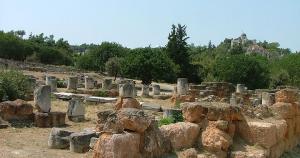
Photo by Dorieo [CC BY-SA 3.0 (https://creativecommons.org/licenses/by-sa/3.0)], from Wikimedia Commons.
Seneca echoes Paul’s teaching that “all have sinned” (Romans 3:23) and that no one is free from the influence of evil. Seneca says, “No man is good without God.” (Epistle 41.2) “Wicked we are, wicked we have been, and (I regret to add) shall always be…Homicides, tyrants, thieves, adulterers, robbers, sacrilegious…they are also covetous and spiteful and cowardly…all are self-seeking, all are ungodly…” (Beneficiis 1.10) “We are all wicked. And so each man will find in his own breast the fault he censures in another.” (Ira 3.26.4) “I am sunk deep in vice of every kind.” (Vita beata 17.3,4) “Every vice exists in every man, though every vice is not prominent in each.” (Beneficiis 4.27) “Man is a weakling and degenerate who struggles and maligns the universe and would rather reform the gods than reform himself.” (Epistle 107.2)
Throughout his essay On Providence, Seneca talks about God as the loving but stern parent or the demanding army commander who tries to bring out the best in humans through suffering. He writes, “How can I know with what spirit you would confront poverty, when you wallow in wealth?…How do I know how serenely you would handle bereavement when all the children you have raised are present to your sight?…So God hardens, scrutinizes, and disciplines those he approves and loves, but those he appears to indulge and spare, he is only keeping soft for disasters to come.” (Providentia 4.5–7) The similarity here to Hebrews 12:5-11, a non-Pauline passage, is hard to miss.
Seneca has much to say about God and about ethics that sounds almost as if it could have been borrowed from Paul. He preaches about following the gods’ example. (Vita beata 15.7) He says, “Temples are not to be built to God of stones piled on high. He must be consecrated in the heart of each man.” (Fragment 123) Again, “You shall not form him of silver and gold; a true likeness of God cannot be molded of this material.” (Epistle 31:11) Seneca even speaks of “a holy spirit residing in us, the guardian and observer of our good and evil deeds.” (Epistle 41.1)
But as Lightfoot correctly observes, the resemblance to Christian theology is superficial. Seneca, he argues, like other true Stoics, is a pantheist. Seneca’s references to God (singular) are to the god all around and within. He says, “God is near you, with you, inside you.” (Epistle 41:1) To Seneca, God is also another name for Nature: “For what else is Nature but God and the Divine Reason…?” You can call him Jupiter, says Seneca, you can call him Fate, any name that refers to some “force that operates in the domain of heaven” (Beneficiis 4.7.1, 2).
Again, “there is no Nature without God, nor God without Nature, but both are the same thing, they differ only in their function.” (Beneficiis 4.8.2) Again, he speaks of “the great creator of the universe, whoever he may be, whether an all-powerful God, or incorporeal Reason contriving vast works, or divine Spirit pervading all things…or Fate and an unalterable sequence of causes…” (Helvetia 8.3). In one letter, Seneca is not sure “whether Fate binds us down by an inexorable law, or whether God as arbiter of the universe has arranged everything, or whether Chance drives and tosses human affairs,” but whichever it may be, we must “obey God” and/or “endure Chance” (Epistle 16.4, 5, 6).
Seneca’s references to the gods (plural) are to beings who are no better or worse than us: “The only difference between the good man and God is the matter of time,” that is, the gods live longer than humans do (Providentia 1.5; compare Epistle 53.11). “In this you may outstrip God: he is exempt from enduring evil, while you are superior to it.” (Providentia 6.6) In this same essay, Seneca writes that “the same necessity” by which our lives are ruled “also binds the gods. One unchangeable course bears along the affairs of men and gods alike. Although the great creator and ruler of the universe himself wrote the decrees of Fate, yet he follows them. He obeys forever, he decreed but once.” (Providentia 5.8).
And as Lightfoot further observes, Seneca and Tertullian might use the same term peccatum, Seneca and Paul may both say “All have sinned,” but they cannot mean the same. Seneca is not speaking of obedience to a personal God, but accepting whatever hardships the universe bestows on us. “This is the sacred obligation by which we are bound – to submit to the human lot, and not to be disquieted by those things which we have no power to avoid…to obey God is freedom.” (Vita beata 15.6, 7) “It is our aim to live according to Nature, and to follow the example of the gods.” (Ibid.)
In Lightfoot’s opinion, “It appears that Christian parallels in Seneca’s writings become more frequent as he advances in life.” Lightfoot cites de Providentia, de Otio, de Vita beata, de Beneficiis, and the Epistolae Morales as Seneca’s works that most closely resemble Christian belief.
Will we see Seneca in heaven? It all depends on what he did with Jesus at the last. If Jesus had personally met Seneca during his time on earth, I can picture Jesus saying to him, “You are not far from the kingdom of God.”
Previous Post

April 12, 2018
Epicureans: Arch-Enemies of Biblical Faith
Next Post
April 19, 2018 Cynics: Simple Lifestyle Freaks of the New Testament World
Browse Our Archives
Select a Category Biblical ethic Biblical word studies Biblical world Creation Historical Jesus Uncategorized
Select a Month July 2018 June 2018 May 2018 April 2018 March 2018 February 2018 January 2018 December 2017 November 2017 October 2017 September 2017 August 2017 July 2017
Follow Us!
TAKE THE
Religious Wisdom Quiz
On the day of God, what is to become of the earth?
Select your answer to see how you score.
It will freeze It will be burned up It will continue as it always has It will explode
Books by This Author Books by Tom Hobson
Related posts from Biblical Words and World

Musonius Rufus, Women's Equality, and the New Testament



TRENDING AT PATHEOS Evangelical

How the author of the world's best hymn...
I've been working with John Newton for a while now. This makes...

Long before this Lectio Divina, Psalm 130 - the song - started...

What About the Trees? Another Living Parable
After I finished writing the last article about falling leaves as a...

Why Classical Education Is a Conversation, Not a...
Come and Read: Joy in Classical Education When I was a little...

Falling Leaves: A Living Parable on Letting Go
I’ve spent the vast majority of my life in the southeast corner...

Cornell University has received a great deal of negative publicity and intense...
view all Evangelical blogs
Ad-Free & Subscriber Log-In Subscription Support
- About Us
- 2026 Calendar
- Videos
- Podcasts
- Library of World Religions
- Faith In Media Tracker
- Advertise With Us
- Write for Us
- Privacy Policy
- Terms of Service
- Do Not Sell My Data
- Contact Us
- Radiant Digital
- Manage Newsletter Subscriptions
- Unsubscribe From Notifications
- Sitemap
Copyright 2008-2026, Patheos. All rights reserved.
Subscription Support Ad-Free & Subscriber Log-In
Follow Patheos