
BuddhistCatholicContemplativeEvangelicalGeneral ChristianHinduJewishLatter-day SaintMuslimNew VisionsProgressive Christian
Beliefs
- Buddhist
- Catholic
- Contemplative
- Evangelical
- General Christian
- Hindu
- Jewish
- Latter-day Saint
- More Voices
- Muslim
- New Visions
- Pagan
- Progressive Christian
Topics
- Religion News
- Food and Religion
- Sports and Religion
- Religious Art
- Religious Music and Entertainment
- Religious Events
- History and Religion
- Style and Religion
- Politics and Religion
- Women in Religion
- Recreation Outdoors and Religion
- Business Finance and Religion
- Careers Workplace and Religion
- Education and Religion
- Family Parenting and Religion
- Health Fitness and Religion
- Home and Religion
- Relationships and Religion
- Technology and Religion
- Travel and Religion
Columnists
- Buddhist Columnists
- Business Finance and Religion Columnists
- Careers Workplace and Religion Columnists
- Catholic Columnists
- Contemplative Columnists
- Education and Religion Columnists
- Evangelists Columnists
- Family Parenting and Religion Columnists
- General Christian Columnists
- Health Fitness and Religion Columnists
- Hindu Columnists
- History and Religion Columnists
- Home and Religion Columnists
- Jewish Columnists
- More Voices Columnists
- Latter Day Columnists
- Muslim Columnists
- New Visions Columnists
- Nonreligious Columnists
- Pagan Columnists
- Politics and Religion Columnists
- Progressive Columnists
- Recreation Outdoors and Religion Columnists
- Relationships and Religion Columnists
- Religion News Columnists
- Religious Art Columnists
- Religious Events Columnists
- Religious Music and Entertainment Columnists
- Sports and Religion Columnists
- Style and Religion Columnists
- Technology and Religion Columnists
- Travel and Religion Columnists
- Women in Religion Columnists
Resource Library
- 2026 Calendar
- Library of World Religions
- The 100 Most Holy Places on Earth
- Patheos Answers
- Podcasts
- Videos
- Faith Leaders Database
- Anglican Episcopalian
- Bahai
- Baptist
- Buddhism
- Christianity
- Confucianism
- Eastern Orthodoxy
- Hinduism
- Holiness and Pentecostal
- ISKCON
- Islam
- Judaism
- Lutheran
- Methodist
- The Church of Jesus Christ of Latter-day Saints
- New Age
- Paganism
- Presbytarian and Reformed
- Protestantism
- Religion Behind the Scenes
- Roman Catholic
- Scientology
- Shia Islam
- Sikhism
- Sufism
- Sunni Islam
- Taoism
- Zen
- See all religions
Research Tools
 Ad-Free & Subscriber Log-In Subscription Support
Ad-Free & Subscriber Log-In Subscription Support
Follow Patheos 

- Trending:
- Forgiveness
- |
- Marriage
- |
- Consciousness
- |
- Death Penalty
- |
- Election
- |
- Halloween
 Biblical Words and World
- Home
- Evangelical
- Will Russia’s Leaders Hack Christ’s Return?
Will Russia’s Leaders Hack Christ’s Return?
Last updated on: December 4, 2017 at 6:30 am by Tom Hobson
Will Russia’s Leaders Hack Christ’s Return? 2017-12-03T17:38:41-05:00 Tom Hobson
Patheos Explore the world's faith through different perspectives on religion and spirituality! Patheos has the views of the prevalent religions and spiritualities of the world.
Let me rephrase that: Will Russia play a major role in the final days of human history? Will they hijack or try to influence the outcome of what God plans to do? The evidence is debatable, but a convincing case can be made that they will. There is much more evidence concerning Russia in the Bible than what we could say for China. Let’s take a look at the evidence.
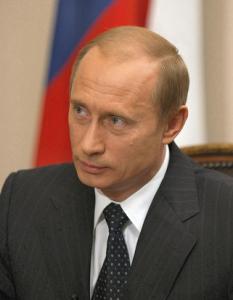
Could this man, or his country, hijack God’s plans for the end of the world? By Kremlin.ru, CC BY 4.0, https://commons.wikimedia.org/w/index.php?curid=5899337.
Magog is found only in Genesis 10, 1 Chronicles 1, and Revelation 20. Magog may have appeared on the Hebrew radar screen as mat-Gagayya, a nation mentioned in the Amarna Letters around 1400 BCE. Josephus says they are the Scythians of ancient Russia. Ambrose (200’s AD) claims that Gog and Magog are the Goths. Gog has been linked by some to Gugu, leader of Lydia (western Turkey) in the time of Ezekiel, but that may be merely appearance; certainly this Gog did none of what Ezekiel predicted. Curiously, in Numbers 24:7, the Septuagint reads “Gog” for “Agag,” and adds “a man shall come from his seed and rule over many nations.”
What about Rosh? Ezekiel 38:2 reads either “head/chief prince of Meshech and Tubal” OR “prince of Rosh, Meshech, and Tubal.” An article by James Price (https://biblicalstudies.org.uk/pdf/gtj/06-1_067.pdf) argues that rosh cannot be an adjective because it would interrupt a possessive chain. It can be counter-argued that rosh cannot be part of a list of three countries because there is no Hebrew word “and” in front of Meshech, but Ezekiel violates this grammatical rule twice in this section.
The Septuagint reads the word in question as Ros, a name that is subsequently applied to the whole region north of the Black Sea. It is objected that modern Russia first appears in the 800’s AD, but it is obvious that the place name seems to have long pre-dated the existence of the people. Jon Marc Ruthven (The Prophecy That Is Shaping History), the most scholarly defender of Russia in end-times prophecy, documents all of the above evidence, plus he identifies a number of ancient territories northeast and northwest of Assyria with the name Ras.
What about Meshech and Tubal? Contrary to Hal Lindsey and his sources, these are not Moscow and Tobolsk! Both are states in eastern Turkey (Mushki and Tabal) known to the Assyrians in the 700’s BCE. In fact, Mushki was ruled at this time by the fabled king Midas (Mita). Scratch these two names from the list of references to Russia, but not from its list of potential allies.
Gomer and all his hordes were known to the Assyrians as Gimirayya, their name for the Cimmerians or Scythians, whom Homer says live near the entrance to Hades in “one long melancholy night.” One of the sons of Gomer in Genesis 10/1 Chronicles 1 is Ashkenaz (Assyrian Iškuza), another name for the Scythians, although Jews have long used “Ashkenazi” as a term for German/Eastern European Jews (similarly, Josephus locates the sons of Ashkenaz in the area of the Danube).
So Gog and Magog, Rosh, and Gomer could all be part of the “Russian Federation” envisioned by Ezekiel in chapters 38-39 that invades Israel in the latter days. Their allies include Persia (= modern Iran), Cush (= Nubia, in modern Sudan), Put (= Egyptian name for Libya), and nations from the area of modern Turkey, including Meshech, Tubal, and Togarmah (named after the ancient Hittite city Tegarama).
Russia, Iran, Turkey, Sudan, and Libya – an eerily modern-looking scenario! Opposing this apparent end-times coalition, Ezekiel names Sheba and Dedan (both located on the Arabian peninsula; Sheba = Yemen), Tarshish (located in Spain or Tunisia), and the “Coastlands” (‘iyyim), encompassing the Greek islands, western Europe, and possibly even the Americas (although it is doubtful that the Americas were known to the Hebrews).
Do we have a road map for exactly who will do what at the end of the world? Even if we think that all of these players have been positively identified (which we cannot do), we still have no clue as to when it will happen. We cannot equate the end-times players named in the Bible to today’s Russia or today’s Iran. See how much the political map of Central Asia has changed in the past 30 years! Enmities and alliances morph back and forth. Still, I am convinced that Ezekiel’s prophecy will come true, not as non-literal symbols of a heavenly war, but as events that can be located on whatever earthly map exists at the time when it happens.
It appears that Russia will play a major role in trying to influence the outcome of this final conflict. But how exactly the world will end militarily or politically is not our concern as believers. Jesus has charged us to target Russia as one of multitudes of nations from whom we are to make disciples. As we seek to influence the outcome of the lives of souls who do not yet know Christ and who stand to be lost eternally without him, Jesus assures us that the gates of Hades will not prevail in our efforts.
Previous Post

December 2, 2017
The Stoning of Naboth and Today's Rush to Judgment
Next Post

December 7, 2017 Jesus' Shocking Words at Hanukkah
Browse Our Archives
Select a Category Biblical ethic Biblical word studies Biblical world Creation Historical Jesus Uncategorized
Select a Month July 2018 June 2018 May 2018 April 2018 March 2018 February 2018 January 2018 December 2017 November 2017 October 2017 September 2017 August 2017 July 2017
Follow Us!
TAKE THE
Religious Wisdom Quiz
What Christian tradition is especially associated with speaking in tongues?
Select your answer to see how you score.
Presbyterianism Pentecostalism Anglicanism Methodism
Books by This Author Books by Tom Hobson
Related posts from Biblical Words and World

Words I Never Heard in the Bible

Musonius Rufus, Women's Equality, and the New Testament


TRENDING AT PATHEOS Evangelical

How the author of the world's best hymn...
I've been working with John Newton for a while now. This makes...

Long before this Lectio Divina, Psalm 130 - the song - started...

What About the Trees? Another Living Parable
After I finished writing the last article about falling leaves as a...

Why Classical Education Is a Conversation, Not a...
Come and Read: Joy in Classical Education When I was a little...

Falling Leaves: A Living Parable on Letting Go
I’ve spent the vast majority of my life in the southeast corner...

Cornell University has received a great deal of negative publicity and intense...
view all Evangelical blogs
Ad-Free & Subscriber Log-In Subscription Support
- About Us
- 2026 Calendar
- Videos
- Podcasts
- Library of World Religions
- Faith In Media Tracker
- Advertise With Us
- Write for Us
- Privacy Policy
- Terms of Service
- Do Not Sell My Data
- Contact Us
- Radiant Digital
- Manage Newsletter Subscriptions
- Unsubscribe From Notifications
- Sitemap
Copyright 2008-2026, Patheos. All rights reserved.
Subscription Support Ad-Free & Subscriber Log-In
Follow Patheos