
BuddhistCatholicContemplativeEvangelicalGeneral ChristianHinduJewishLatter-day SaintMuslimNew VisionsProgressive Christian
Beliefs
- Buddhist
- Catholic
- Contemplative
- Evangelical
- General Christian
- Hindu
- Jewish
- Latter-day Saint
- More Voices
- Muslim
- New Visions
- Pagan
- Progressive Christian
Topics
- Religion News
- Food and Religion
- Sports and Religion
- Religious Art
- Religious Music and Entertainment
- Religious Events
- History and Religion
- Style and Religion
- Politics and Religion
- Women in Religion
- Recreation Outdoors and Religion
- Business Finance and Religion
- Careers Workplace and Religion
- Education and Religion
- Family Parenting and Religion
- Health Fitness and Religion
- Home and Religion
- Relationships and Religion
- Technology and Religion
- Travel and Religion
Columnists
- Buddhist Columnists
- Business Finance and Religion Columnists
- Careers Workplace and Religion Columnists
- Catholic Columnists
- Contemplative Columnists
- Education and Religion Columnists
- Evangelists Columnists
- Family Parenting and Religion Columnists
- General Christian Columnists
- Health Fitness and Religion Columnists
- Hindu Columnists
- History and Religion Columnists
- Home and Religion Columnists
- Jewish Columnists
- More Voices Columnists
- Latter Day Columnists
- Muslim Columnists
- New Visions Columnists
- Nonreligious Columnists
- Pagan Columnists
- Politics and Religion Columnists
- Progressive Columnists
- Recreation Outdoors and Religion Columnists
- Relationships and Religion Columnists
- Religion News Columnists
- Religious Art Columnists
- Religious Events Columnists
- Religious Music and Entertainment Columnists
- Sports and Religion Columnists
- Style and Religion Columnists
- Technology and Religion Columnists
- Travel and Religion Columnists
- Women in Religion Columnists
Resource Library
- 2026 Calendar
- Library of World Religions
- The 100 Most Holy Places on Earth
- Patheos Answers
- Podcasts
- Videos
- Faith Leaders Database
- Anglican Episcopalian
- Bahai
- Baptist
- Buddhism
- Christianity
- Confucianism
- Eastern Orthodoxy
- Hinduism
- Holiness and Pentecostal
- ISKCON
- Islam
- Judaism
- Lutheran
- Methodist
- The Church of Jesus Christ of Latter-day Saints
- New Age
- Paganism
- Presbytarian and Reformed
- Protestantism
- Religion Behind the Scenes
- Roman Catholic
- Scientology
- Shia Islam
- Sikhism
- Sufism
- Sunni Islam
- Taoism
- Zen
- See all religions
Research Tools
 Ad-Free & Subscriber Log-In Subscription Support
Ad-Free & Subscriber Log-In Subscription Support
Follow Patheos 

- Trending:
- Forgiveness
- |
- Marriage
- |
- Consciousness
- |
- Death Penalty
- |
- Election
- |
- Halloween
 Biblical Words and World
- Home
- Evangelical
- The Stoning of Naboth and Today’s Rush to Judgment
The Stoning of Naboth and Today’s Rush to Judgment
Last updated on: December 6, 2017 at 2:13 pm by Tom Hobson
The Stoning of Naboth and Today’s Rush to Judgment 2017-12-06T14:13:40-05:00 Tom Hobson
Patheos Explore the world's faith through different perspectives on religion and spirituality! Patheos has the views of the prevalent religions and spiritualities of the world.
We see a hideous rush to judgment in the stoning of Naboth in 1 Kings 21. Likewise, we see a similar rush to judgment in today’s knee-jerk dismissals of those who are accused of sexual misconduct. While most of these recent charges are probably true, the apparent denial of due process, the “execution without trial” (as it were), does violence to our sense of justice. It casts a cloud over whatever actual justice gets done in these cases.
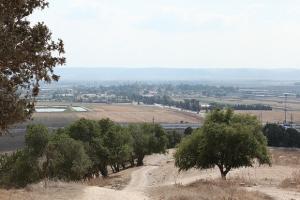
The Jezreel Valley, not far from where Naboth was stoned to death to acquire his vineyard. Photo courtesy of the State of Israel. Attribution-ShareAlike 2.0 Generic (CC BY-SA 2.0), via Flickr.
In a land grab by Queen Jezebel for her husband, Naboth is accused by two “Sons Of Belial” (“S.O.B.’s” – see my post http://www.patheos.com/blogs/tomhobson/2017/10/belial-and-sons/) of cursing God and the king. The first is a slam-dunk capital crime (Leviticus 24:16). The second has no stated penalty (Exodus 22:28), but to pronounce a solemn curse on a king amounted to attempted assassination. Serious charges, indeed.
The real reason Naboth is a target here is because he refuses to sell or even trade away his vineyard when King Ahab makes him an offer. He insists that his land is an inalienable inheritance from God, which it was (Leviticus 25:23-24). Ahab knows that he has no power from God to coerce such a sale. But Jezebel has no such God-hangups. She is a Canaanite, and using the law to kill an innocent man is no problem to her. Such a plot probably never crossed Ahab’s mind, but giving her his signature machine makes him guilty of cold-blooded murder in the eyes of God (1 Kings 21:19).
“Hang the evidence (or lack thereof)! It’s the seriousness of the charge!” What is disturbing here is not merely that the charges against Naboth are false, but that there seems to have been no attempt to examine the witnesses, or even a jury vote. Perhaps these did take place, but we are not told so. The word of the accusers is accepted without question, leading to a tragic rush to judgment.
That’s what’s so chilling about the scene today. It is dangerous when one entire category of people is automatically believed (e.g. “women never lie” about sexual abuse). It is equally dangerous when threats and intimidation can prevent evil from ever being brought to light, which tragically has been the case for too long.
God abhors any place where one class is automatically believed, and/or where one class automatically gets disbelieved. We must make the effort to discern between malicious gossip, and evidence that demands a verdict. And we must make it safe for genuine victims to come forward without fear of being shamed or of character assassination.
Our current atmosphere of accusations eerily resembles the days of Herod, where a paranoid Herod the Great would promptly put people to death on the mere suspicion of disloyalty, which led to the use of false charges as a popular way to get rid of disliked rivals. As was said recently, this year is not the year to hang the mistletoe at the office Christmas party.
God’s people developed safeguards to prevent injustice to the accused. Deuteronomy 19:15-20 requires multiple witnesses, and threatens false accusers with the same penalty that they tried to inflict on the accused. Cross-examination of witnesses produces an acquittal in the adultery trial of Susanna, where the witnesses contradict each other on under what kind of tree the offense took place (Susanna 1:52-59). While the account is probably fiction, it no doubt gives us an example on how witnesses were tested for reliability in Israelite courts in the late intertestamental period.
The rabbis of Jesus’ day developed a long list of criteria to disqualify witnesses as biased or unreliable (Mishnah, Sanhedrin 3:3-5). A long list of relatives, plus friends and enemies, were excluded from serving as witnesses or jurors. The testimony of tax collectors, dice players, loan sharks, pigeon flyers, and those who ran the black market on seventh year produce was excluded. Witnesses were relentlessly cross-examined (Sanhedrin 5:1-3) as to exactly when, where, and how the offense took place, with zero tolerance for contradiction.
Safeguards went out the window at the trial of Jesus. It was the proverbial “hearing, where no one was listening.” It was a predetermined guilty verdict, desperately searching for a charge. Earthly speaking, Jesus’ death was a quintessential rush to judgment.
In the volume Aboth de Rabbi Nathan (chapter 19), Rabbi Joshua’s followers watch while he talks all alone with an incredibly beautiful woman, takes off his outer garment and prayer shawl, goes with her behind locked doors, then comes out and takes a ritual bath. He asks his followers if he had done anything evil. They said no, assuming that there were perfectly valid explanations behind each of his questionable actions. Then Joshua makes his point: “Judge every person with the scales weighted in their favor.”
A bit too radical for me (I certainly wouldn’t follow his example!), but here we have definite presumption of innocence until proven guilty. Indeed, the rabbinic standards for capital trials in the Mishnah are so strict that Rabbis Tarfon and Aqiba said, if we were in charge, no one would be put to death, which led one rabbi to complain, “They would multiply the shedders of blood in Israel.” (Mishnah, Makkoth 1:10)
The need for justice is victims of sexual abuse is so important, that it must not be undermined by denying justice to the accused. The stoning of Naboth is a grim reminder to us of what happens when we rush to judgment.
Previous Post

November 30, 2017
Where Are the Chinese People in God's Word?
Next Post
December 4, 2017 Will Russia's Leaders Hack Christ's Return?
Browse Our Archives
Select a Category Biblical ethic Biblical word studies Biblical world Creation Historical Jesus Uncategorized
Select a Month July 2018 June 2018 May 2018 April 2018 March 2018 February 2018 January 2018 December 2017 November 2017 October 2017 September 2017 August 2017 July 2017
Follow Us!
TAKE THE
Religious Wisdom Quiz
Who said, "Whom shall I send, and who will go for us?"
Select your answer to see how you score.
Jesus God Moses Isaiah
Books by This Author Books by Tom Hobson
Related posts from Biblical Words and World

Musonius Rufus, Women's Equality, and the New Testament

Theology by the Polls: Ten Billion Flies Can't...


TRENDING AT PATHEOS Evangelical

How the author of the world's best hymn...
I've been working with John Newton for a while now. This makes...

Long before this Lectio Divina, Psalm 130 - the song - started...

What About the Trees? Another Living Parable
After I finished writing the last article about falling leaves as a...

Why Classical Education Is a Conversation, Not a...
Come and Read: Joy in Classical Education When I was a little...

Falling Leaves: A Living Parable on Letting Go
I’ve spent the vast majority of my life in the southeast corner...

Cornell University has received a great deal of negative publicity and intense...
view all Evangelical blogs
Ad-Free & Subscriber Log-In Subscription Support
- About Us
- 2026 Calendar
- Videos
- Podcasts
- Library of World Religions
- Faith In Media Tracker
- Advertise With Us
- Write for Us
- Privacy Policy
- Terms of Service
- Do Not Sell My Data
- Contact Us
- Radiant Digital
- Manage Newsletter Subscriptions
- Unsubscribe From Notifications
- Sitemap
Copyright 2008-2026, Patheos. All rights reserved.
Subscription Support Ad-Free & Subscriber Log-In
Follow Patheos