
BuddhistCatholicContemplativeEvangelicalGeneral ChristianHinduJewishLatter-day SaintMuslimNew VisionsProgressive Christian
Beliefs
- Buddhist
- Catholic
- Contemplative
- Evangelical
- General Christian
- Hindu
- Jewish
- Latter-day Saint
- More Voices
- Muslim
- New Visions
- Pagan
- Progressive Christian
Topics
- Religion News
- Food and Religion
- Sports and Religion
- Religious Art
- Religious Music and Entertainment
- Religious Events
- History and Religion
- Style and Religion
- Politics and Religion
- Women in Religion
- Recreation Outdoors and Religion
- Business Finance and Religion
- Careers Workplace and Religion
- Education and Religion
- Family Parenting and Religion
- Health Fitness and Religion
- Home and Religion
- Relationships and Religion
- Technology and Religion
- Travel and Religion
Columnists
- Buddhist Columnists
- Business Finance and Religion Columnists
- Careers Workplace and Religion Columnists
- Catholic Columnists
- Contemplative Columnists
- Education and Religion Columnists
- Evangelists Columnists
- Family Parenting and Religion Columnists
- General Christian Columnists
- Health Fitness and Religion Columnists
- Hindu Columnists
- History and Religion Columnists
- Home and Religion Columnists
- Jewish Columnists
- More Voices Columnists
- Latter Day Columnists
- Muslim Columnists
- New Visions Columnists
- Nonreligious Columnists
- Pagan Columnists
- Politics and Religion Columnists
- Progressive Columnists
- Recreation Outdoors and Religion Columnists
- Relationships and Religion Columnists
- Religion News Columnists
- Religious Art Columnists
- Religious Events Columnists
- Religious Music and Entertainment Columnists
- Sports and Religion Columnists
- Style and Religion Columnists
- Technology and Religion Columnists
- Travel and Religion Columnists
- Women in Religion Columnists
Resource Library
- 2026 Calendar
- Library of World Religions
- The 100 Most Holy Places on Earth
- Patheos Answers
- Podcasts
- Videos
- Faith Leaders Database
- Anglican Episcopalian
- Bahai
- Baptist
- Buddhism
- Christianity
- Confucianism
- Eastern Orthodoxy
- Hinduism
- Holiness and Pentecostal
- ISKCON
- Islam
- Judaism
- Lutheran
- Methodist
- The Church of Jesus Christ of Latter-day Saints
- New Age
- Paganism
- Presbytarian and Reformed
- Protestantism
- Religion Behind the Scenes
- Roman Catholic
- Scientology
- Shia Islam
- Sikhism
- Sufism
- Sunni Islam
- Taoism
- Zen
- See all religions
Research Tools
 Ad-Free & Subscriber Log-In Subscription Support
Ad-Free & Subscriber Log-In Subscription Support
Follow Patheos 

- Trending:
- Forgiveness
- |
- Marriage
- |
- Consciousness
- |
- Death Penalty
- |
- Election
- |
- Halloween
 Biblical Words and World
- Home
- Evangelical
- Messiah’s Mother: Virgin or Young Woman?
Messiah’s Mother: Virgin or Young Woman?
Last updated on: December 21, 2017 at 7:42 am by Tom Hobson
Messiah’s Mother: Virgin or Young Woman? 2017-12-21T07:42:28-05:00 Tom Hobson
Patheos Explore the world's faith through different perspectives on religion and spirituality! Patheos has the views of the prevalent religions and spiritualities of the world.
‘Almah in Isaiah 7:14 – does this word mean “virgin” or merely “young woman”? In my previous Biblical Words and World post on the Christian teaching that Jesus was virgin-born, I promised that I would dive deeper into the meaning of this key word in the text. Let’s investigate. I think I can give you evidence far more extensive than the doubters will give you that this word really means “virgin.”
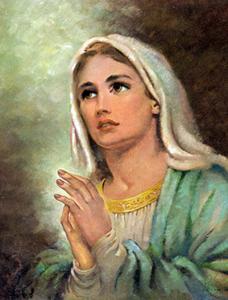
“Annunciation 44” by Waiting For The Word. Attribution 2.0 Generic (CC BY 2.0) via Flickr.
“The virgin shall conceive.” That’s how the Greek Old Testament renders the verse in question. It uses the word parthenos (the standard word for “virgin”) to translate the Hebrew term ‘almah. The Jewish translators made this choice in their Greek version, almost 300 years before Matthew seizes upon this line as a prophecy of the miraculous conception of Jesus.
After Matthew’s use of the Septuagint to prove that the Messiah was prophesied to be virgin-born, Jews begin to backtrack from the rendering quoted by Matthew, from Aquila, Symmachus, and Theodotion (in their revised Greek translations), to Justin Martyr’s fictional debate partner Trypho the Jew. Instead, they opt for the word neanis in their translations. And as time moves on to the so-called Enlightenment, we begin to hear that if Isaiah had meant “virgin,” he would have used the word betulah, which is unambiguous.
But wait a minute. First, betulah is no more unambiguous than ‘almah. The Canaanite goddess Anath goes by the title “Virgin” (btlt), but her virginity is questionable (to the extent that one can question the factual details of a myth). Likewise, the virginity of Babylon (Isaiah 47:1) and even Israel are open to question, if collective identities can lose their virginity. True, betulah is most often accompanied by the specification that the girl has never had sexual experience, but one might ask whether that is necessary to spell out, if sexual inexperience is undoubtedly implied in the word. We also have strong reason to question the virginity of the betulah in Joel 1:8, where we read, “Lament like a virgin clothed in sackcloth for the husband of her youth.”
Curiously, even the Greek parthenos is not as unambiguous as often thought. Dinah is still called a parthenos after she is violated by Shechem in Genesis 34:3 (translating the Hebrew na‘arah, “girl”).
Second, we can dismiss the claim that the Hebrew term ‘almah in Isaiah 7:14 can only mean “young woman.” The word, in both its masculine and feminine forms, emphasizes the subject’s youth and inexperience, such as when young David is called an ‘elem in 1 Samuel 17:56 (see also 1 Samuel 20:22, where ‘elem is used to describe what 20:25 calls a na‘ar qaton or “little boy”). Miriam is called an ‘almah in Exodus 2:8, and Proverbs 30:19 refers to the seduction of an ‘almah, a verse which seems to imply that the girl has no prior sexual experience.
Where else is ‘almah used? The five additional verses where this word is used in the Hebrew Bible add nothing pro or con to the debate about whether this word means “virgin.” In Psalm 68:25, we have young girls playing tambourines, which is what the ‘alamoth in 1 Chronicles 15:20 and Psalm 46:1 may also be. In Song of Solomon 1:3, the girl sings to her beloved, “Therefore the young girls love you.”
The only verse left that uses ‘almah that has even a ghost of a chance of implying non-virginity is Song of Solomon 6:8, where the man compares his beloved to “60 queens and 80 concubines, and maidens without number.” Here, ‘almah potentially becomes a victim of guilt by association with two other groups of women who are definitely not virgins. But again, what is proved? The ‘alamoth arguably becomes a category for the women for whom the male lead character has not had the leisure for carnal knowledge.
Finally, going back before Moses into the archaic Canaanite dialect of Hebrew known as Ugaritic, we find ‘almah and betulah being used as poetic synonyms in a text cited by Ugaritic language pioneer Dr. Cyrus Gordon in his article “‘Almah in Isaiah 7:14” (https://academic.oup.com/jaar/article-abstract/XXI/2/106/724404). Gordon also gives us an example from Aramaic where betulta’ is used to describe a pregnant woman who is have problems giving birth (Ugaritic Textbook, 377), more proof that the betulah root is not guaranteed to always mean “virgin.”
The ‘almah root is also found in the substantive noun ‘alumim, “youth/youthfulness”, which is found in Isaiah 54:4, Psalm 89:45, Job 20:11, and Job 33:25. Overall, the picture we get from this term ‘almah is a picture of a girl who is young and inexperienced, a synonym of na‘arah, betulah, and parthenos.
So the claim that Isaiah 7:14’s ‘almah has no connotation of virginity is not as slam-dunk as we’ve been led to believe. Rather, ‘almah is part of a semantic field of words that all emphasize youth and inexperience. The real question is how the birth of any child to any mother (virgin or not) 700 years in the future can be a sign to a king in Isaiah’s day.
It appears that the initial sign to Ahaz was a normal birth that took place in the 730’s BCE. As I said in my previous post, the supernatural conception and birth of Jesus of Nazareth 700 years in the future was Isaiah’s prophecy “on steroids.” It is the ultimate example of sensus plenior, a deeper sense put there by God that goes far beyond what the original human author would have grasped.
Previous Post

December 11, 2017
Logical Grounds for Jesus' Virgin Birth
Next Post

December 18, 2017 No Room For the Inn
Browse Our Archives
Select a Category Biblical ethic Biblical word studies Biblical world Creation Historical Jesus Uncategorized
Select a Month July 2018 June 2018 May 2018 April 2018 March 2018 February 2018 January 2018 December 2017 November 2017 October 2017 September 2017 August 2017 July 2017
Follow Us!
TAKE THE
Religious Wisdom Quiz
This shortest book in the Old Testament prophesies judgment on Edom for violence against Judah. How many verses does it contain?
Select your answer to see how you score.
30 verses 12 verses 21 verses 15 verses
Books by This Author Books by Tom Hobson
Related posts from Biblical Words and World

Words I Never Heard in the Bible

How Much Did Paul Get from Jesus?

Be Ye Perfect? What Does Jesus Mean?

What's the Difference Between Spirit and Soul?
TRENDING AT PATHEOS Evangelical

How the author of the world's best hymn...
I've been working with John Newton for a while now. This makes...

Long before this Lectio Divina, Psalm 130 - the song - started...

What About the Trees? Another Living Parable
After I finished writing the last article about falling leaves as a...

Why Classical Education Is a Conversation, Not a...
Come and Read: Joy in Classical Education When I was a little...

Falling Leaves: A Living Parable on Letting Go
I’ve spent the vast majority of my life in the southeast corner...

Cornell University has received a great deal of negative publicity and intense...
view all Evangelical blogs
Ad-Free & Subscriber Log-In Subscription Support
- About Us
- 2026 Calendar
- Videos
- Podcasts
- Library of World Religions
- Faith In Media Tracker
- Advertise With Us
- Write for Us
- Privacy Policy
- Terms of Service
- Do Not Sell My Data
- Contact Us
- Radiant Digital
- Manage Newsletter Subscriptions
- Unsubscribe From Notifications
- Sitemap
Copyright 2008-2026, Patheos. All rights reserved.
Subscription Support Ad-Free & Subscriber Log-In
Follow Patheos