
BuddhistCatholicContemplativeEvangelicalGeneral ChristianHinduJewishLatter-day SaintMuslimNew VisionsProgressive Christian
Beliefs
- Buddhist
- Catholic
- Contemplative
- Evangelical
- General Christian
- Hindu
- Jewish
- Latter-day Saint
- More Voices
- Muslim
- New Visions
- Pagan
- Progressive Christian
Topics
- Religion News
- Food and Religion
- Sports and Religion
- Religious Art
- Religious Music and Entertainment
- Religious Events
- History and Religion
- Style and Religion
- Politics and Religion
- Women in Religion
- Recreation Outdoors and Religion
- Business Finance and Religion
- Careers Workplace and Religion
- Education and Religion
- Family Parenting and Religion
- Health Fitness and Religion
- Home and Religion
- Relationships and Religion
- Technology and Religion
- Travel and Religion
Columnists
- Buddhist Columnists
- Business Finance and Religion Columnists
- Careers Workplace and Religion Columnists
- Catholic Columnists
- Contemplative Columnists
- Education and Religion Columnists
- Evangelists Columnists
- Family Parenting and Religion Columnists
- General Christian Columnists
- Health Fitness and Religion Columnists
- Hindu Columnists
- History and Religion Columnists
- Home and Religion Columnists
- Jewish Columnists
- More Voices Columnists
- Latter Day Columnists
- Muslim Columnists
- New Visions Columnists
- Nonreligious Columnists
- Pagan Columnists
- Politics and Religion Columnists
- Progressive Columnists
- Recreation Outdoors and Religion Columnists
- Relationships and Religion Columnists
- Religion News Columnists
- Religious Art Columnists
- Religious Events Columnists
- Religious Music and Entertainment Columnists
- Sports and Religion Columnists
- Style and Religion Columnists
- Technology and Religion Columnists
- Travel and Religion Columnists
- Women in Religion Columnists
Resource Library
- 2026 Calendar
- Library of World Religions
- The 100 Most Holy Places on Earth
- Patheos Answers
- Podcasts
- Videos
- Faith Leaders Database
- Anglican Episcopalian
- Bahai
- Baptist
- Buddhism
- Christianity
- Confucianism
- Eastern Orthodoxy
- Hinduism
- Holiness and Pentecostal
- ISKCON
- Islam
- Judaism
- Lutheran
- Methodist
- The Church of Jesus Christ of Latter-day Saints
- New Age
- Paganism
- Presbytarian and Reformed
- Protestantism
- Religion Behind the Scenes
- Roman Catholic
- Scientology
- Shia Islam
- Sikhism
- Sufism
- Sunni Islam
- Taoism
- Zen
- See all religions
Research Tools
 Ad-Free & Subscriber Log-In Subscription Support
Ad-Free & Subscriber Log-In Subscription Support
Follow Patheos 

- Trending:
- Forgiveness
- |
- Marriage
- |
- Consciousness
- |
- Death Penalty
- |
- Election
- |
- Halloween
 Biblical Words and World
- Home
- Evangelical
- Jesus’ Shocking Words at Hanukkah
Jesus’ Shocking Words at Hanukkah
Last updated on: December 13, 2017 at 1:50 pm by Tom Hobson
Jesus’ Shocking Words at Hanukkah 2017-12-13T13:50:02-05:00 Tom Hobson
Patheos Explore the world's faith through different perspectives on religion and spirituality! Patheos has the views of the prevalent religions and spiritualities of the world.
Hanukkah is only mentioned once in the Protestant Bible, in John 10:22-33, where it is called the “Feast of the Dedication.” And Jesus was there, celebrating! Only, the words that he speaks that day are enough to make jaws drop, on the occasion and in the place where he speaks them.
Hanukkah was never commanded by God in Scripture. Let’s take a look at the back-story on this holiday.
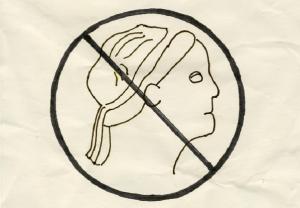
Hanukkah celebrates the Jewish victory over the guy who went into the Temple and claimed to be God. So what happens when Jesus walks in and makes the same claim? Picture: Tom Hobson.
Back around 175 BCE, the Jews were being ruled by a Greek king of Syria named Antiochus IV, who begins a bold new program to turn the Jewish nation into Greeks. As time goes on, Antiochus begins to have delusions of grandeur. He sets up statues of the Greek gods made to look like himself. He gives himself the title “Epiphanes,” which means “God on display”. Finally, Antiochus makes a move so shocking, no Greek ruler had ever went so far before: religious persecution.
In the past, others had tried to get Jews to worship additional gods. Antiochus is the first who tries to actually exterminate Judaism. He orders the Jewish religion to be replaced with Greek religion. He orders an end to the Sabbath and the Jewish feasts. He orders an end to circumcision. He orders hogs to be offered in sacrifice. And he orders Greek idols to be set up throughout the land. The word goes out: “Whoever does not obey the command of the king shall die.”
The king’s commands are carried out. In mid-December 167 BCE, the Jewish temple gets rededicated to the Greek god Zeus. A statue of Zeus (made to look like the Greek king) gets set up in the Temple. Pigs are offered in sacrifice, and the sacred courts are filled with Greeks partying and having orgies, defiling the sacred ground. (This was the first defiling of the Temple spoken of by the prophet Daniel.) Possession of the Scriptures becomes a crime punishable by death. One congregation is burned alive for secretly observing the Sabbath. Finally, the entire population is lined up and forced to eat pork. Most choose to live and do so. Some refuse, and are brutally beaten to death.
At last, some people in one small village resist the king’s orders. An official from the king comes to town to force them to perform a Greek sacrifice. He invites an old priest named Mattathias to do the honors. When the priest refuses, another Jew steps forward to perform the sacrifice. But before he can do so, the old priest rises up and kills both the Jew who tries to take his place, and the official from the king. He tears down the Greek altar and cries, “Let everyone who is zealous for the Law of God follow me!” And he and his sons flee into the hills to fight a guerilla war against the Greeks.
One of the old man’s sons named Judah takes over as leader of the rebels. Judah proves to be so powerful in battle that they nickname him Judas Maccabeus, “Judas the Hammer,” from which we get the name Maccabee. After a number of surprising victories where he and his men were the underdogs, Judas Maccabeus drives the Greeks out of the Temple and recaptures the holy city. Then they cut down the bushes that had grown up in the Temple courtyard, repair the ruined chambers of the priests, get rid of the idols, and rebuild the altar of the Lord.
Finally, one morning in mid-December of 164 BCE, exactly three years after the Greeks had defiled the Temple, Judas and his followers offer sacrifice on the new altar and rededicate the newly cleansed Temple. They hold an eight-day celebration, now called the Feast of the “Dedication,” which is what the word Hanukkah means. Today, the Jews light candles for each of the eight days of this holiday. They also exchange presents, much as we do at Christmas.
So Hanukkah was a patriotic holiday, an Independence Day, a day the Jews gave thanks that God had set them free from the guy who tried to exterminate their faith. At a festival like Hanukkah, where people were asking, “When will our Messiah appear?”, it only makes sense for the crowd to ask Jesus, “Are you the Messiah? If you are, tell us in plain words.”
Jesus finally makes it perfectly clear: “I and the Father are one.”
You can hear the crowd gasp! They asked him a question; he gave them an answer! Only the answer to them sounds downright blasphemous. Whatever you do at Hanukkah, don’t claim to be God, unless you want to get used for target practice! John brings out the utmost in irony: on that day when they’re celebrating their victory over that villain who sets up his image in the Temple and claims to be a god, Jesus stands in the Temple and claims to be God!
“I and the Father are one.” No, Jesus doesn’t mean one with God in some metaphoric or symbolic sense. He means that he IS God, and his audience understands him correctly, which is why they pick up stones to throw at him. Jesus asks them why. They answer, “Because you, being a man, make yourself God.”
Jesus doesn’t say, “I’m sorry, guys. You misunderstood me. I wasn’t really claiming to be God.” No, Jesus defends himself. But his argument fails to convince the crowd, and only by slipping out of their hands does Jesus escape a violent end.
Jesus neither trashes nor disrespects anyone. He merely claims to be the real “God on display,” as opposed to the fake one driven out by the Maccabees. On this day when the nation celebrates its independence and freedom from idolatry, Jesus confronts them with the claim that he is their true deliverer, the one who will truly set them free.
What Jesus says at Hanukkah is the clearest expression in all the Gospels that Jesus and his Father are one God. Our response to him makes all the difference in the world. Jesus is either an idol, an imposter like that Greek king from Syria, or else Jesus is who he said he was: the One who is God on display, the only One who can save us from sin and death.
In this season when Israel celebrates their victory over the guy who tried to stamp out their faith, as they celebrate the Feast of Re-Dedication, let us rededicate ourselves to Jesus, the Messiah, God on Display, the One who has come to set us free. Let us remove the idols from the temples of our hearts. Let us resist the world’s attempts to stamp out what we believe, to mold us into their image. Let us welcome Jesus as the One who has come to rule us with justice, with wisdom, and with love, the One who has come to save us and put us right with God.
Previous Post

December 4, 2017
Will Russia's Leaders Hack Christ's Return?
Next Post
December 11, 2017 Logical Grounds for Jesus' Virgin Birth
Browse Our Archives
Select a Category Biblical ethic Biblical word studies Biblical world Creation Historical Jesus Uncategorized
Select a Month July 2018 June 2018 May 2018 April 2018 March 2018 February 2018 January 2018 December 2017 November 2017 October 2017 September 2017 August 2017 July 2017
Follow Us!
TAKE THE
Religious Wisdom Quiz
Three of the four beasts from Daniel's vision are: a bear with three ribs in its mouth, a leopard with four wings and four heads, and a terrifying beast with iron teeth and ten horns. Which beast is missing?
Select your answer to see how you score.
A dragon with seven heads A ram with two sets of gilded horns A bull breathing fire A lion with eagle's wings
Books by This Author Books by Tom Hobson
Related posts from Biblical Words and World

Musonius Rufus, Women's Equality, and the New Testament


TRENDING AT PATHEOS Evangelical

Long before this Lectio Divina, Psalm 130 - the song - started...

What About the Trees? Another Living Parable
After I finished writing the last article about falling leaves as a...

Why Classical Education Is a Conversation, Not a...
Come and Read: Joy in Classical Education When I was a little...

Falling Leaves: A Living Parable on Letting Go
I’ve spent the vast majority of my life in the southeast corner...

Cornell University has received a great deal of negative publicity and intense...

Several years ago, I sat across from a couple whose marriage appeared...
view all Evangelical blogs
Ad-Free & Subscriber Log-In Subscription Support
- About Us
- 2026 Calendar
- Videos
- Podcasts
- Library of World Religions
- Faith In Media Tracker
- Advertise With Us
- Write for Us
- Privacy Policy
- Terms of Service
- Do Not Sell My Data
- Contact Us
- Radiant Digital
- Manage Newsletter Subscriptions
- Unsubscribe From Notifications
- Sitemap
Copyright 2008-2026, Patheos. All rights reserved.
Subscription Support Ad-Free & Subscriber Log-In
Follow Patheos