
BuddhistCatholicContemplativeEvangelicalGeneral ChristianHinduJewishLatter-day SaintMuslimNew VisionsProgressive Christian
Beliefs
- Buddhist
- Catholic
- Contemplative
- Evangelical
- General Christian
- Hindu
- Jewish
- Latter-day Saint
- More Voices
- Muslim
- New Visions
- Pagan
- Progressive Christian
Topics
- Religion News
- Food and Religion
- Sports and Religion
- Religious Art
- Religious Music and Entertainment
- Religious Events
- History and Religion
- Style and Religion
- Politics and Religion
- Women in Religion
- Recreation Outdoors and Religion
- Business Finance and Religion
- Careers Workplace and Religion
- Education and Religion
- Family Parenting and Religion
- Health Fitness and Religion
- Home and Religion
- Relationships and Religion
- Technology and Religion
- Travel and Religion
Columnists
- Buddhist Columnists
- Business Finance and Religion Columnists
- Careers Workplace and Religion Columnists
- Catholic Columnists
- Contemplative Columnists
- Education and Religion Columnists
- Evangelists Columnists
- Family Parenting and Religion Columnists
- General Christian Columnists
- Health Fitness and Religion Columnists
- Hindu Columnists
- History and Religion Columnists
- Home and Religion Columnists
- Jewish Columnists
- More Voices Columnists
- Latter Day Columnists
- Muslim Columnists
- New Visions Columnists
- Nonreligious Columnists
- Pagan Columnists
- Politics and Religion Columnists
- Progressive Columnists
- Recreation Outdoors and Religion Columnists
- Relationships and Religion Columnists
- Religion News Columnists
- Religious Art Columnists
- Religious Events Columnists
- Religious Music and Entertainment Columnists
- Sports and Religion Columnists
- Style and Religion Columnists
- Technology and Religion Columnists
- Travel and Religion Columnists
- Women in Religion Columnists
Resource Library
- 2026 Calendar
- Library of World Religions
- The 100 Most Holy Places on Earth
- Patheos Answers
- Podcasts
- Videos
- Faith Leaders Database
- Anglican Episcopalian
- Bahai
- Baptist
- Buddhism
- Christianity
- Confucianism
- Eastern Orthodoxy
- Hinduism
- Holiness and Pentecostal
- ISKCON
- Islam
- Judaism
- Lutheran
- Methodist
- The Church of Jesus Christ of Latter-day Saints
- New Age
- Paganism
- Presbytarian and Reformed
- Protestantism
- Religion Behind the Scenes
- Roman Catholic
- Scientology
- Shia Islam
- Sikhism
- Sufism
- Sunni Islam
- Taoism
- Zen
- See all religions
Research Tools
 Ad-Free & Subscriber Log-In Subscription Support
Ad-Free & Subscriber Log-In Subscription Support
Follow Patheos 

- Trending:
- Forgiveness
- |
- Marriage
- |
- Consciousness
- |
- Death Penalty
- |
- Election
- |
- Halloween
 Biblical Words and World
- Home
- Evangelical
- God’s Bill of Rights for the Poor
God’s Bill of Rights for the Poor
Last updated on: November 27, 2017 at 9:15 am by Tom Hobson
God’s Bill of Rights for the Poor 2017-11-27T09:15:18-05:00 Tom Hobson
Patheos Explore the world's faith through different perspectives on religion and spirituality! Patheos has the views of the prevalent religions and spiritualities of the world.
Proverbs 29:7 says, “A righteous person knows the rights of the poor.” Unfortunately, because they knew those rights back then, God did not spell them out in writing for us. Don’t you wish we had that list?
(And even if God did give us a list of those rights, would we be willing to accept what God said to people in the Late Bronze Age? Or would we dismiss what God said to them on the grounds that times have changed?)
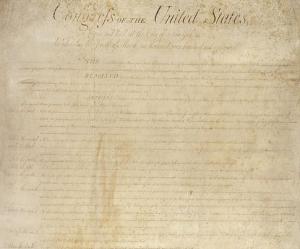
God has a Bill of Rights for the poor – but we have to hunt for the pieces! Photo: U.S. National Archives and Records Administration [Public domain], via Wikimedia Commons.
While God did not spell out an explicit list of the rights that the writer of Proverbs 29:7 had in mind, I have come to believe that we can identify some of those rights in Deuteronomy 23 and 24. Here are just a few:
- Exodus 22:25, Leviticus 25:35-37, and Deuteronomy 23:19-20 all forbid charging interest to a fellow Israelite who is financially destitute. These verses do not forbid commercial loans. That’s why it was OK to charge interest to non-Israelites; such loans would always be commercial loans. What God forbids is charging interest on food or necessities, making profit off of a fellow Israelite’s poverty.
- In Deuteronomy 24:6, God makes it illegal to require anything vital for survival as collateral to be repossessed, particularly their means of production. Today, a car might fit this definition.
- In Deuteronomy 24:10-13. God protects the privacy of the poor by forbidding the creditor to enter a house to obtain collateral. God also makes it difficult to use the coat or bed in which one sleeps for collateral (see also Exodus 22:26-27), by requiring the creditor to return the item every night. And only in Deuteronomy 24:17 is the widow’s garment explicitly forbidden as collateral under any circumstances.
- Deuteronomy 24:14-15. Withholding wages is another forbidden means of violating the rights of the poor. See also Leviticus 19:13: “The wages of a hired servant shall not remain with you all night until morning.” Deadbeat employers steal their employees’ labor this way. Deadbeat corporations steal the use of their suppliers’ money this way. Even a conservative such as Rushdoony the theonomist writes, “Work must be promptly paid, or it is theft and should be prosecuted as such.”
- Deuteronomy 24:17, Exodus 22:21, and Leviticus 19:33 all remind us not to oppress the alien or the orphan, depriving them of justice. The meaning of “oppression,” which is best described as “coercion” or abuse of power, will be discussed in a post next week. Israel’s experience in Egypt is cited in the Torah as a prime example of oppression. The issue of whether the calls for equal justice for aliens in the Torah are applicable to today’s illegal aliens is a subject I have addressed in my previous post (http://www.patheos.com/blogs/tomhobson/2017/11/immigrant-hebrew-law/).
- Deuteronomy 24:19-21. Leaving part of the harvest for the poor is also in the Holiness Code (Leviticus 19:9-10, 23:22). It was a way of giving the poor a chance to harvest for themselves. It required generosity on the part of the landowner, and offered productive work for those who were in need. The salvaging of unwanted food from supermarkets and restaurants to feed the poor, the salvaging of clothes and other goods by resale stores, and the salvaging of recyclables from trash, can all claim Biblical precedent in this law. But the heart of this law is the requirement that the producer of food must set aside part of their potential profit, so that those in need (who are willing to labor for it) can also earn their living.
Did the poor have other rights that have not been spelled out in the Hebrew Bible? We have no way of knowing for sure, and we must be careful about adding rights to this list without sufficient Scriptural warrant. But the commands we have identified above are enough for starters. They give us examples of God’s passion for justice expressed in specific actions.
Previous Post

November 20, 2017
The Immigrant in Hebrew Law
Next Post

November 27, 2017 Oppression: Stomping on the Powerless
Browse Our Archives
Select a Category Biblical ethic Biblical word studies Biblical world Creation Historical Jesus Uncategorized
Select a Month July 2018 June 2018 May 2018 April 2018 March 2018 February 2018 January 2018 December 2017 November 2017 October 2017 September 2017 August 2017 July 2017
Follow Us!
TAKE THE
Religious Wisdom Quiz
Which prophet called bears out of the woods to attack boys who mocked him?
Select your answer to see how you score.
Samuel Elisha Isaiah Elijah
Books by This Author Books by Tom Hobson
Related posts from Biblical Words and World

Theology by the Polls: Ten Billion Flies Can't...

A Gospel of Glorious Half-Truth

Ham Sandwiches and Gay Sex: How Timeless Is...

Gambling Is Not a Biblical Issue
TRENDING AT PATHEOS Evangelical

How the author of the world's best hymn...
I've been working with John Newton for a while now. This makes...

Long before this Lectio Divina, Psalm 130 - the song - started...

What About the Trees? Another Living Parable
After I finished writing the last article about falling leaves as a...

Why Classical Education Is a Conversation, Not a...
Come and Read: Joy in Classical Education When I was a little...

Falling Leaves: A Living Parable on Letting Go
I’ve spent the vast majority of my life in the southeast corner...

Cornell University has received a great deal of negative publicity and intense...
view all Evangelical blogs
Ad-Free & Subscriber Log-In Subscription Support
- About Us
- 2026 Calendar
- Videos
- Podcasts
- Library of World Religions
- Faith In Media Tracker
- Advertise With Us
- Write for Us
- Privacy Policy
- Terms of Service
- Do Not Sell My Data
- Contact Us
- Radiant Digital
- Manage Newsletter Subscriptions
- Unsubscribe From Notifications
- Sitemap
Copyright 2008-2026, Patheos. All rights reserved.
Subscription Support Ad-Free & Subscriber Log-In
Follow Patheos