
BuddhistCatholicContemplativeEvangelicalGeneral ChristianHinduJewishLatter-day SaintMuslimNew VisionsProgressive Christian
Beliefs
- Buddhist
- Catholic
- Contemplative
- Evangelical
- General Christian
- Hindu
- Jewish
- Latter-day Saint
- More Voices
- Muslim
- New Visions
- Pagan
- Progressive Christian
Topics
- Religion News
- Food and Religion
- Sports and Religion
- Religious Art
- Religious Music and Entertainment
- Religious Events
- History and Religion
- Style and Religion
- Politics and Religion
- Women in Religion
- Recreation Outdoors and Religion
- Business Finance and Religion
- Careers Workplace and Religion
- Education and Religion
- Family Parenting and Religion
- Health Fitness and Religion
- Home and Religion
- Relationships and Religion
- Technology and Religion
- Travel and Religion
Columnists
- Buddhist Columnists
- Business Finance and Religion Columnists
- Careers Workplace and Religion Columnists
- Catholic Columnists
- Contemplative Columnists
- Education and Religion Columnists
- Evangelists Columnists
- Family Parenting and Religion Columnists
- General Christian Columnists
- Health Fitness and Religion Columnists
- Hindu Columnists
- History and Religion Columnists
- Home and Religion Columnists
- Jewish Columnists
- More Voices Columnists
- Latter Day Columnists
- Muslim Columnists
- New Visions Columnists
- Nonreligious Columnists
- Pagan Columnists
- Politics and Religion Columnists
- Progressive Columnists
- Recreation Outdoors and Religion Columnists
- Relationships and Religion Columnists
- Religion News Columnists
- Religious Art Columnists
- Religious Events Columnists
- Religious Music and Entertainment Columnists
- Sports and Religion Columnists
- Style and Religion Columnists
- Technology and Religion Columnists
- Travel and Religion Columnists
- Women in Religion Columnists
Resource Library
- 2026 Calendar
- Library of World Religions
- The 100 Most Holy Places on Earth
- Patheos Answers
- Podcasts
- Videos
- Faith Leaders Database
- Anglican Episcopalian
- Bahai
- Baptist
- Buddhism
- Christianity
- Confucianism
- Eastern Orthodoxy
- Hinduism
- Holiness and Pentecostal
- ISKCON
- Islam
- Judaism
- Lutheran
- Methodist
- The Church of Jesus Christ of Latter-day Saints
- New Age
- Paganism
- Presbytarian and Reformed
- Protestantism
- Religion Behind the Scenes
- Roman Catholic
- Scientology
- Shia Islam
- Sikhism
- Sufism
- Sunni Islam
- Taoism
- Zen
- See all religions
Research Tools
 Ad-Free & Subscriber Log-In Subscription Support
Ad-Free & Subscriber Log-In Subscription Support
Follow Patheos 

- Trending:
- Forgiveness
- |
- Marriage
- |
- Consciousness
- |
- Death Penalty
- |
- Election
- |
- Halloween
 Biblical Words and World
- Home
- Evangelical
- Where Are the Chinese People in God’s Word?
Where Are the Chinese People in God’s Word?
Last updated on: December 1, 2017 at 10:15 am by Tom Hobson
Where Are the Chinese People in God’s Word? 2017-12-01T10:15:59-05:00 Tom Hobson
Patheos Explore the world's faith through different perspectives on religion and spirituality! Patheos has the views of the prevalent religions and spiritualities of the world.
When I first arrived at seminary 38 years ago, I was full of curiosity as to where I could find the Chinese people in the Bible. Which of the names in the Genesis 10 Table of Nations was China by another name? A Chinese student was quick to advise me not to waste my time on the search.
Yes, I’m sure the Table of Nations was selective. And yes, the Bible’s declarations about “all” of humankind apply also to the Chinese. But could there still have been at least one specific reference to China in God’s word?

Photo by Nicolas Perrault III. Public domain: Creative Commons 1.0 license, via Wikimedia Commons.
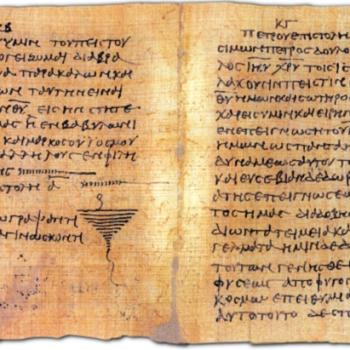
The strongest candidate for a Biblical reference to China is Isaiah 49:12, a description of Jews returning from captivity: “Behold, these shall come from far away, and behold, these from the north and from the west, and these from the land of Sinim.” While eminent scholars including Gesenius and Delitzsch seriously believed this to be a reference to China, others in the past two centuries have emended the text from synym to swnym, which would mean “Aswan” or “Syene” in far southern Egypt. The Dead Sea Scrolls (1QIsa) contain such a reading, although even there it may be an attempted correction rather than an original reading; it may be that the Dead Sea copyists preferred a familiar place name to a name they knew nothing of. The Latin version reads de terra australi, “from the land of the south” (not Australia, although it is amusing to consider!). The Greek version reads “from the land of the Persians,” which may be a directional stab in the dark, or a directional understatement; the land in question may be much further east than Persia.
Sinae is the Latin name for the Qin (Ch’in) state, founded approximately 778 BCE (here I confess to be academically deficient, and am forced to rely on Wikipedia – see https://en.wikipedia.org/wiki/Qin_(state)), although the Romans and Greeks usually referred to China as “Silk-Land” (Serica). So Sinim as a potential reference to the land which became China, by the name by which it became known, is plausible for the writer of this scripture, whether it was written by Isaiah ben-Amoz (690 BCE?) or by a later writer (540 BCE?). However, if this is a reference to the early Qin state, it is the only one we can find in the ancient Near East; any other such references must be under a name hitherto never associated with the Far East.
The only other possible reference to the Chinese is in Revelation 16:12, the “kings from the East” who come in the final days before the return of Christ from beyond the Euphrates, for whom we are given their number: 200 million of them (Revelation 9:16). It is a number probably larger than the entire population of the planet in 95 AD, but it has been argued that today’s China could potentially field an army that large. The claim that this is China cannot be proved, but cannot easily be dismissed.
God’s word may speak more specifically about China than it does about America. The closest such verse I can find is Ezekiel 30:5, which mentions the “Land of the Covenant,” which sounds like the modern Israeli name in Hebrew for the “United States” (Artzoth-ha-Berith, “The Lands of the Covenant”).
But while China may have been barely if at all visible on the radar of the Biblical audience, China was always important to God. It is fascinating to trace the evidence of the Gospel’s arrival in China (http://www.soc-wus.org/2012News/11132012122317.htm). Leading the way was a Nestorian bishop named Alopen in 635 AD (http://www.atour.com/religion/docs/20011114a.html), who composed the first Christian writing in Chinese, The Sutra of Jesus the Messiah. As defective as the Nestorian understanding of Christ may have been (a schizophrenic juxtaposition of divine and human natures), it was apparently good enough for God to use anyway. Syrian Orthodox missionaries came soon thereafter. The Xian-Fu stone (781 AD), inscribed in both Chinese and Syriac, contains the names of over 70 Christian leaders in China.
Who would have dreamed how God’s church in China would have exploded with growth since 1949? It has been jokingly observed that Mao Zedong was one of the greatest evangelists who ever lived, because he bulldozed obstacles to the Gospel that might have taken decades to overcome. He built roads, imposed a single language, made the nation literate, swept away the old gods and goddesses, and created a spiritual vacuum that only Christ could fill.
Praise God for today’s huge army of our Christian sisters and brothers in Christ, an army so big that it would have staggered the minds of anyone from Biblical times! Indeed, the only one who ever saw that huge crowd of Chinese believers was John (Revelation 7:9), and even he was unable to name them by name.
Previous Post

November 27, 2017
Oppression: Stomping on the Powerless
Next Post

December 2, 2017 The Stoning of Naboth and Today's Rush to Judgment
Browse Our Archives
Select a Category Biblical ethic Biblical word studies Biblical world Creation Historical Jesus Uncategorized
Select a Month July 2018 June 2018 May 2018 April 2018 March 2018 February 2018 January 2018 December 2017 November 2017 October 2017 September 2017 August 2017 July 2017
Follow Us!
TAKE THE
Religious Wisdom Quiz
What does the Bible teach about giving to the poor?
Select your answer to see how you score.
Insult them Take from them Ignore them Be generous
Books by This Author Books by Tom Hobson
Related posts from Biblical Words and World

Musonius Rufus, Women's Equality, and the New Testament


TRENDING AT PATHEOS Evangelical

How the author of the world's best hymn...
I've been working with John Newton for a while now. This makes...

Long before this Lectio Divina, Psalm 130 - the song - started...

What About the Trees? Another Living Parable
After I finished writing the last article about falling leaves as a...

Why Classical Education Is a Conversation, Not a...
Come and Read: Joy in Classical Education When I was a little...

Falling Leaves: A Living Parable on Letting Go
I’ve spent the vast majority of my life in the southeast corner...

Cornell University has received a great deal of negative publicity and intense...
view all Evangelical blogs
Ad-Free & Subscriber Log-In Subscription Support
- About Us
- 2026 Calendar
- Videos
- Podcasts
- Library of World Religions
- Faith In Media Tracker
- Advertise With Us
- Write for Us
- Privacy Policy
- Terms of Service
- Do Not Sell My Data
- Contact Us
- Radiant Digital
- Manage Newsletter Subscriptions
- Unsubscribe From Notifications
- Sitemap
Copyright 2008-2026, Patheos. All rights reserved.
Subscription Support Ad-Free & Subscriber Log-In
Follow Patheos