
BuddhistCatholicContemplativeEvangelicalGeneral ChristianHinduJewishLatter-day SaintMuslimNew VisionsProgressive Christian
Beliefs
- Buddhist
- Catholic
- Contemplative
- Evangelical
- General Christian
- Hindu
- Jewish
- Latter-day Saint
- More Voices
- Muslim
- New Visions
- Pagan
- Progressive Christian
Topics
- Religion News
- Food and Religion
- Sports and Religion
- Religious Art
- Religious Music and Entertainment
- Religious Events
- History and Religion
- Style and Religion
- Politics and Religion
- Women in Religion
- Recreation Outdoors and Religion
- Business Finance and Religion
- Careers Workplace and Religion
- Education and Religion
- Family Parenting and Religion
- Health Fitness and Religion
- Home and Religion
- Relationships and Religion
- Technology and Religion
- Travel and Religion
Columnists
- Buddhist Columnists
- Business Finance and Religion Columnists
- Careers Workplace and Religion Columnists
- Catholic Columnists
- Contemplative Columnists
- Education and Religion Columnists
- Evangelists Columnists
- Family Parenting and Religion Columnists
- General Christian Columnists
- Health Fitness and Religion Columnists
- Hindu Columnists
- History and Religion Columnists
- Home and Religion Columnists
- Jewish Columnists
- More Voices Columnists
- Latter Day Columnists
- Muslim Columnists
- New Visions Columnists
- Nonreligious Columnists
- Pagan Columnists
- Politics and Religion Columnists
- Progressive Columnists
- Recreation Outdoors and Religion Columnists
- Relationships and Religion Columnists
- Religion News Columnists
- Religious Art Columnists
- Religious Events Columnists
- Religious Music and Entertainment Columnists
- Sports and Religion Columnists
- Style and Religion Columnists
- Technology and Religion Columnists
- Travel and Religion Columnists
- Women in Religion Columnists
Resource Library
- 2026 Calendar
- Library of World Religions
- The 100 Most Holy Places on Earth
- Patheos Answers
- Podcasts
- Videos
- Faith Leaders Database
- Anglican Episcopalian
- Bahai
- Baptist
- Buddhism
- Christianity
- Confucianism
- Eastern Orthodoxy
- Hinduism
- Holiness and Pentecostal
- ISKCON
- Islam
- Judaism
- Lutheran
- Methodist
- The Church of Jesus Christ of Latter-day Saints
- New Age
- Paganism
- Presbytarian and Reformed
- Protestantism
- Religion Behind the Scenes
- Roman Catholic
- Scientology
- Shia Islam
- Sikhism
- Sufism
- Sunni Islam
- Taoism
- Zen
- See all religions
Research Tools
 Ad-Free & Subscriber Log-In Subscription Support
Ad-Free & Subscriber Log-In Subscription Support
Follow Patheos 

- Trending:
- Forgiveness
- |
- Marriage
- |
- Consciousness
- |
- Death Penalty
- |
- Election
- |
- Halloween
 Biblical Words and World
- Home
- Evangelical
- More Tolerable for Sodom
More Tolerable for Sodom
Last updated on: October 5, 2017 at 6:29 am by Tom Hobson
More Tolerable for Sodom 2017-10-05T06:29:33-05:00 Tom Hobson
Patheos Explore the world's faith through different perspectives on religion and spirituality! Patheos has the views of the prevalent religions and spiritualities of the world.
Jesus says to the people of Capernaum, “I tell you that it will be more tolerable for Sodom on the day of judgment than for you.” (Matthew 11:24) Jesus puts today’s political correctness on the horns of a dilemma. He makes Sodom look good, but only at the expense of those who refuse to bow the knee to Christ. (Make no mistake: Jesus is not trying to make Sodom look good.)
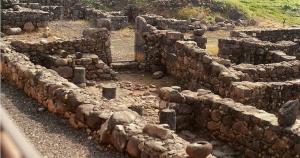
The streets of first-century Capernaum, Jesus’ missionary HQ. Jesus says it will be more tolerable for Sodom than for that city. Photo: Tom Hobson.
Jesus is politically incorrect here, either way we slice it: Sodom is bad, rejecting Christ is worse. Jesus says it will be more tolerable for Sodom than for a town who had seen and heard him with their own eyes and ears but who did not believe. Jesus argues that Sodom and other pagan cities would have been on their knees in an instant if Jesus had come to town.
So how bad was Sodom? Forget the claims based on Ezekiel 16:49 that Sodom’s sin was merely pride, excess of food and pleasure, and neglect for the poor and needy. Verse 50 goes on to say that the people of Sodom had done “abominable deeds.” Sodom’s faults in verse 49 bear no resemblance to the rest of what the Hebrew Bible calls “abomination,” including fraudulent weights and measures (Deuteronomy 25:16; Proverbs 20:10), idolatry (Deuteronomy 7:25, also 27:15), burning one’s children in sacrifice (Deuteronomy 12:31, also 18:10), offering blemished sacrifices to God (Deuteronomy 17:1), witchcraft (Deuteronomy 18:10–11), the wages of a female or male prostitute (Deuteronomy 23:19), and officials who justify the wicked or condemn the righteous (Proverbs 17:15).
But the demands made by the mob in Genesis 19 go far beyond any sort of affectionate, mutual same-sex behavior. Middle Bronze Age Sodom makes any modern gay community look Puritan by comparison: lawless roving gangs of sexual predators, demanding not merely tolerance but submission, threatening violence against anyone who gets in their way.
Because of such a context of mob violence, the sinfulness of same-gender sex cannot be proved by this passage, although the main character in the account treats heterosexual assault as being the lesser of the two evil options. The morality of same-sex intercourse must be directly addressed by other scriptures (see http://www.patheos.com/blogs/tomhobson/2017/09/gods-sex-mandate-two-shall-become-one-flesh/).
Abraham’s nephew Lot moves to Sodom literally because of greener pastures. Sodom was an oasis, “well-watered everywhere like the garden of the Lord.” It was prime agricultural land, plus it had all the attractions of a city. Lot pitches his tent near Sodom. Before you know it, he’s moved into town. It wasn’t easy at first. Peter writes that Lot was “tormented in his righteous soul by the lawless deeds he saw and heard.” But Lot gradually accepts what he sees as normal. Lot gets along with his neighbors, however, only by keeping his mouth shut.
Lot’s wake-up call came the night he takes in two angelic visitors as his guests. All the men of Sodom surround his house and demand him to hand over his two guests. Just when he thought he had become shockproof, Lot can’t believe what this crowd is now demanding. Lot is so horrified that he offers to give up his two virgin daughters to the mob instead. Lot’s move to Sodom is a move he wishes he’d never made.
See what bitter resentment Lot provokes just by speaking up against the sin of his neighbors. See how they now threaten him with violence for being so intolerant and “judge”-mental!
When people are this angry at God, we need to ask the question: Why? What have I done, what have we done, to contribute to their anger at God? In the case of those who are attracted to their own gender, it’s not hard to find the answer: think of all the pain and rejection these folks have been subjected to over the centuries. We have been so determined to reject same-sex behavior that we have failed to truly love the people involved.
Let me emphasize that most people who experience same-sex desire are not like the angry mob at Sodom. Yes, some are militant, self-affirming, in-your-face activists who wish to bully their opponents into submission. Some just wish to be left alone. But the ones to whom my heart goes out most of all are those who long to be free from a desire they don’t want and did not ask for.
The Good News is that Jesus Christ can set people free from the bondage of same-sex desire, the same as for any other type of bondage. Some testify to a complete redirection of their desires. But not everybody does. Others find themselves able to choose celibacy as a lifestyle which they believe to be preferable to same-sex involvement. (Visit http://outpostministries.org/ or http://www.oneby1.org/.) God’s people can help the gay person in his or her journey by giving them all the NON-sexual love we can give from their own gender.
Abraham has no desire to see the people of Sodom suffer God’s judgment. In Genesis 18, we see him urgently bargaining with God, like a peddler on the street who won’t take no for an answer. Abraham bargains boldly, although he admits he has no right to ask what he asks, and God has no obligation to give him what he asks. As out-of-control as Sodom was, Abraham pleads for mercy on the city.
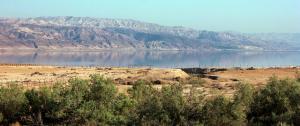
Photo: Yair Aronshtam, “The Dead Sea.” Creative Commons Attribution Share-Alike 2.0 via Flickr.
Judgment comes to Sodom swiftly and without warning. Fire from heaven out of a clear blue sky appears to have set off a huge natural gas explosion. Even today, the air about 100 feet above the Dead Sea still smells like an oil refinery. Locals say if a bird tries to fly across the Dead Sea, it will never reach the other side – it will be overcome by toxic fumes.
When Abraham looks out the next day into the valley toward Sodom, the fertile fields have become a flaming furnace. Acrid black smoke billows into the sky for miles. Paul’s command to flee from sexual sin takes on a whole new meaning in this scene, where to avoid being swallowed up, every second counts. Today, we need to flee from sexual sin in any of its forms, to avoid being destroyed by it, to avoid being overcome by its toxic attraction, like what happened to Lot’s wife.
While archaeologists have been puzzled as to where to find Sodom, a document from Ebla names it as a real place in the area of the Dead Sea. Although the area is desert today, it appears to have been irrigated, due to the abundant evidence of crops at Bab edh-Dhra, the leading candidate for the site (see Bryant Wood, http://www.biblearchaeology.org/post/2008/04/The-Discovery-of-the-Sin-Cities-of-Sodom-and-Gomorrah.aspx#Article). The other possible site of Sodom is Tel el-Hammam, almost due east of Jericho (http://popular-archaeology.com/issue/fall-2015/article/possible-site-of-ancient-sodom-yields-more-finds).
Jesus puts Sodom’s sin into perspective. As bad as Sodom was by anyone’s measure, whatever you think of same-sex behavior, Jesus says it will be more tolerable for Sodom than for those who saw and heard him but did not believe.
Previous Post
September 28, 2017
How Do We Explain Noah's Flood?
Next Post
October 5, 2017 Concubine Versus Married Woman in the Bible
Browse Our Archives
Select a Category Biblical ethic Biblical word studies Biblical world Creation Historical Jesus Uncategorized
Select a Month July 2018 June 2018 May 2018 April 2018 March 2018 February 2018 January 2018 December 2017 November 2017 October 2017 September 2017 August 2017 July 2017
Follow Us!
TAKE THE
Religious Wisdom Quiz
Who said, "Lord, I am not worthy to have you come under my roof" but asked Jesus to heal his servant?
Select your answer to see how you score.
A Roman centurion Peter A scribe A Pharisee
Books by This Author Books by Tom Hobson
Related posts from Biblical Words and World

Musonius Rufus, Women's Equality, and the New Testament

Theology by the Polls: Ten Billion Flies Can't...


TRENDING AT PATHEOS Evangelical

How the author of the world's best hymn...
I've been working with John Newton for a while now. This makes...

Long before this Lectio Divina, Psalm 130 - the song - started...

What About the Trees? Another Living Parable
After I finished writing the last article about falling leaves as a...

Why Classical Education Is a Conversation, Not a...
Come and Read: Joy in Classical Education When I was a little...

Falling Leaves: A Living Parable on Letting Go
I’ve spent the vast majority of my life in the southeast corner...

Cornell University has received a great deal of negative publicity and intense...
view all Evangelical blogs
Ad-Free & Subscriber Log-In Subscription Support
- About Us
- 2026 Calendar
- Videos
- Podcasts
- Library of World Religions
- Faith In Media Tracker
- Advertise With Us
- Write for Us
- Privacy Policy
- Terms of Service
- Do Not Sell My Data
- Contact Us
- Radiant Digital
- Manage Newsletter Subscriptions
- Unsubscribe From Notifications
- Sitemap
Copyright 2008-2026, Patheos. All rights reserved.
Subscription Support Ad-Free & Subscriber Log-In
Follow Patheos