
BuddhistCatholicContemplativeEvangelicalGeneral ChristianHinduJewishLatter-day SaintMuslimNew VisionsProgressive Christian
Beliefs
- Buddhist
- Catholic
- Contemplative
- Evangelical
- General Christian
- Hindu
- Jewish
- Latter-day Saint
- More Voices
- Muslim
- New Visions
- Pagan
- Progressive Christian
Topics
- Religion News
- Food and Religion
- Sports and Religion
- Religious Art
- Religious Music and Entertainment
- Religious Events
- History and Religion
- Style and Religion
- Politics and Religion
- Women in Religion
- Recreation Outdoors and Religion
- Business Finance and Religion
- Careers Workplace and Religion
- Education and Religion
- Family Parenting and Religion
- Health Fitness and Religion
- Home and Religion
- Relationships and Religion
- Technology and Religion
- Travel and Religion
Columnists
- Buddhist Columnists
- Business Finance and Religion Columnists
- Careers Workplace and Religion Columnists
- Catholic Columnists
- Contemplative Columnists
- Education and Religion Columnists
- Evangelists Columnists
- Family Parenting and Religion Columnists
- General Christian Columnists
- Health Fitness and Religion Columnists
- Hindu Columnists
- History and Religion Columnists
- Home and Religion Columnists
- Jewish Columnists
- More Voices Columnists
- Latter Day Columnists
- Muslim Columnists
- New Visions Columnists
- Nonreligious Columnists
- Pagan Columnists
- Politics and Religion Columnists
- Progressive Columnists
- Recreation Outdoors and Religion Columnists
- Relationships and Religion Columnists
- Religion News Columnists
- Religious Art Columnists
- Religious Events Columnists
- Religious Music and Entertainment Columnists
- Sports and Religion Columnists
- Style and Religion Columnists
- Technology and Religion Columnists
- Travel and Religion Columnists
- Women in Religion Columnists
Resource Library
- 2026 Calendar
- Library of World Religions
- The 100 Most Holy Places on Earth
- Patheos Answers
- Podcasts
- Videos
- Faith Leaders Database
- Anglican Episcopalian
- Bahai
- Baptist
- Buddhism
- Christianity
- Confucianism
- Eastern Orthodoxy
- Hinduism
- Holiness and Pentecostal
- ISKCON
- Islam
- Judaism
- Lutheran
- Methodist
- The Church of Jesus Christ of Latter-day Saints
- New Age
- Paganism
- Presbytarian and Reformed
- Protestantism
- Religion Behind the Scenes
- Roman Catholic
- Scientology
- Shia Islam
- Sikhism
- Sufism
- Sunni Islam
- Taoism
- Zen
- See all religions
Research Tools
 Ad-Free & Subscriber Log-In Subscription Support
Ad-Free & Subscriber Log-In Subscription Support
Follow Patheos 

- Trending:
- Forgiveness
- |
- Marriage
- |
- Consciousness
- |
- Death Penalty
- |
- Election
- |
- Halloween
 Biblical Words and World
- Home
- Evangelical
- Genetics and Early Genesis
Genetics and Early Genesis
Last updated on: October 23, 2017 at 6:30 am by Tom Hobson
Genetics and Early Genesis 2017-10-22T16:05:02-05:00 Tom Hobson
Patheos Explore the world's faith through different perspectives on religion and spirituality! Patheos has the views of the prevalent religions and spiritualities of the world.
A new fascinating study makes the connection between genetics and early Genesis. It finds Cro-Magnon and earlier forms of hominids in the Bible. It makes the connection between post-Ice-Age geology, rumors of Atlantis, and Noah’s flood. It even delves into epigenetics, the evidence that DNA can be rapidly impacted by adaptation to environment, as genes that are already present are switched on or off, according to need. The author proposes that speech may be what makes Adam’s race into a new creation that reflects the image of God, a change not traceable in DNA, but which can account for huge advances in human civilization.
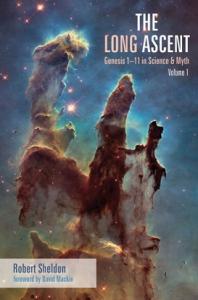
Robert Sheldon’s new book The Long Ascent (Resource Publications, 2017) contains a fascinating fresh approach to genetics and early Genesis.
The book is Robert Sheldon’s The Long Ascent (https://wipfandstock.com/the-long-ascent.html). Sheldon has a PhD in physics, and a Biblical degree from Westminster Theological Seminary. The “Long Ascent” of which Sheldon speaks is what he sees as the process of the human race rising above the epigenetic effects of sin. Cain’s murder injects violence into our DNA, which God partially extinguishes through the Flood, but it has been a long, slow climb to eliminate that violence ever since then.
Sheldon argues that Neanderthals and Australopithecines do not share our DNA, and therefore are not made in the image of God, while Cro-Magnons do share our DNA. Sheldon locates the creation of the latter in Genesis 1:26, approximately 50,000 years ago, while he puts the Genesis 2:7 creation of Adam in approximately 12,000 BCE. Why here? His reason is because here language appears, which is the key element of what it means to be made in the image of God. He suggests that the “divine breath” of Genesis 2:7 could be language. The ability to speak is acquired and passed on epigenetically, yet it does not show up in the DNA, only in the technological revolution that shows up in the archaeological record (reflected in Genesis 4).
“Be fruitful and multiply.” Sheldon says that while Neanderthals may have survived 250,000 years, their populations were always tiny (7,000-50,000), while when Cro-Magnon humanity arrives, the population jumps possibly a hundredfold. It was the Cro-Magnon human being who filled the earth from Africa to Patagonia with advanced hunting tools. Sheldon also reads Genesis 1:29 in the reverse from how most modern readers do; he sees here the dietary shift found in the fossil record from an exclusively meat diet to vegetables, starting with the gathering of grains. Neanderthals ate only large game that could be speared, and lived only in the north; Cro-Magnons were able to hunt anything, anywhere, plus they utilized plants in their diet.
Sheldon comments on Mesolithic stone monuments such as Stonehenge and Göbekli Tepe in Turkey. He dates them to the tenth millennium BCE, allowing for evidence of their reuse at later dates. He believes their original purpose was not worship, but as places where speech was taught. He takes them all as relics of an ancient Adamic empire that existed before the Flood.
This brings us to the Flood. Sheldon believes that Eden was created around 12,000 BCE, during the last Ice Age, in a Mediterranean basin that was substantially below sea level. The waters of the Atlantic are held back by the jammed Straits of Gibraltar, caused by a cataclysmic event, possibly the explosion of a meteor off the Carolina coast, for which there is evidence on both sides of the ocean. This blockage stops the Gulf Stream, plunging Europe into a deep freeze. All of civilized humanity descends into the warm Mediterranean basin. Eventually, the ocean rises high enough to overcome the barrier at Gibraltar, and the ocean pours in and obliterates the civilization in the basin – all but the few humans with whom God will repopulate the earth. Sheldon connects this scenario with the rumors of the Atlantis civilization retold by Plato, using geological research done by scholars who are seeking Atlantis rather than Noah. Sheldon reckons the date of this Flood to be around 9500 BCE.
In one of his forthcoming volumes (three are planned), Sheldon will develop his suggestions on the spread of our present human race, using clues from genetics and linguistics. He sees proto-Indo-Europeans, Cro-Magnon Basques, and proto-Uralic Asians all playing a role. In another forthcoming volume, he plans to give more detail on the rivers of Eden flowing into the empty Mediterranean basin, requiring a re-jiggering from the common understanding of four rivers that meet at the far southern end of Mesopotamia. Here I have yet to be convinced.
There is much more to absorb in Sheldon’s book. I do not necessarily agree with all that I have read in it, nor do I pretend to understand it all or even to explain it correctly to you, for which I hereby apologize to the author in advance wherever this may be true. Overall, I find it to be a valuable resource, and a welcome approach for those of us who strive to connect what God has written in the Hebrew Bible with what God has written into the wordless evidence buried in the earth concerning prehistoric times. Or as Sheldon puts it: “other accounts of Genesis, accounts written in flakes of stone, in coals from a hearth, or in genes extracted from bone.” This book is a keeper for those who struggle to plumb the meaning of early Genesis, in light of our available information from nature.
Previous Post

October 19, 2017
Who Are You Calling Boy?
Next Post

October 26, 2017 God Bashes Fake News
Browse Our Archives
Select a Category Biblical ethic Biblical word studies Biblical world Creation Historical Jesus Uncategorized
Select a Month July 2018 June 2018 May 2018 April 2018 March 2018 February 2018 January 2018 December 2017 November 2017 October 2017 September 2017 August 2017 July 2017
Follow Us!
TAKE THE
Religious Wisdom Quiz
What was Bezalel's profession?
Select your answer to see how you score.
Priest Craftsman Soldier Farmer
Books by This Author Books by Tom Hobson
Related posts from Biblical Words and World

Musonius Rufus, Women's Equality, and the New Testament


TRENDING AT PATHEOS Evangelical

How the author of the world's best hymn...
I've been working with John Newton for a while now. This makes...

Long before this Lectio Divina, Psalm 130 - the song - started...

What About the Trees? Another Living Parable
After I finished writing the last article about falling leaves as a...

Why Classical Education Is a Conversation, Not a...
Come and Read: Joy in Classical Education When I was a little...

Falling Leaves: A Living Parable on Letting Go
I’ve spent the vast majority of my life in the southeast corner...

Cornell University has received a great deal of negative publicity and intense...
view all Evangelical blogs
Ad-Free & Subscriber Log-In Subscription Support
- About Us
- 2026 Calendar
- Videos
- Podcasts
- Library of World Religions
- Faith In Media Tracker
- Advertise With Us
- Write for Us
- Privacy Policy
- Terms of Service
- Do Not Sell My Data
- Contact Us
- Radiant Digital
- Manage Newsletter Subscriptions
- Unsubscribe From Notifications
- Sitemap
Copyright 2008-2026, Patheos. All rights reserved.
Subscription Support Ad-Free & Subscriber Log-In
Follow Patheos