
BuddhistCatholicContemplativeEvangelicalGeneral ChristianHinduJewishLatter-day SaintMuslimNew VisionsProgressive Christian
Beliefs
- Buddhist
- Catholic
- Contemplative
- Evangelical
- General Christian
- Hindu
- Jewish
- Latter-day Saint
- More Voices
- Muslim
- New Visions
- Pagan
- Progressive Christian
Topics
- Religion News
- Food and Religion
- Sports and Religion
- Religious Art
- Religious Music and Entertainment
- Religious Events
- History and Religion
- Style and Religion
- Politics and Religion
- Women in Religion
- Recreation Outdoors and Religion
- Business Finance and Religion
- Careers Workplace and Religion
- Education and Religion
- Family Parenting and Religion
- Health Fitness and Religion
- Home and Religion
- Relationships and Religion
- Technology and Religion
- Travel and Religion
Columnists
- Buddhist Columnists
- Business Finance and Religion Columnists
- Careers Workplace and Religion Columnists
- Catholic Columnists
- Contemplative Columnists
- Education and Religion Columnists
- Evangelists Columnists
- Family Parenting and Religion Columnists
- General Christian Columnists
- Health Fitness and Religion Columnists
- Hindu Columnists
- History and Religion Columnists
- Home and Religion Columnists
- Jewish Columnists
- More Voices Columnists
- Latter Day Columnists
- Muslim Columnists
- New Visions Columnists
- Nonreligious Columnists
- Pagan Columnists
- Politics and Religion Columnists
- Progressive Columnists
- Recreation Outdoors and Religion Columnists
- Relationships and Religion Columnists
- Religion News Columnists
- Religious Art Columnists
- Religious Events Columnists
- Religious Music and Entertainment Columnists
- Sports and Religion Columnists
- Style and Religion Columnists
- Technology and Religion Columnists
- Travel and Religion Columnists
- Women in Religion Columnists
Resource Library
- 2026 Calendar
- Library of World Religions
- The 100 Most Holy Places on Earth
- Patheos Answers
- Podcasts
- Videos
- Faith Leaders Database
- Anglican Episcopalian
- Bahai
- Baptist
- Buddhism
- Christianity
- Confucianism
- Eastern Orthodoxy
- Hinduism
- Holiness and Pentecostal
- ISKCON
- Islam
- Judaism
- Lutheran
- Methodist
- The Church of Jesus Christ of Latter-day Saints
- New Age
- Paganism
- Presbytarian and Reformed
- Protestantism
- Religion Behind the Scenes
- Roman Catholic
- Scientology
- Shia Islam
- Sikhism
- Sufism
- Sunni Islam
- Taoism
- Zen
- See all religions
Research Tools
 Ad-Free & Subscriber Log-In Subscription Support
Ad-Free & Subscriber Log-In Subscription Support
Follow Patheos 

- Trending:
- Forgiveness
- |
- Marriage
- |
- Consciousness
- |
- Death Penalty
- |
- Election
- |
- Halloween
 Biblical Words and World
- Home
- Evangelical
- What’s Wrong With Getting Drunk?
What’s Wrong With Getting Drunk?
Last updated on: August 9, 2017 at 8:02 pm by Tom Hobson
What’s Wrong With Getting Drunk? 2017-08-09T20:02:39-05:00 Tom Hobson
Patheos Explore the world's faith through different perspectives on religion and spirituality! Patheos has the views of the prevalent religions and spiritualities of the world.
What’s wrong with getting drunk? Paul’s one-word answer in Ephesians 5:18 is as hard to define in English as it is in Greek. “Be not drunk with wine, for that is” – “dissipation”? (NKJV, NAS) Or is it “debauchery”? (NRSV, NIV) Most of us need a dictionary to understand either of these words, even though they are in English.

Wood statue of a drunken man that my father bought in Brazil. Photo: Catherine Hobson
“Debauchery” (originally a French word) is defined by Webster as “extreme indulgence in sensuality.” “Dissipation” is defined as “wasteful expenditure,” from “dissipate,” meaning “to cause to spread out or spread thin to the point of vanishing.” So where does that leave us?
“Wherein is excess” (old KJV) is a little more understandable and concise than the other versions. “Because that will ruin your life” (NLT) may be less literal, but it is the easiest translation to understand and the closest to the meaning of the word Paul uses.
Asōtia is the noun Paul uses to explain what’s wrong with getting drunk. The noun form is used three times in the New Testament. In addition to the Ephesians passage, Paul warns in Titus 1:6 that church overseers should have children who are not open to accusations of asōtia or incorrigibility. In 1 Peter 4:4, Peter says that unbelievers are surprised that his readers do not join them in the flood of asōtia that he describes in the previous verse. He describes asōtia with a list of vices that includes three terms for alcohol abuse, plus a term for “licentiousness” that goes beyond mere fornication and adultery (aselgeais).
Asōtia is also used twice in the Greek Old Testament. In Proverbs 28:7, it is used to translate “gluttony.” And in 2 Maccabees 6:4, we are told that the Greeks filled the temple with asōtia and carousing (komoi, wild partying with both food and drink). The adjective form asōtos is used to describe the woman on the prowl in Two-Time Square in Proverbs 7:11, where the Hebrew says she is loud and “rebellious.” To be an asōtos is to indulge so excessively that one destroys oneself.
Possibly the most famous use of this Greek root is in its adverb form (asōtōs) in the parable of the Prodigal Son (Luke 15:13), where we are told that the son squanders his share of his father’s inheritance in living “riotously.” While the older brother in the story claims that the money was spent on harlots, the point of asōtōs seems to be that the inheritance was wasted in a wild and reckless manner.
Uses of asōtia outside the Greek Bible yield much the same results. Commenting on this word in his Theological Lexicon of the New Testament, Spicq observes that “the asōtos not only wastes his goods, but loses his time, degrades his faculties and abilities, and consumes him.” Philo writes that the besotted, debauched (asōtos) life is “a threat to everyone.” Heraclitus says, “Charybdis is a good name for the insatiable, spendthrift debauchery of drinking bouts.”
Testament of Judah 16:1, a line from a biographical fiction piece from the second century BCE, applies this word specifically to wine. Here, Judah the patriarch warns, “Watch out for the limit of wine, for in it are four evil spirits: of lust, of feverish passion, of asōtia, and of sordid gain.” A few sections earlier in the piece (14:1), Judah uses the exact same words and forms as Paul does in Ephesians 5:18: “Be not drunk with wine.” His rationale is that too much wine confuses the mind by filthy thoughts (rhuparois – 14:3); the spirit of error invades one’s mind (14:8), causing one to become foul-mouthed and lawless.
The philosopher Epicurus, who is famous for his line that “the beginning and root of all good is the pleasure of the stomach,” nevertheless declares, “When then we say that pleasure is the goal [of life], we do not mean the pleasures of profligates (asōtōn)…For it is not continuous drinking bouts and carousing, nor the [sexual] enjoyment of boys and women, nor of fish and other items carried on the extravagant [dinner] table, which produce a pleasurable life, but sober reasoning.”
Most of the time, asōtia refers to excesses of food and drink; for sexual indulgence, other terms tend to be used. In the case of food, it refers to gluttony in its most unhealthy form. Dio Cassius describes a character named Plautianus as being “asōtotatos (the most debauched) of men, so much so that he both feasted himself and vomited at the same time, because of the load of foods and wine he was not able to digest.” (In the next line, Dio tells us that this character was also a notorious pedophile who preyed on both genders.) Josephus says that once the emperor Vitellus “left the palace drunk after a debauched (asōtos) dinner.”
Exhausting one’s resources is another common meaning. Papyrus Florentini 99.7 uses the verb form asōteuesthai, “to exhaust all of one’s resources,” to describe a son who spent all his money on harlots, like the Prodigal Son was accused of doing. Athenaeus tells of several asōtoi who devoured their entire family inheritances irresponsibly, including one who sold his father’s monuments (gravestones?) worth 1000 drachmae to finance his riotous lifestyle. Athenaeus states that such asōtoi were often punished by the Areopagus at Athens for such behavior.
The meaning of asōtia may be illumined further by comparing it to other vices and virtues. Asōtia is regarded as the opposite of aretē (virtue, moral excellence). In the Tablet of Cebes, Asōtia is a harlot accompanied by Akrasia (Lack of Self-Control), Aplēstia (Insatiability), and Kolakeia (Lasciviousness). In his Nicomachean Ethic, Aristotle declares asōtia to be the opposite of aneleutheria or “stinginess.”
Asōtia gets paired with vices such as being ataktos (unruly) and aselgēs (licentious), and with rhathumia (laziness) and kinaidia (horribly obscene behavior, even by Greek standards). Both Spicq and Kittel theorize that asōtia originally meant “incurable,” which is precisely what the expression asōtōs echein means, an expression that is close to our modern concept of “addiction.” (Similarly, Clement of Alexandria claims that asōtia means “beyond salvation,” and takes Paul’s warning to the Ephesians as a reference to the “hopelessness of the drunkard.”)
What a picture of the dangers of substance abuse! (Don’t get the wrong idea! Paul is not singling out wine, as if it were OK to be drunk with beer, liquor, marijuana, or other mind-altering drugs. No, he is forbidding the use of any mind-altering substance to get high.) Asōtia may be described by our concept of “getting wasted.” The word gives us a picture of someone pouring their resources down the drain on food, alcohol, and other indulgences, ruining their mind, health, and life in the process.
As I put it in chapter 5 of my book, What’s on God’s Sin List for Today?, the bottom line is that for Paul, getting drunk is a reckless, harmful form of excess. That’s hard to say in just one word. But Paul did. Too bad we don’t have any one word in plain English that does the same trick.
Previous Post

August 7, 2017
Jonah and the Eclipse in Ancient Nineveh
Next Post
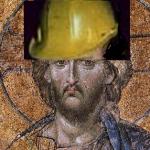
August 14, 2017 Christ the Builder?
Browse Our Archives
Select a Category Biblical ethic Biblical word studies Biblical world Creation Historical Jesus Uncategorized
Select a Month July 2018 June 2018 May 2018 April 2018 March 2018 February 2018 January 2018 December 2017 November 2017 October 2017 September 2017 August 2017 July 2017
Follow Us!
TAKE THE
Religious Wisdom Quiz
I came to Jesus at night to ask about being born again. Who was this Pharisee and member of the Jewish ruling council?
Select your answer to see how you score.
Caiaphas Gamaliel Joseph of Arimathea Nicodemus
Books by This Author Books by Tom Hobson
Related posts from Biblical Words and World

Words I Never Heard in the Bible

Theology by the Polls: Ten Billion Flies Can't...

A Gospel of Glorious Half-Truth

Ham Sandwiches and Gay Sex: How Timeless Is...
TRENDING AT PATHEOS Evangelical

The REST of Your Life: A Creative Wrestles...
This week I had a conversation with a good friend from church....

How the author of the world's best hymn...
I've been working with John Newton for a while now. This makes...

Long before this Lectio Divina, Psalm 130 - the song - started...

What About the Trees? Another Living Parable
After I finished writing the last article about falling leaves as a...

Why Classical Education Is a Conversation, Not a...
Come and Read: Joy in Classical Education When I was a little...

Cornell University has received a great deal of negative publicity and intense...
view all Evangelical blogs
Ad-Free & Subscriber Log-In Subscription Support
- About Us
- 2026 Calendar
- Videos
- Podcasts
- Library of World Religions
- Faith In Media Tracker
- Advertise With Us
- Write for Us
- Privacy Policy
- Terms of Service
- Do Not Sell My Data
- Contact Us
- Radiant Digital
- Manage Newsletter Subscriptions
- Unsubscribe From Notifications
- Sitemap
Copyright 2008-2026, Patheos. All rights reserved.
Subscription Support Ad-Free & Subscriber Log-In
Follow Patheos