
BuddhistCatholicContemplativeEvangelicalGeneral ChristianHinduJewishLatter-day SaintMuslimNew VisionsProgressive Christian
Beliefs
- Buddhist
- Catholic
- Contemplative
- Evangelical
- General Christian
- Hindu
- Jewish
- Latter-day Saint
- More Voices
- Muslim
- New Visions
- Pagan
- Progressive Christian
Topics
- Religion News
- Food and Religion
- Sports and Religion
- Religious Art
- Religious Music and Entertainment
- Religious Events
- History and Religion
- Style and Religion
- Politics and Religion
- Women in Religion
- Recreation Outdoors and Religion
- Business Finance and Religion
- Careers Workplace and Religion
- Education and Religion
- Family Parenting and Religion
- Health Fitness and Religion
- Home and Religion
- Relationships and Religion
- Technology and Religion
- Travel and Religion
Columnists
- Buddhist Columnists
- Business Finance and Religion Columnists
- Careers Workplace and Religion Columnists
- Catholic Columnists
- Contemplative Columnists
- Education and Religion Columnists
- Evangelists Columnists
- Family Parenting and Religion Columnists
- General Christian Columnists
- Health Fitness and Religion Columnists
- Hindu Columnists
- History and Religion Columnists
- Home and Religion Columnists
- Jewish Columnists
- More Voices Columnists
- Latter Day Columnists
- Muslim Columnists
- New Visions Columnists
- Nonreligious Columnists
- Pagan Columnists
- Politics and Religion Columnists
- Progressive Columnists
- Recreation Outdoors and Religion Columnists
- Relationships and Religion Columnists
- Religion News Columnists
- Religious Art Columnists
- Religious Events Columnists
- Religious Music and Entertainment Columnists
- Sports and Religion Columnists
- Style and Religion Columnists
- Technology and Religion Columnists
- Travel and Religion Columnists
- Women in Religion Columnists
Resource Library
- 2026 Calendar
- Library of World Religions
- The 100 Most Holy Places on Earth
- Patheos Answers
- Podcasts
- Videos
- Faith Leaders Database
- Anglican Episcopalian
- Bahai
- Baptist
- Buddhism
- Christianity
- Confucianism
- Eastern Orthodoxy
- Hinduism
- Holiness and Pentecostal
- ISKCON
- Islam
- Judaism
- Lutheran
- Methodist
- The Church of Jesus Christ of Latter-day Saints
- New Age
- Paganism
- Presbytarian and Reformed
- Protestantism
- Religion Behind the Scenes
- Roman Catholic
- Scientology
- Shia Islam
- Sikhism
- Sufism
- Sunni Islam
- Taoism
- Zen
- See all religions
Research Tools
 Ad-Free & Subscriber Log-In Subscription Support
Ad-Free & Subscriber Log-In Subscription Support
Follow Patheos 

- Trending:
- Forgiveness
- |
- Marriage
- |
- Consciousness
- |
- Death Penalty
- |
- Election
- |
- Halloween
 Biblical Words and World
- Home
- Evangelical
- How Did Creation Happen?
How Did Creation Happen?
Last updated on: September 6, 2017 at 7:22 am by Tom Hobson
How Did Creation Happen? 2017-09-06T07:22:23-05:00 Tom Hobson
Patheos Explore the world's faith through different perspectives on religion and spirituality! Patheos has the views of the prevalent religions and spiritualities of the world.
How did creation happen? Is there a special word for what God did? At what taxonomic level did God create life? And how long did it take?
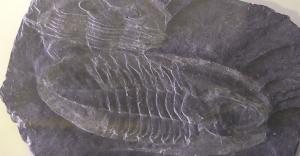
Trilobites are part of the explosion of forms of complex life that arise suddenly way back in the Cambrian period, with virtually no hint of how they evolved. Photo: Bruno Dumaine via Creative Commons Share Alike 4.0 International.
Only one being in this universe can create out of nothing. The rest of us must create out of previously existing material. Even if we create a new idea or object of art or intellectual property, we did not create the ingredients. (We could even question whether we create new ideas, or simply discover them; Ecclesiastes says there is “nothing new under the sun.”)
The Hebrew Bible has a verb for it: bara’, to create out of nothing. We find this verb used 48 times, mostly in Genesis (eleven times), Psalms (six times), and Isaiah (seventeen times, mostly in chapters 40-45). (Beware of homonyms with very different meanings!) God is always the subject. Bara’ is different from yatzar, to make from previously existing material, like a potter creating objects from clay. Yatzar is the word used in Genesis 2:7 for God making humans out of the dust of the earth. Still one more word for “create” is the generic ‘asah, to do or make. Both ‘asah and bara’ are used for the totality of creation in Genesis 2:4, bara’ being the more specific of the two.
What else does God create-out-of-nothing? Exodus 34:10 announces to the Hebrews in the desert that God will create unprecedented wonders. In Numbers 16:30, Moses warns that God is about to create one of those wonders: the earth will swallow up his opponents. In Psalm 51:10 (51:12 Hebrew), David cries, “Create in me a clean heart, O God!” Psalm 102:18 predicts that “a people yet to be created (= born) may praise the Lord.” Isaiah 41:20 predicts that God will again create unprecedented events. Isaiah 45:7 declares that God creates both welfare (shalom) and harm / bad (ra‘, a word that will require another blog post). In Isaiah 54:16, God says, “I have created the destroyer.” And in Jeremiah 31:22, God predicts that he will create one more new thing: “a woman protects a (grown) man.”
Note that in Genesis 1, bara’ is only used for the initial creation of heaven and earth on the first day, for the creation of animal life in the sea and air on the fifth day, and for the creation of humans on the sixth day. One could imply that God uses the elements from these creative acts to make the rest of what exists. In fact, on the third and sixth days, God commands the earth to bring forth plants and vertebrates. If I were inclined to believe in macro-evolution (which I am not), I would use these commands as Biblical support.
We are told that God creates organisms according to their “kind” (min), a word that is used 31 times, almost entirely in the creation account, in the worldwide flood account, and the kosher animal passages in Leviticus 11 and Deuteronomy 14. In the latter passages, “species” fits the context best, but in Genesis, I suggest a higher taxonomic level.
Micro-evolution within a genus or species is hard to deny, such as the common descent of all species of sunfish. But macro-evolution that turns a tunicate into a fish, a fish into a frog, or a land mammal into a whale, would require so much change that only an intelligent Creator could make it happen. So my theory is that min refers to a genus within which its members are genetically close enough to interbreed. You can cross a lake trout and a brook trout, but not a trout and a bass; such “kinds” would require super-natural intervention to produce.
Look at the so-called Cambrian explosion. At its earliest end, the fossil record suddenly goes from the tiniest, simplest organisms to a wild number of phyla, with complex creatures like the trilobite suddenly appearing out of nowhere. This does not fit the model for gradual evolution, and it’s a shame that most public school students are not given this information, because that would be creationism, one of the rare absolute evils in the belief system of relativists.
(Francis Collins is the only evolutionist who raises questions not yet answered by creationists, such as how to explain seemingly vestigial DNA. Other evolutionists fail to engage the scientific issues raised by creationists.)
What about the time frame for the Biblical creation? Here, Biblical inerrancy proponents (of which I am one) can agree to disagree. The literal 144-hour creation framework is said to be what the Bible really means, both by conservatives who believe it, and by liberals who reject it as foolish. It is argued that yom always means 24-hour day, but one might ask how long the seventh day was; has God rested from creation or not? And how long is the Day of the Lord?
Others theorize that creation did not happen in six days, but was revealed in six days. This would include John Walton’s cosmic temple theory (see his book The Lost World of Genesis One), which I find to be faithful and well-argued, but unconvincing for me. His theory affirms that God creates all from nothing, but that the six days are actually about God organizing it all into the parts of God’s cosmic temple.
Meredith Kline, one of my professors at Gordon-Conwell, offers another version of the six-day revealing of creation: the framework hypothesis. Kline observes that plants are created on the third day, but the heavenly bodies are not created until the fourth day. He sees the order of the six days as not chronological, but topical. He sees the first three days as creation-kingdoms: the heavens, air and water, dry land and plants. During the second three days, God creates the kings who rule those realms: heavenly bodies, air and water creatures, and land mammals, including the creature appointed to rule them all.
I lean toward either the framework hypothesis, or the so-called “day-age” theory. I can see an account of gradual creation in Genesis 1, similar to what a secular scientist would suggest. We start with an event like the Big Bang, where light and matter come into existence. The atmosphere forms (see next blog post), then the continents and plant life, then we capture the moon into our orbit, then aquatic life and flying insects (Pennsylvanian period?), then animals of the Jurassic and Cenozoic periods, with a pronounced break between these and the appearance of a creature made in the image of God.
Implications: First, we are taught to believe that creation is good, because it is produced by God. (Tertullian’s jab at those rascally Gnostics was that they reject the goodness of creation, but they have to hijack the Creator’s water to baptize their converts!)
The other implication I find is that for years, I have taught my confirmation students that you are stuck with either a God who always existed, or matter that has always existed. You can worship God, or worship matter. Those are the options. To me, it is more logical that matter owes its existence to a higher power, specifically, the One first revealed in the Hebrew Bible.
Previous Post

August 28, 2017
The Ancient Flat Earth? A Modern Lie
Next Post

September 4, 2017 Firmament: Dome or Atmosphere?
Browse Our Archives
Select a Category Biblical ethic Biblical word studies Biblical world Creation Historical Jesus Uncategorized
Select a Month July 2018 June 2018 May 2018 April 2018 March 2018 February 2018 January 2018 December 2017 November 2017 October 2017 September 2017 August 2017 July 2017
Follow Us!
TAKE THE
Religious Wisdom Quiz
In Philippians, Paul mentions two women who need to be of the same mind. Who are they?
Select your answer to see how you score.
Mary and Martha Lydia and Chloe Phoebe and Priscilla Euodia and Syntyche
Books by This Author Books by Tom Hobson
Related posts from Biblical Words and World

Words I Never Heard in the Bible

Be Ye Perfect? What Does Jesus Mean?
What's the Difference Between Spirit and Soul?

Soul or Life? The Double Meaning of Psychē
TRENDING AT PATHEOS Evangelical

How the author of the world's best hymn...
I've been working with John Newton for a while now. This makes...

Long before this Lectio Divina, Psalm 130 - the song - started...

What About the Trees? Another Living Parable
After I finished writing the last article about falling leaves as a...

Why Classical Education Is a Conversation, Not a...
Come and Read: Joy in Classical Education When I was a little...

Falling Leaves: A Living Parable on Letting Go
I’ve spent the vast majority of my life in the southeast corner...

Cornell University has received a great deal of negative publicity and intense...
view all Evangelical blogs
Ad-Free & Subscriber Log-In Subscription Support
- About Us
- 2026 Calendar
- Videos
- Podcasts
- Library of World Religions
- Faith In Media Tracker
- Advertise With Us
- Write for Us
- Privacy Policy
- Terms of Service
- Do Not Sell My Data
- Contact Us
- Radiant Digital
- Manage Newsletter Subscriptions
- Unsubscribe From Notifications
- Sitemap
Copyright 2008-2026, Patheos. All rights reserved.
Subscription Support Ad-Free & Subscriber Log-In
Follow Patheos