
BuddhistCatholicContemplativeEvangelicalGeneral ChristianHinduJewishLatter-day SaintMuslimNew VisionsProgressive Christian
Beliefs
- Buddhist
- Catholic
- Contemplative
- Evangelical
- General Christian
- Hindu
- Jewish
- Latter-day Saint
- More Voices
- Muslim
- New Visions
- Pagan
- Progressive Christian
Topics
- Religion News
- Food and Religion
- Sports and Religion
- Religious Art
- Religious Music and Entertainment
- Religious Events
- History and Religion
- Style and Religion
- Politics and Religion
- Women in Religion
- Recreation Outdoors and Religion
- Business Finance and Religion
- Careers Workplace and Religion
- Education and Religion
- Family Parenting and Religion
- Health Fitness and Religion
- Home and Religion
- Relationships and Religion
- Technology and Religion
- Travel and Religion
Columnists
- Buddhist Columnists
- Business Finance and Religion Columnists
- Careers Workplace and Religion Columnists
- Catholic Columnists
- Contemplative Columnists
- Education and Religion Columnists
- Evangelists Columnists
- Family Parenting and Religion Columnists
- General Christian Columnists
- Health Fitness and Religion Columnists
- Hindu Columnists
- History and Religion Columnists
- Home and Religion Columnists
- Jewish Columnists
- More Voices Columnists
- Latter Day Columnists
- Muslim Columnists
- New Visions Columnists
- Nonreligious Columnists
- Pagan Columnists
- Politics and Religion Columnists
- Progressive Columnists
- Recreation Outdoors and Religion Columnists
- Relationships and Religion Columnists
- Religion News Columnists
- Religious Art Columnists
- Religious Events Columnists
- Religious Music and Entertainment Columnists
- Sports and Religion Columnists
- Style and Religion Columnists
- Technology and Religion Columnists
- Travel and Religion Columnists
- Women in Religion Columnists
Resource Library
- 2026 Calendar
- Library of World Religions
- The 100 Most Holy Places on Earth
- Patheos Answers
- Podcasts
- Videos
- Faith Leaders Database
- Anglican Episcopalian
- Bahai
- Baptist
- Buddhism
- Christianity
- Confucianism
- Eastern Orthodoxy
- Hinduism
- Holiness and Pentecostal
- ISKCON
- Islam
- Judaism
- Lutheran
- Methodist
- The Church of Jesus Christ of Latter-day Saints
- New Age
- Paganism
- Presbytarian and Reformed
- Protestantism
- Religion Behind the Scenes
- Roman Catholic
- Scientology
- Shia Islam
- Sikhism
- Sufism
- Sunni Islam
- Taoism
- Zen
- See all religions
Research Tools
 Ad-Free & Subscriber Log-In Subscription Support
Ad-Free & Subscriber Log-In Subscription Support
Follow Patheos 

- Trending:
- Forgiveness
- |
- Marriage
- |
- Consciousness
- |
- Death Penalty
- |
- Election
- |
- Halloween
 Biblical Words and World
- Home
- Evangelical
- African Bible Heroes
African Bible Heroes
Last updated on: July 28, 2017 at 8:01 am by Tom Hobson
African Bible Heroes 2017-07-28T08:01:57-05:00 Tom Hobson
Patheos Explore the world's faith through different perspectives on religion and spirituality! Patheos has the views of the prevalent religions and spiritualities of the world.
It’s easier to find an African of faith in the Hebrew Bible than an Indo-European! This post takes a closer look at several Africans in both Testaments who are featured as persons of faith.
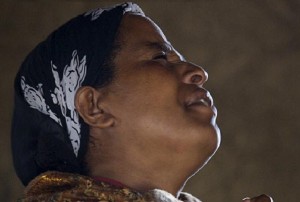
Steve Evans, licensed via Creative Commons Attribution 2.0 Generic license
The God found in the Hebrew Bible has a passion for Africa. “Let Ethiopia (= Nubia, Hebrew Cush) stretch forth her hands to God,” says Psalm 68:31. Isaiah 18:7 predicts that someday, gifts will be sent to the Lord of hosts on Mount Zion from the land of Nubia, “a people tall and smooth, from a people feared near and far, a nation mighty and conquering, whose land the rivers divide.” Likewise, Zephaniah 3:10 predicts, “From beyond the rivers of Nubia my worshipers, the daughter of my scattered ones, shall bring my offering.”
Africans are far better represented among the “good guys” in the Bible than almost any other racial or ethnic group who is reading this post. I will use the term “heroes” in this post simply to specify characters of whom the Bible speaks well, as opposed to Pharaoh and his army, or the Nubian army in 2 Chronicles 14, who were opponents of God’s people rather than positive figures in Israel’s history.
While the Hebrew term Cush has been traditionally translated “Ethiopia,” I concur that the both the modern nation, and the land referred to by the Greeks by that name, are too far to the southeast to be the land referred to in the Hebrew Bible and in other ancient Near Eastern languages. In my opinion, Sudan is where we find Cush, and we find it in the area known as Nubia (see https://en.wikipedia.org/wiki/Kingdom_of_Kush).
We find the first Bible character from Nubia in Numbers 12:1, where Moses is said to have married a nameless woman from there, which becomes a bone of contention with his brother and sister. This is probably not Zipporah the Midianite, whom Moses married in Exodus 2:21, but a second wife. The presence of this woman in the Exodus confirms that a “mixed multitude” did indeed go up from Egypt with Israel (Exodus 12:38).

By United States Department of Energy [Public domain], via Wikimedia Commons
(Be careful about using Numbers 12 as the Biblical basis for interracial marriage. I did so from the pulpit in rural Missouri in the mid-1980s. The mushroom cloud has since dissipated. I made the mistake of assuming that because my Bible study group accepted Moses’ marriage, that the rest of the parish would be OK with its implications. I still stand by my affirmation of interracial marriage.)
The next Nubian we meet in the Bible is an unnamed servant of King David in 2 Samuel 18:21-32 who delivers the message that Absalom has been killed in battle. In a direct quote, the Nubian credits YHWH as being the one who has delivered David from his enemies.
The best Hebrew Bible example of a Nubian of faith in Israel is Ebed-Melech, whom we first meet in Jeremiah 38:7. His name simply means “Servant of the King,” and he seems to be highly placed in the Judean royal palace. Ebed-Melech rescues Jeremiah from dying in the cistern into which he has been thrown by a mob (Jeremiah 38:8-13).
Ebed-Melech gets a direct word from God in Jeremiah 39:16-18. God assures Ebed-Melech that when the promised disaster falls upon Jerusalem, “I will save you on that day, says the LORD, and you shall not be handed over to those whom you dread. For I will surely save you, and you shall not fall by the sword; but you shall have your life as a prize of war, because you have trusted in me, says the LORD.” (NRSV)
It is far easier to find an African of faith in the Hebrew Bible than to find an Indo-European of faith. We could try to point to David’s bodyguard of Gittites, Cherethites, and Pelethites (all of whom were Philistines), but none of them are singled out as believers like the African characters we have discussed. And converts such as Rahab the harlot, Ruth the Moabite, and the Queen of Sheba, are Semitic, not Indo-European. The best candidates for Indo-European followers of YHWH are (ironically) Uriah the Hittite, and Araunah the Jebusite, if we follow the scholarly hunch that the Jebusites were Hurrian.
Isaiah 19 predicts that someday, the Egyptians as a people shall worship the God of Israel. I see the Coptic church (descendants of the ethnic Egyptians) as the fulfillment of that prophecy. By the way, if we include Egyptians as Africans, both the tribes of Ephraim and Manasseh have an Egyptian mother, Asenath the daughter of Potiphera, priest of On (Heliopolis). So we can add them as positively identified Africans among the people of God in the Hebrew Bible!
In the New Testament, we cannot know whether Simon of Cyrene (Matthew 27:32 + parallels) or Lucius of Cyrene (Acts 13:1) were Libyan Messianic Jews, or whether they were ethnic African converts. (The decision to cast Sidney Potier as Simon of Cyrene in “The Greatest Story Ever Told” had at least some Biblical basis.) However, the early church leader Simeon-called-Niger (Acts 13:1), simply by the way he is identified, must almost certainly have been ethnic African.
But the best-known African hero of faith is the Ethiopian royal treasurer (Acts 8:27-39) who takes several months off from his job to travel 900 miles to seek the God of Israel. He even purchases an expensive personal copy of the Septuagint. Here is a man who fulfills Isaiah’s 700-year-old prophecy that worshippers will come to Jerusalem from beyond the rivers of Sudan. When he hears the Good News of Jesus, he asks to be baptized. He goes on his way rejoicing, and becomes the first follower of Jesus in Africa – to be followed by hundreds of millions more!
Previous Post

July 24, 2017
What Does the Bible Teach About Obscene Language?
Next Post

July 31, 2017 Divine Necessity: Events That Had to Happen
Browse Our Archives
Select a Category Biblical ethic Biblical word studies Biblical world Creation Historical Jesus Uncategorized
Select a Month July 2018 June 2018 May 2018 April 2018 March 2018 February 2018 January 2018 December 2017 November 2017 October 2017 September 2017 August 2017 July 2017
Follow Us!
TAKE THE
Religious Wisdom Quiz
What was rolled away from Jesus’ tomb?
Select your answer to see how you score.
A stone A fence A wall A door
Books by This Author Books by Tom Hobson
Related posts from Biblical Words and World

Musonius Rufus, Women's Equality, and the New Testament


TRENDING AT PATHEOS Evangelical

How the author of the world's best hymn...
I've been working with John Newton for a while now. This makes...

Long before this Lectio Divina, Psalm 130 - the song - started...

What About the Trees? Another Living Parable
After I finished writing the last article about falling leaves as a...

Why Classical Education Is a Conversation, Not a...
Come and Read: Joy in Classical Education When I was a little...

Falling Leaves: A Living Parable on Letting Go
I’ve spent the vast majority of my life in the southeast corner...

Cornell University has received a great deal of negative publicity and intense...
view all Evangelical blogs
Ad-Free & Subscriber Log-In Subscription Support
- About Us
- 2026 Calendar
- Videos
- Podcasts
- Library of World Religions
- Faith In Media Tracker
- Advertise With Us
- Write for Us
- Privacy Policy
- Terms of Service
- Do Not Sell My Data
- Contact Us
- Radiant Digital
- Manage Newsletter Subscriptions
- Unsubscribe From Notifications
- Sitemap
Copyright 2008-2026, Patheos. All rights reserved.
Subscription Support Ad-Free & Subscriber Log-In
Follow Patheos