
BuddhistCatholicContemplativeEvangelicalGeneral ChristianHinduJewishLatter-day SaintMuslimNew VisionsProgressive Christian
Beliefs
- Buddhist
- Catholic
- Contemplative
- Evangelical
- General Christian
- Hindu
- Jewish
- Latter-day Saint
- More Voices
- Muslim
- New Visions
- Pagan
- Progressive Christian
Topics
- Religion News
- Food and Religion
- Sports and Religion
- Religious Art
- Religious Music and Entertainment
- Religious Events
- History and Religion
- Style and Religion
- Politics and Religion
- Women in Religion
- Recreation Outdoors and Religion
- Business Finance and Religion
- Careers Workplace and Religion
- Education and Religion
- Family Parenting and Religion
- Health Fitness and Religion
- Home and Religion
- Relationships and Religion
- Technology and Religion
- Travel and Religion
Columnists
- Buddhist Columnists
- Business Finance and Religion Columnists
- Careers Workplace and Religion Columnists
- Catholic Columnists
- Contemplative Columnists
- Education and Religion Columnists
- Evangelists Columnists
- Family Parenting and Religion Columnists
- General Christian Columnists
- Health Fitness and Religion Columnists
- Hindu Columnists
- History and Religion Columnists
- Home and Religion Columnists
- Jewish Columnists
- More Voices Columnists
- Latter Day Columnists
- Muslim Columnists
- New Visions Columnists
- Nonreligious Columnists
- Pagan Columnists
- Politics and Religion Columnists
- Progressive Columnists
- Recreation Outdoors and Religion Columnists
- Relationships and Religion Columnists
- Religion News Columnists
- Religious Art Columnists
- Religious Events Columnists
- Religious Music and Entertainment Columnists
- Sports and Religion Columnists
- Style and Religion Columnists
- Technology and Religion Columnists
- Travel and Religion Columnists
- Women in Religion Columnists
Resource Library
- 2026 Calendar
- Library of World Religions
- The 100 Most Holy Places on Earth
- Patheos Answers
- Podcasts
- Videos
- Faith Leaders Database
- Anglican Episcopalian
- Bahai
- Baptist
- Buddhism
- Christianity
- Confucianism
- Eastern Orthodoxy
- Hinduism
- Holiness and Pentecostal
- ISKCON
- Islam
- Judaism
- Lutheran
- Methodist
- The Church of Jesus Christ of Latter-day Saints
- New Age
- Paganism
- Presbytarian and Reformed
- Protestantism
- Religion Behind the Scenes
- Roman Catholic
- Scientology
- Shia Islam
- Sikhism
- Sufism
- Sunni Islam
- Taoism
- Zen
- See all religions
Research Tools
 Ad-Free & Subscriber Log-In Subscription Support
Ad-Free & Subscriber Log-In Subscription Support
Follow Patheos 

- Trending:
- Forgiveness
- |
- Marriage
- |
- Consciousness
- |
- Death Penalty
- |
- Election
- |
- Halloween
 To Do Justice
- Home
- Progressive Christian
- Politics and Religion
- Why the Supreme Court’s Decision to Respect “Sincere Religious Beliefs” is Wrong
Why the Supreme Court’s Decision to Respect “Sincere Religious Beliefs” is Wrong
Last updated on: June 5, 2018 at 7:00 am by Rebecca Todd Peters
Why the Supreme Court’s Decision to Respect “Sincere Religious Beliefs” is Wrong 2018-06-05T01:30:06-04:00 Rebecca Todd Peters
Patheos Explore the world's faith through different perspectives on religion and spirituality! Patheos has the views of the prevalent religions and spiritualities of the world.
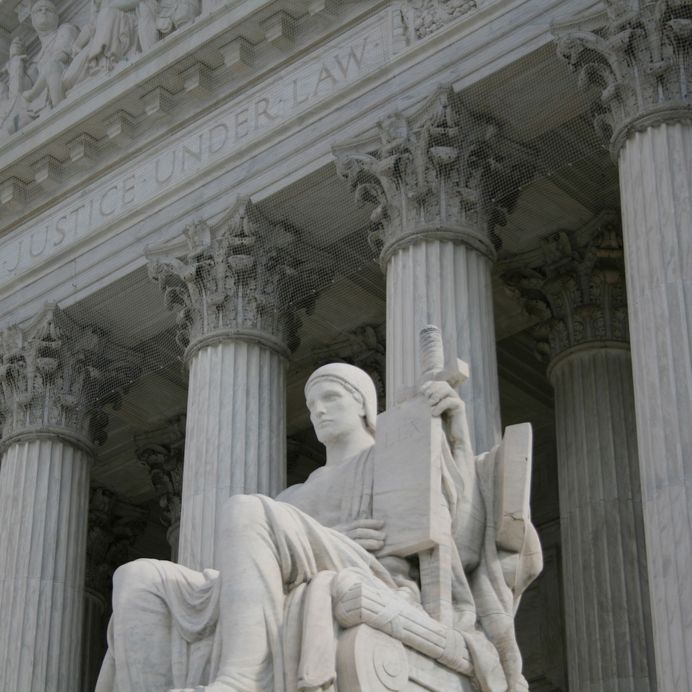
Copyright: fintastique / 123RF Stock Photo
Yesterday, the Supreme Court upheld a Colorado baker’s decision to refuse to bake a wedding cake for a gay couple. It was an oddly narrow decision that reaffirmed protections for gay rights while simultaneously allowing the baker to violate them.
The case was argued on two grounds – free speech and free exercise of religion. Regarding free speech, the argument that baking a cake is a speech act did not seem to hold much traction. Neither did the majority opinion hold that a businessperson has a right to discriminate based on their religious beliefs.
The Supreme Court’s Decision
Surprisingly, perhaps, the decision was ultimately decided on very narrow grounds. The majority ruled in favor of the baker based on the judgment that the Colorado Civil Rights Commission demonstrated “hostility” to religion. The Civil Rights Commission had made the original ruling against the baker.
What Justice Kennedy is referring to here are remarks that were made by one member of the Commission who said:
Freedom of religion and religion has been used to justify all kinds of discrimination throughout history, whether it be slavery, whether it be the holocaust, whether it be – I mean, we – we can list hundreds of situations where freedom of religion has been used to justify discrimination.
So far, what this Commissioner said is simply fact. Religion has been used in exactly this way throughout history. Furthermore, religious people continue to claim “freedom of religion” to justify misogyny, violence, homophobia, and other egregious and uncivil behaviors.
Here’s where it gets tricky
However, the Commissioner went on to say:
And to me it is one of the most despicable pieces of rhetoric that people can use to – to use their religion to hurt others.
This is what really seemed to set Justice Kennedy off. He argued in response:
To describe a man’s faith as “one of the most despicable pieces of rhetoric that people can use” is to disparage his religion in at least two distinct ways: by describing it as despicable, and also by characterizing it as merely rhetorical – something insubstantial and even insincere.
Based on this statement of one Commissioner, Kennedy held that the whole Colorado Civil Rights Commission failed to uphold their responsibility of “fair and neutral enforcement of Colorado’s anti-discrimination law – a law that protects discrimination on the basis of religion as well as sexual orientation.”
The opinion equivocated on a number of points and fairly invited further cases by stating:
The outcome of cases like this in other circumstances must await further elaboration in the courts, all in the context of recognizing that these disputes must be resolved with tolerance, without undue disrespect to sincere religious beliefs, and without subjecting gay persons to indignities when they seek goods and services in an open market.
Just what is “undue disrespect”?
It is the phrase “without undue disrespect to sincere religious beliefs” that gives me pause.
How are we to determine what constitutes “undue disrespect”? Is that another way of saying we need to respect these “sincere religious beliefs”? Who decides what is “undue”?
After all, we live in a country where Christians hold some horribly disrespectful beliefs.
Some of these beliefs are against the law. As in, some Christians sincerely believe that they have the right to beat their wives and some of their wives have been taught to believe they deserve it.
Some of these beliefs are used to harm women. As in, some Christians who sincerely believe that fertilized eggs are human beings are interfering with women’s access to birth control and abortion.
Some of these beliefs are simply morally abhorrent. As in, some Christians sincerely believe that the white race is morally, physically, and intellectually superior to all other races.
Freedom of speech means that we must allow people to express their beliefs, however abhorrent. It doesn’t mean we must respect those beliefs.
The same must be said for freedom of religion. While people have a right to believe whatever they wish, they do not have a right to act on those beliefs when they harm other people.
My faith calls me to challenge hatred
My faith calls me to respect other people and to seek the good in them. I do not, however, believe that I am called to respect their “sincere religious beliefs.” In fact, I believe that my faith calls me to challenge beliefs that are hateful, hurtful, and harmful to other human beings.
What exactly does it mean to “respect” beliefs that violate the humanity of others?
I think the opinion would have been better served to have asked that these disputes be resolved without undue disrespect to people who hold sincerely held-religious beliefs.
Some beliefs do not warrant my respect, no matter how sincerely held.
SaveSave
SaveSave
SaveSave
SaveSave
SaveSave
SaveSave
SaveSave
SaveSave
SaveSave

About Rebecca Todd Peters
I am a Professor of Religious Studies at Elon University. I am a feminist Christian ethicist and work on issues of social justice, particularly globalization, economic justice, and reproductive justice. My latest book is Trust Women: A Progressive Christian Argument for Reproductive Justice. You can read more about the author here.
Previous Post

May 26, 2018
Why Falling U.S. Birthrates are a Good Thing
Next Post
June 25, 2018 Republican Voices for Choice Retreat Amidst Increased Polarization
Browse Our Archives
Select a Category book review christian ethics christianity college/higher education economics ecumenism environment feminism feminism and feminist theology justice motherhood parenting politics poverty public policy reproductive justice sexuality social change solidarity Uncategorized
Select a Month September 2018 July 2018 June 2018 May 2018 April 2018 March 2018 February 2017 January 2017 November 2016 October 2016 September 2016 August 2016 July 2016 May 2016 April 2016 March 2016 February 2016 January 2016 December 2015 November 2015 October 2015 September 2015 August 2015 July 2015 June 2015 May 2015 April 2015 March 2015 February 2015
Follow Us!
TAKE THE
Religious Wisdom Quiz
Which prophet predicted God would pour out His Spirit on all people?
Select your answer to see how you score.
Joel Micah Amos Hosea
Related posts from To Do Justice


Kavanaugh and the Threat to Women

Women’s Unalienable Rights Cannot Be Subject to Whims...

Last Week Was Hard: Moving Reproductive Justice Forward...
TRENDING AT PATHEOS Progressive Christian

Why Christians Have a Sacred Duty to Vote:...
The Bible offers strong support for the sacred duty to vote. Here...

What Being a Modern-Day Apostle Means to Me
In my last column, I discussed the ins and outs of modern-day...

Did Ancient China Once Worship the God of...
Across human history, a common thread weaves through the origins of the...

Love Your Neighbor – Including Earth-Kin: Lev. 19,...
God’s command to love your neighbor means acting in an ethical and...

Lead a Church Study of “Jesus and Lao...
Guest writer Jack Thomas (The Irreverent Reverend) reflects on leading his church...

Principles for Understanding the Apostolic Ministry Today
Whenever people discover that my formal ministry title is "apostle," as in...
view all Progressive Christian blogs
Ad-Free & Subscriber Log-In Subscription Support
- About Us
- 2026 Calendar
- Videos
- Podcasts
- Library of World Religions
- Faith In Media Tracker
- Advertise With Us
- Write for Us
- Privacy Policy
- Terms of Service
- Do Not Sell My Data
- Contact Us
- Radiant Digital
- Manage Newsletter Subscriptions
- Unsubscribe From Notifications
- Sitemap
Copyright 2008-2026, Patheos. All rights reserved.
Subscription Support Ad-Free & Subscriber Log-In
Follow Patheos