
BuddhistCatholicContemplativeEvangelicalGeneral ChristianHinduJewishLatter-day SaintMuslimNew VisionsProgressive Christian
Beliefs
- Buddhist
- Catholic
- Contemplative
- Evangelical
- General Christian
- Hindu
- Jewish
- Latter-day Saint
- More Voices
- Muslim
- New Visions
- Pagan
- Progressive Christian
Topics
- Religion News
- Food and Religion
- Sports and Religion
- Religious Art
- Religious Music and Entertainment
- Religious Events
- History and Religion
- Style and Religion
- Politics and Religion
- Women in Religion
- Recreation Outdoors and Religion
- Business Finance and Religion
- Careers Workplace and Religion
- Education and Religion
- Family Parenting and Religion
- Health Fitness and Religion
- Home and Religion
- Relationships and Religion
- Technology and Religion
- Travel and Religion
Columnists
- Buddhist Columnists
- Business Finance and Religion Columnists
- Careers Workplace and Religion Columnists
- Catholic Columnists
- Contemplative Columnists
- Education and Religion Columnists
- Evangelists Columnists
- Family Parenting and Religion Columnists
- General Christian Columnists
- Health Fitness and Religion Columnists
- Hindu Columnists
- History and Religion Columnists
- Home and Religion Columnists
- Jewish Columnists
- More Voices Columnists
- Latter Day Columnists
- Muslim Columnists
- New Visions Columnists
- Nonreligious Columnists
- Pagan Columnists
- Politics and Religion Columnists
- Progressive Columnists
- Recreation Outdoors and Religion Columnists
- Relationships and Religion Columnists
- Religion News Columnists
- Religious Art Columnists
- Religious Events Columnists
- Religious Music and Entertainment Columnists
- Sports and Religion Columnists
- Style and Religion Columnists
- Technology and Religion Columnists
- Travel and Religion Columnists
- Women in Religion Columnists
Resource Library
- 2026 Calendar
- Library of World Religions
- The 100 Most Holy Places on Earth
- Patheos Answers
- Podcasts
- Videos
- Faith Leaders Database
- Anglican Episcopalian
- Bahai
- Baptist
- Buddhism
- Christianity
- Confucianism
- Eastern Orthodoxy
- Hinduism
- Holiness and Pentecostal
- ISKCON
- Islam
- Judaism
- Lutheran
- Methodist
- The Church of Jesus Christ of Latter-day Saints
- New Age
- Paganism
- Presbytarian and Reformed
- Protestantism
- Religion Behind the Scenes
- Roman Catholic
- Scientology
- Shia Islam
- Sikhism
- Sufism
- Sunni Islam
- Taoism
- Zen
- See all religions
Research Tools
 Ad-Free & Subscriber Log-In Subscription Support
Ad-Free & Subscriber Log-In Subscription Support
Follow Patheos 

- Trending:
- Forgiveness
- |
- Marriage
- |
- Consciousness
- |
- Death Penalty
- |
- Election
- |
- Halloween
 To Do Justice
- Home
- Progressive Christian
- Politics and Religion
- Is Slavery Really Over?
Is Slavery Really Over?
Last updated on: February 29, 2016 at 9:11 am by Rebecca Todd Peters
Is Slavery Really Over? 2016-02-29T09:11:41-04:00 Rebecca Todd Peters
Patheos Explore the world's faith through different perspectives on religion and spirituality! Patheos has the views of the prevalent religions and spiritualities of the world.
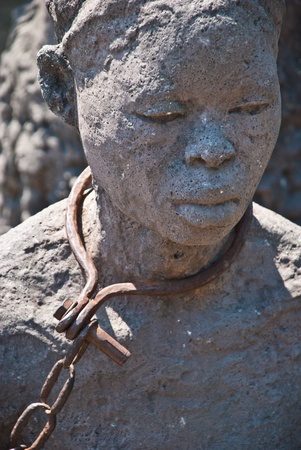
In 1935, Howard Thurman was on a “pilgrimage of friendship” from US students to students in India, Burma, and Ceylon (Sri Lanka). The principal (chief academic officer) of a Law College asked Thurman to tea and proceeded to ask Thurman why he was there as part of a delegation of Christians? As a Hindu, the principal was unable to reconcile Thurman’s commitment to Christianity with the historical reality of Christian racism. As he put the argument to Thurman:
More than three hundred years ago your forefathers were taken from the western coast of Africa as slaves. The people who dealt in the slave traffic were Christians. One of your famous Christian hymn writers, Sir John Newton, made his money from the sale of slaves to the New World. He is the man who wrote “How Sweet the Name of Jesus Sounds” and “Amazing Grace” – there may be others, but these are the only ones I know. The name of one of the famous British slave vessels was “Jesus.”
The men who brought the slaves were Christians. Christian ministers, quoting the Christian apostle Paul, gave the sanction of religion to the system of slavery. Some seventy years or more ago you were freed by a man who was not a professing Christian, but was rather the spearhead of certain political, social, and economic forces, the significance of which he himself did not understand. During all the period since then you have lived in a Christian nation in which you are segregated, lynched, and burned. Even in the church, I understand, there is segregation. One of my students who went to your country sent me a clipping telling about a Christian church in which the regular Sunday worship was interrupted so that many could join a mob against one of your fellows. When he had been caught and done to death, they came back to resume their worship of their Christian God.
I am Hindu. I do not understand. Here you are in my country, standing deep within the Christian faith and tradition. I do not wish to seem rude to you. But, sir, I think you are a traitor to all the darker peoples of the earth. I am wondering what you, an intelligent man, can say in defense of your position.
Thurman describes how he spent the next five hours in dialogue with this man explaining his theology and the reason why he remained a Christian. For Thurman, the power and inspiration of how Jesus lived his life in opposition to the oppression and marginalization of his own people (the Jewish people) at the hands of the Roman empire gave Thurman inspiration for how we are all called to live as followers of this singularly amazing man.
Thurman doesn’t describe his faith as the power of salvation or the pride of the church or even the importance of the community of believers – for Thurman, the power of Christianity is that it is the story of God working through the lives of believers to act out love in the world.
That said, the principal’s question is a valid one.
Both the history of the United States and the history of Christianity are rife with sustained periods of racism, xenophobia, violence against targeted groups of people, and horrific and indefensible acts of hostility and cruelty. However, the same things can be said of almost every nation, religion, and group of people throughout history and across the globe. There seems to be something about human nature that fears difference and resorts to violence in its attempt at social control.
By saying this, I do not seek to excuse the history of Christianity or of the United States – quite the opposite. I believe that any evolutionary move on our part as a human species toward peace, equality, and harmony can only be achieved when we know our history and remember why and how it has been important in shaping who we are today. I believe that our capacity to make this move is supported and encouraged by the Spirit of all that is good within us. The Spirit that Christians claim as the Divine Being, or God.
Too many people today want to dismiss history and the role that it has played in shaping our culture and our society. This comes out in myriad ways including the following:
“I’m not responsible for slavery.”
“The police are just doing their job”
“All lives matter.”
Each of these statements are true. They are also entirely beside the point.
White people will never be able to understand the problem of policing and the black community until we are able to unpack the legacy of slavery and how contemporary prejudice and racism unfold directly from that legacy. Slavery may have legally ended 150 years ago, but its legacy is alive and well and continuing to shape cultural attitudes and social structures (like housing, access to loans, education, etc.) in our country.
Of course “all lives matter” but since the days of Jesus, Christianity has taught the importance of paying attention to what Thurman called “the disinherited.” In this moment, it is black lives that are at risk, black lives that are disinherited, and in this moment – all of us must join together to remind ourselves and one another that “Black Lives Matter.”
Rereading classic texts from Thurman and Du Bois in my Racism and Black Theology this semester is an important reminder that we must know the history of racism and Christianity in this country in order to be able to make sense of the brutality and racism that continue to plague our lives. Understanding this history and seeing the ways in which our present is the result of our past is essential in understanding what is happening in our country and how the Black Lives Matter movement is responding.
Reading Du Bois and Thurman is a reminder that the problem that we label today as “white privilege” is the same thing that Du Bois referred to as “the Veil” and “double-consciousness” in the first days of the 20th century. Du Bois said that the color-line would be the problem of the 20th century.
As long as blacks in this country are held back by the chains of prejudice and whites refuse to acknowledge how the legacy of slavery continues to shape our consciousness as well as our political and economic structures, slavery is not over.
Unless we figure out better ways to talk about race, privilege, and inequality in this country the problem of the color-line might also be the problem of the 21st century.

Next Post

March 3, 2016 The Threat of Obama
Browse Our Archives
Select a Category book review christian ethics christianity college/higher education economics ecumenism environment feminism feminism and feminist theology justice motherhood parenting politics poverty public policy reproductive justice sexuality social change solidarity Uncategorized
Select a Month September 2018 July 2018 June 2018 May 2018 April 2018 March 2018 February 2017 January 2017 November 2016 October 2016 September 2016 August 2016 July 2016 May 2016 April 2016 March 2016 February 2016 January 2016 December 2015 November 2015 October 2015 September 2015 August 2015 July 2015 June 2015 May 2015 April 2015 March 2015 February 2015
Follow Us!
TAKE THE
Religious Wisdom Quiz
What does the word "apostle" mean?
Select your answer to see how you score.
One who is sent Leader Teacher Counselor
Related posts from To Do Justice


Kavanaugh and the Threat to Women

Women’s Unalienable Rights Cannot Be Subject to Whims...

Last Week Was Hard: Moving Reproductive Justice Forward...
TRENDING AT PATHEOS Progressive Christian

What Being a Modern-Day Apostle Means to Me
In my last column, I discussed the ins and outs of modern-day...

Did Ancient China Once Worship the God of...
Across human history, a common thread weaves through the origins of the...

Love Your Neighbor – Including Earth-Kin: Lev. 19,...
God’s command to love your neighbor means acting in an ethical and...

Lead a Church Study of “Jesus and Lao...
Guest writer Jack Thomas (The Irreverent Reverend) reflects on leading his church...

Pastoral Wisdom for Responding to Sermon Pushback
Getting sermon pushback on your social justice sermon? Learn practical, Proverbs-based strategies...

Principles for Understanding the Apostolic Ministry Today
Whenever people discover that my formal ministry title is "apostle," as in...
view all Progressive Christian blogs
Ad-Free & Subscriber Log-In Subscription Support
- About Us
- 2026 Calendar
- Videos
- Podcasts
- Library of World Religions
- Faith In Media Tracker
- Advertise With Us
- Write for Us
- Privacy Policy
- Terms of Service
- Do Not Sell My Data
- Contact Us
- Radiant Digital
- Manage Newsletter Subscriptions
- Unsubscribe From Notifications
- Sitemap
Copyright 2008-2026, Patheos. All rights reserved.
Subscription Support Ad-Free & Subscriber Log-In
Follow Patheos