
BuddhistCatholicContemplativeEvangelicalGeneral ChristianHinduJewishLatter-day SaintMuslimNew VisionsProgressive Christian
Beliefs
- Buddhist
- Catholic
- Contemplative
- Evangelical
- General Christian
- Hindu
- Jewish
- Latter-day Saint
- More Voices
- Muslim
- New Visions
- Pagan
- Progressive Christian
Topics
- Religion News
- Food and Religion
- Sports and Religion
- Religious Art
- Religious Music and Entertainment
- Religious Events
- History and Religion
- Style and Religion
- Politics and Religion
- Women in Religion
- Recreation Outdoors and Religion
- Business Finance and Religion
- Careers Workplace and Religion
- Education and Religion
- Family Parenting and Religion
- Health Fitness and Religion
- Home and Religion
- Relationships and Religion
- Technology and Religion
- Travel and Religion
Columnists
- Buddhist Columnists
- Business Finance and Religion Columnists
- Careers Workplace and Religion Columnists
- Catholic Columnists
- Contemplative Columnists
- Education and Religion Columnists
- Evangelists Columnists
- Family Parenting and Religion Columnists
- General Christian Columnists
- Health Fitness and Religion Columnists
- Hindu Columnists
- History and Religion Columnists
- Home and Religion Columnists
- Jewish Columnists
- More Voices Columnists
- Latter Day Columnists
- Muslim Columnists
- New Visions Columnists
- Nonreligious Columnists
- Pagan Columnists
- Politics and Religion Columnists
- Progressive Columnists
- Recreation Outdoors and Religion Columnists
- Relationships and Religion Columnists
- Religion News Columnists
- Religious Art Columnists
- Religious Events Columnists
- Religious Music and Entertainment Columnists
- Sports and Religion Columnists
- Style and Religion Columnists
- Technology and Religion Columnists
- Travel and Religion Columnists
- Women in Religion Columnists
Resource Library
- 2026 Calendar
- Library of World Religions
- The 100 Most Holy Places on Earth
- Patheos Answers
- Podcasts
- Videos
- Faith Leaders Database
- Anglican Episcopalian
- Bahai
- Baptist
- Buddhism
- Christianity
- Confucianism
- Eastern Orthodoxy
- Hinduism
- Holiness and Pentecostal
- ISKCON
- Islam
- Judaism
- Lutheran
- Methodist
- The Church of Jesus Christ of Latter-day Saints
- New Age
- Paganism
- Presbytarian and Reformed
- Protestantism
- Religion Behind the Scenes
- Roman Catholic
- Scientology
- Shia Islam
- Sikhism
- Sufism
- Sunni Islam
- Taoism
- Zen
- See all religions
Research Tools
 Ad-Free & Subscriber Log-In Subscription Support
Ad-Free & Subscriber Log-In Subscription Support
Follow Patheos 

- Trending:
- Forgiveness
- |
- Marriage
- |
- Consciousness
- |
- Death Penalty
- |
- Election
- |
- Halloween
 To Do Justice
- Home
- Progressive Christian
- Politics and Religion
- Why I’m Ecumenical
Why I’m Ecumenical
Last updated on: August 22, 2015 at 3:12 pm by Rebecca Todd Peters
Why I’m Ecumenical 2015-08-22T15:12:57-04:00 Rebecca Todd Peters
Patheos Explore the world's faith through different perspectives on religion and spirituality! Patheos has the views of the prevalent religions and spiritualities of the world.
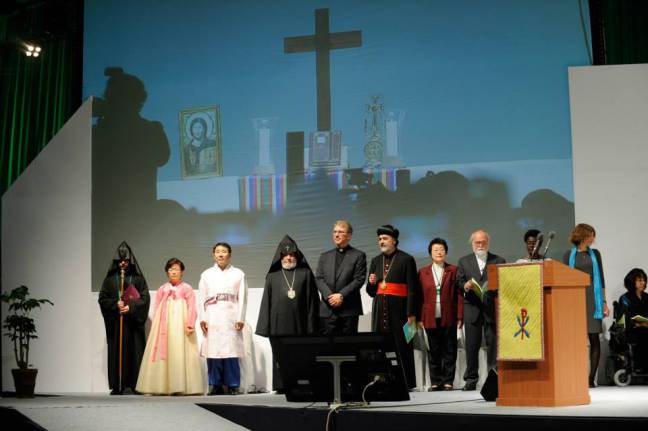 This post is the fourth and final in a series of blog posts addressing understanding Christian denominations and ecumenism. It was first published in the Christian Century blog.
CENTURY BLOG
The ecumenical movement and me
Apr 24, 2015 by Rebecca Todd Peters
Growing up as a cradle Presbyterian and a preacher’s kid, Presbyterianism was my sociocultural world. When my father got angry with me or my sister, he would often preface his remarks with the exasperated endearment, “Child of the covenant!”
As an adult, I asked him why he did this. He explained that it was his reminder to himself of the sacred nature of his responsibility as a parent and of the vows he had made at our baptism. What it taught me was that I wasn’t just his daughter, I had a larger family, a covenant family—and that our baptismal vows were a lifelong commitment.
Sermons, Bible, Sunday school, and youth conferences taught me that what it means to follow God is to do justice, love kindness, and walk humbly with God. While this is by no means an exclusively Presbyterian orientation, I do credit the emphasis on justice in my upbringing to the social gospel tradition of mainline Christianity. And certainly the egalitarian polity of the Presbyterians and our vision of shared ministry between clergy and laity are the foundation of my feminism. After college I worked for the national office of the Presbyterian Church (U.S.A.) for two years—supplementing my experiential understanding of Presbyterianism with a theological and bureaucratic one.
By the time I was ready for seminary, I knew what it meant to be Presbyterian, but I wasn’t sure I understood how our flavor of Christianity differed from Methodists, Episcopalians, and Lutherans, much less Catholics, Orthodox, and so many others. I chose an ecumenical seminary so that I could learn.
My ecumenical education came not from the curriculum but from my fellow students as we discussed theology, church history, creeds, and liturgy from our varying perspectives and traditions. It also came in the form of my involvement with young women’s leadership development with the World Council of Churches and the World Student Christian Federation.
One of my friends from the ecumenical movement heads up the Council of Churches of Malaysia. Herman is a progressive, justice-oriented Christian who is deeply committed to interfaith dialogue in the midst of an increasingly conservative landscape among Malaysia’s Christian minority (less than 10 percent of the population, alongside a Muslim majority and a larger Buddhist minority). He represents and defends the rights of Christians to practice their faith, along with promoting ecumenical work fighting homelessness and addressing racial equality and women’s rights.
I asked him once about where his passion for justice came from and how he managed to practice such a prophetic ministry in his context. He credited his work in the ecumenical movement as a student—work that exposed him to people, ideas, and concerns beyond the borders of his own country and helped him to see bigger questions. It also offered him an alternative model of leadership and support from churches, friends, and colleagues around the world as he pursued a ministry of justice and compassion in his own country.
As U.S. churches struggle to find their relevance in the 21st century, interest in ecumenicity has waned among congregations and even denominations. When financial contributions are down in local churches, it becomes more and more difficult to justify supporting ecumenical ministries. This, of course, parallels Americans’ interest in having more influence over our tax dollars and our charitable donations alike.
But here’s the rub: Christianity was never meant to be about us. Like my dad taught me, we are a covenant people. The covenant was made by my local church when I was baptized, made on behalf of the whole people of God, the oikoumene. The ecumenical movement is about recognizing that the body of Christ is bigger than any one denomination. It’s about sharing our faith with one another across our lines of difference, and about learning from one another new ways to follow God.
A couple of years ago, I organized 14 churches in my local community to do a book study about issues of social justice. Each week we met in a different church in a different part of town. All of us crossed boundaries of our comfort zones; people regularly commented that they had never been to that particular part of town before. Moving around and hosting one another gave each church the opportunity to provide hospitality and care. We began to build ties of solidarity.
As we talked about problems in our community, we learned new things from one another. People discovered that we are used to discussing such issues in public meetings, with the school board, city council, or neighborhood associations. But rarely do we have the opportunity to come together as Christians from different parts of our city to talk about how our faith calls us to respond to injustice. It wasn’t partisan politics, it was talking together as Christians about how we might mobilize a response. That is ecumenism.
Denominationalism can be an important part of our identity—but we cannot let it turn into its own kind of parochialism and prevent us from seeing our obligations to the larger covenant community. My daughters know that they, too, are children of the covenant—I remind us all of it frequently. But they also know that our covenant is an ecumenical covenant, and that living a life of faith is so much more than being Presbyterian.
Previous Post

April 24, 2015
NC Republican Legislators Reject Facts, Embrace Emotion
Next Post

April 28, 2015 How Honoring Self Makes One a Better Mother
Browse Our Archives
Select a Category book review christian ethics christianity college/higher education economics ecumenism environment feminism feminism and feminist theology justice motherhood parenting politics poverty public policy reproductive justice sexuality social change solidarity Uncategorized
Select a Month September 2018 July 2018 June 2018 May 2018 April 2018 March 2018 February 2017 January 2017 November 2016 October 2016 September 2016 August 2016 July 2016 May 2016 April 2016 March 2016 February 2016 January 2016 December 2015 November 2015 October 2015 September 2015 August 2015 July 2015 June 2015 May 2015 April 2015 March 2015 February 2015
Follow Us!
TAKE THE
Religious Wisdom Quiz
What did Jesus use to heal a blind man in John 9?
Select your answer to see how you score.
His robe Mud and saliva Olive oil A fig leaf
Related posts from To Do Justice

Kavanaugh and the Threat to Women

Last Week Was Hard: Moving Reproductive Justice Forward...

Why the Supreme Court’s Decision to Respect “Sincere...
All I Want for Mother’s Day is ....
TRENDING AT PATHEOS Progressive Christian

Why Christians Have a Sacred Duty to Vote:...
The Bible offers strong support for the sacred duty to vote. Here...

What Being a Modern-Day Apostle Means to Me
In my last column, I discussed the ins and outs of modern-day...

Did Ancient China Once Worship the God of...
Across human history, a common thread weaves through the origins of the...

Love Your Neighbor – Including Earth-Kin: Lev. 19,...
God’s command to love your neighbor means acting in an ethical and...

Lead a Church Study of “Jesus and Lao...
Guest writer Jack Thomas (The Irreverent Reverend) reflects on leading his church...

Principles for Understanding the Apostolic Ministry Today
Whenever people discover that my formal ministry title is "apostle," as in...
view all Progressive Christian blogs
Ad-Free & Subscriber Log-In Subscription Support
- About Us
- 2026 Calendar
- Videos
- Podcasts
- Library of World Religions
- Faith In Media Tracker
- Advertise With Us
- Write for Us
- Privacy Policy
- Terms of Service
- Do Not Sell My Data
- Contact Us
- Radiant Digital
- Manage Newsletter Subscriptions
- Unsubscribe From Notifications
- Sitemap
Copyright 2008-2026, Patheos. All rights reserved.
Subscription Support Ad-Free & Subscriber Log-In
Follow Patheos