
BuddhistCatholicContemplativeEvangelicalGeneral ChristianHinduJewishLatter-day SaintMuslimNew VisionsProgressive Christian
Beliefs
- Buddhist
- Catholic
- Contemplative
- Evangelical
- General Christian
- Hindu
- Jewish
- Latter-day Saint
- More Voices
- Muslim
- New Visions
- Pagan
- Progressive Christian
Topics
- Religion News
- Food and Religion
- Sports and Religion
- Religious Art
- Religious Music and Entertainment
- Religious Events
- History and Religion
- Style and Religion
- Politics and Religion
- Women in Religion
- Recreation Outdoors and Religion
- Business Finance and Religion
- Careers Workplace and Religion
- Education and Religion
- Family Parenting and Religion
- Health Fitness and Religion
- Home and Religion
- Relationships and Religion
- Technology and Religion
- Travel and Religion
Columnists
- Buddhist Columnists
- Business Finance and Religion Columnists
- Careers Workplace and Religion Columnists
- Catholic Columnists
- Contemplative Columnists
- Education and Religion Columnists
- Evangelists Columnists
- Family Parenting and Religion Columnists
- General Christian Columnists
- Health Fitness and Religion Columnists
- Hindu Columnists
- History and Religion Columnists
- Home and Religion Columnists
- Jewish Columnists
- More Voices Columnists
- Latter Day Columnists
- Muslim Columnists
- New Visions Columnists
- Nonreligious Columnists
- Pagan Columnists
- Politics and Religion Columnists
- Progressive Columnists
- Recreation Outdoors and Religion Columnists
- Relationships and Religion Columnists
- Religion News Columnists
- Religious Art Columnists
- Religious Events Columnists
- Religious Music and Entertainment Columnists
- Sports and Religion Columnists
- Style and Religion Columnists
- Technology and Religion Columnists
- Travel and Religion Columnists
- Women in Religion Columnists
Resource Library
- 2026 Calendar
- Library of World Religions
- The 100 Most Holy Places on Earth
- Patheos Answers
- Podcasts
- Videos
- Faith Leaders Database
- Anglican Episcopalian
- Bahai
- Baptist
- Buddhism
- Christianity
- Confucianism
- Eastern Orthodoxy
- Hinduism
- Holiness and Pentecostal
- ISKCON
- Islam
- Judaism
- Lutheran
- Methodist
- The Church of Jesus Christ of Latter-day Saints
- New Age
- Paganism
- Presbytarian and Reformed
- Protestantism
- Religion Behind the Scenes
- Roman Catholic
- Scientology
- Shia Islam
- Sikhism
- Sufism
- Sunni Islam
- Taoism
- Zen
- See all religions
Research Tools
 Ad-Free & Subscriber Log-In Subscription Support
Ad-Free & Subscriber Log-In Subscription Support
Follow Patheos 

- Trending:
- Forgiveness
- |
- Marriage
- |
- Consciousness
- |
- Death Penalty
- |
- Election
- |
- Halloween
 To Do Justice
- Home
- Progressive Christian
- Politics and Religion
- On Death and Denominationalism
On Death and Denominationalism
Last updated on: August 22, 2015 at 3:14 pm by Rebecca Todd Peters
On Death and Denominationalism 2015-08-22T15:14:46-04:00 Rebecca Todd Peters
Patheos Explore the world's faith through different perspectives on religion and spirituality! Patheos has the views of the prevalent religions and spiritualities of the world.
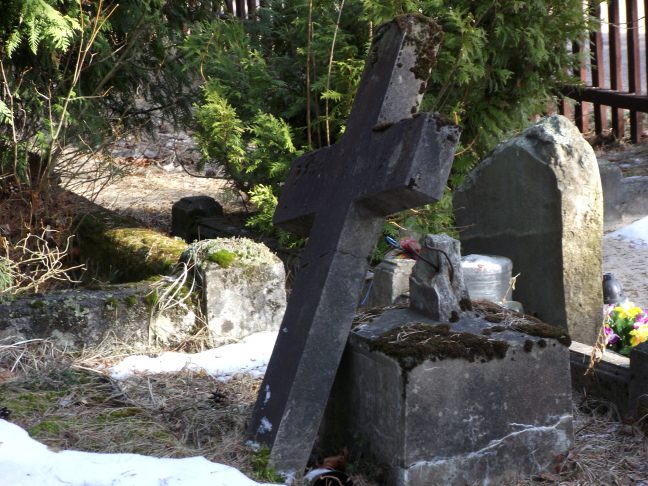 [third in a series of posts addressed to understanding denominations and ecumenism]
What would you die for?
To save your children? To save your spouse? To ensure world peace? To promote your religion? Would you die rather than renounce your beliefs? Which ones? As we enter Holy Week, I often think about Jesus’ death and try to figure out what to make of it.
There is no doubt in my mind that Jesus was brutally murdered. But how we understand his life and that murder matters – theologically, politically, socially, and culturally. The best that Jesus and the Christian tradition have had to teach me is how to live my life. Not just on a personal level – don’t lie, cheat, steal or covet (which is, of course, important) – but on a social level. Our world should be a just place, a place where everyone’s needs are met, and where everyone has access to living a “good life.”
This is what I teach my children about the cross and Jesus’ death. Jesus taught us how to live through the way that he lived his life. His radical challenge to the status quo position of the Roman Empire and the religious authorities is a witness to a vision of the world that is counter cultural. Rather than renounce that vision and the alternative pathway for living that he embodied, he submitted to the Roman authorities and he was murdered for his attempt to live into and bring about a world of justice here on earth. He offered us salvation by offering us an alternative way of being in the world.
Over the years, many people have followed in his footsteps and given up their lives for what they believe. The Christian tradition is rife with martyrs. Part of our story is a willingness to die for what we believe.
At the same time, theological, organizational, political, cultural, and social differences between Christians about what it means to be “Christian” go back to the earliest days after his death. Even Peter and Paul argued over what to do about the Gentiles.
As most people know, there are hundreds of different branches of the Christian faith – each with their own distinct history, tradition, belief, and practice (also known as liturgy or ritual). While there are some core beliefs that hold these different groups of people together – Trinitarian understanding of the divine, the life and work of a man named Jesus, the idea of salvation, a commitment to justice and the common good, sacraments and the worship of God – even these various “dogmas” or beliefs are interpreted differently by different groups of Christians.
These different groups have historically been referred to as “denominations,” which indicated that they often fell into particular “families” or “branches” of the Christian tradition. Most denominations differ on three major areas – baptism, eucharist, and ministry. The World Council of Churches authored an important text known at the “Lima text” or more simply as BEM that outlines these differences more fully for those who are interested in more detail.
Baptism – Differences over baptism refer to the conditions, circumstances, and requirements of baptism. It largely boils down a difference over whether or not infant baptism is a meaningful form of the sacrament of baptism or whether or not “believer’s baptism” is required, meaning that the individual being baptized must know and understand the meaning and purpose of baptism and seek it for themselves. There is general (though not absolute) ecumenical consensus that as a sacrament in which one receives the Holy Spirit, baptism is not something that should be repeated. In other words, ecumenical consensus is to avoid the practice or requirement of “rebaptism.”
Eucharist/Communion – Theological differences relate to the meaning of this sacrament and what happens (if anything) to the bread and the wine during the liturgy. All churches recognize this particular sacrament as a gift of Jesus to the church that dates back to the last week of Jesus’ life and the Passover meal that he shared with his disciples. During that meal, Jesus predicted his pending betrayal and death and broke bread and drank wine with them telling them to continue to do so in his memory after his death.
Differences between church families or traditions arose based on theological disagreements about whether or not the bread and wine transform and become the literal body and blood of Jesus (transubstantiation), or if Jesus is present with the community through the sharing of this ritual (consubstantiation/real presence/spiritual presence), or Jesus’ life and work is remembered (symbolic/memorial) through the sharing of the ritual or liturgy of communion. These theological differences impact the relative importance of this sacrament to different denominations as well as who is “welcome” at the table or who is invited to participate or partake of eucharist/communion.
Ministry – Finally, the practice of ministry refers both to the theological understanding of who engages in the practice of ministry as well as in the polity or political structure of the church (also known as ecclesiology). The basic differences in structures and accountability are largely divided between episcopal, presbyterian, and congregational. Episcopal polities are more hierarchal and include the office of “bishop” which oversees larger groups of churches. These structures are found in Catholic, Orthodox, Anglican, Methodist, and Lutheran traditions and generally trace their authority back to the twelve apostles (apostolic succession).
Presbyterian structures are more democratic and include groups of elders (usually teaching elders and ruling elders) that form “sessions” or councils, which function as the decision-making body at the local level (individual church) with regional representative assemblies (presbyteries and synods) forming the authoritative structure of the Church. Congregational polities are also more democratic and egalitarian and leave all decision-making in local congregations. While these churches are not accountable to higher structures or bodies, many churches from Congregational, Baptist, and Anabaptist traditions may form denominations to work together on social or educational issues.
The question of who serves as ministers is the other key issue. In episcopal polities the bishop ordains ministers to lead congregations; in presbyterian polities, the whole people of God are understood to engage in ministry but teaching elders are set apart and ordained as professional clergy; and in congregational polities, the local church has the authority to call and ordain its clergy.
Any discussion of denominational difference should also address the role of women as ordained clergy. There are branches within each of these following seven families or traditions that ordain women and there are branches that reject the ordination of women. While many people who come out of various Christian branches that arose out of the Reformation take the ordination of women for granted, there are major branches that still reject women’s ordination (including Orthodox, Roman Catholic, and Southern Baptist).
Quick overview of seven major “families,” “traditions,” or “branches” of Christianity:
Lutheran – trace their theological, historical roots back to Martin Luther; generally practice infant baptism, believe in the real presence of Christ in the eucharist; and follow an episcopal form of polity.
Reformed – go by many names but often include “Presbyterian” or “Reformed” in the title, traces its theological roots back to John Calvin, Zwingli, Melanchthon, John Knox (among others); they generally practice infant baptism, believe in the spiritual presence of Christ in communion, and follow a presbyterian form of polity.
Anabaptist/Historic Peace churches – this “family” includes a wide variety of denominations including Mennonites, Brethren, Quakers, Amish, Shakers, among others; they trace their origins to the earliest days of the Reformation and a group known as the “radical reformers” who argued for believer baptism, requiring the rebaptism of followers who were baptized as infants; their commitment to nonviolence and pacifism has led to their designation as “historic peace churches”; they follow a memorial theology of communion and practice a congregational polity.
Anglican/Episcopal – broke off from the Roman Catholic church in 1534 under the direction of King Henry VIII, largely for political reasons; there is a range of theological beliefs about the eucharist within the tradition from transubstantiation to real presence to memorial; they generally practice infant baptism, follow an episcopal polity, and the US denomination is called the Episcopal Church.
Baptist – are most notable for their theological affirmation of believer’s baptism meaning they hold the belief that only those who are able to profess their belief and ask for baptism should be baptized; they also generally practice the more ancient tradition of immersion where one’s whole body is immersed in water; while there is a range of beliefs about communion, historically Baptists came from the memorial tradition; they practice a congregational form of polity.
Methodism – began as a reform movement in 18th c. England and trace their history to John Wesley; there was a strong emphasis on social service, a missionary spirit of sharing God’s love and message, and the possibility of universal salvation; they generally practice infant baptism, hold to a memorial understanding of communion, and practice an episcopal polity.
Congregational – this tradition or family also originated in England and began with a desire for more local autonomy and control for churches; many Congregationalists were among the earliest immigrants to the new colonies and are represented in the US by Congregational churches, the UCC, and Disciples of Christ; they practice believer baptism, generally hold to a memorial understanding of communion, and practice a congregational polity.
There are theological differences between the denominations, to be sure. While I personally feel strongly about infant baptism, presbyterian polity, and the ordination of women – I’m not sure I feel so strongly that I would be willing to die for these beliefs.
What would I die for? What Christianity has taught me is how to live my life. To live in service of the gospel, in service of justice, in service of working to change the world in ways that reflect the dignity of God’s creation – human and non-human.
These are the things that I stick my neck out for – social justice, anti-poverty work, care for the earth community, and dignity for God’s people.
As we enter Holy Week, I ask you to consider – what would you die for?
Previous Post
March 23, 2015
Why I’m Presbyterian
Next Post

April 11, 2015 Safe Sex, Healthy Sex, Sacred Sex
Browse Our Archives
Select a Category book review christian ethics christianity college/higher education economics ecumenism environment feminism feminism and feminist theology justice motherhood parenting politics poverty public policy reproductive justice sexuality social change solidarity Uncategorized
Select a Month September 2018 July 2018 June 2018 May 2018 April 2018 March 2018 February 2017 January 2017 November 2016 October 2016 September 2016 August 2016 July 2016 May 2016 April 2016 March 2016 February 2016 January 2016 December 2015 November 2015 October 2015 September 2015 August 2015 July 2015 June 2015 May 2015 April 2015 March 2015 February 2015
Follow Us!
TAKE THE
Religious Wisdom Quiz
What is the largest predominantly Catholic country in South America?
Select your answer to see how you score.
Argentina Mexico Peru Brazil
Related posts from To Do Justice

Kavanaugh and the Threat to Women

Last Week Was Hard: Moving Reproductive Justice Forward...
Why the Supreme Court’s Decision to Respect “Sincere...
All I Want for Mother’s Day is ....
TRENDING AT PATHEOS Progressive Christian

Why Christians Have a Sacred Duty to Vote:...
The Bible offers strong support for the sacred duty to vote. Here...

What Being a Modern-Day Apostle Means to Me
In my last column, I discussed the ins and outs of modern-day...

Did Ancient China Once Worship the God of...
Across human history, a common thread weaves through the origins of the...

Love Your Neighbor – Including Earth-Kin: Lev. 19,...
God’s command to love your neighbor means acting in an ethical and...

Lead a Church Study of “Jesus and Lao...
Guest writer Jack Thomas (The Irreverent Reverend) reflects on leading his church...

Principles for Understanding the Apostolic Ministry Today
Whenever people discover that my formal ministry title is "apostle," as in...
view all Progressive Christian blogs
Ad-Free & Subscriber Log-In Subscription Support
- About Us
- 2026 Calendar
- Videos
- Podcasts
- Library of World Religions
- Faith In Media Tracker
- Advertise With Us
- Write for Us
- Privacy Policy
- Terms of Service
- Do Not Sell My Data
- Contact Us
- Radiant Digital
- Manage Newsletter Subscriptions
- Unsubscribe From Notifications
- Sitemap
Copyright 2008-2026, Patheos. All rights reserved.
Subscription Support Ad-Free & Subscriber Log-In
Follow Patheos