
BuddhistCatholicContemplativeEvangelicalGeneral ChristianHinduJewishLatter-day SaintMuslimNew VisionsProgressive Christian
Beliefs
- Buddhist
- Catholic
- Contemplative
- Evangelical
- General Christian
- Hindu
- Jewish
- Latter-day Saint
- More Voices
- Muslim
- New Visions
- Pagan
- Progressive Christian
Topics
- Religion News
- Food and Religion
- Sports and Religion
- Religious Art
- Religious Music and Entertainment
- Religious Events
- History and Religion
- Style and Religion
- Politics and Religion
- Women in Religion
- Recreation Outdoors and Religion
- Business Finance and Religion
- Careers Workplace and Religion
- Education and Religion
- Family Parenting and Religion
- Health Fitness and Religion
- Home and Religion
- Relationships and Religion
- Technology and Religion
- Travel and Religion
Columnists
- Buddhist Columnists
- Business Finance and Religion Columnists
- Careers Workplace and Religion Columnists
- Catholic Columnists
- Contemplative Columnists
- Education and Religion Columnists
- Evangelists Columnists
- Family Parenting and Religion Columnists
- General Christian Columnists
- Health Fitness and Religion Columnists
- Hindu Columnists
- History and Religion Columnists
- Home and Religion Columnists
- Jewish Columnists
- More Voices Columnists
- Latter Day Columnists
- Muslim Columnists
- New Visions Columnists
- Nonreligious Columnists
- Pagan Columnists
- Politics and Religion Columnists
- Progressive Columnists
- Recreation Outdoors and Religion Columnists
- Relationships and Religion Columnists
- Religion News Columnists
- Religious Art Columnists
- Religious Events Columnists
- Religious Music and Entertainment Columnists
- Sports and Religion Columnists
- Style and Religion Columnists
- Technology and Religion Columnists
- Travel and Religion Columnists
- Women in Religion Columnists
Resource Library
- 2026 Calendar
- Library of World Religions
- The 100 Most Holy Places on Earth
- Patheos Answers
- Podcasts
- Videos
- Faith Leaders Database
- Anglican Episcopalian
- Bahai
- Baptist
- Buddhism
- Christianity
- Confucianism
- Eastern Orthodoxy
- Hinduism
- Holiness and Pentecostal
- ISKCON
- Islam
- Judaism
- Lutheran
- Methodist
- The Church of Jesus Christ of Latter-day Saints
- New Age
- Paganism
- Presbytarian and Reformed
- Protestantism
- Religion Behind the Scenes
- Roman Catholic
- Scientology
- Shia Islam
- Sikhism
- Sufism
- Sunni Islam
- Taoism
- Zen
- See all religions
Research Tools
 Ad-Free & Subscriber Log-In Subscription Support
Ad-Free & Subscriber Log-In Subscription Support
Follow Patheos 

- Trending:
- Forgiveness
- |
- Marriage
- |
- Consciousness
- |
- Death Penalty
- |
- Election
- |
- Halloween
 To Do Justice
- Home
- Progressive Christian
- Politics and Religion
- Why I’m Presbyterian
Why I’m Presbyterian
Last updated on: August 22, 2015 at 3:15 pm by Rebecca Todd Peters
Why I’m Presbyterian 2015-08-22T15:15:15-04:00 Rebecca Todd Peters
Patheos Explore the world's faith through different perspectives on religion and spirituality! Patheos has the views of the prevalent religions and spiritualities of the world.
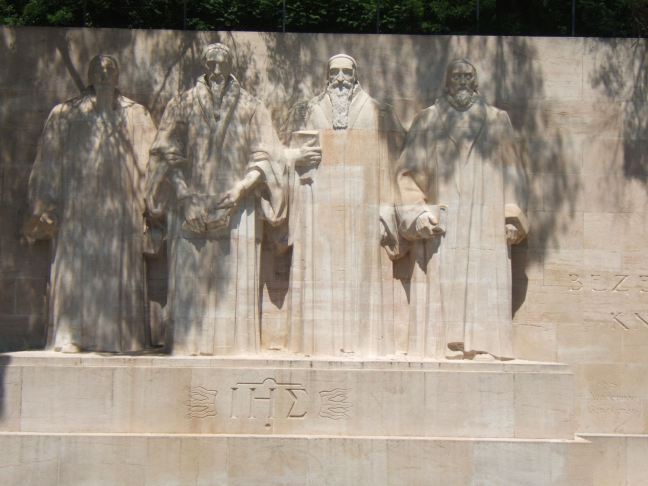 [this is the second in a series of posts addressed to understanding denominations and ecumenism]
I’m a PK (preacher’s kid) and a cradle Presbyterian. Family lore has it that when my grandparents married, my grandfather was a Republican and an Episcopalian and my grandmother was a Democrat and a Presbyterian. They agreed that they needed to make some compromises and so they became Republican Presbyterians. My grandmother later confided in me that while everybody knew where they went to church, the voting booth had curtains!
When I went to college, one of my best friends was also the daughter of a Presbyterian minister and as we went through periods of questioning our faith and figuring out what we believed, we used to joke with each other that even when we weren’t sure if we were Christian, we knew we were Presbyterians!
There are a lot of things about Reformed theology that are at the core of my theological understanding of God, the sacred, and what it means to be a Christian. Some Reformed beliefs like infant baptism as a sign of God’s grace; the idea of God’s grace as a divine gift unrelated to my actions, desires or worthiness; and the importance and centrality of scripture are truly foundational to my theology.
Others, more rooted in Calvin, like the idea that some of us are “elected” or chosen and others aren’t; the belief in humanity’s total depravity; and the idea that God has predestined or “freely and unchangeably ordain(ed) whatsoever comes to pass” I find to be at the heart of some of the most perverse and damaging expressions of Christian theology that I know.
But, there are two theological tenets that truly make me Presbyterian – “the priesthood of all believers” and “God alone is Lord of the conscience.” These, for me, are the heart and soul of Presbyterianism and they have shaped my own heart and soul in untold ways. Let me explain.
The idea of the “priesthood of all believers” is the notion that all believers, all Christians, all followers of Christ are, in our essence “priests” or, in the more vernacular sense – we are all called as Christians to minister to each other. The care of the body of Christ is in all of our hands. We are responsible for each other, for taking care of one another. That is truly a radical idea. Each of us is holy and sacred and responsible. Yes, we are called to follow Christ, but following Christ shapes how we live and how we order our society.
While other denominations may affirm the priesthood of all believers on a theological level, for Presbyterians, this belief is at the core of our polity – how we organize the church. At every level of the church (local, presbytery, general assembly), teaching elders (pastors) and ruling elders (ordained laypeople – yes, I know that’s an oxymoron but that warrants another blog post!) share in oversight and administration. This is what we refer to as “shared governance.”
Authority, in the Presbyterian tradition, resides in the community, not in individuals. It is not incidental that we do not have bishops or other hierarchal offices – it is an embodiment of our theology. We believe that the power of the Holy Spirit works in and through us collectively. This is why we form committees to do our work and why we share our governance.
The second belief that I hold dear is represented in The Westminster Confession this way, “God alone is Lord of the conscience, and has left it free from the doctrines and commandments of men (people) which are, in anything, contrary to his Word; or beside it, if matters of faith or worship.” What this means is that we believe that while individuals are shaped, formed, and accountable to communities; in matters of faith, we are accountable to God.
Practically this means even as we stand in a historic tradition of creeds and confessions, we recognize ours is a living faith and that how we understand God, humanity, and the church will change over time. This is why we continue to grow and change theologically as a church and why we develop new statements of faith that express our understanding of our theology in response to the world in which we live.
Of course, we must remember that this theological principle begins with God, not with us. God alone is Lord of the conscience. Because we are also subject to sin in many forms – including misinformation, prejudice, and the potentially narrow perspective of our own personal experience – part of the process of theological discernment involves critical study of an issue, engagement with people whose ideas and beliefs differ from our own, and considering the issue or question within the larger context of our faith informed by scripture, tradition, experience, reason, and science.
One of the main reasons I like this principle, though, is that it is a protection of the possibility of the tyranny of the majority against the minority. It is an important corollary belief to our radical orientation toward collectivism and community. After all, as many people who challenge the norms and expectations of society know, the dark underbelly of community and collectivism is when these notions are used to enforce conformity and police borders and boundaries.
At the same time, this belief is not meant to defend personal idiosyncrasies or distorted theology. The notion that God has instructed me to beat my wife or child or steal money at work represents a distorted understanding of this principle and it is why our own theological exploration must always balance individual and communal discernment.
“God alone” is a fundamental theological belief that ought to allow for Presbyterians to hold a wide range of theological beliefs that differ from one another, but still remain together in communion as the body of Christ. I think our misunderstanding of this most basic feature of Presbyterianism is largely why the PCUSA is seeing so many churches pull away from the denomination. It is not the difference in our theological beliefs that threaten our unity. It is our inability to recognize the profound mystery and freedom represented in the belief that “God alone is Lord of the conscience” that is at the heart of our disunity.
To me, these radical notions of egalitarianism, freedom, and community have always been the heart of the gospel. They are not only what it means to be a Presbyterian, they are what it means to be a Christian but they seem to be the part that the Presbyterians got right!
Previous Post

March 21, 2015
Catechism, Christianity, and Chocolate Soda
Next Post
March 30, 2015 On Death and Denominationalism
Browse Our Archives
Select a Category book review christian ethics christianity college/higher education economics ecumenism environment feminism feminism and feminist theology justice motherhood parenting politics poverty public policy reproductive justice sexuality social change solidarity Uncategorized
Select a Month September 2018 July 2018 June 2018 May 2018 April 2018 March 2018 February 2017 January 2017 November 2016 October 2016 September 2016 August 2016 July 2016 May 2016 April 2016 March 2016 February 2016 January 2016 December 2015 November 2015 October 2015 September 2015 August 2015 July 2015 June 2015 May 2015 April 2015 March 2015 February 2015
Follow Us!
TAKE THE
Religious Wisdom Quiz
Though you sit among the coals lamenting, you must remember that_________. What does Lamentations say will not cease?
Select your answer to see how you score.
His love His covenant His compassions His presence
Related posts from To Do Justice

Kavanaugh and the Threat to Women

Last Week Was Hard: Moving Reproductive Justice Forward...
Why the Supreme Court’s Decision to Respect “Sincere...
All I Want for Mother’s Day is ....
TRENDING AT PATHEOS Progressive Christian

Why Christians Have a Sacred Duty to Vote:...
The Bible offers strong support for the sacred duty to vote. Here...

What Being a Modern-Day Apostle Means to Me
In my last column, I discussed the ins and outs of modern-day...

Did Ancient China Once Worship the God of...
Across human history, a common thread weaves through the origins of the...

Love Your Neighbor – Including Earth-Kin: Lev. 19,...
God’s command to love your neighbor means acting in an ethical and...

Lead a Church Study of “Jesus and Lao...
Guest writer Jack Thomas (The Irreverent Reverend) reflects on leading his church...

Principles for Understanding the Apostolic Ministry Today
Whenever people discover that my formal ministry title is "apostle," as in...
view all Progressive Christian blogs
Ad-Free & Subscriber Log-In Subscription Support
- About Us
- 2026 Calendar
- Videos
- Podcasts
- Library of World Religions
- Faith In Media Tracker
- Advertise With Us
- Write for Us
- Privacy Policy
- Terms of Service
- Do Not Sell My Data
- Contact Us
- Radiant Digital
- Manage Newsletter Subscriptions
- Unsubscribe From Notifications
- Sitemap
Copyright 2008-2026, Patheos. All rights reserved.
Subscription Support Ad-Free & Subscriber Log-In
Follow Patheos