
BuddhistCatholicContemplativeEvangelicalGeneral ChristianHinduJewishLatter-day SaintMuslimNew VisionsProgressive Christian
Beliefs
- Buddhist
- Catholic
- Contemplative
- Evangelical
- General Christian
- Hindu
- Jewish
- Latter-day Saint
- More Voices
- Muslim
- New Visions
- Pagan
- Progressive Christian
Topics
- Religion News
- Food and Religion
- Sports and Religion
- Religious Art
- Religious Music and Entertainment
- Religious Events
- History and Religion
- Style and Religion
- Politics and Religion
- Women in Religion
- Recreation Outdoors and Religion
- Business Finance and Religion
- Careers Workplace and Religion
- Education and Religion
- Family Parenting and Religion
- Health Fitness and Religion
- Home and Religion
- Relationships and Religion
- Technology and Religion
- Travel and Religion
Columnists
- Buddhist Columnists
- Business Finance and Religion Columnists
- Careers Workplace and Religion Columnists
- Catholic Columnists
- Contemplative Columnists
- Education and Religion Columnists
- Evangelists Columnists
- Family Parenting and Religion Columnists
- General Christian Columnists
- Health Fitness and Religion Columnists
- Hindu Columnists
- History and Religion Columnists
- Home and Religion Columnists
- Jewish Columnists
- More Voices Columnists
- Latter Day Columnists
- Muslim Columnists
- New Visions Columnists
- Nonreligious Columnists
- Pagan Columnists
- Politics and Religion Columnists
- Progressive Columnists
- Recreation Outdoors and Religion Columnists
- Relationships and Religion Columnists
- Religion News Columnists
- Religious Art Columnists
- Religious Events Columnists
- Religious Music and Entertainment Columnists
- Sports and Religion Columnists
- Style and Religion Columnists
- Technology and Religion Columnists
- Travel and Religion Columnists
- Women in Religion Columnists
Resource Library
- 2026 Calendar
- Library of World Religions
- The 100 Most Holy Places on Earth
- Patheos Answers
- Podcasts
- Videos
- Faith Leaders Database
- Anglican Episcopalian
- Bahai
- Baptist
- Buddhism
- Christianity
- Confucianism
- Eastern Orthodoxy
- Hinduism
- Holiness and Pentecostal
- ISKCON
- Islam
- Judaism
- Lutheran
- Methodist
- The Church of Jesus Christ of Latter-day Saints
- New Age
- Paganism
- Presbytarian and Reformed
- Protestantism
- Religion Behind the Scenes
- Roman Catholic
- Scientology
- Shia Islam
- Sikhism
- Sufism
- Sunni Islam
- Taoism
- Zen
- See all religions
Research Tools
 Ad-Free & Subscriber Log-In Subscription Support
Ad-Free & Subscriber Log-In Subscription Support
Follow Patheos 

- Trending:
- Forgiveness
- |
- Marriage
- |
- Consciousness
- |
- Death Penalty
- |
- Election
- |
- Halloween
 Tinsel
- Home
- Religious Music & Entertainment
- Think Like a Man Too: The Hangover’s Vapid, Shallow, and Forgettable Cousin
Think Like a Man Too: The Hangover’s Vapid, Shallow, and Forgettable Cousin
Last updated on: June 20, 2014 at 8:29 am by Matt Harrison
Think Like a Man Too: The Hangover’s Vapid, Shallow, and Forgettable Cousin 2014-06-20T08:29:38-06:00 Matt Harrison
Patheos Explore the world's faith through different perspectives on religion and spirituality! Patheos has the views of the prevalent religions and spiritualities of the world.
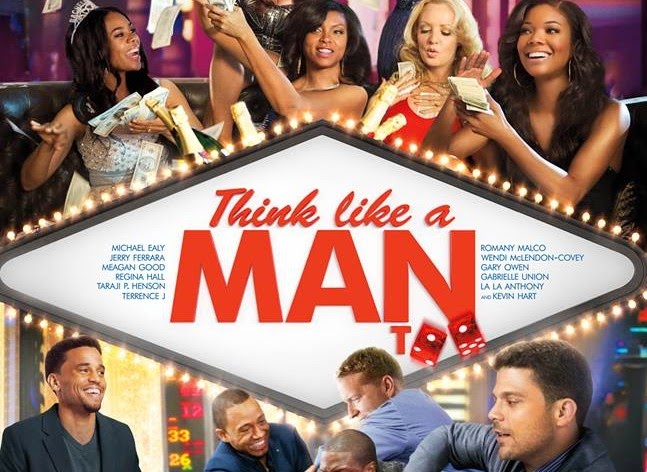
As I watched Think Like a Man Too, the most recent product from writers Keith Merryman and David Newman who brought you that wholesome flick, Friends with Benefits, I couldn’t help but think of the climbing divorce rate in America. In a culture that is increasingly devaluing marriage (sadly more often than not treating it as a fashion to be dispensed when no longer convenient — though I do want to go on record saying divorce can sometimes be appropriate), Think Like a Man Too exemplifies it to a degree that ranges from hopelessly depressing to downright maddening.
In fact, part of me is even impressed by how much this movie affected me; I left the theater legitimately boiling from its aftertaste, much as I did after watching the critically acclaimed but also morally vapid, *Sideways (*starring Paul Giamatti and Thomas Haden Church), in which Church’s character gets involved in an affair that he proudly manages to hide from his fiancé by the film’s end (all while Giamatti’s character looks on from a distance with satisfaction).
Yet, it’s not the actions of moral depravity that upset me in film/television. Those who know me will know I am a huge fan of shows like Breaking Bad and Game of Thrones, which are both bursting at the seams with immoral actions throughout. The difference between those examples and Think Like a Man Too is purely the message you’re left with. Either being one that condemns those actions and provides consequences (as the former two do), or one that is all too comfortable with that behavior, sometimes even to the extent of promoting it — and Think Like a Man Too couldn’t do this more.

For those who haven’t seen the first *Think Like a Man (*and if you have, I won’t judge you for denying it), the film chronicles an interconnected series of couples as they wrestle with conflicting expectations and preferences on relationships. Holding such stereotypical nicknames as “The Player,” “The Non-Committer,” and “The Girl Who Wants a Ring,” the characters and their significant (to varying degrees) others struggle to maintain any sort of a healthy relationship that points to long-term success due to their self-centered mindsets regarding relationships.
In the first film, which largely focuses on the ladies’ perspective (hence the title), the women discover a book of [terrible] relationship advice, which they then use to get what they want from their unsatisfactory significant others. Of course, it wouldn’t be fair if there was no sequel for the guys to have their turn, and so thus Think Like a Man Too was born.
Think Like a Man Too follows up the events of the first film with the group arriving in Vegas for the wedding of their friends Michael (played by Terrence J) and Candace (Regina Hall). The film mainly chronicles the events of the bachelor party, but before that each character is briefly reintroduced (for those lucky enough to have missed the first film), and it isn’t long before the audience gets a deep understanding of their flaws, which at times are, shockingly, even intended as comic relief.
But there’s nothing funny to me about a group of men whose ideas of relationships have nothing to do with commitment, exclusivity, or integrity. Cedric (played by the tireless Kevin Hart), Michael’s faux-best man — “faux” as in Michael intended for his best friend Dominic (Michael Ealy) to be his best man, but Cedric thought he was pointing to him so they all awkwardly decided to go with it (because why not?) — attempts throughout the bachelor party to get the groom to indulge in strippers and enough alcohol to make his future self of 12 hours weep. The other members of the group in the meantime go along with this with varying levels of acceptance, yet none of them do anything to limit it.

What becomes infuriating to watch over the 106 minute runtime is that every continuing instance of the groom’s degradation is given an atmosphere of acceptance and justification. The filmmakers clearly want you to laugh at the chaos and ridiculousness of the night, but it’s not because the night is a failure and these characters are stumbling on their way to redemption. To them, and unfortunately most of the audience, this is how a bachelor party is supposed to go down, and anything otherwise is a failure.
Even more unfortunate, however, is that this low-brow comedy comprises of a superbly talented cast. For all the distasteful, cliche, and unoriginal dialogue throughout, the actors sell their roles. Cedric in particular, while a horrible faux-best man, does play his character with an impressive level of energy and authenticity. Furthermore, Loretta (Jenifer Lewis), the mother of the groom, sells the unapproving and over-protective old woman in a performance that is sure to go down among the best film portrayals of that type.
Yet what was perhaps saddest of all is that when the events that transpire result in the groomsmen (and their counterpart bridesmaids who have been having their own equally empty bachelorette party) getting thrown in jail and arriving late to the now-cancelled wedding, the actions that caused this are not condemned. And there is where my problem with the film’s message lies.
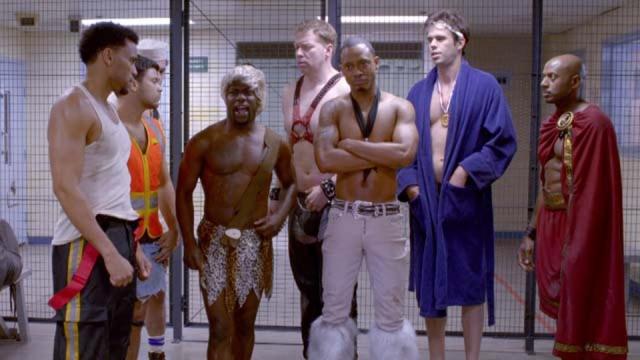
The movie ends with the group finding a way to go through with the wedding later that night after all; The couple says “I do,” everyone cheers, and the credits roll with the newly formed husband and wife living happily-ever-after.
But that is complete bullshit.
As I touched upon earlier, shows like Breaking Bad and Game of Thrones would have resulted in the characters not finding immediate gratification. They would have paid the price and hopefully learned from their mistakes, or at least realized that there was an issue with them to begin with. If there’s anything Think Like a Man Too does well, it’s exemplify a culture where the sanctity of marriage is fading away in place of one where a wedding ring is nothing more than a symbol of two people being slightly more committed than before. Unfortunately, nothing in the film convinced me it will last.
Previous Post

June 18, 2014
New DVD releases and What the Critics Said

Browse Our Archives
Select a Category Becky's Picks Children's Movies DVD releases Entertainment News Faith on Film Featured Hunger Games In Theaters Interviews Life, Etc. Mixed Nuts Movie Reviews Poliflix Scroogewatch slider Television Uncategorized
Select a Month December 2014 November 2014 October 2014 September 2014 August 2014 July 2014 June 2014 May 2014 April 2014 March 2014 February 2014 January 2014 December 2013 November 2013 October 2013 September 2013 August 2013 July 2013 June 2013 May 2013 April 2013 March 2013 February 2013 January 2013 December 2012 November 2012 October 2012 September 2012 August 2012 July 2012 June 2012 May 2012 April 2012 March 2012 February 2012 January 2012 December 2011 November 2011 October 2011 September 2011 August 2011 July 2011 June 2011 April 2011 March 2011
Follow Us!
TAKE THE
Religious Wisdom Quiz
What Christian group uses the term "Elder" for its church leaders?
Select your answer to see how you score.
Methodists Baptists Pentecostals Presbyterians
Related posts from Tinsel
'The Overnighters:' Q&A with Director Jesse Moss

Gratitude for Five Years at Patheos - Moving...

Despite its Title, Stephen Hawking’s Biopic Earns an...

Video: Watch the Trailer for 'The Bible' Sequel...
TRENDING AT PATHEOS Religious Music & Entertainment

Emotion in Early Christianity by Andrew Crislip
Andrew Crislip’s Emotion in Early Christianity examines an often overlooked dimension of...

16 Spiritual Touchstones for a More Grounded Life
After decades of spiritual study, here are 16 principles I try...

Catholic Evangelization: Sharing Your Faith Every Day
Welcome back to the Graceful Awakening mini-series called, “From Faith to Mission.” ...

The Pillar of the Boatmen: the Ancient Monument...
The Pillar of the Boatmen is a Romano-Gaulish sculpture that dates from...

In one sense walking into Westminster Abbey is like walking down the...

'Super Scam Me' Exposes AI Jon Bon Jovi...
Leslie Pickett believed she was in a relationship with Jon Bon Jovi....
view all Religious Music & Entertainment blogs
Ad-Free & Subscriber Log-In Subscription Support
- About Us
- 2026 Calendar
- Videos
- Podcasts
- Library of World Religions
- Faith In Media Tracker
- Advertise With Us
- Write for Us
- Privacy Policy
- Terms of Service
- Do Not Sell My Data
- Contact Us
- Radiant Digital
- Manage Newsletter Subscriptions
- Unsubscribe From Notifications
- Sitemap
Copyright 2008-2026, Patheos. All rights reserved.
Subscription Support Ad-Free & Subscriber Log-In
Follow Patheos