
BuddhistCatholicContemplativeEvangelicalGeneral ChristianHinduJewishLatter-day SaintMuslimNew VisionsProgressive Christian
Beliefs
- Buddhist
- Catholic
- Contemplative
- Evangelical
- General Christian
- Hindu
- Jewish
- Latter-day Saint
- More Voices
- Muslim
- New Visions
- Pagan
- Progressive Christian
Topics
- Religion News
- Food and Religion
- Sports and Religion
- Religious Art
- Religious Music and Entertainment
- Religious Events
- History and Religion
- Style and Religion
- Politics and Religion
- Women in Religion
- Recreation Outdoors and Religion
- Business Finance and Religion
- Careers Workplace and Religion
- Education and Religion
- Family Parenting and Religion
- Health Fitness and Religion
- Home and Religion
- Relationships and Religion
- Technology and Religion
- Travel and Religion
Columnists
- Buddhist Columnists
- Business Finance and Religion Columnists
- Careers Workplace and Religion Columnists
- Catholic Columnists
- Contemplative Columnists
- Education and Religion Columnists
- Evangelists Columnists
- Family Parenting and Religion Columnists
- General Christian Columnists
- Health Fitness and Religion Columnists
- Hindu Columnists
- History and Religion Columnists
- Home and Religion Columnists
- Jewish Columnists
- More Voices Columnists
- Latter Day Columnists
- Muslim Columnists
- New Visions Columnists
- Nonreligious Columnists
- Pagan Columnists
- Politics and Religion Columnists
- Progressive Columnists
- Recreation Outdoors and Religion Columnists
- Relationships and Religion Columnists
- Religion News Columnists
- Religious Art Columnists
- Religious Events Columnists
- Religious Music and Entertainment Columnists
- Sports and Religion Columnists
- Style and Religion Columnists
- Technology and Religion Columnists
- Travel and Religion Columnists
- Women in Religion Columnists
Resource Library
- 2026 Calendar
- Library of World Religions
- The 100 Most Holy Places on Earth
- Patheos Answers
- Podcasts
- Videos
- Faith Leaders Database
- Anglican Episcopalian
- Bahai
- Baptist
- Buddhism
- Christianity
- Confucianism
- Eastern Orthodoxy
- Hinduism
- Holiness and Pentecostal
- ISKCON
- Islam
- Judaism
- Lutheran
- Methodist
- The Church of Jesus Christ of Latter-day Saints
- New Age
- Paganism
- Presbytarian and Reformed
- Protestantism
- Religion Behind the Scenes
- Roman Catholic
- Scientology
- Shia Islam
- Sikhism
- Sufism
- Sunni Islam
- Taoism
- Zen
- See all religions
Research Tools
 Ad-Free & Subscriber Log-In Subscription Support
Ad-Free & Subscriber Log-In Subscription Support
Follow Patheos 

- Trending:
- Forgiveness
- |
- Marriage
- |
- Consciousness
- |
- Death Penalty
- |
- Election
- |
- Halloween
 Tinsel
- Home
- Religious Music & Entertainment
- “Breaking Bad” Season 6 Episode 4: Curing the “Rabid Dog”
“Breaking Bad” Season 6 Episode 4: Curing the “Rabid Dog”
Last updated on: September 16, 2013 at 7:51 am by Andrew Johnson
“Breaking Bad” Season 6 Episode 4: Curing the “Rabid Dog” 2013-09-16T07:51:02-06:00 Andrew Johnson
Patheos Explore the world's faith through different perspectives on religion and spirituality! Patheos has the views of the prevalent religions and spiritualities of the world.
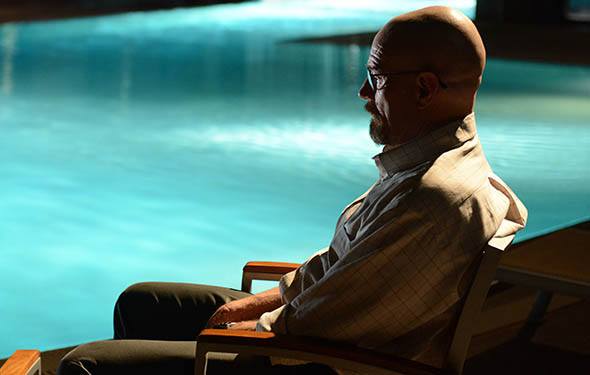
One of the underlying subtexts of Breaking Bad has always been about how Walt is a cancer, a disease eating away at the people around him. In “Rabid Dog,” the fourth episode of this latest batch, we see that nobody is immune from his infection. The two most shocking revelations occur when both Skyler and Hank reveal that they have no regard for Jesse’s life; he’s just a tool for them to either use or to throw away. In their obsession with either protecting or catching Walt, they have become just like Heisenberg, valuing human life only insofar as it suits their purposes.
“We’ve come this far,” Skyler says. “For us, what’s one more?” One of the unexpected side effects of Walt’s continual slide into darkness is that he’s dragged his family along with him. In fighting for his own survival, he’s made it about theirs. Skyler is now just as morally lost as he is, and she perfectly sums up the slippery slope they’ve slid down. In the grand scheme of everything they’ve done to keep from being caught, Jesse’s life doesn’t mean much. Not even Hank, the supposed moral center of the show, cares about Jesse as a person. Forgiveness doesn’t seem to be an option. A desire to repent, to atone for past sins, is only a device to be used to take down Walt, not something he thinks Jesse deserves. As he puts it: “Pinkman gets killed, we get it all on tape.”
“Rabid Dog” doesn’t feel quite as action-packed as the past few episodes. In fact, writer Sam Catlin seems intent on denying the audience violent confrontations and dramatic reveals altogether. We aren’t shown the scene where Hank finally relents and tells Gomie everything that’s going on. We don’t see the full tape of Jesse’s confession (for structural reasons as well as thematic, I imagine—it would take hours). The only glimpse we’re given ends with the line, “He was my teacher.” That’s the real tragedy of Jesse Pinkman’s life—in many ways, he was just a child led astray by an adult he trusted. His relationship with Walt is one of love, but it’s a twisted love held in place by force and psychological abuse.
The only question now seems to be whether Jesse was a good student. This is an episode all about him realizing his independence and finally cutting himself free from anyone who might try to manipulate him. In a brilliant twist of editing, we see Walt arrive home to a gasoline-soaked living room with Jesse nowhere to be found, only to flash back in time and reveal that Hank prevented him from lighting the house on fire at gunpoint. The knowledge that Walt poisoned Brock is the last straw, the final bit of injustice that zaps Jesse out of his guilt-ridden stupor and into action. He wants to do something, and “Rabid Dog” follows his journey to figure out what that should be.
First, he finally confesses. Hank now knows the entire story, and they cook up a plan to have Jesse wire up and meet Walt in the plaza, where they can hopefully get Walt to admit his misdeeds on tape. But once Jesse confesses, he’s released from the psychological chains of “the Devil” (there’s that name again), but he’s still not fully free. He’s just replaced one master for another. Hank doesn’t have his best interests at heart, so when he wires up and then makes the sudden decision to disobey orders and take another course of action, he isn’t helping Walt, he’s helping himself. This isn’t an episode about confrontations; it’s an episode about salvation. Jesse begins the episode like the rabid dog of the title, but he ends it a new man with the potential to use everything he’s learned from “Mister White” over the past few years to his advantage. No matter what happens now, at least he’s taking responsibility for himself, and he won’t be put back on anyone’s leash.
The tragic irony is that Walt was the only person who genuinely cared about Jesse’s well-being. Their relationship has been through so many ups and downs that he views Jesse as a spiritual son, someone who traveled with him down the wide path of destruction and, in at least one instance, saved his life. His hug with Walter Jr. by the pool acts as a repeat of the embrace he shared with Jesse in the previous episode. He would never kill family, so how could he kill Jesse, who knows him better than his son ever will?
Jesse is no longer the rabid dog. Walt is the one who’s always been a danger to those around him, who’s capable of going on a rampage of deceit and destruction when threatened. When he calls Todd at the end of the episode—supposedly to “make Jesse see reason” in the Skyler sense of the phrase—he’s throwing a lit match on gasoline that was spilled long ago. I have a feeling Todd’s involvement is going to ruin all of his plans.
The question is, if Walt is Old Yeller, who’s going to be the one to put him down?
As a final side note: What’s going on with Marie in this episode? We finally get to meet her therapist, Dave, and she admits to fantasizing about poisoning Walt and Skyler. “There is no problem, no matter how difficult…that violence won’t make worse,” he tells her. “Don’t worry,” she responds, “I would never hurt anybody. It just feels good to think about it.” This gets at the heart of the complex relationship between fantasy violence and real violence. Violence in media often acts as a cathartic way to release our own violent thoughts and tendencies, but it also reinforces cultural attitudes and myths about violence that might be unhealthy. It will be interesting to see if Marie ever acts on her impulses. If so, I wonder what that means Vince Gilligan thinks about the people who enjoy Breaking Bad.
—
What did you think of this episode of Breaking Bad? Let us know in the comments below!
—
Read More:
Breaking Bad Season 6 Episode 1: Blood Money.
Breaking Bad Season 6 Episode 2: Buried
Breaking Bad Season 6 Episode 3: Confessions
Breaking Bad Season 6 Episode 5: To’hajiilee
Breaking Bad Season 6 Episode 6: Ozymandias
Vote on how the series should end here.
Previous Post

August 31, 2013
"Broadchurch" Review: Back to Basics
Next Post
September 3, 2013 The Salvation of Jesse Pinkman: Is There Room for God in 'Breaking Bad?'
Browse Our Archives
Select a Category Becky's Picks Children's Movies DVD releases Entertainment News Faith on Film Featured Hunger Games In Theaters Interviews Life, Etc. Mixed Nuts Movie Reviews Poliflix Scroogewatch slider Television Uncategorized
Select a Month December 2014 November 2014 October 2014 September 2014 August 2014 July 2014 June 2014 May 2014 April 2014 March 2014 February 2014 January 2014 December 2013 November 2013 October 2013 September 2013 August 2013 July 2013 June 2013 May 2013 April 2013 March 2013 February 2013 January 2013 December 2012 November 2012 October 2012 September 2012 August 2012 July 2012 June 2012 May 2012 April 2012 March 2012 February 2012 January 2012 December 2011 November 2011 October 2011 September 2011 August 2011 July 2011 June 2011 April 2011 March 2011
Follow Us!
TAKE THE
Religious Wisdom Quiz
What king was killed by an arrow in battle, fulfilling Elijah's prophecy?
Select your answer to see how you score.
Joash Jeroboam Ahaziah Ahab
Related posts from Tinsel
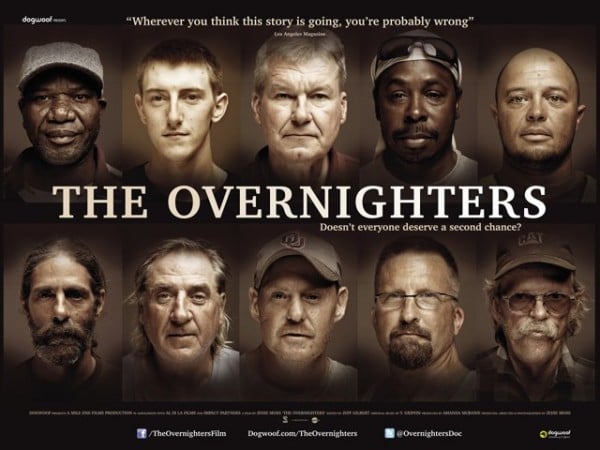
'The Overnighters:' Q&A with Director Jesse Moss

Gratitude for Five Years at Patheos - Moving...

Despite its Title, Stephen Hawking’s Biopic Earns an...

Video: Watch the Trailer for 'The Bible' Sequel...
TRENDING AT PATHEOS Religious Music & Entertainment

The First Eucharistic Controversy: Christ’s Real Presence
For Catholics, the Eucharist is the source and summit of the Christian...

What a Stop Sign Can Teach Us About...
How to Make a Decision When You Can't Hear God Main point:...

Archdiocese Hosts Military Marriage Retreat in Germany
RASTATT, Germany — The transient military lifestyle, with its frequent deployments and...

Nearly every morning, I make the drive to Detroit with my high-school-age...

The Real AI Story Is Adoption Without Trust
Artificial intelligence has crossed a political threshold. It is no longer a...

A new article, written by Jeff Lindsay and Gale L. Pooley,...
view all Religious Music & Entertainment blogs
Ad-Free & Subscriber Log-In Subscription Support
- About Us
- 2026 Calendar
- Videos
- Podcasts
- Library of World Religions
- Faith In Media Tracker
- Advertise With Us
- Write for Us
- Privacy Policy
- Terms of Service
- Do Not Sell My Data
- Contact Us
- Radiant Digital
- Manage Newsletter Subscriptions
- Unsubscribe From Notifications
- Sitemap
Copyright 2008-2026, Patheos. All rights reserved.
Subscription Support Ad-Free & Subscriber Log-In
Follow Patheos