
BuddhistCatholicContemplativeEvangelicalGeneral ChristianHinduJewishLatter-day SaintMuslimNew VisionsProgressive Christian
Beliefs
- Buddhist
- Catholic
- Contemplative
- Evangelical
- General Christian
- Hindu
- Jewish
- Latter-day Saint
- More Voices
- Muslim
- New Visions
- Pagan
- Progressive Christian
Topics
- Religion News
- Food and Religion
- Sports and Religion
- Religious Art
- Religious Music and Entertainment
- Religious Events
- History and Religion
- Style and Religion
- Politics and Religion
- Women in Religion
- Recreation Outdoors and Religion
- Business Finance and Religion
- Careers Workplace and Religion
- Education and Religion
- Family Parenting and Religion
- Health Fitness and Religion
- Home and Religion
- Relationships and Religion
- Technology and Religion
- Travel and Religion
Columnists
- Buddhist Columnists
- Business Finance and Religion Columnists
- Careers Workplace and Religion Columnists
- Catholic Columnists
- Contemplative Columnists
- Education and Religion Columnists
- Evangelists Columnists
- Family Parenting and Religion Columnists
- General Christian Columnists
- Health Fitness and Religion Columnists
- Hindu Columnists
- History and Religion Columnists
- Home and Religion Columnists
- Jewish Columnists
- More Voices Columnists
- Latter Day Columnists
- Muslim Columnists
- New Visions Columnists
- Nonreligious Columnists
- Pagan Columnists
- Politics and Religion Columnists
- Progressive Columnists
- Recreation Outdoors and Religion Columnists
- Relationships and Religion Columnists
- Religion News Columnists
- Religious Art Columnists
- Religious Events Columnists
- Religious Music and Entertainment Columnists
- Sports and Religion Columnists
- Style and Religion Columnists
- Technology and Religion Columnists
- Travel and Religion Columnists
- Women in Religion Columnists
Resource Library
- 2026 Calendar
- Library of World Religions
- The 100 Most Holy Places on Earth
- Patheos Answers
- Podcasts
- Videos
- Faith Leaders Database
- Anglican Episcopalian
- Bahai
- Baptist
- Buddhism
- Christianity
- Confucianism
- Eastern Orthodoxy
- Hinduism
- Holiness and Pentecostal
- ISKCON
- Islam
- Judaism
- Lutheran
- Methodist
- The Church of Jesus Christ of Latter-day Saints
- New Age
- Paganism
- Presbytarian and Reformed
- Protestantism
- Religion Behind the Scenes
- Roman Catholic
- Scientology
- Shia Islam
- Sikhism
- Sufism
- Sunni Islam
- Taoism
- Zen
- See all religions
Research Tools
 Ad-Free & Subscriber Log-In Subscription Support
Ad-Free & Subscriber Log-In Subscription Support
Follow Patheos 

- Trending:
- Forgiveness
- |
- Marriage
- |
- Consciousness
- |
- Death Penalty
- |
- Election
- |
- Halloween
 Tinsel
- Home
- Religious Music & Entertainment
- This Season’s Must See Movie: Les Miserables
This Season’s Must See Movie: Les Miserables
Last updated on: December 18, 2012 at 10:41 pm by Rebecca Cusey
This Season’s Must See Movie: Les Miserables 2012-12-18T12:45:09-06:00 Rebecca Cusey
Patheos Explore the world's faith through different perspectives on religion and spirituality! Patheos has the views of the prevalent religions and spiritualities of the world.
What to do?
What to say?
What I tell you about Les Mis-er-ab-les?

Beneath the music that will insinuate itself into your mind, beneath the acting that will have tears streaming down your face, beneath the scope the movie offers that is not available on a stage, there is a story.
And what a story.
The story of the reformed and restored criminal Jean Valjean from Victor Hugo’s great novel is the story of humanity, of despair, but most of all, of redemption.
If haven’t heard the story, here is a rundown. It’s helpful to know the story going in because it moves quickly and sometimes is hard to follow if you are unfamiliar.
As the musical starts, Jean Valjean finishes serving nineteen years hard labor for the theft of a loaf of bread. Paroled, but not freed from his shame, he sets into the world with his moral code of an eye for an eye, of turning his heart into stone.
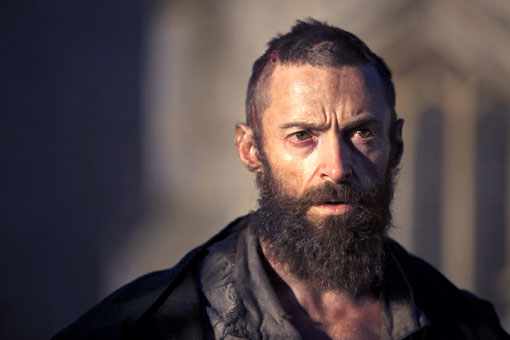
Hugh Jackman stars as Jean Valjean, a convict who becomes a rich man, receiving and extending grace in a harsh world.
But God has another plan. An encounter with a priest shows Valjean another way, a way of grace, of redemption, of reprieve.
Jean Valjean vows to live his life in this new way, something beyond rules and just rewards, something based on love and not justice. Years later, as chief businessman and mayor of a Paris suburb, he has a chance to help a prostitute named Fantine, but the need is great. The dying mother leaves behind a little girl, a girl Valjean promises to protect.
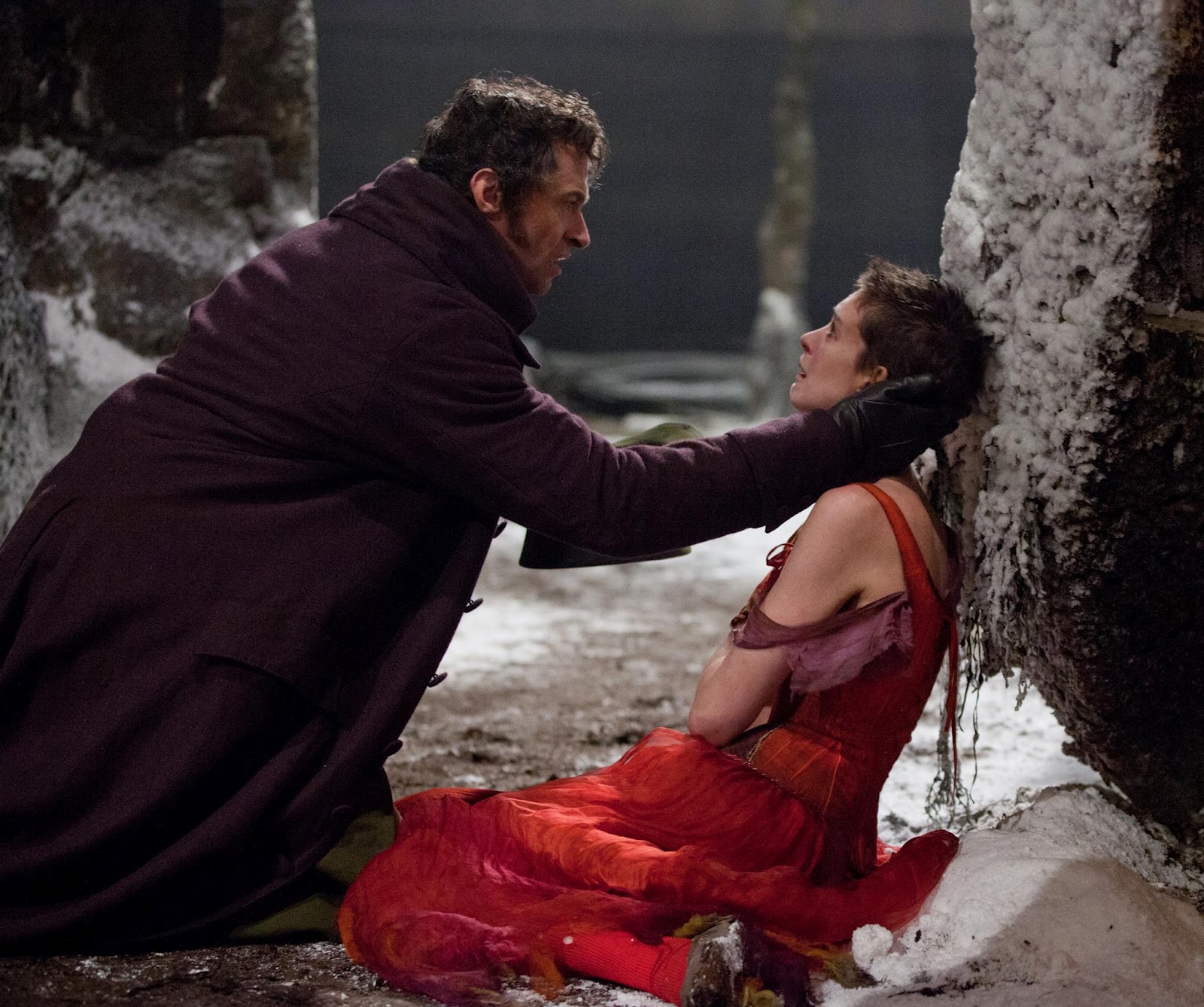
However, the former convict has broken parole to embark on his new life. A police officer named Javert makes it his personal mission to bring the fugitive to justice. Valjean with the little girl Cosette flee to Paris, where they find yet another new life with seething poverty and revolution as a backdrop, a chance at love, and the relentless footsteps of Javert constantly echoing behind them.

Fans of the musical, as I have been for decades, will love the movie. For the most part, the film sticks straight to the outlines of the musical. Some little tweaks are made, a missing song intro here or a switch in order there, but the tone of the musical remains. A few plot points come from the book, but are not in the musical.
In fact, it’s remarkable how different two experiences can be with the same lyrics and music. Director Tom Hooper takes full advantage of movie magic, giving street scenes, sewers, and the Paris skyline the kind of scope and presence only implied on a limited stage. The first number of the second half, Do You Hear the People Sing?, fulfills the promise of the music by filling up a Parisian thoroughfare with the discontented and disenfranchised beginning to rally around a revolutionary flag. It’s positively stirring.
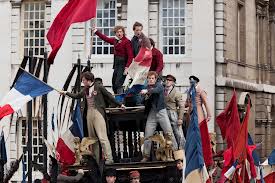
This is not a movie to replace the musical, but a different, complimentary experience.
The other difference between movies and stage is that the camera can capture the face of an actor, while a play audience has to watch from a distance. The cast of the musical sang the songs as they filmed, as opposed to taping in a studio and dubbing over, so the words are raw and the acting integrated with them.
The most powerful example, indeed the most powerful scene in any movie this year, is Anne Hathaway as Fantine, a mother forced from respectable employment to the streets and prostitution to support her child. When she sings I Dreamed a Dream, the anguish in her voice and her eyes unite to make a heartbreaking whole. It is nearly impossible to watch without tears. Indeed, she is considered nearly a lock for the Oscar for Best Supporting Actress for this role.
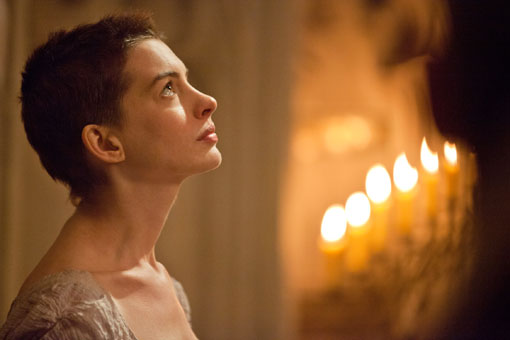
Fantine (Anne Hathaway)
It’s all the more remarkable in that Hathaway’s voice, like that of the bulk of the cast, is nowhere near Broadway quality. It is not the skill in her notes that makes the effect, but the emotion. The weakest link in the film is Russell Crowe as Javert, the relentless rule-enforcer, but even he conjures up powerful emotions and themes. Likewise, Amanda Seyfried as grown Cosette acquits herself passably.
Hugh Jackman as Jean Valjean runs the range of emotions from haggard and hateful to sacrificially loving, from frightened to secure, from sinner to saint. A Tony-award winning Broadway actor as well as a bona fide movie star, Jackman aims more for emotion than for Broadway vocal power, and succeeds. He also performs the new song in the production, Suddenly, a lullaby of love to little Cosette.
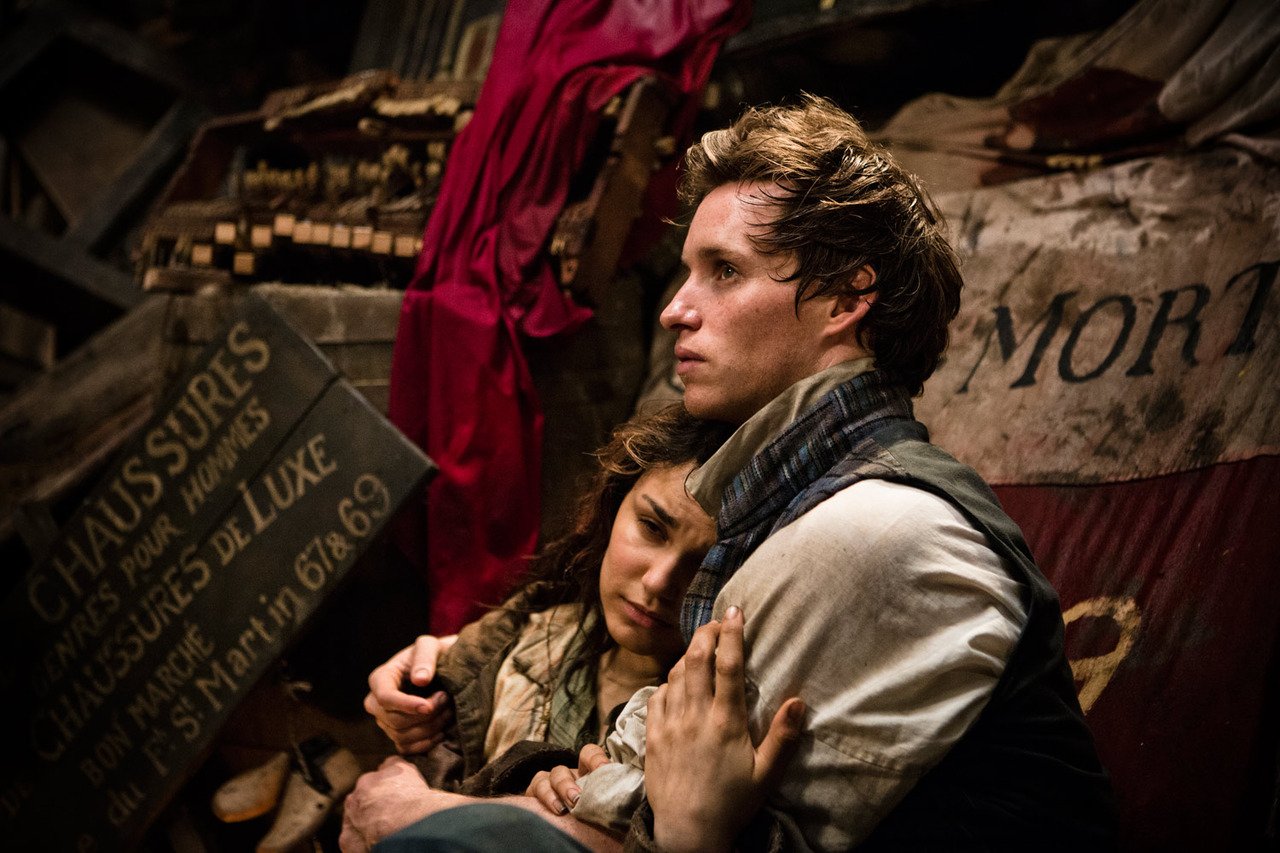
Stage veterans were cast in some big roles. Marius, the revolutionary, is played by the adorable Eddie Redmayne, no stranger to the stage in London and New York. Samantha Barks, who has a long stage resume and played Eponine in London, reprises her role here. Her voice is so powerful and pure that it stands out among the other cast.
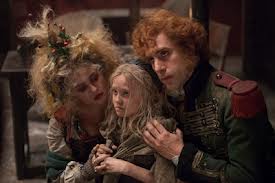
Helena Bonham Carter and Sacha Baron Cohen are well cast as the despicable Thenardier couple, the Master of the House, looking only to line their own pockets. Cohen, whom we know best from Borat, is an unexpected delight in the role.
The story, however, is the heart and soul of the movie. Much will be written, and indeed has been over the years, about the contrast of two men. One lives by the way of grace. The other is a slave to justice. Their lives intersect and interweave, but grace perseveres.
It is one of the most beautiful stories ever written, one of the most beautiful scores ever composed, expertly set to film. Gather up the family this Christmas. Don’t miss it. In fact, this movie reflects exactly why Christians believe Jesus came to earth.
He came for the miserable ones, Les Miserables.
Rated PG-13, the epic story shows the despair and dregs of life as well as victory. There are scenes of violence, murder, and prison savagery. Fantine is reduced to prostitution. Although the movie does not explicitly show sex, the lyrics refer to the act of prostitution and Fantine’s shame as she takes her first customer is shown, with the motions of her body evident but the man never seen. There are battle scenes, heroically portrayed and not particularly bloody, but filled with death, death of a child, and a suicide. The movie deals with universal and human themes in ways that help children understand the world and humanity, but parents should be ready for these themes. Not appropriate for elementary aged children, probably.

Browse Our Archives
Select a Category Becky's Picks Children's Movies DVD releases Entertainment News Faith on Film Featured Hunger Games In Theaters Interviews Life, Etc. Mixed Nuts Movie Reviews Poliflix Scroogewatch slider Television Uncategorized
Select a Month December 2014 November 2014 October 2014 September 2014 August 2014 July 2014 June 2014 May 2014 April 2014 March 2014 February 2014 January 2014 December 2013 November 2013 October 2013 September 2013 August 2013 July 2013 June 2013 May 2013 April 2013 March 2013 February 2013 January 2013 December 2012 November 2012 October 2012 September 2012 August 2012 July 2012 June 2012 May 2012 April 2012 March 2012 February 2012 January 2012 December 2011 November 2011 October 2011 September 2011 August 2011 July 2011 June 2011 April 2011 March 2011
Follow Us!
TAKE THE
Religious Wisdom Quiz
Which prophet was commanded to buy a field during a siege?
Select your answer to see how you score.
Obadiah Isaiah Jeremiah Habakkuk
Related posts from Tinsel
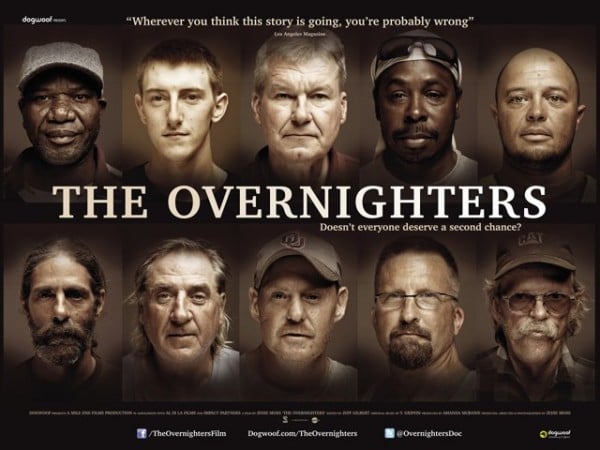
'The Overnighters:' Q&A with Director Jesse Moss

Gratitude for Five Years at Patheos - Moving...

Despite its Title, Stephen Hawking’s Biopic Earns an...

Video: Watch the Trailer for 'The Bible' Sequel...
TRENDING AT PATHEOS Religious Music & Entertainment

Methodist Central Hall and Westminster Abbey
Situated on the same square is Methodist Central Hall and Westminster Abbey. ...

57th Dove Awards Honor Dolly Parton, Crown New...
On gospel music’s biggest night, the 57th annual GMA Dove Awards honored...

The First Eucharistic Controversy: Christ’s Real Presence
For Catholics, the Eucharist is the source and summit of the Christian...

What a Stop Sign Can Teach Us About...
How to Make a Decision When You Can't Hear God Main point:...

Archdiocese Hosts Military Marriage Retreat in Germany
RASTATT, Germany — The transient military lifestyle, with its frequent deployments and...

Nearly every morning, I make the drive to Detroit with my high-school-age...
view all Religious Music & Entertainment blogs
Ad-Free & Subscriber Log-In Subscription Support
- About Us
- 2026 Calendar
- Videos
- Podcasts
- Library of World Religions
- Faith In Media Tracker
- Advertise With Us
- Write for Us
- Privacy Policy
- Terms of Service
- Do Not Sell My Data
- Contact Us
- Radiant Digital
- Manage Newsletter Subscriptions
- Unsubscribe From Notifications
- Sitemap
Copyright 2008-2026, Patheos. All rights reserved.
Subscription Support Ad-Free & Subscriber Log-In
Follow Patheos