
BuddhistCatholicContemplativeEvangelicalGeneral ChristianHinduJewishLatter-day SaintMuslimNew VisionsProgressive Christian
Beliefs
- Buddhist
- Catholic
- Contemplative
- Evangelical
- General Christian
- Hindu
- Jewish
- Latter-day Saint
- More Voices
- Muslim
- New Visions
- Pagan
- Progressive Christian
Topics
- Religion News
- Food and Religion
- Sports and Religion
- Religious Art
- Religious Music and Entertainment
- Religious Events
- History and Religion
- Style and Religion
- Politics and Religion
- Women in Religion
- Recreation Outdoors and Religion
- Business Finance and Religion
- Careers Workplace and Religion
- Education and Religion
- Family Parenting and Religion
- Health Fitness and Religion
- Home and Religion
- Relationships and Religion
- Technology and Religion
- Travel and Religion
Columnists
- Buddhist Columnists
- Business Finance and Religion Columnists
- Careers Workplace and Religion Columnists
- Catholic Columnists
- Contemplative Columnists
- Education and Religion Columnists
- Evangelists Columnists
- Family Parenting and Religion Columnists
- General Christian Columnists
- Health Fitness and Religion Columnists
- Hindu Columnists
- History and Religion Columnists
- Home and Religion Columnists
- Jewish Columnists
- More Voices Columnists
- Latter Day Columnists
- Muslim Columnists
- New Visions Columnists
- Nonreligious Columnists
- Pagan Columnists
- Politics and Religion Columnists
- Progressive Columnists
- Recreation Outdoors and Religion Columnists
- Relationships and Religion Columnists
- Religion News Columnists
- Religious Art Columnists
- Religious Events Columnists
- Religious Music and Entertainment Columnists
- Sports and Religion Columnists
- Style and Religion Columnists
- Technology and Religion Columnists
- Travel and Religion Columnists
- Women in Religion Columnists
Resource Library
- 2026 Calendar
- Library of World Religions
- The 100 Most Holy Places on Earth
- Patheos Answers
- Podcasts
- Videos
- Faith Leaders Database
- Anglican Episcopalian
- Bahai
- Baptist
- Buddhism
- Christianity
- Confucianism
- Eastern Orthodoxy
- Hinduism
- Holiness and Pentecostal
- ISKCON
- Islam
- Judaism
- Lutheran
- Methodist
- The Church of Jesus Christ of Latter-day Saints
- New Age
- Paganism
- Presbytarian and Reformed
- Protestantism
- Religion Behind the Scenes
- Roman Catholic
- Scientology
- Shia Islam
- Sikhism
- Sufism
- Sunni Islam
- Taoism
- Zen
- See all religions
Research Tools
 Ad-Free & Subscriber Log-In Subscription Support
Ad-Free & Subscriber Log-In Subscription Support
Follow Patheos 

- Trending:
- Forgiveness
- |
- Marriage
- |
- Consciousness
- |
- Death Penalty
- |
- Election
- |
- Halloween
 Tinsel
- Home
- Religious Music & Entertainment
- Is it Possible for Woody Allen to “get” Rome?
Is it Possible for Woody Allen to “get” Rome?
Last updated on: July 9, 2012 at 10:40 am by Rebecca Cusey
Is it Possible for Woody Allen to “get” Rome? 2012-07-09T10:40:30-06:00 Rebecca Cusey
Patheos Explore the world's faith through different perspectives on religion and spirituality! Patheos has the views of the prevalent religions and spiritualities of the world.
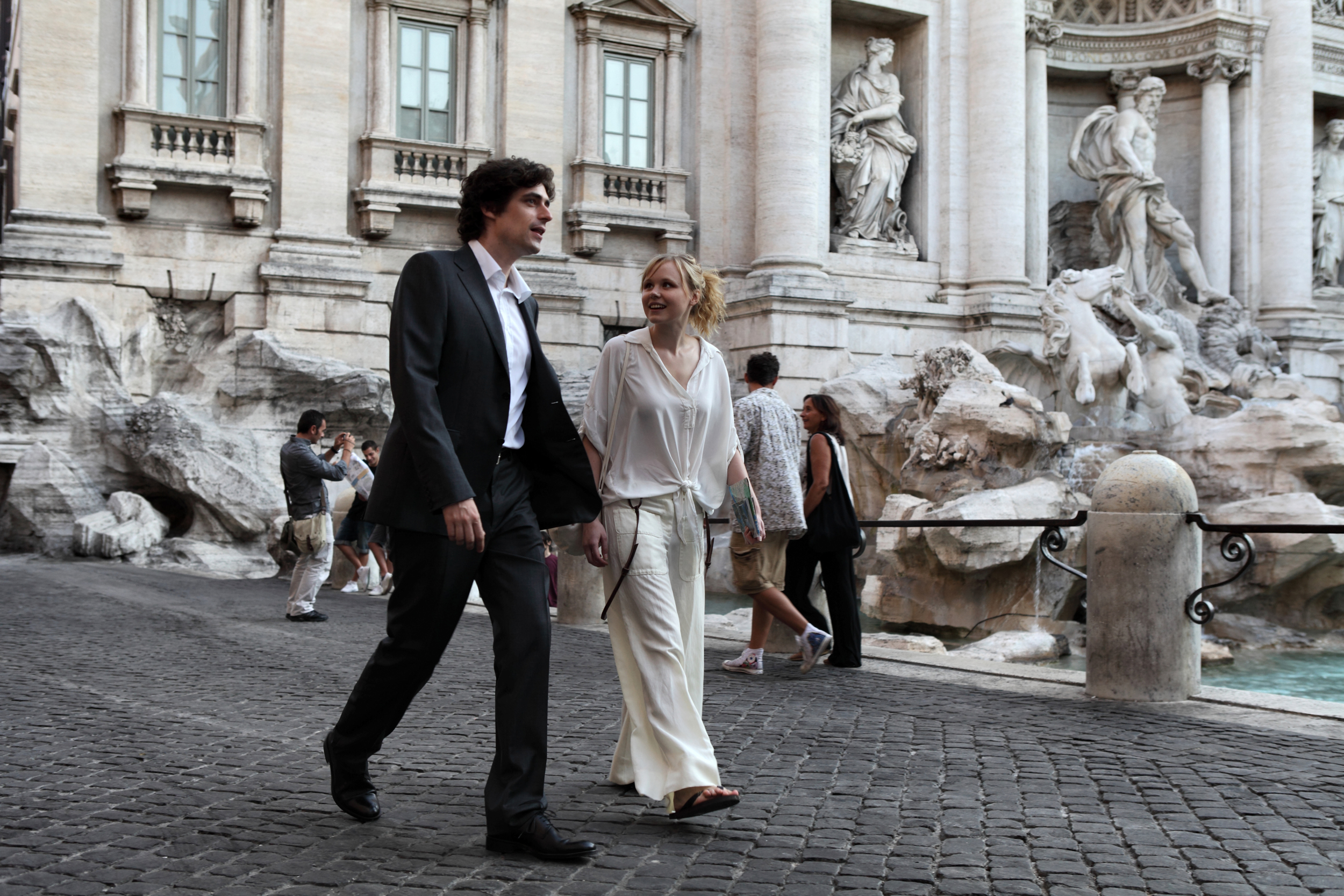 Ah Woody Allen, the quintessential New Yorker, neurotic, self-focused, consumed with triviality of details.
So can he “get” the Eternal City, a place completely uninterested in the individual? A city infused with millennia, steeped in ancient humanity, the push and pull of empire and faith?
Apparently not, if his movie To Rome with Love, is any indication. (Click through for my review.)
Manhattan, he gets. That’s a given. He captured the magic and fantasy of Paris in Midnight in Paris. He can do Los Angeles and Barcelona and London.
But Rome?
It may be too much for him.
He populated his Rome with New Yorkers, some characters actual New Yorkers imported from the States and others a Roman version of New Yorkers. Here we have a loving couple just needing a sexual escapade to launch them into the perfect marriage. There we have a comic-infused undertaker just waiting to be discovered as an opera singer. Everyone is modern and amoral and sophisticated.
But where are the nuns?
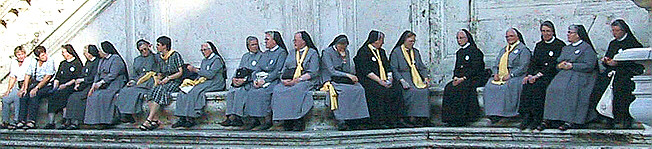
You can’t throw a cannoli in Rome without hitting a nun or priest. Yet, they are M.I.A. from Allen’s movie. Allen’s characters frequent little cafes and walk ancient streets, but don’t enter the churches.
And that’s what Rome is all about, isn’t it? On every corner, art, monuments, cathedrals, statues, and the very framing of architecture point to humanity grappling with the universe, with God, with destiny.
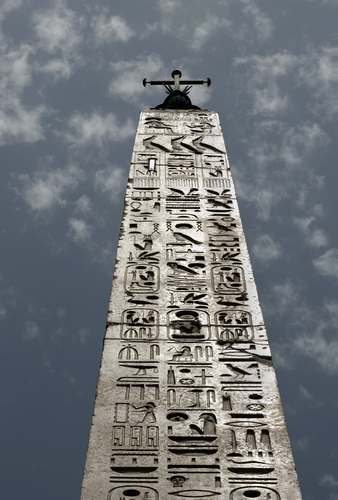
Let’s start with the eight Egyptian obelisks that dot the city. For the most part, they were plundered from the more ancient Egyptian empire during the height of the Roman Empire before the Christian era, a pagan empire plundering the riches and gods of a formerly powerful and long-lasting people. There they stand, although the religion and empire that built them has long crumbled, along with the religion and empire that plundered them.
Or take the Pantheon, built by the Emperor Hadrian in 118, when the Empire seemed destined to last forever and the chorus of Roman gods the apex of all gods. Little did he suspect the seeds of revolution were already sprouting in his empire. They weren’t political revolution – that had been dealt with before, harshly – but a revolution in the very concept of what it means to be human, a revolution that would strip him and his successors of divine status and the gods of their glory.
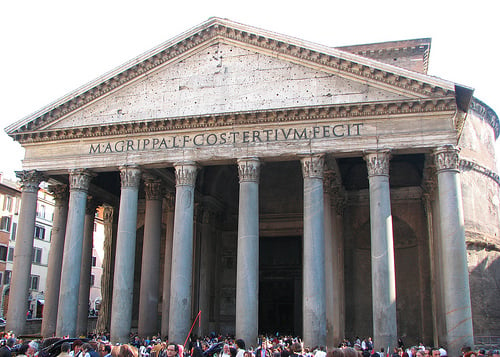
The Panthenon in Rome
Take the Coliseum, mentioned in the movie, where adherents of a new faith would die before beasts and gladiators, or the catacombs, where the faithful hid among the dead to worship.
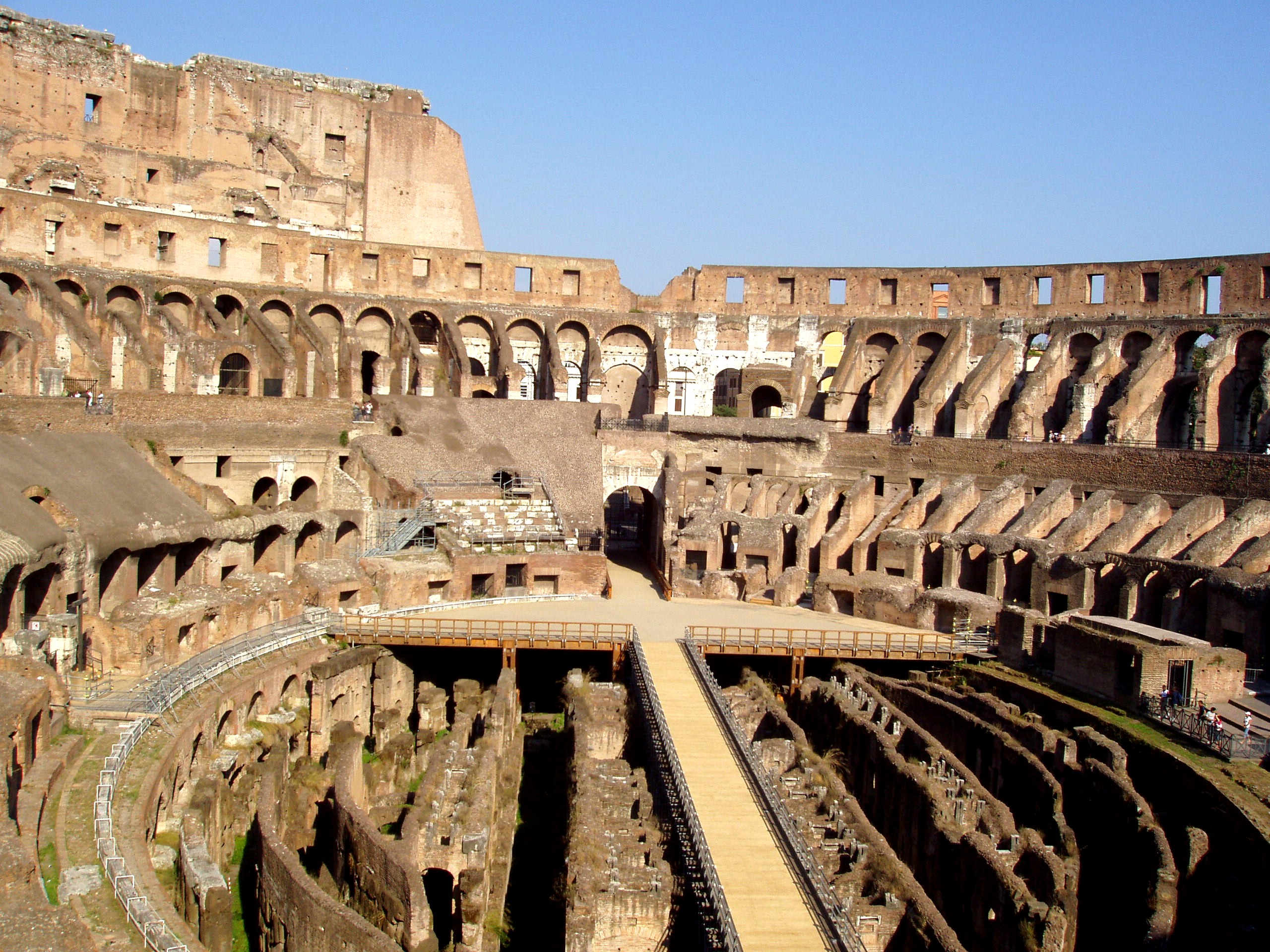
Roman Coliseum
Or focus on the Christian era, where corruption and faithfulness battled for a thousand years, where great glory mixed with great shame, and continues to this day. This is the awe-inspiring nature of the Vatican, with its Sistine Chapel altar wall by Michelangelo so vividly showing the struggle between Heaven and Hell, good and evil, salvation and damnation.
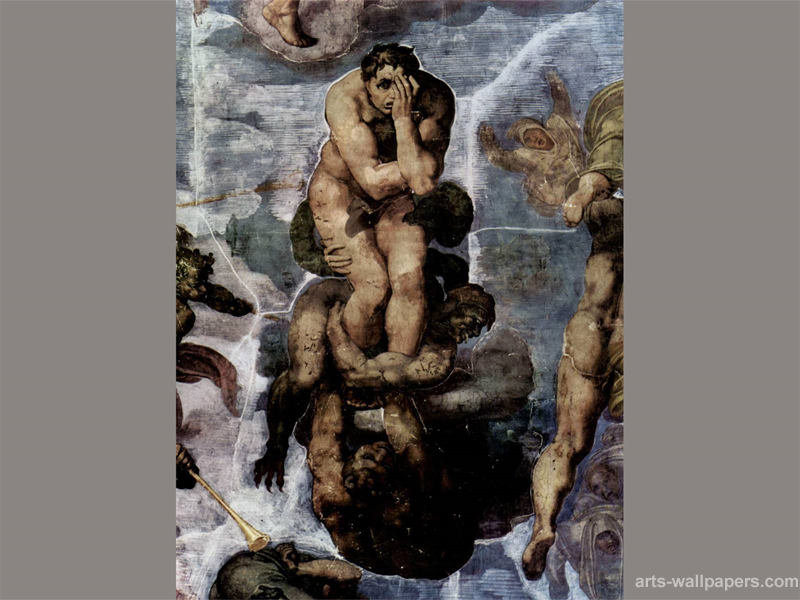
None of this weight of history cares much about one neurotic man’s ambition to find a new singer, nor of sexual escapades, nor of the wild and semi-regretted affair with a troubled girl.
Allen is Jewish, a people who have their own long history with Rome, but that doesn’t factor into the movie either. He works hard to avoid all mention of the transcendent.
The very thing Woody Allen specializes in – staring into the trivialities of one’s own experience to highlight the absurdity there – will not do in Rome.
In Rome, triviality washes away, along with the individual.
Allen hints at this. Two different characters bring up “ozymandias melancholi,” the melancholy brought on by the weight of ruins, the feeling that life and empires flash by and nothing lasts forever. But they only speak of it; they do not become changed by it.
Rome – and humanity in general – handles this melancholy by embracing the eternal, coming to terms with mortality, usually by finding faith.
Woody Allen handles it by doubling down on the trivial.
It seems he is incapable, when in Rome, of doing as the Romans do.

Next Post

July 11, 2012 First Look: Aronofsky Builds his Ark for 'Noah'
Browse Our Archives
Select a Category Becky's Picks Children's Movies DVD releases Entertainment News Faith on Film Featured Hunger Games In Theaters Interviews Life, Etc. Mixed Nuts Movie Reviews Poliflix Scroogewatch slider Television Uncategorized
Select a Month December 2014 November 2014 October 2014 September 2014 August 2014 July 2014 June 2014 May 2014 April 2014 March 2014 February 2014 January 2014 December 2013 November 2013 October 2013 September 2013 August 2013 July 2013 June 2013 May 2013 April 2013 March 2013 February 2013 January 2013 December 2012 November 2012 October 2012 September 2012 August 2012 July 2012 June 2012 May 2012 April 2012 March 2012 February 2012 January 2012 December 2011 November 2011 October 2011 September 2011 August 2011 July 2011 June 2011 April 2011 March 2011
Follow Us!
TAKE THE
Religious Wisdom Quiz
What was the primary beverage in biblical times?
Select your answer to see how you score.
Milk Water Wine Beer
Related posts from Tinsel
'The Overnighters:' Q&A with Director Jesse Moss

Gratitude for Five Years at Patheos - Moving...

Despite its Title, Stephen Hawking’s Biopic Earns an...

Video: Watch the Trailer for 'The Bible' Sequel...
TRENDING AT PATHEOS Religious Music & Entertainment

'Super Scam Me' Exposes AI Jon Bon Jovi...
Leslie Pickett believed she was in a relationship with Jon Bon Jovi....

The Brazilian Remake of Kendricks' 'Flywheel' Opens in...
“Flywheel,” the story that launched the Kendrick Brothers’ filmmaking career is getting...

The Dangers of Gradual Accommodation (Winking at Sin)
Recently, the “law of gradualness” resurfaced during the opening of a weeklong,...

The Iron Gates and the Lion of the...
Yesterday, I didn't finish my report about, well, yesterday. So I'll...

The Image: On the Horror of Capitalism and...
The Image Then went the Pharisees, and took counsel how they might...

We are approaching the date of our new American national holiday: October...
view all Religious Music & Entertainment blogs
Ad-Free & Subscriber Log-In Subscription Support
- About Us
- 2026 Calendar
- Videos
- Podcasts
- Library of World Religions
- Faith In Media Tracker
- Advertise With Us
- Write for Us
- Privacy Policy
- Terms of Service
- Do Not Sell My Data
- Contact Us
- Radiant Digital
- Manage Newsletter Subscriptions
- Unsubscribe From Notifications
- Sitemap
Copyright 2008-2026, Patheos. All rights reserved.
Subscription Support Ad-Free & Subscriber Log-In
Follow Patheos