
BuddhistCatholicContemplativeEvangelicalGeneral ChristianHinduJewishLatter-day SaintMuslimNew VisionsProgressive Christian
Beliefs
- Buddhist
- Catholic
- Contemplative
- Evangelical
- General Christian
- Hindu
- Jewish
- Latter-day Saint
- More Voices
- Muslim
- New Visions
- Pagan
- Progressive Christian
Topics
- Religion News
- Food and Religion
- Sports and Religion
- Religious Art
- Religious Music and Entertainment
- Religious Events
- History and Religion
- Style and Religion
- Politics and Religion
- Women in Religion
- Recreation Outdoors and Religion
- Business Finance and Religion
- Careers Workplace and Religion
- Education and Religion
- Family Parenting and Religion
- Health Fitness and Religion
- Home and Religion
- Relationships and Religion
- Technology and Religion
- Travel and Religion
Columnists
- Buddhist Columnists
- Business Finance and Religion Columnists
- Careers Workplace and Religion Columnists
- Catholic Columnists
- Contemplative Columnists
- Education and Religion Columnists
- Evangelists Columnists
- Family Parenting and Religion Columnists
- General Christian Columnists
- Health Fitness and Religion Columnists
- Hindu Columnists
- History and Religion Columnists
- Home and Religion Columnists
- Jewish Columnists
- More Voices Columnists
- Latter Day Columnists
- Muslim Columnists
- New Visions Columnists
- Nonreligious Columnists
- Pagan Columnists
- Politics and Religion Columnists
- Progressive Columnists
- Recreation Outdoors and Religion Columnists
- Relationships and Religion Columnists
- Religion News Columnists
- Religious Art Columnists
- Religious Events Columnists
- Religious Music and Entertainment Columnists
- Sports and Religion Columnists
- Style and Religion Columnists
- Technology and Religion Columnists
- Travel and Religion Columnists
- Women in Religion Columnists
Resource Library
- 2026 Calendar
- Library of World Religions
- The 100 Most Holy Places on Earth
- Patheos Answers
- Podcasts
- Videos
- Faith Leaders Database
- Anglican Episcopalian
- Bahai
- Baptist
- Buddhism
- Christianity
- Confucianism
- Eastern Orthodoxy
- Hinduism
- Holiness and Pentecostal
- ISKCON
- Islam
- Judaism
- Lutheran
- Methodist
- The Church of Jesus Christ of Latter-day Saints
- New Age
- Paganism
- Presbytarian and Reformed
- Protestantism
- Religion Behind the Scenes
- Roman Catholic
- Scientology
- Shia Islam
- Sikhism
- Sufism
- Sunni Islam
- Taoism
- Zen
- See all religions
Research Tools
 Ad-Free & Subscriber Log-In Subscription Support
Ad-Free & Subscriber Log-In Subscription Support
Follow Patheos 

- Trending:
- Forgiveness
- |
- Marriage
- |
- Consciousness
- |
- Death Penalty
- |
- Election
- |
- Halloween
 Tinsel
- Home
- Religious Music & Entertainment
- The Politics of the Hunger Games
The Politics of the Hunger Games
Last updated on: March 26, 2012 at 8:16 am by Rebecca Cusey
The Politics of the Hunger Games 2012-03-26T08:16:42-06:00 Rebecca Cusey
Patheos Explore the world's faith through different perspectives on religion and spirituality! Patheos has the views of the prevalent religions and spiritualities of the world.
 It seems “The Hunger Games” is a bit of a Rorschach test for people politically. Do the districts represent #Occupy protesters? Ayn Rand workers oppressed by their government? Fodder for meaningless wars? Or something more?
In his review, Roger Ebert writes:
In interviews, Sutherland has equated the younger generation with leftists and Occupiers. The old folks in the Capitol are no doubt a right-wing oligarchy. My conservative friends, however, equate the young with the Tea Party and the old with decadent Elitists.
The Hollywood reporter, um, reports, that reactions are all over the map. Conservatives see big government as the evil, while some even equate the story (weirdly in my opinion) to global warming, assuming that the catastrophe that caused the apocalypse was climate-related. But there’s more. Paul Bond writes:
Occupy-Wall-Street liberals are loving the way the film portrays an extraordinary gap between the rich and poor as simply an innate evil. It’s a black-and-white view in which there’s no allowance that the rich might have earned their wealth — they’re portrayed simply as lazy and overly indulged oppressors. The poor are shown as the industrious ones.
Yet Christian Toto over at Breitbart says: “The fact that the film targets an all-powerful government enslaving its citizens gives it even extra heft for right-of-center audiences.”
In my review, I had a different slant. Although I see the oppression of the government angle, I think it’s pretty neutral to our situation. Oppressive governments can be either wildly left, as in the Soviet Union or Communist China, or wildly right, as in Nazi Germany. Some could argue that the socially conservative oil oligarchies of the Middle East are wildly right. At some point, totalitarianism transcends the left-right arguments of free people and becomes something different altogether.
I keyed in much more on the pacifist message. I think the book says that fighting for anything, even freedom, is eventually a chump’s game and never a noble or worthwhile thing.
Apparently I wasn’t the only one who saw it that way. Over at Patheos’s Pangea blog, a Mennonite pastor, Marty Troyer, sees the same thing, although he thinks the books falls short of offering a solution. He writes:
In the final analysis, Collins offers us little beyond a sturdy “No!” to violence, leaving us hungering for something to say “Yes” to. What’s missing is the path forward among people’s who have been mutually destructive, such as The Truth and Reconciliation Commissions of Africa. She offers little hope beyond perseverance, no spirituality outside public ritual, and little insight into the world as it should be. Instead, what we get is a masterful look at the end of violence: the world as it is.
Over at Values and Capitalism, run by the American Enterprise Institute (full disclosure – my husband works at AEI in a different department), they have an excellent wrap-up of thought on “The Hunger Games” from the same perspective as me, that there are some things worth fighting for, although the battle may be hard and costly. They’ve done something fun, offering alternate endings to the trilogy. Surely such an excellent series deserves an ending with more meaning and a sense of a battle well-fought, like Harry Potter.
Or maybe this discussion is exactly what Suzanne Collins hoped would come out of her series.
Previous Post

March 23, 2012
RedState Movie Mafia Podcast: All About the Hunger Games
Next Post

March 26, 2012 Titanic Director James Cameron Returns to Bottom of Ocean
Browse Our Archives
Select a Category Becky's Picks Children's Movies DVD releases Entertainment News Faith on Film Featured Hunger Games In Theaters Interviews Life, Etc. Mixed Nuts Movie Reviews Poliflix Scroogewatch slider Television Uncategorized
Select a Month December 2014 November 2014 October 2014 September 2014 August 2014 July 2014 June 2014 May 2014 April 2014 March 2014 February 2014 January 2014 December 2013 November 2013 October 2013 September 2013 August 2013 July 2013 June 2013 May 2013 April 2013 March 2013 February 2013 January 2013 December 2012 November 2012 October 2012 September 2012 August 2012 July 2012 June 2012 May 2012 April 2012 March 2012 February 2012 January 2012 December 2011 November 2011 October 2011 September 2011 August 2011 July 2011 June 2011 April 2011 March 2011
Follow Us!
TAKE THE
Religious Wisdom Quiz
Who became jealous and tried to kill David several times?
Select your answer to see how you score.
Samuel Abiathar Abner Saul
Related posts from Tinsel
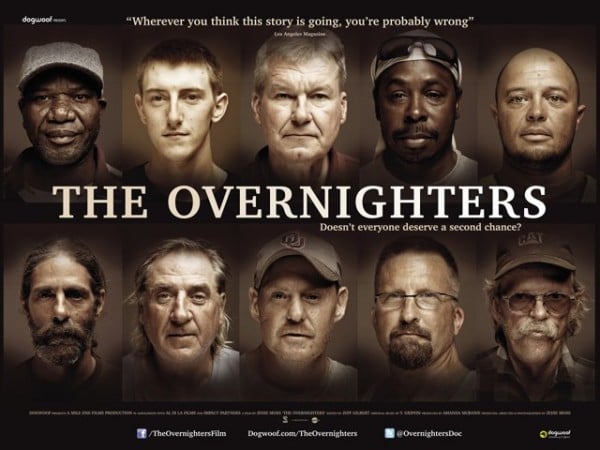
'The Overnighters:' Q&A with Director Jesse Moss

Gratitude for Five Years at Patheos - Moving...

Despite its Title, Stephen Hawking’s Biopic Earns an...

Video: Watch the Trailer for 'The Bible' Sequel...
TRENDING AT PATHEOS Religious Music & Entertainment

The Problem with False Prophets
Miller’s Station UMC| 10/18/26| Anchor Verse: Jeremiah 23: 1, 9-23 I...

Emotion in Early Christianity by Andrew Crislip
Andrew Crislip’s Emotion in Early Christianity examines an often overlooked dimension of...

16 Spiritual Touchstones for a More Grounded Life
After decades of spiritual study, here are 16 principles I try...

Catholic Evangelization: Sharing Your Faith Every Day
Welcome back to the Graceful Awakening mini-series called, “From Faith to Mission.” ...

The Pillar of the Boatmen: the Ancient Monument...
The Pillar of the Boatmen is a Romano-Gaulish sculpture that dates from...

In one sense walking into Westminster Abbey is like walking down the...
view all Religious Music & Entertainment blogs
Ad-Free & Subscriber Log-In Subscription Support
- About Us
- 2026 Calendar
- Videos
- Podcasts
- Library of World Religions
- Faith In Media Tracker
- Advertise With Us
- Write for Us
- Privacy Policy
- Terms of Service
- Do Not Sell My Data
- Contact Us
- Radiant Digital
- Manage Newsletter Subscriptions
- Unsubscribe From Notifications
- Sitemap
Copyright 2008-2026, Patheos. All rights reserved.
Subscription Support Ad-Free & Subscriber Log-In
Follow Patheos