
BuddhistCatholicContemplativeEvangelicalGeneral ChristianHinduJewishLatter-day SaintMuslimNew VisionsProgressive Christian
Beliefs
- Buddhist
- Catholic
- Contemplative
- Evangelical
- General Christian
- Hindu
- Jewish
- Latter-day Saint
- More Voices
- Muslim
- New Visions
- Pagan
- Progressive Christian
Topics
- Religion News
- Food and Religion
- Sports and Religion
- Religious Art
- Religious Music and Entertainment
- Religious Events
- History and Religion
- Style and Religion
- Politics and Religion
- Women in Religion
- Recreation Outdoors and Religion
- Business Finance and Religion
- Careers Workplace and Religion
- Education and Religion
- Family Parenting and Religion
- Health Fitness and Religion
- Home and Religion
- Relationships and Religion
- Technology and Religion
- Travel and Religion
Columnists
- Buddhist Columnists
- Business Finance and Religion Columnists
- Careers Workplace and Religion Columnists
- Catholic Columnists
- Contemplative Columnists
- Education and Religion Columnists
- Evangelists Columnists
- Family Parenting and Religion Columnists
- General Christian Columnists
- Health Fitness and Religion Columnists
- Hindu Columnists
- History and Religion Columnists
- Home and Religion Columnists
- Jewish Columnists
- More Voices Columnists
- Latter Day Columnists
- Muslim Columnists
- New Visions Columnists
- Nonreligious Columnists
- Pagan Columnists
- Politics and Religion Columnists
- Progressive Columnists
- Recreation Outdoors and Religion Columnists
- Relationships and Religion Columnists
- Religion News Columnists
- Religious Art Columnists
- Religious Events Columnists
- Religious Music and Entertainment Columnists
- Sports and Religion Columnists
- Style and Religion Columnists
- Technology and Religion Columnists
- Travel and Religion Columnists
- Women in Religion Columnists
Resource Library
- 2026 Calendar
- Library of World Religions
- The 100 Most Holy Places on Earth
- Patheos Answers
- Podcasts
- Videos
- Faith Leaders Database
- Anglican Episcopalian
- Bahai
- Baptist
- Buddhism
- Christianity
- Confucianism
- Eastern Orthodoxy
- Hinduism
- Holiness and Pentecostal
- ISKCON
- Islam
- Judaism
- Lutheran
- Methodist
- The Church of Jesus Christ of Latter-day Saints
- New Age
- Paganism
- Presbytarian and Reformed
- Protestantism
- Religion Behind the Scenes
- Roman Catholic
- Scientology
- Shia Islam
- Sikhism
- Sufism
- Sunni Islam
- Taoism
- Zen
- See all religions
Research Tools
 Ad-Free & Subscriber Log-In Subscription Support
Ad-Free & Subscriber Log-In Subscription Support
Follow Patheos 

- Trending:
- Forgiveness
- |
- Marriage
- |
- Consciousness
- |
- Death Penalty
- |
- Election
- |
- Halloween
 Tinsel
- Home
- Religious Music & Entertainment
- Love Song to a Love Song: The Tree of Life
Love Song to a Love Song: The Tree of Life
Last updated on: November 7, 2011 at 9:12 am by Rebecca Cusey
Love Song to a Love Song: The Tree of Life 2011-11-07T09:12:37-06:00 Rebecca Cusey
Patheos Explore the world's faith through different perspectives on religion and spirituality! Patheos has the views of the prevalent religions and spiritualities of the world.
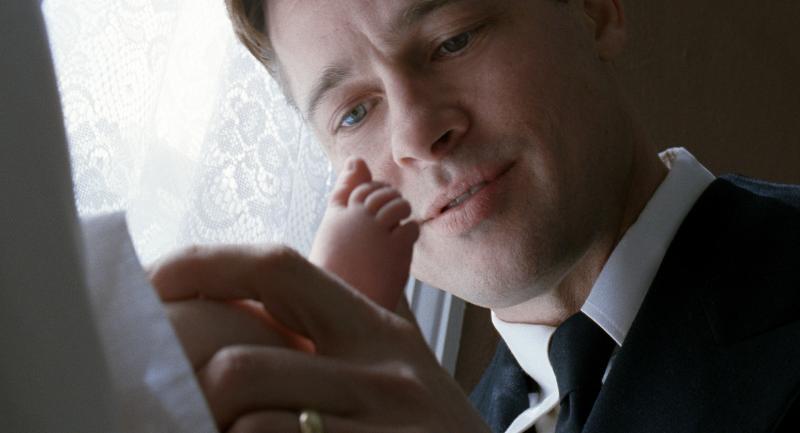
Few movies have penetrated my soul like “The Tree of Life,” Terrence Malick’s impressionistic love song to life, the universe, and everything that comes out on DVD this week. The fragmentary film follows a middle aged man (Sean Penn) as he remembers his brother, killed years ago at 19, and reflects on his relationship with God and his own brokenness. Many of his mental memories of spirituality were influenced by his Mother (Jessica Chastain), angelic in memory, and his hard Father (Brad Pitt) as he grew up in the 60s in Texas.
Like a stained glass window, the film is made of pieces of images, story, and music that appeal differently to each viewer.
For me, the primary concept that keeps echoing around my head as I go through life is the opening prologue which compares the way of nature with the way of grace.
“The nuns taught us there were two ways through life – the way of nature and the way of grace,” whispers the Mother, “You have to choose which one you’ll follow. Grace doesn’t try to please itself. Accepts being slighted, forgotten, disliked. Accepts insults and injuries.”
“Nature only wants to please itself. Get others to please it too. Likes to lord it over them. To have its own way. It finds reasons to be unhappy when all the world is shining around it. And love is smiling through all things.”
“The nuns taught us that no one who loves the way of grace ever comes to a bad end.”
“I will be true to You. Whatever comes.”
114 words, spoken in the movie haltingly, as if each word matters, imposed over images of a beautiful mother as she smiles through the world around her. These words are her statement of faith, her framework for her life, and her challenge when tragedy strikes.
Like the Mother, I find myself wondering if my actions are the way of nature or the way of grace as I go about the tiny tasks and worries of my day. The framework has become part of me.
Others with whom I’ve spoken hardly remember that passage, but key off other images or ideas. One friend, an architect, was moved by the images of spaces in the film, how the afterlife is portrayed as wide open, free, and earthly life is increasingly closed in and removed from nature. Another woman was moved by a brief scene of a father and child planting a tree. Still others speak of the unimaginable grandeur of God seen through the cosmos and accompanied by choral music.
I have also spoken with many who hate the film. Its focus on images and lack of coherence strike them as pretentious and boring. At 139 minutes, it’s undoubtedly too long. At least half an hour should be cut.
The trick, however, is figuring out which thirty minutes to eliminate. While I most disliked the final scenes of the film, in which the family unites in a sort of afterlife, I have spoken to people for whom those images were deeply moving. The births of children, portrayed as swimming through doors and running through gates in gardens? Perhaps unnecessary, but haunting in their beauty and statements of life’s origins.
The meaning and questions would not strike with such power if Malick had not also captured the profound joy and beauty of life.
Which takes time, after all.
Perhaps the most universal disparagement is of the scenes of dinosaurs running through ancient earth. What was that?
Honey, I hear ya. We all wonder what that was.
Despite these very serious critiques, I left the theater feeling deeply content, as after a particularly good church service or a fulfilling day in a museum, but also confused. It took me a day of pondering just to figure out what was happening in the film. Me! Who spends her professional life summing up movies in a sentence or two!
My mind kept coming back, flirting with images and ideas, wondering, feeling.
The second time I saw it, I wept.
I think the thing I love most about the film is that, unlike most movies, you have to work at it. Each viewer brings himself to the movie and struggles with the discomfort, the questions, the infuriating vagueness of it. Although deeply Christian, I believe, in it its outlook, the film offers no answers or catechism of faith.
Instead, it makes faith, and I would argue Christian faith, universal. When the boy Jack, stunned by his own dark desires, cries out “The things I do…I hate!” it is not a treatise on the Apostle Paul and his theology, but an emotive heart-cry that feels common to all humanity. I did not recognize it as a Bible verse, although it surely is, but instead it made the Bible human to me, as an emotive universal distress that predated the day the Apostle Paul wrote those words.
I must note, however, that people of other faiths – or no faith at all – also see themselves in this film and are moved by it.
Like a great cathedral painting, an aria, or a particularly powerful church service, it requires you to work for your experience, for the insight you will gain.
For once in the theater, we are not consumers, but worshippers.
The film is far from perfect and will feel unfamiliar, but I urge you to give it a chance.
If it insinuates itself into your soul the way it has into mine, I would love to hear about it.
Rated PG-13, the film is appropriate for children, and would be a fascinating conversation starter with children, if you can get them to sit through it. It’s not Sponge Bob.
Previous Post

October 6, 2011
Ides of March
Next Post

October 21, 2011 The Mighty Macs
Browse Our Archives
Select a Category Becky's Picks Children's Movies DVD releases Entertainment News Faith on Film Featured Hunger Games In Theaters Interviews Life, Etc. Mixed Nuts Movie Reviews Poliflix Scroogewatch slider Television Uncategorized
Select a Month December 2014 November 2014 October 2014 September 2014 August 2014 July 2014 June 2014 May 2014 April 2014 March 2014 February 2014 January 2014 December 2013 November 2013 October 2013 September 2013 August 2013 July 2013 June 2013 May 2013 April 2013 March 2013 February 2013 January 2013 December 2012 November 2012 October 2012 September 2012 August 2012 July 2012 June 2012 May 2012 April 2012 March 2012 February 2012 January 2012 December 2011 November 2011 October 2011 September 2011 August 2011 July 2011 June 2011 April 2011 March 2011
Follow Us!
TAKE THE
Religious Wisdom Quiz
In the Parable of the Ten Virgins, what were the wise ones prepared for?
Select your answer to see how you score.
The bridegroom The Sabbath A king A feast
Related posts from Tinsel
'The Overnighters:' Q&A with Director Jesse Moss

Despite its Title, Stephen Hawking’s Biopic Earns an...

Video: Watch the Trailer for 'The Bible' Sequel...
Clip: Tyler Perry's 'Hell Hath No Fury Like...
TRENDING AT PATHEOS Religious Music & Entertainment

The Problem with False Prophets
Miller’s Station UMC| 10/18/26| Anchor Verse: Jeremiah 23: 1, 9-23 I...

Emotion in Early Christianity by Andrew Crislip
Andrew Crislip’s Emotion in Early Christianity examines an often overlooked dimension of...

16 Spiritual Touchstones for a More Grounded Life
After decades of spiritual study, here are 16 principles I try...

Catholic Evangelization: Sharing Your Faith Every Day
Welcome back to the Graceful Awakening mini-series called, “From Faith to Mission.” ...

The Pillar of the Boatmen: the Ancient Monument...
The Pillar of the Boatmen is a Romano-Gaulish sculpture that dates from...

In one sense walking into Westminster Abbey is like walking down the...
view all Religious Music & Entertainment blogs
Ad-Free & Subscriber Log-In Subscription Support
- About Us
- 2026 Calendar
- Videos
- Podcasts
- Library of World Religions
- Faith In Media Tracker
- Advertise With Us
- Write for Us
- Privacy Policy
- Terms of Service
- Do Not Sell My Data
- Contact Us
- Radiant Digital
- Manage Newsletter Subscriptions
- Unsubscribe From Notifications
- Sitemap
Copyright 2008-2026, Patheos. All rights reserved.
Subscription Support Ad-Free & Subscriber Log-In
Follow Patheos