
BuddhistCatholicContemplativeEvangelicalGeneral ChristianHinduJewishLatter-day SaintMuslimNew VisionsProgressive Christian
Beliefs
- Buddhist
- Catholic
- Contemplative
- Evangelical
- General Christian
- Hindu
- Jewish
- Latter-day Saint
- More Voices
- Muslim
- New Visions
- Pagan
- Progressive Christian
Topics
- Religion News
- Food and Religion
- Sports and Religion
- Religious Art
- Religious Music and Entertainment
- Religious Events
- History and Religion
- Style and Religion
- Politics and Religion
- Women in Religion
- Recreation Outdoors and Religion
- Business Finance and Religion
- Careers Workplace and Religion
- Education and Religion
- Family Parenting and Religion
- Health Fitness and Religion
- Home and Religion
- Relationships and Religion
- Technology and Religion
- Travel and Religion
Columnists
- Buddhist Columnists
- Business Finance and Religion Columnists
- Careers Workplace and Religion Columnists
- Catholic Columnists
- Contemplative Columnists
- Education and Religion Columnists
- Evangelists Columnists
- Family Parenting and Religion Columnists
- General Christian Columnists
- Health Fitness and Religion Columnists
- Hindu Columnists
- History and Religion Columnists
- Home and Religion Columnists
- Jewish Columnists
- More Voices Columnists
- Latter Day Columnists
- Muslim Columnists
- New Visions Columnists
- Nonreligious Columnists
- Pagan Columnists
- Politics and Religion Columnists
- Progressive Columnists
- Recreation Outdoors and Religion Columnists
- Relationships and Religion Columnists
- Religion News Columnists
- Religious Art Columnists
- Religious Events Columnists
- Religious Music and Entertainment Columnists
- Sports and Religion Columnists
- Style and Religion Columnists
- Technology and Religion Columnists
- Travel and Religion Columnists
- Women in Religion Columnists
Resource Library
- 2026 Calendar
- Library of World Religions
- The 100 Most Holy Places on Earth
- Patheos Answers
- Podcasts
- Videos
- Faith Leaders Database
- Anglican Episcopalian
- Bahai
- Baptist
- Buddhism
- Christianity
- Confucianism
- Eastern Orthodoxy
- Hinduism
- Holiness and Pentecostal
- ISKCON
- Islam
- Judaism
- Lutheran
- Methodist
- The Church of Jesus Christ of Latter-day Saints
- New Age
- Paganism
- Presbytarian and Reformed
- Protestantism
- Religion Behind the Scenes
- Roman Catholic
- Scientology
- Shia Islam
- Sikhism
- Sufism
- Sunni Islam
- Taoism
- Zen
- See all religions
Research Tools
 Ad-Free & Subscriber Log-In Subscription Support
Ad-Free & Subscriber Log-In Subscription Support
Follow Patheos 

- Trending:
- Forgiveness
- |
- Marriage
- |
- Consciousness
- |
- Death Penalty
- |
- Election
- |
- Halloween

- Home
- Pagan
- What We Knew in the Night: The Five Components of Magic
What We Knew in the Night: The Five Components of Magic
Last updated on: September 16, 2019 at 11:04 pm by Guest Contributor
What We Knew in the Night: The Five Components of Magic 2019-09-16T23:04:51-04:00 Guest Contributor
Patheos Explore the world's faith through different perspectives on religion and spirituality! Patheos has the views of the prevalent religions and spiritualities of the world.
There are essentially five components that comprise the art of creating successful and consistent works of magic:
1. Will
2. Timing
3. Imagery
4. Direction
5. Balance
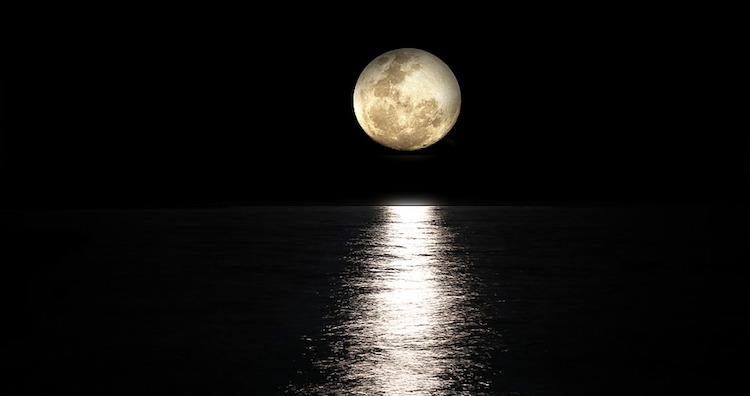
Image from Pixabay. CC0 License.
WILL
It is the personal mental will of the Witch that drives the manifestation of any desired spell or work of magic. The will is, of course, the directed focus of the mind. The power of the will in any given work must be equal to motivation to accomplish your goal. The less intense the focus of the personal will, the less likely the manifestation is to appear. The stronger the need or desire, the more likely enough will power will be raised. This is one reason why magic should not always be the first remedy to a need or situation. Magic should be a resource in times of need as opposed to a commonplace practice. This keeps it sacred and powerful.
When applying the will, it is important to not let your thoughts stray. If they do, you can unintentionally morph the effect you desire to manifest. This is one reason why written evocations or invocations are useful to keep things focused on the intent. Rhyming words in one’s spell is effective in keeping the train of thought fixed in place.
TIMING
In the performance of magic, timing can mean success or failure. Witchcraft is rooted in the ways and cycles of nature. The night is the preferred time for the Witch’s magic because calmness has settled over the hectic energy of daily life.
The best time to cast a spell or direct a work of magic is when the target is most receptive. Receptivity is usually assured when the target is passive. Therefore, an effective time to cast a spell is when people are asleep; corporations are closed overnight and on holidays, and so on. In this way there is no counter flow of energy there to buffer the spell. Another important factor is to take into account the phase of the moon. Always work with nature and not against it. Generally speaking, 4 a.m. in the target zone area is the most effective time to cast a spell of influence over a person or a situation.
IMAGERY
The success of any magical work also depends upon images that connect the Witch to the desired manifestation. This is where one’s imagination enters into the formula. The image you use should heighten your emotions and draw you deeply into the work at hand.
Anything that serves to intensify the emotions will contribute to success. Therefore, things such as a drawing, a statue, a photo, or a symbol are very useful. For increased energy you can accompany it with a scent, article of clothing, sound, or setting that adds to your connection. The merging of these components will greatly add to your successful outcome.
Imagery is a constant reminder during the spell casting of what you wish to attract or accomplish. It acts as a homing device in its role as a representation of the object, person, or situation for which the spell is intended. Imagery joins with the personal will to shape and direct everything in accord with the will of the Witch. This becomes the pattern or formula that leads to the realization of desire. Surround yourself with images of your desire and a resonance will arise, forming a directed vibration that will attract to you the thing you desire.
DIRECTION
In order to have any outside effect, magic must be directed in accord with time and space. Time, space, and energy are the three points of manifestation. This principle is called the triangle of manifestation. It is active now in your hands because you taking the time to read this book, you are in a space/location, and you are putting forth the effort to read these words.

Photo from Pixabay. CC0 License.
Releasing magic is necessary for it to have an effect on anything outside of oneself. Once energy is raised, you must direct it toward a space/location. This connects you and the target by a cord or bridge of magical energy. It is through this connection that the desired results of your spell will return to you.
Once you release the magic of the spell, do not be anxious concerning the results. Anxiety will act to draw the energy back to you before it can take effect. Reflecting upon the spell tends to ground the energy because it draws the images and concepts back to you. Once you cast a spell, it is best to not give the matter further thought so as not to drain off its effectiveness. Mark a seven-day period on your calendar and evaluate the situation seven days later. It usually takes this amount of time (one lunar quarter) for magic to manifest.
BALANCE
As with all things in Witchcraft, balance is essential in a spell or other work of magic. Balance is about knowing the outcome in accord with what is realistic. Therefore, you need to look at what you are trying to make happen and the reality that surrounds it. As a mundane example, you can’t make roses grow outside in the snow. When casting a spell, know the greater forces already at play and then design your magic to match and work within that reality. Balance is joining in with the tide and the flow.
Another element related to personal balance is to consider the need for the work of magic as well as the likely consequences on both the spell caster and the target. If anger motivates your magical work, then wait a few hours or sleep on it overnight. While anger can be a useful propellant for a spell, it can also cloud the thinking. Again, it is a question of balance. In my personal practice of martial arts I learned not to let anger or fear of pain into the situation of any encounter. Purity of focus and energy is vital to the desired outcome; everything else is counterproductive to success.
Balance also calls for you to make sure you have exhausted the normal means of dealing with something before you move to a magical solution. Make sure you are feeling well enough to work magic, and plan to rest afterward. Magic requires a portion of your vital life-force essence. Replenish this with rest even if you do not feel tired.
____
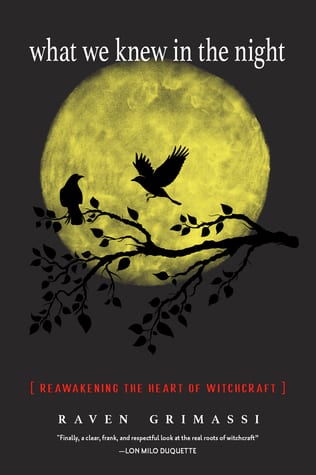
Adapted, and reprinted with permission from Weiser Books, an imprint of Red Wheel/Weiser, What We Knew in the Night by Raven Grimassi is available wherever books and ebooks are sold or directly from the publisher atwww.redwheelweiser.com or 800-423-7087.

About Raven Grimassi
Raven Grimassi was a neo-pagan scholar and award-winning author of more than 12 books on witchcraft, Wicca, and neo-paganism. He was a member of the American Folklore Society and was a co-founder and co-director of the Crossroads Fellowship, a modern Mystery School tradition. Photo credit: Peter Paradise, Raven Wolfe Photography You can read more about the author here.
Previous Post
August 21, 2019
Tarot for Troubled Times: Introducing the Archetypes
Next Post
September 19, 2019 The Altar for Mama Moses
Browse Our Archives
Select a Category Conversations Interviews Pagan Voices Uncategorized
Select a Month December 2020 October 2020 September 2020 August 2020 June 2020 May 2020 April 2020 February 2020 December 2019 November 2019 September 2019 August 2019 June 2019 May 2019 April 2019 March 2019 February 2019 January 2019 December 2018 October 2018 September 2018 August 2018 June 2018 May 2018 April 2018 March 2018 February 2018 January 2018 December 2017 October 2017 August 2017 July 2017 June 2017 April 2017 March 2017 February 2017 December 2016 November 2016 October 2016 September 2016 August 2016 July 2016 June 2016 May 2016 April 2016 March 2016 February 2016 January 2016 December 2015 November 2015 October 2015 September 2015 August 2015 August 2011 July 2011 June 2011
TAKE THE
Religious Wisdom Quiz
Who was raised from the dead by Peter in Joppa?
Select your answer to see how you score.
Tabitha Eutychus Lazarus The widow's son
Related posts from Through the Grapevine
Lunar Alchemy: The Moon Is Your Mirror

Lift Your Personal Power, Health, and Success with...
Tarot for Troubled Times: Introducing the Archetypes
TRENDING AT PATHEOS Pagan

I was recently chatting with someone on Instagram. She asked me what...

While there are many people who share their results, the end of...

On July 23, I saw Christopher Nolan's The Odyssey which is Homer’s...

As I write this two big events have just finished up. One...

Restoring the Watershed of Divine Love
Perhaps cooperation is not something we manufacture through legislation, ideology, or moral...

Many UUs don’t pray because of bad experiences in a previous religion,...
view all Pagan blogs
Ad-Free & Subscriber Log-In Subscription Support
- About Us
- 2026 Calendar
- Videos
- Podcasts
- Library of World Religions
- Faith In Media Tracker
- Advertise With Us
- Write for Us
- Privacy Policy
- Terms of Service
- Do Not Sell My Data
- Contact Us
- Radiant Digital
- Manage Newsletter Subscriptions
- Unsubscribe From Notifications
- Sitemap
Copyright 2008-2026, Patheos. All rights reserved.
Subscription Support Ad-Free & Subscriber Log-In
Follow Patheos