
BuddhistCatholicContemplativeEvangelicalGeneral ChristianHinduJewishLatter-day SaintMuslimNew VisionsProgressive Christian
Beliefs
- Buddhist
- Catholic
- Contemplative
- Evangelical
- General Christian
- Hindu
- Jewish
- Latter-day Saint
- More Voices
- Muslim
- New Visions
- Pagan
- Progressive Christian
Topics
- Religion News
- Food and Religion
- Sports and Religion
- Religious Art
- Religious Music and Entertainment
- Religious Events
- History and Religion
- Style and Religion
- Politics and Religion
- Women in Religion
- Recreation Outdoors and Religion
- Business Finance and Religion
- Careers Workplace and Religion
- Education and Religion
- Family Parenting and Religion
- Health Fitness and Religion
- Home and Religion
- Relationships and Religion
- Technology and Religion
- Travel and Religion
Columnists
- Buddhist Columnists
- Business Finance and Religion Columnists
- Careers Workplace and Religion Columnists
- Catholic Columnists
- Contemplative Columnists
- Education and Religion Columnists
- Evangelists Columnists
- Family Parenting and Religion Columnists
- General Christian Columnists
- Health Fitness and Religion Columnists
- Hindu Columnists
- History and Religion Columnists
- Home and Religion Columnists
- Jewish Columnists
- More Voices Columnists
- Latter Day Columnists
- Muslim Columnists
- New Visions Columnists
- Nonreligious Columnists
- Pagan Columnists
- Politics and Religion Columnists
- Progressive Columnists
- Recreation Outdoors and Religion Columnists
- Relationships and Religion Columnists
- Religion News Columnists
- Religious Art Columnists
- Religious Events Columnists
- Religious Music and Entertainment Columnists
- Sports and Religion Columnists
- Style and Religion Columnists
- Technology and Religion Columnists
- Travel and Religion Columnists
- Women in Religion Columnists
Resource Library
- 2026 Calendar
- Library of World Religions
- The 100 Most Holy Places on Earth
- Patheos Answers
- Podcasts
- Videos
- Faith Leaders Database
- Anglican Episcopalian
- Bahai
- Baptist
- Buddhism
- Christianity
- Confucianism
- Eastern Orthodoxy
- Hinduism
- Holiness and Pentecostal
- ISKCON
- Islam
- Judaism
- Lutheran
- Methodist
- The Church of Jesus Christ of Latter-day Saints
- New Age
- Paganism
- Presbytarian and Reformed
- Protestantism
- Religion Behind the Scenes
- Roman Catholic
- Scientology
- Shia Islam
- Sikhism
- Sufism
- Sunni Islam
- Taoism
- Zen
- See all religions
Research Tools
 Ad-Free & Subscriber Log-In Subscription Support
Ad-Free & Subscriber Log-In Subscription Support
Follow Patheos 

- Trending:
- Forgiveness
- |
- Marriage
- |
- Consciousness
- |
- Death Penalty
- |
- Election
- |
- Halloween

- Home
- Pagan
- Conversations: Personal Gnosis
Conversations: Personal Gnosis
Last updated on: September 10, 2015 at 11:05 am by Jason Mankey
Conversations: Personal Gnosis 2015-09-10T11:05:22-04:00 Jason Mankey
Patheos Explore the world's faith through different perspectives on religion and spirituality! Patheos has the views of the prevalent religions and spiritualities of the world.
On Wednesday June 17 various writers from Patheos Pagan got together to discuss the roles deities play (or don’t play) in our lives. In the course of that conversation we touched on multiple topics. One of my favorite snippets of our chat was a discussion about personal gnosis.
“Unverifiable personal gnosis (UPG) is a neopagan concept. The general idea of UPG is that some insights into divinity and the universe come unbidden to a particular individual, and cannot be tested or verified by anyone else. This is most often the case with neopagans who feel “called” to a particular god or pantheon.-RationalWiki
Parts of our initial conversation have been edited and rearranged for clarity. Our discussion was not argumentative, if it comes across that way it’s because I’ve failed as an editor. It’s not necessary to read part one of our chat, Atheism, Polytheism, and Pagans: A Discussion, but it does provide some context and a bit of intro to the persons involved.
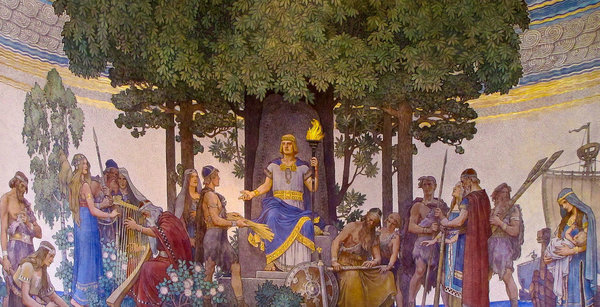
Heimdallr brings forth the gift of the gods to mankind by Nils Asplund. From WikiMedia.
Jason Mankey (Raise the Horns): Why do our differences always feel so much greater online? When I go to a festival I always feel like it’s easy to find consensus around the campfire.
Ian Corrigan (Into the Mound): The people who don’t dig the fire-circle consensus stay at camp.
Rua Lupa (Paths Through the Forest): I agree with Ian, the same happens for Court at SCA events, and the bardic circles too.
Dana Corby (The Rantin Raven): Because everything is harder to communicate in writing. All the nuances are gone, not to mention the energy flow from person to person that actually carries nearly half our meaning.
Jason Mankey: How do you see the gods Ian? All separate? All inter-related some how?
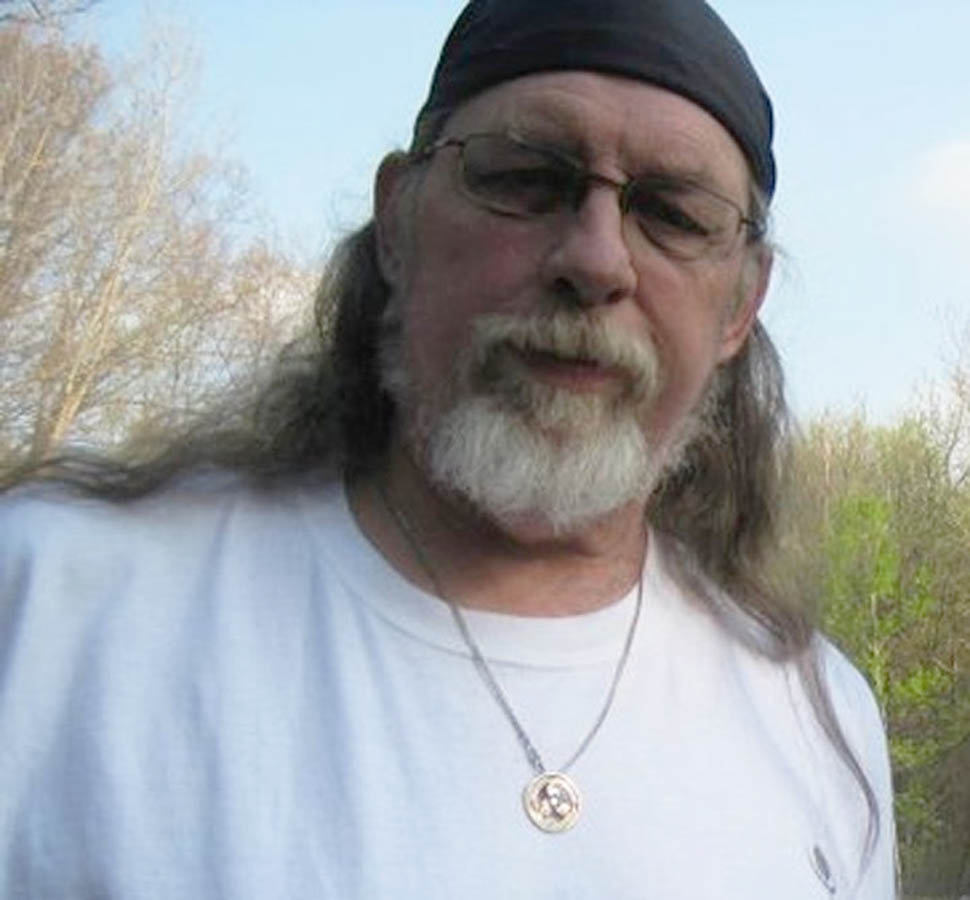
Still can’t believe Ian blogs here.
Ian Corrigan: I am a practical polytheist, with an unfixed opinion on just how many persons may actually be involved. I assume that similar gods from neighboring cultures are probably the same person.
Molly Khan (Heathen at Heart): I think there’s something to the online/offline dichotomy. In person I am cool enough with less scholarly or rigorous theology to hang out with, and honestly learn from, all sorts of Pagans. Online not so much.
Ian Corrigan: I don’t think that adherence to a formal theology has much value in a Pagan spirituality.
Shauna Aura Knight (Seeking the Grail): I think the Yoga reference is actually pretty useful here, because it’s a great example of a spiritual practice/ philosophy as well as a physical practice. Most people think of Yoga as just a physical practice. I see a lot of physical things being incredibly effective for ritual work, and for me, the physical practice/logistics, and the theology, don’t need to be in alignment.
The ritual work I do is about getting people into trance. I don’t care what their theology is. I’m there to use breathwork, movement, chanting, drumming, dancing, fire, decorations…I’m there to get their brains into an altered state. It’s just science.
Whatever people do with that altered state, whether it’s connecting to the Pantheistic All or their pantheon or a specific deity, or to their holy guardian angel or just their deepest self…that’s irrelevant. The practice, the physicality, the breath and the song, the altered state–it works.
Ian Corrigan: Yes, the practical value of religious activity is the generation of personal spiritual experience. Everything else is side-effect.
Molly Khan: More than meaning, I think relationship has a lot to do with it as well. When a particularly badly researched statement is made about a deity I honor in person, the respect and relationship I have with that person mitigates my reaction, both in my mind and out loud. Online that doesn’t happen nearly as often.
Ian Corrigan: I will always advocate for basing spiritual symbols on verifiable tradition. If one is simply in error about the flavor of a deity, it is as if one makes pie with cherries and calls it apple pie.

John Halstead
John Halstead (The Allergic Pagan): Molly, maybe it’s like two people that both know someone named Steve, but there’s more than one Steve out there. Ian, I put sour cream in my apple pie, and my wife doesn’t recognize it as apple pie-Who is the final authority on apple pies?
Ian Corrigan: Cultural consensus John.
John Halstead: Who speaks for the culture?
Ian: It speaks through local mouths . . . kinda like gods.
John: If that’s the case then, Freya may be a moon goddess, because probably most people are not scholars.

The Mighty Molly Khan
Molly: You both make great points! What I’m saying is, in person I’m happy to hang out and discuss these ideas without correction, but sometimes clarification of my point of view, because I generally like the people I’m taking time to spend time with. Online, it’s a lot easier to sigh and say “you’re wrong.”
Ian: John – I see us in a transitional phase in our revival. There is merit, still, in calling for a rigorous learning about what ancient Paganism was like. In time we’ll end up, I think, with new expressions of the gods shaped by our own culture, in the meantime I prefer a conservative ethos in the matter.
John: Ian, no superhero worship then?
Ian: Nor Tolkienian, nor Lovecraftian gods.
Molly: Ah, but was Tolkien picking up on Anglo-Saxon ideas of deities? I have some thoughts on him and ancient Paganism.
Ian: A fiction with resonance to the ancestors is at least better than one with none, perhaps. But fiction isn’t myth, nor vice-versa.
Jason: I know a lot of people have trouble with “personal gnosis” and especially online it usually comes with a hearty “that’s not in the myth” but for me that’s an important part of the experience. We know very little about Cernunnos but when John Beckett and I seem to describe the same god (through personal gnosis) that has to count for something right? Shouldn’t we be building a new understanding of the gods, using both the new and the old?
John: But Jason, you and John are part of the same subculture.
Ian: Jason – we *are* building it, I think – but the method is still lifting rocks from old buildings.
Jason: I think John and I come from very different worlds . . . Druid and Witch.

Shauna Aura Knight.
Shauna: I look at personal gnosis as this–back in the day, someone had personal gnosis about Isis, or Aphrodite, or Inanna, or Freya. How is our modern personal gnosis any less valid than that?
John: And I’ve heard people have the exact opposite experience — Star did a post about it years ago about Hephaestus. Jason, you’re both polytheists who are part of the .25%.
Jason: John and I have both gone to PantheaCon, but other than that . . . . . the way we ritualize is very different, the experiences of a BTW Witch are going to be very different from an OBOD Druid. But I love most Druids, they are definitely a part of my more extended tribe. I probably spend more time in the ADF Suites at festivals than the “Pagan” ones.
Ian: Personal gnosis is as valuable as its cultural cachet. One modern guy like to say he wants his innovations to ‘rhyme with’ tradition. I like that.
Molly: I agree, I think UPG is valid and incredibly important to each individual. These ideas can come together as cultural consensus, and I think in a lot of cases- Loki is a big one in heathenry – this has happened.
John: Someone else’s experience of Hephaestus didn’t resonate at all with hers — it seems like a case of confirmation bias.
Ian: UPG shapes one’s personal cult, but often ought to be set aside to attend village rites.
John: To me, we ignore the outliers.
Ian: Outliers with good ideas can get heard.
Molly: I think even outliers can be useful as Ian says, in that person’s personal rites. Like knowing someone in a very different way than the general public does.
John: I’m not trying to invalidate your experience, I just think this consensus thing is suspect.
Niki Whiting (A Witch’s Ashram): What we need is dinner, in person, with lots of mead and wine.
Previous Post

September 4, 2015
Conversations: Paganism, A Spiritual Identity or a Social Grouping?
Next Post

September 14, 2015 Pagan Interviews: Erynn Rowan Laurie
Browse Our Archives
Select a Category Conversations Interviews Pagan Voices Uncategorized
Select a Month December 2020 October 2020 September 2020 August 2020 June 2020 May 2020 April 2020 February 2020 December 2019 November 2019 September 2019 August 2019 June 2019 May 2019 April 2019 March 2019 February 2019 January 2019 December 2018 October 2018 September 2018 August 2018 June 2018 May 2018 April 2018 March 2018 February 2018 January 2018 December 2017 October 2017 August 2017 July 2017 June 2017 April 2017 March 2017 February 2017 December 2016 November 2016 October 2016 September 2016 August 2016 July 2016 June 2016 May 2016 April 2016 March 2016 February 2016 January 2016 December 2015 November 2015 October 2015 September 2015 August 2015 August 2011 July 2011 June 2011
TAKE THE
Religious Wisdom Quiz
What did Jesus feed to the 5,000 people?
Select your answer to see how you score.
Chicken and rice Fruit and cheese Bread and fish Cake and wine
Related posts from Through the Grapevine

Lilith Dorsey in a Voodoo Universe

She's a Witch Indeed: Lisa Wagoner

The Tea Addicted Witch: Scarlet Magdalene

The Best of Patheos Pagan 2018
TRENDING AT PATHEOS Pagan

I was recently chatting with someone on Instagram. She asked me what...

While there are many people who share their results, the end of...

On July 23, I saw Christopher Nolan's The Odyssey which is Homer’s...

As I write this two big events have just finished up. One...

Restoring the Watershed of Divine Love
Perhaps cooperation is not something we manufacture through legislation, ideology, or moral...

Many UUs don’t pray because of bad experiences in a previous religion,...
view all Pagan blogs
Ad-Free & Subscriber Log-In Subscription Support
- About Us
- 2026 Calendar
- Videos
- Podcasts
- Library of World Religions
- Faith In Media Tracker
- Advertise With Us
- Write for Us
- Privacy Policy
- Terms of Service
- Do Not Sell My Data
- Contact Us
- Radiant Digital
- Manage Newsletter Subscriptions
- Unsubscribe From Notifications
- Sitemap
Copyright 2008-2026, Patheos. All rights reserved.
Subscription Support Ad-Free & Subscriber Log-In
Follow Patheos