
BuddhistCatholicContemplativeEvangelicalGeneral ChristianHinduJewishLatter-day SaintMuslimNew VisionsProgressive Christian
Beliefs
- Buddhist
- Catholic
- Contemplative
- Evangelical
- General Christian
- Hindu
- Jewish
- Latter-day Saint
- More Voices
- Muslim
- New Visions
- Pagan
- Progressive Christian
Topics
- Religion News
- Food and Religion
- Sports and Religion
- Religious Art
- Religious Music and Entertainment
- Religious Events
- History and Religion
- Style and Religion
- Politics and Religion
- Women in Religion
- Recreation Outdoors and Religion
- Business Finance and Religion
- Careers Workplace and Religion
- Education and Religion
- Family Parenting and Religion
- Health Fitness and Religion
- Home and Religion
- Relationships and Religion
- Technology and Religion
- Travel and Religion
Columnists
- Buddhist Columnists
- Business Finance and Religion Columnists
- Careers Workplace and Religion Columnists
- Catholic Columnists
- Contemplative Columnists
- Education and Religion Columnists
- Evangelists Columnists
- Family Parenting and Religion Columnists
- General Christian Columnists
- Health Fitness and Religion Columnists
- Hindu Columnists
- History and Religion Columnists
- Home and Religion Columnists
- Jewish Columnists
- More Voices Columnists
- Latter Day Columnists
- Muslim Columnists
- New Visions Columnists
- Nonreligious Columnists
- Pagan Columnists
- Politics and Religion Columnists
- Progressive Columnists
- Recreation Outdoors and Religion Columnists
- Relationships and Religion Columnists
- Religion News Columnists
- Religious Art Columnists
- Religious Events Columnists
- Religious Music and Entertainment Columnists
- Sports and Religion Columnists
- Style and Religion Columnists
- Technology and Religion Columnists
- Travel and Religion Columnists
- Women in Religion Columnists
Resource Library
- 2026 Calendar
- Library of World Religions
- The 100 Most Holy Places on Earth
- Patheos Answers
- Podcasts
- Videos
- Faith Leaders Database
- Anglican Episcopalian
- Bahai
- Baptist
- Buddhism
- Christianity
- Confucianism
- Eastern Orthodoxy
- Hinduism
- Holiness and Pentecostal
- ISKCON
- Islam
- Judaism
- Lutheran
- Methodist
- The Church of Jesus Christ of Latter-day Saints
- New Age
- Paganism
- Presbytarian and Reformed
- Protestantism
- Religion Behind the Scenes
- Roman Catholic
- Scientology
- Shia Islam
- Sikhism
- Sufism
- Sunni Islam
- Taoism
- Zen
- See all religions
Research Tools
 Ad-Free & Subscriber Log-In Subscription Support
Ad-Free & Subscriber Log-In Subscription Support
Follow Patheos 

- Trending:
- Forgiveness
- |
- Marriage
- |
- Consciousness
- |
- Death Penalty
- |
- Election
- |
- Halloween
 Through Catholic Lenses
- Home
- Catholic
- Religion News
- Fetal Cell Lines ≠ Aborted Baby Parts
Fetal Cell Lines ≠ Aborted Baby Parts
Last updated on: November 18, 2021 at 9:08 am by Fr. Matthew P. Schneider, LC
Fetal Cell Lines ≠ Aborted Baby Parts 2021-11-18T09:08:02-05:00 Fr. Matthew P. Schneider, LC
Patheos Explore the world's faith through different perspectives on religion and spirituality! Patheos has the views of the prevalent religions and spiritualities of the world.
In the discussion around vaccines tested on fetal cell lines there is what appears to be a small matter of terminology but actually points to a significant difference both ontologically and morally. This is the distinction between cells from a fetal cell line and fetal cells. Fetal cells can often be termed as aborted baby parts, murdered baby organs, or similar.
This will examine the ontological and moral distinctions, then ask a question about the COVID vaccines’ use of fetal cell lines.
Ontological Distinctions
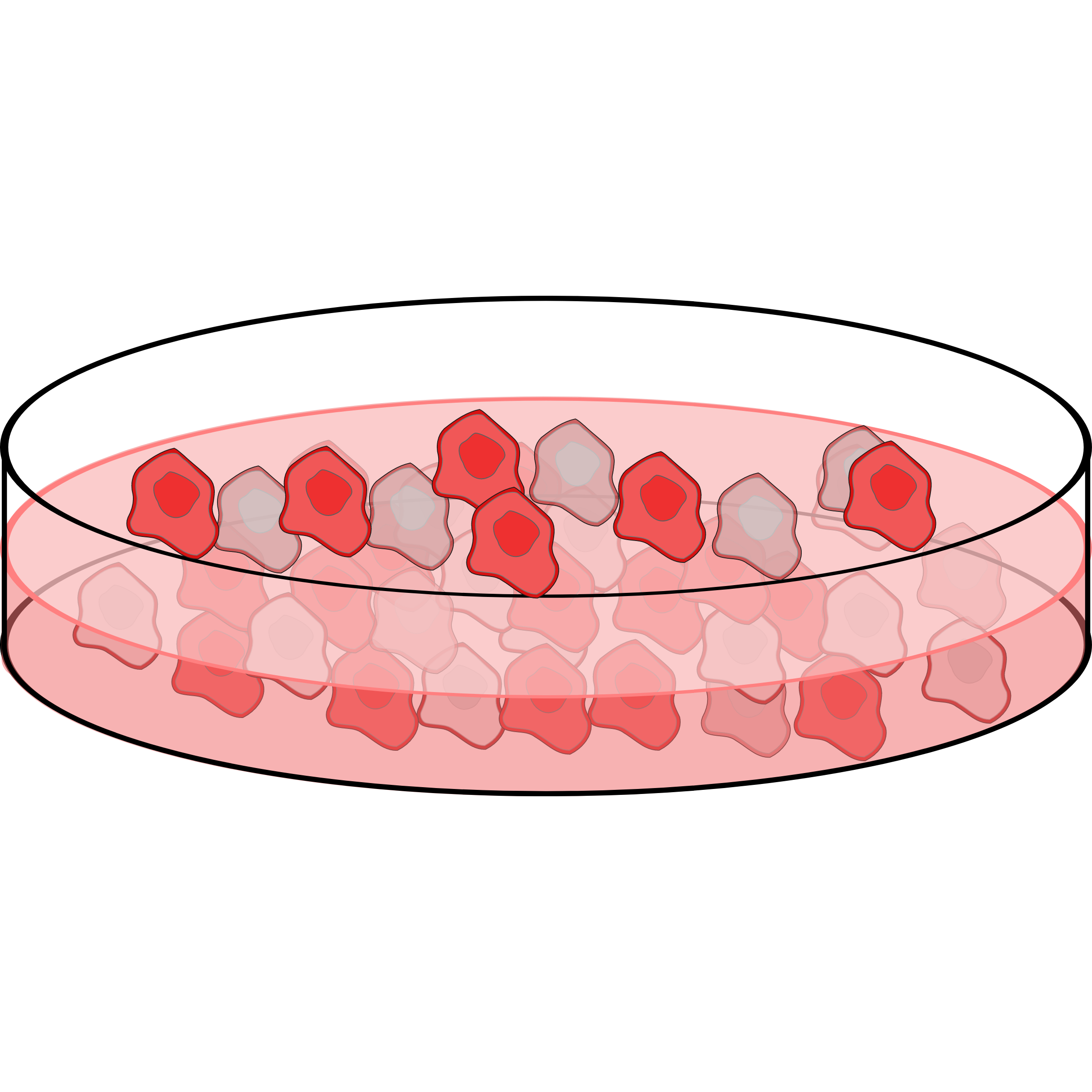
Cell Culture (CC0 FreeSVG)
When a baby is aborted, their organs can rightly be called something like “aborted baby parts.” These are directly part of the baby who was killed.
Fetal cell lines are biological artifacts, not organisms or parts of organisms. Artifact simply means something created by man in an artificial manner, not existing in nature or simply through purely natural processes. This means more than just selective breeding like we have a lot of domestic animals. The word “biological” modifying “artifact” points to a biological origin unlike say the computer I’m typing this on which is a non-biological artifact. This might sound odd, but a decent portion of the food we eat is made of biological artifacts where something natural is modified in a way that never exists on its own in nature.
The fetal cell line is remotely connected to the aborted fetus it came from, but it is definitely not a part of the aborted fetus. The first scientist who takes cells from a fetus is obviously connected in a way morally equivalent to those experimenting on the fetal parts. However, once those cells are removed, the subsequent cells produced in the line are not part of the fetus. This is even more so if the fetal cell line is genetically modified in the process such as HEK293 which was immortalized by changing genes. By the time you get several passages (each passage is multiple cell divisions) away from the original fetal body part, it is also clear that even if unmodified, this is definitively not part of the fetus.
Moral distinctions
We have Church teaching clearly stating that experiments on aborted fetal parts is wrong in every case but the same teaching seems to allow Catholic researchers to use fetal cell lines in some cases.
Dignitatis Personae from the Congregation from the Doctrine of the Faith in 2008 deals with doing experimental tests on live fetuses in number 34, and on embryonic stem cells (between fetal parts & fetal cell lines) in 32. These are both directed at researchers so it would be significantly more remote for one of us who benefits from such experimentation.
Fetal Experimentation:
“[Regarding] experimentation on embryos… The use of human embryos or fetuses as an object of experimentation constitutes a crime against their dignity as human beings who have a right to the same respect owed to a child once born, just as to every person.” (Evangelium vitae, 63) These forms of experimentation always constitute a grave moral disorder. (34)
There is no case where destructive experimentation can be done on human fetuses or embryos. The Vatican makes clear that every case is a “grave moral disorder.” This does not mean we can’t use any knowledge gained from such information. In fact, we can use the knowledge about human embryology that such experiments have shown us.
It is worth noting that these are experiments done on live fetuses that will likely end in their death. It would seem that taking parts from already dead fetuses might be allowed in certain circumstances.
Embryonic Stem Cells
On the other hand, the same document gives some warnings about embryonic stem cells, but not a prohibition:
The use of embryonic stem cells or differentiated cells derived from them – even when these are provided by other researchers through the destruction of embryos or when such cells are commercially available – presents serious problems from the standpoint of cooperation in evil and scandal. (32)
These involve serious issues of cooperation so it is a type of cooperation that would often make much experimentation illicit. Cooperation is an extension of double effect and where one needs to protect some good in extreme cases, one can accept significant evil results. For example, in a hostage situation, the good being sought is the end 0f being held hostage and safety of the hostage(s): the police need to try those with the least negative effects, such as negotiating a peaceful surrender, but if that does not work, they can accept the very serious evil of a human death (the hostage-taker) in an act whose object would be the removal of imminent threat to innocent people. Likewise, speaking about cooperation, no degree of remote cooperation on its own makes an act absolutely never possible in any circumstances: for sufficient reason, any issue of cooperation that is not direct – even if only slightly remote – could be morally acceptable in certain circumstances.
Fetal Cell Lines
Getting embryonic stem cells (referred to in DP 32) is almost always causal in killing the embryo. Existing fetal cell lines are different from this morally as the progenitor cells were all taken from already aborted fetuses that were aborted for other reasons unrelated to cell line creation. The taking of these cells in no way contributed to the fetus’s death. They were also usually taken by a different group of scientists from those performing the abortion.
This does not make the cell lines completely morally clean as they are still related to abortion. As there is no causal factor though, this relationship is remote, even when talking about the scientists doing the initial research or maintaining the line in existence. If instead of abortions, these cells were taken from fetuses who died of miscarriage or similar. The only issue in such a case would be whether the next of kin gave proper consent.
Using fetal cell lines involves remote cooperation on the part of the researcher. But by the time you get to researchers using fetal cell lines, we are quite remote such that a number of experiments could be justified ethically if using this fetal cell line provided proportionate benefits that outweighed the rather remote connection.
Application
There are two points to apply this to.
First, this is a reminder of how astronomically remote the connection of COVID vaccines is with abortion. If you want more on this, I have written serval pieces including, “12 Things Less-Remote Cooperation in Evil Than COVID Vaccines,” on this topic
Second, using “aborted baby parts” or similar to refer to the fetal cell lines vaccines were tested or grown on is inaccurate. It is extremely misleading. The point seems to be to make an emotional argument. Emotional arguments can be valuable but if they are factually inaccurate like this, they can easily become emotional manipulation. We should seek to be honest in our terminology, even if it does not match our predetermined preferences.
Note: Please support me on Patreon so I can keep writing more analysis using Catholic moral theology. Patreon provides most of the money I get from writing to help support my community.
Previous Post

October 19, 2021
Raising Kids with Learning Disabilities: Podcast with Sr. Josephine
Next Post

December 2, 2021 Australian Bishops Want Us to Include Those with Disabilities
Browse Our Archives
Select a Category Autism Bioethics Book Review Business and Economics Catholic Social Teaching Culture Diocesan Life Disability Discipleship Euthanasia Family Life Genetics Global Politics History Immigration Inspiration Interview Liturgy Moral Theology My Life News Analysis Original Articles Prayer Privacy Pro-Life Science Sexual orientation or identity Social Media Sports Technology Theology Uncategorized US Politics Vatican
Select a Month March 2022 February 2022 January 2022 December 2021 November 2021 October 2021 September 2021 August 2021 July 2021 June 2021 April 2021 March 2021 February 2021 January 2021 December 2020 November 2020 October 2020 September 2020 August 2020 July 2020 June 2020 May 2020 April 2020 March 2020 February 2020 January 2020 December 2019 November 2019 October 2019 September 2019 August 2019 July 2019 June 2019 May 2019 April 2019 March 2019 February 2019 January 2019 December 2018 November 2018 October 2018 September 2018 August 2018 July 2018 June 2018 May 2018
Follow Us!
TAKE THE
Religious Wisdom Quiz
In 1 Peter, what did the prophets search intently and with great care about?
Select your answer to see how you score.
The salvation of Israel The day of the Lord The sufferings of the Messiah and the glories that would follow The end times
Support this
Column


Related posts from Through Catholic Lenses

Why Such a Focus on Extraordinary Form in...

Sensory-Friendly Mass Directory Now Available

The Church Cannot Change Teaching on Homosexuality (Hollerich...
Catholic Media: Fides Quarens Rem Publicam
TRENDING AT PATHEOS Catholic

Rejecting Doom: Christian Hope And Human Action
Christianity is a religion of hope. We are to have hope and...

It’s What Comes From Within Which Matters
One of the most difficult things for us to understand is why...

Why I Choose the Eucharist Over the Sermon
Choose the Eucharist, Not the Sermon What are we supposed to get...

5 Design Elements Found in Spiritually Rooted Homes
Putting Spirituality Into Home Decor Our homes are more than our living...

Credo: A Story of God Told with the...
About 10 years ago, I began to imagine a personal "Credo" that...

The Anatomy of Divine Revelation in Catholic Thought
The claim that God has made Himself known to human beings is...
view all Catholic blogs
Ad-Free & Subscriber Log-In Subscription Support
- About Us
- 2026 Calendar
- Videos
- Podcasts
- Library of World Religions
- Faith In Media Tracker
- Advertise With Us
- Write for Us
- Privacy Policy
- Terms of Service
- Do Not Sell My Data
- Contact Us
- Radiant Digital
- Manage Newsletter Subscriptions
- Unsubscribe From Notifications
- Sitemap
Copyright 2008-2026, Patheos. All rights reserved.
Subscription Support Ad-Free & Subscriber Log-In
Follow Patheos