
BuddhistCatholicContemplativeEvangelicalGeneral ChristianHinduJewishLatter-day SaintMuslimNew VisionsProgressive Christian
Beliefs
- Buddhist
- Catholic
- Contemplative
- Evangelical
- General Christian
- Hindu
- Jewish
- Latter-day Saint
- More Voices
- Muslim
- New Visions
- Pagan
- Progressive Christian
Topics
- Religion News
- Food and Religion
- Sports and Religion
- Religious Art
- Religious Music and Entertainment
- Religious Events
- History and Religion
- Style and Religion
- Politics and Religion
- Women in Religion
- Recreation Outdoors and Religion
- Business Finance and Religion
- Careers Workplace and Religion
- Education and Religion
- Family Parenting and Religion
- Health Fitness and Religion
- Home and Religion
- Relationships and Religion
- Technology and Religion
- Travel and Religion
Columnists
- Buddhist Columnists
- Business Finance and Religion Columnists
- Careers Workplace and Religion Columnists
- Catholic Columnists
- Contemplative Columnists
- Education and Religion Columnists
- Evangelists Columnists
- Family Parenting and Religion Columnists
- General Christian Columnists
- Health Fitness and Religion Columnists
- Hindu Columnists
- History and Religion Columnists
- Home and Religion Columnists
- Jewish Columnists
- More Voices Columnists
- Latter Day Columnists
- Muslim Columnists
- New Visions Columnists
- Nonreligious Columnists
- Pagan Columnists
- Politics and Religion Columnists
- Progressive Columnists
- Recreation Outdoors and Religion Columnists
- Relationships and Religion Columnists
- Religion News Columnists
- Religious Art Columnists
- Religious Events Columnists
- Religious Music and Entertainment Columnists
- Sports and Religion Columnists
- Style and Religion Columnists
- Technology and Religion Columnists
- Travel and Religion Columnists
- Women in Religion Columnists
Resource Library
- 2026 Calendar
- Library of World Religions
- The 100 Most Holy Places on Earth
- Patheos Answers
- Podcasts
- Videos
- Faith Leaders Database
- Anglican Episcopalian
- Bahai
- Baptist
- Buddhism
- Christianity
- Confucianism
- Eastern Orthodoxy
- Hinduism
- Holiness and Pentecostal
- ISKCON
- Islam
- Judaism
- Lutheran
- Methodist
- The Church of Jesus Christ of Latter-day Saints
- New Age
- Paganism
- Presbytarian and Reformed
- Protestantism
- Religion Behind the Scenes
- Roman Catholic
- Scientology
- Shia Islam
- Sikhism
- Sufism
- Sunni Islam
- Taoism
- Zen
- See all religions
Research Tools
 Ad-Free & Subscriber Log-In Subscription Support
Ad-Free & Subscriber Log-In Subscription Support
Follow Patheos 

- Trending:
- Forgiveness
- |
- Marriage
- |
- Consciousness
- |
- Death Penalty
- |
- Election
- |
- Halloween
 Through Catholic Lenses
- Home
- Catholic
- Religion News
- Ohio Dioceses Dealing with Closing Parishes
Ohio Dioceses Dealing with Closing Parishes
Last updated on: October 15, 2021 at 10:47 am by Fr. Matthew P. Schneider, LC
Ohio Dioceses Dealing with Closing Parishes 2021-10-15T10:47:56-04:00 Fr. Matthew P. Schneider, LC
Patheos Explore the world's faith through different perspectives on religion and spirituality! Patheos has the views of the prevalent religions and spiritualities of the world.
Recently, it’s been in the news that the Archdiocese of Cincinnati is starting a program to reduce the number of parishes. I wanted to share a little about what I saw working in the area about a decade ago, but it got just too long for a tweet or Facebook post.
Cincinnati’s Announcement
The Archdiocese of Cincinnati announced on Friday a restructuring initiative that could eventually close 70% of archdiocesan parishes. The process will begin by clustering the 208 parishes of the archdiocese into 60 “families” of parishes, which will share pastors, staff, and infrastructure, but initially remain canonically independent. […]
The archdiocese calls its project, euphemistically, “Beacons of Light.” The idea is that clusters of parishes will be identified in November, which will engage next year in planning processes that aim to discern, among other things, which church buildings they can realistically maintain over the long-term. Eventually parishes will be canonically merged.
The idea is probably designed to avoid the kinds of fights that parish closures have prompted in other dioceses.
The project seems intended to allow parishioners to adjust gradually to the idea that they have far more buildings than practicing Catholics need, that priests are stretched thin by driving circuits to service them, and that paying the maintenance and upkeep costs on little used buildings is rarely a realistic long-term proposition.
Read more if you want the whole story.
My Experience 2006-2010
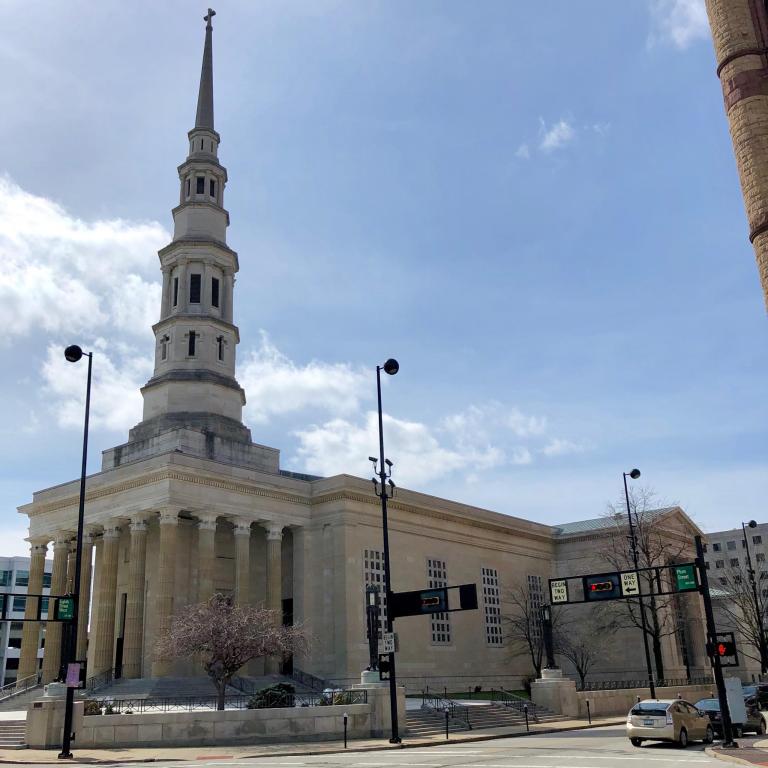
St. Peter-in-Chains Cathedral, Cincinnati, OH (Warren LeMay CC0 1.0)

From 2006-2010, I was assigned to help with Regnum Christi, ECYD, and Conquest groups in Ohio, and neighboring states. I was constantly on the road. This allowed me to talk to priests in various dioceses about the issues facing their diocese. Toledo and Cincinnati both have a large section of agricultural lands dotted with small towns while Cleveland and Cincinnati had a lot of inner-city ethnic parishes that were little used.
In Toledo, they had a policy where no priest would ever be pastor of more than two parishes, so as rural areas lost population and priests got stretched, less used parishes would either be closed or reduced to chapels of the parish a town over. In general, this was done one part of the diocese at a time and when I was there, they were moving from three to two priests covering 6 towns so reduced two parishes to chapels with one Sunday Mass leaving the townsfolk to decide if the cost of maintaining the building was worth not driving 10-15 minutes further to Mass.
At the time, Cincinnati had some priests covering a whole slew of parishes. One diocesan priest told me that it seemed like this was causing significantly more burnout and stress-related medical issues at higher rates than any other position, even pastors of the mega parishes in the diocese who had significantly more parishioners than if you combined those rural parishes.
Cleveland decided to do it all together, so created groups that were told that out of this cluster of parishes, the diocese would be able to have this many parishes, this many schools, and this many priests after the changes. They gave parish clusters time to go over it and then sent out announcement letters to all the parishes on the same Sunday. Some people I knew involved in one cluster said that it was pretty much predetermined which parishes would close the day the cluster was announced but the dialogue and discussion also helped deal with a few more minor points for a smoother transition.
Now Cincinnati is doing a process with some things like each of the other two dioceses in the state I knew. Theirs is interesting as they want to maintain canonical parishes while combining staff while others did the staff combining and the canonical parish reduction in tandem.
Conclusion
I don’t have a solution, but I thought it worthwhile to consider the various methods. This is not my forte. And I don’t think any solution will be perfect. There are some ethnic or rural parishes that we’d likely close even with tons of priests due to demographic changes so we can better serve the community now. However, I suspect that the Church’s lack of vocations for a while has made it necessary to close some other parishes. Blaming it all on vocations is inadequate though as “Ordinations in [the Archdiocese of Cincinnati] are on the rise, and while [Schnurr] expects to eventually see priestly vocations reach above replacement level, in which the archdiocese sees more annual ordinations than retirements.”
Closing parishes is always tough but sometimes necessary. We need to look realistically at how the Church can best evangelize the world as it is now, not the world as it was 75 years ago.
Note: Please support me on Patreon so I can keep writing more analysis of Catholicism.
Previous Post
October 14, 2021
Fetal Cell Line Testing & Church Teaching
Next Post

October 19, 2021 Raising Kids with Learning Disabilities: Podcast with Sr. Josephine
Browse Our Archives
Select a Category Autism Bioethics Book Review Business and Economics Catholic Social Teaching Culture Diocesan Life Disability Discipleship Euthanasia Family Life Genetics Global Politics History Immigration Inspiration Interview Liturgy Moral Theology My Life News Analysis Original Articles Prayer Privacy Pro-Life Science Sexual orientation or identity Social Media Sports Technology Theology Uncategorized US Politics Vatican
Select a Month March 2022 February 2022 January 2022 December 2021 November 2021 October 2021 September 2021 August 2021 July 2021 June 2021 April 2021 March 2021 February 2021 January 2021 December 2020 November 2020 October 2020 September 2020 August 2020 July 2020 June 2020 May 2020 April 2020 March 2020 February 2020 January 2020 December 2019 November 2019 October 2019 September 2019 August 2019 July 2019 June 2019 May 2019 April 2019 March 2019 February 2019 January 2019 December 2018 November 2018 October 2018 September 2018 August 2018 July 2018 June 2018 May 2018
Follow Us!
TAKE THE
Religious Wisdom Quiz
Who did Jesus raise from the dead after four days?
Select your answer to see how you score.
Jairus’ daughter Widow's son Himself Lazarus
Support this
Column


Related posts from Through Catholic Lenses

Why Such a Focus on Extraordinary Form in...

Sensory-Friendly Mass Directory Now Available

Greg Locke, Autism Is not Demonic

The Church Cannot Change Teaching on Homosexuality (Hollerich...
TRENDING AT PATHEOS Catholic

Rejecting Doom: Christian Hope And Human Action
Christianity is a religion of hope. We are to have hope and...

It’s What Comes From Within Which Matters
One of the most difficult things for us to understand is why...

Why I Choose the Eucharist Over the Sermon
Choose the Eucharist, Not the Sermon What are we supposed to get...

5 Design Elements Found in Spiritually Rooted Homes
Putting Spirituality Into Home Decor Our homes are more than our living...

Credo: A Story of God Told with the...
About 10 years ago, I began to imagine a personal "Credo" that...

The Anatomy of Divine Revelation in Catholic Thought
The claim that God has made Himself known to human beings is...
view all Catholic blogs
Ad-Free & Subscriber Log-In Subscription Support
- About Us
- 2026 Calendar
- Videos
- Podcasts
- Library of World Religions
- Faith In Media Tracker
- Advertise With Us
- Write for Us
- Privacy Policy
- Terms of Service
- Do Not Sell My Data
- Contact Us
- Radiant Digital
- Manage Newsletter Subscriptions
- Unsubscribe From Notifications
- Sitemap
Copyright 2008-2026, Patheos. All rights reserved.
Subscription Support Ad-Free & Subscriber Log-In
Follow Patheos