
BuddhistCatholicContemplativeEvangelicalGeneral ChristianHinduJewishLatter-day SaintMuslimNew VisionsProgressive Christian
Beliefs
- Buddhist
- Catholic
- Contemplative
- Evangelical
- General Christian
- Hindu
- Jewish
- Latter-day Saint
- More Voices
- Muslim
- New Visions
- Pagan
- Progressive Christian
Topics
- Religion News
- Food and Religion
- Sports and Religion
- Religious Art
- Religious Music and Entertainment
- Religious Events
- History and Religion
- Style and Religion
- Politics and Religion
- Women in Religion
- Recreation Outdoors and Religion
- Business Finance and Religion
- Careers Workplace and Religion
- Education and Religion
- Family Parenting and Religion
- Health Fitness and Religion
- Home and Religion
- Relationships and Religion
- Technology and Religion
- Travel and Religion
Columnists
- Buddhist Columnists
- Business Finance and Religion Columnists
- Careers Workplace and Religion Columnists
- Catholic Columnists
- Contemplative Columnists
- Education and Religion Columnists
- Evangelists Columnists
- Family Parenting and Religion Columnists
- General Christian Columnists
- Health Fitness and Religion Columnists
- Hindu Columnists
- History and Religion Columnists
- Home and Religion Columnists
- Jewish Columnists
- More Voices Columnists
- Latter Day Columnists
- Muslim Columnists
- New Visions Columnists
- Nonreligious Columnists
- Pagan Columnists
- Politics and Religion Columnists
- Progressive Columnists
- Recreation Outdoors and Religion Columnists
- Relationships and Religion Columnists
- Religion News Columnists
- Religious Art Columnists
- Religious Events Columnists
- Religious Music and Entertainment Columnists
- Sports and Religion Columnists
- Style and Religion Columnists
- Technology and Religion Columnists
- Travel and Religion Columnists
- Women in Religion Columnists
Resource Library
- 2026 Calendar
- Library of World Religions
- The 100 Most Holy Places on Earth
- Patheos Answers
- Podcasts
- Videos
- Faith Leaders Database
- Anglican Episcopalian
- Bahai
- Baptist
- Buddhism
- Christianity
- Confucianism
- Eastern Orthodoxy
- Hinduism
- Holiness and Pentecostal
- ISKCON
- Islam
- Judaism
- Lutheran
- Methodist
- The Church of Jesus Christ of Latter-day Saints
- New Age
- Paganism
- Presbytarian and Reformed
- Protestantism
- Religion Behind the Scenes
- Roman Catholic
- Scientology
- Shia Islam
- Sikhism
- Sufism
- Sunni Islam
- Taoism
- Zen
- See all religions
Research Tools
 Ad-Free & Subscriber Log-In Subscription Support
Ad-Free & Subscriber Log-In Subscription Support
Follow Patheos 

- Trending:
- Forgiveness
- |
- Marriage
- |
- Consciousness
- |
- Death Penalty
- |
- Election
- |
- Halloween
 Through Catholic Lenses
- Home
- Catholic
- Religion News
- The Secular Value of the Sacrament of Confession
The Secular Value of the Sacrament of Confession
Last updated on: June 16, 2021 at 9:30 am by Fr. Matthew P. Schneider, LC
The Secular Value of the Sacrament of Confession 2021-06-16T09:30:57-04:00 Fr. Matthew P. Schneider, LC
Patheos Explore the world's faith through different perspectives on religion and spirituality! Patheos has the views of the prevalent religions and spiritualities of the world.
As some of you may know, my current full-time responsibility is writing a doctoral thesis on the right to privacy. To this end, I have read a bunch of secular thinkers on what privacy means. Recently, I was reading Secrets: On the Ethics of Concealment and Revelation by Sissela Bok. She has a chapter on the idea of confessing wrongs. In this chapter, she has a few things about confessing to other persons that are valuable for the sacrament, not just confession between human persons.
I want to share four insights I found in this chapter. I will leave them with minimal commentary. Bok is a retired philosopher and ethicist of the continental school. Both of her parents (Gunnar Myrdal and Alva Myrdal) won noble prizes: talk about a tough standard to live up to.
Confess Only Sins
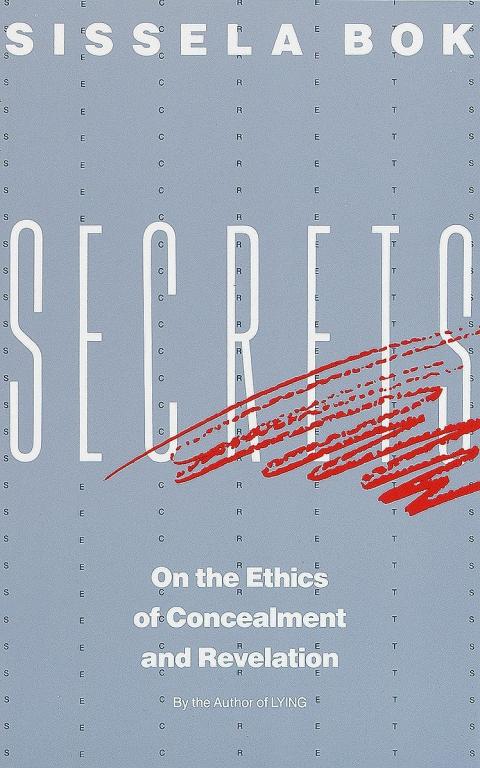
Book Cover of Secrets by Bok (fair use)
She notes the need to confess only what one has power over (pg. 76-77):
People confess only to previously concealed matters over which it is (or has been) possible, at least in principle, to exert some control, or for which they acknowledge at least shared responsibility. Thus they may confess to incest or to child abuse, but not to having unwittingly transmitted polio; they may confess to religious backsliding, but not to loss of memory. But they also seek support against forces they may regard as too strong to combat alone – addiction, perhaps, or weakness of will, or supernatural powers of evil. By confessing, they often hope to align themselves with communal or sacred forces that will help in this battle. Because they accept responsibility and seek such assistance, they are in a position to offer some assurance of efforts to change: efforts great enough to affect their entire way of life, perhaps also to allow them to transcend their old selves and attain forgiveness or salvation in a future lite. The change may be from deviance to normalcy, from wrong to right, from ignorance about the self to insight.
In this way, confession may serve as a means for transforming one’s life. It may bring new insight and a chance to re-create oneself. This cannot easily be achieved through introspection alone. To seek out a confessor is, then, to look for someone who can share one’s burdens, interpret one’s revelations, and show the path to release. Confessing may be a call for intervention and for help in reaching through to the layers of secrecy sensed in oneself or in the authority one confronts. Thus Dietrich Bonhoeffer sees confession as a breakthrough to fellowship and community. By making manifest ‘all that is secret and hidden,’ confession brings the sin into the light.
Confession strengthens resolve for many, and thus serves as an added control for those who are not certain that they will be capable of keeping the temptations of their past lives subdued. They see their lives as a battleground between great forces, and the confessor as an ally in the battle. Naming the temptations and the hostile forces may give strength to resist them. So long as these forces are nameless, they remain blurred and shadowy. Once named, they are forced into the light, compelled to take on an identity. Perhaps they may then be ‘done to death,’ as Origen put it when describing the need to bring sins into the open:
“For if we do this and reveal our sins not only to God but also to those who can heal our wounds and sins, our wickedness will be wiped out by him who says ‘I will wipe out your wickedness like a cloud.'”
The subquote is attributed to Origen, Homiliae in Lucam, in Bettenson, ed., Early Christian Fathers, 253.
Modern Psychology Takes from Confession
Bok notes how modern secular practise takes from confessin (pg. 79):
Like the earlier religious practices, current secular ones focus intensive and detailed probing on the individual’s experience present and past, and especially on sexuality in all its stages and manifestations, seeking thereby to alleviate guilt and to bring about a personal transformation. Just as religious confessors have urged those in their charge not to leave out of account a single sin or even a sinful thought, so analysts have stressed the basic rule of analysis: that not a single secret, no matter how seemingly irrelevant, be held back. Without such complete openness, each of the traditions has held, it might not be possible to help revealers overcome their suffering. Without it, the desired freedom and transformation would be out of reach.
Secrets Fester in the Soul
Sissela Bok notes that maintaining secrets and excessive probing can both be dangerous for the soul (pg. 82):
Secrets left hidden will continue to fester, it holds, unless exposed. Patients risk nothing in exposing harmless secrets, and stand to benefit greatly by bringing harmful ones into the open: as a result, they have nothing to lose and much to gain by the fullest possible disclosure. But such an assumption is far from indisputable. I have pointed in earlier chapters to injuries that can stem from indiscriminate self-revelation. They should at the very least be taken into account in weighing how deeply to probe. […]
When the probing for secrets is not only needlessly invasive but also carried out by coercive means, self-deception may be invoked as added justification. Listeners who threaten or otherwise force people to confess may argue that those who protest want, at the same time, to be helped, so that coercing them only seems to go counter to their will, no matter how strong their objections; for there is that other, deceived part or their selves that in fact desires help in overriding the protests.
The Value of Seal of Confession
She also notes that without the seal, confession can be manipulative if not kept under a professional or sacramental seal (pg. 84):
When the probing for secrets is not only needlessly invasive but also carried out by coercive means, self-deception may be invoked as added justification. Listeners who threaten or otherwise force people to confess may argue that those who protest want, at the same time, to be helped, so that coercing them only seems to go counter to their will, no matter how strong their objections; for there is that other, deceived part or their selves that in fact desires help in overriding the protests. […]
Self-revelation becomes manipulative when the unspoken aim is to secure from others some response they would otherwise restrain: confidences in return, or a bond that can be exploited, or some form of cooptation. Seduction is the aim of much self-disclosure of a manipulative nature.
Conclusion
This is obviously just one secular ethicist, but Bok is a pretty “mainstream” voice of secular ethics. Obviously, the greatest value of confession is the forgiveness of sins through contrition and absolution which re-opens the gates of heaven to us. Nonetheless, I think it’s worth noting the other positive aspects of confession. Confession is also helpful psychologically. God made us for the sacraments! The sacraments are the fullest and truest part of human life with the rest just pointing to them.
Note: If you appreciated this, please support me on Patreon.
Previous Post
June 10, 2021
Peter Singer: Eugenics Is Great! (YIKES!)
Next Post
July 2, 2021 Who is Weaponizing the Eucharist? Politicians, Not Bishops
Browse Our Archives
Select a Category Autism Bioethics Book Review Business and Economics Catholic Social Teaching Culture Diocesan Life Disability Discipleship Euthanasia Family Life Genetics Global Politics History Immigration Inspiration Interview Liturgy Moral Theology My Life News Analysis Original Articles Prayer Privacy Pro-Life Science Sexual orientation or identity Social Media Sports Technology Theology Uncategorized US Politics Vatican
Select a Month March 2022 February 2022 January 2022 December 2021 November 2021 October 2021 September 2021 August 2021 July 2021 June 2021 April 2021 March 2021 February 2021 January 2021 December 2020 November 2020 October 2020 September 2020 August 2020 July 2020 June 2020 May 2020 April 2020 March 2020 February 2020 January 2020 December 2019 November 2019 October 2019 September 2019 August 2019 July 2019 June 2019 May 2019 April 2019 March 2019 February 2019 January 2019 December 2018 November 2018 October 2018 September 2018 August 2018 July 2018 June 2018 May 2018
Follow Us!
TAKE THE
Religious Wisdom Quiz
In 1 Peter, what did the prophets search intently and with great care about?
Select your answer to see how you score.
The salvation of Israel The day of the Lord The sufferings of the Messiah and the glories that would follow The end times
Support this
Column


Related posts from Through Catholic Lenses

Why Such a Focus on Extraordinary Form in...

Sensory-Friendly Mass Directory Now Available

Greg Locke, Autism Is not Demonic

The Church Cannot Change Teaching on Homosexuality (Hollerich...
TRENDING AT PATHEOS Catholic

Rejecting Doom: Christian Hope And Human Action
Christianity is a religion of hope. We are to have hope and...

It’s What Comes From Within Which Matters
One of the most difficult things for us to understand is why...

Why I Choose the Eucharist Over the Sermon
Choose the Eucharist, Not the Sermon What are we supposed to get...

5 Design Elements Found in Spiritually Rooted Homes
Putting Spirituality Into Home Decor Our homes are more than our living...

Credo: A Story of God Told with the...
About 10 years ago, I began to imagine a personal "Credo" that...

The Anatomy of Divine Revelation in Catholic Thought
The claim that God has made Himself known to human beings is...
view all Catholic blogs
Ad-Free & Subscriber Log-In Subscription Support
- About Us
- 2026 Calendar
- Videos
- Podcasts
- Library of World Religions
- Faith In Media Tracker
- Advertise With Us
- Write for Us
- Privacy Policy
- Terms of Service
- Do Not Sell My Data
- Contact Us
- Radiant Digital
- Manage Newsletter Subscriptions
- Unsubscribe From Notifications
- Sitemap
Copyright 2008-2026, Patheos. All rights reserved.
Subscription Support Ad-Free & Subscriber Log-In
Follow Patheos