
BuddhistCatholicContemplativeEvangelicalGeneral ChristianHinduJewishLatter-day SaintMuslimNew VisionsProgressive Christian
Beliefs
- Buddhist
- Catholic
- Contemplative
- Evangelical
- General Christian
- Hindu
- Jewish
- Latter-day Saint
- More Voices
- Muslim
- New Visions
- Pagan
- Progressive Christian
Topics
- Religion News
- Food and Religion
- Sports and Religion
- Religious Art
- Religious Music and Entertainment
- Religious Events
- History and Religion
- Style and Religion
- Politics and Religion
- Women in Religion
- Recreation Outdoors and Religion
- Business Finance and Religion
- Careers Workplace and Religion
- Education and Religion
- Family Parenting and Religion
- Health Fitness and Religion
- Home and Religion
- Relationships and Religion
- Technology and Religion
- Travel and Religion
Columnists
- Buddhist Columnists
- Business Finance and Religion Columnists
- Careers Workplace and Religion Columnists
- Catholic Columnists
- Contemplative Columnists
- Education and Religion Columnists
- Evangelists Columnists
- Family Parenting and Religion Columnists
- General Christian Columnists
- Health Fitness and Religion Columnists
- Hindu Columnists
- History and Religion Columnists
- Home and Religion Columnists
- Jewish Columnists
- More Voices Columnists
- Latter Day Columnists
- Muslim Columnists
- New Visions Columnists
- Nonreligious Columnists
- Pagan Columnists
- Politics and Religion Columnists
- Progressive Columnists
- Recreation Outdoors and Religion Columnists
- Relationships and Religion Columnists
- Religion News Columnists
- Religious Art Columnists
- Religious Events Columnists
- Religious Music and Entertainment Columnists
- Sports and Religion Columnists
- Style and Religion Columnists
- Technology and Religion Columnists
- Travel and Religion Columnists
- Women in Religion Columnists
Resource Library
- 2026 Calendar
- Library of World Religions
- The 100 Most Holy Places on Earth
- Patheos Answers
- Podcasts
- Videos
- Faith Leaders Database
- Anglican Episcopalian
- Bahai
- Baptist
- Buddhism
- Christianity
- Confucianism
- Eastern Orthodoxy
- Hinduism
- Holiness and Pentecostal
- ISKCON
- Islam
- Judaism
- Lutheran
- Methodist
- The Church of Jesus Christ of Latter-day Saints
- New Age
- Paganism
- Presbytarian and Reformed
- Protestantism
- Religion Behind the Scenes
- Roman Catholic
- Scientology
- Shia Islam
- Sikhism
- Sufism
- Sunni Islam
- Taoism
- Zen
- See all religions
Research Tools
 Ad-Free & Subscriber Log-In Subscription Support
Ad-Free & Subscriber Log-In Subscription Support
Follow Patheos 

- Trending:
- Forgiveness
- |
- Marriage
- |
- Consciousness
- |
- Death Penalty
- |
- Election
- |
- Halloween
 Through Catholic Lenses
- Home
- Catholic
- Religion News
- The Case of Hearing an Abusive Priest’s Confession
The Case of Hearing an Abusive Priest’s Confession
Last updated on: March 18, 2021 at 3:26 pm by Fr. Matthew P. Schneider, LC
The Case of Hearing an Abusive Priest’s Confession 2021-03-18T15:26:47-04:00 Fr. Matthew P. Schneider, LC
Patheos Explore the world's faith through different perspectives on religion and spirituality! Patheos has the views of the prevalent religions and spiritualities of the world.
When I did my License in Theology, my thesis was 100 pages on when absolution should be deferred in confession. When a few months later there was a coloquim on clerical abuse not far away at Villanova, I prepared a presentation. It took large sections from my thesis, but was on a more specific case of an abusive priest coming to confession. Now, a year and a half later, a version of this talk has been published in Homiletic & Pastoral Reveiw.
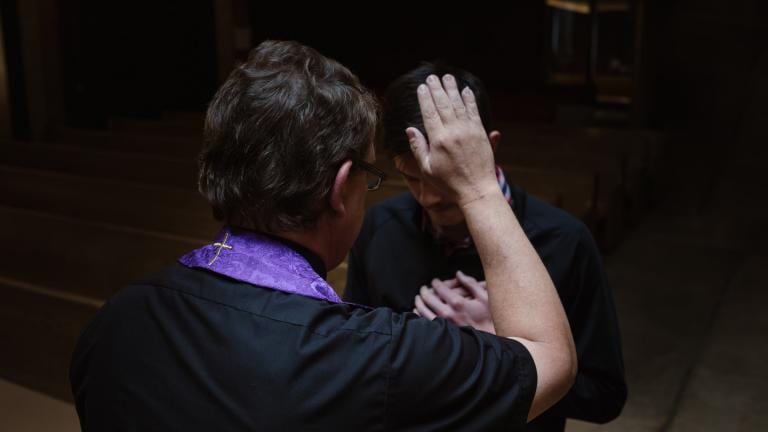
Priest giving absolution (CC0 Josh Applegate on Unsplash)
This is a little long and dense compared with most of what I publish here, but here are some of the key paragraphs.
Deferring absolution is the key moment of decision on several key moral issues like contraception and relations with legal but not legitimate spouses, so it ends up being somewhat controversial. However, regarding clerical abuse, I think the same point can be more a point of convergence than divergence. We see that even bad priests don’t reveal what was said in confession. That reveals that on some level they understand the sacrament. The fact that they went into the priesthood as opposed to other jobs or lifestyles likely shows some sense of the sacraments. I imagine that for some abusive priests, the confessional is the place they most fully admitted to their abusive tendencies. I want to suggest that whatever priest hears such a confession has a particular role in helping to end clerical abuse through how he administers the sacrament. The goal is make the abusive priest repentant and have a purpose of amendment to change his ways. Towards achieving that goal, I think a proper understanding of contrition and denying absolution if needed would be helpful. […]
In the confessional, a confessor approached by an abusive penitent must do one of two things: move the penitent to contrition or deny absolution. A willingness to do the latter might help with the former, as penitents want absolution, so if the confessor indicates he is willing to forgo it unless the penitent changes, that should move the penitent towards changing. If a priest is unwilling to defer absolution for an unrepentant penitent, we would be committing a sacrilege. Moreover, he would give an abuser the false impression that it is acceptable that he continues abusing, and falsely assuage his conscience.
Several things are within a confessor’s purview to try to get the penitent to reform. First, he can suggest turning oneself in, attending therapy and/or being part of a support group. If the penitent rejects these, it is important to ask why, as a rejection may indicate a lack of purpose of amendment and thus a time to defer absolution. The seal prevents the priest from requiring anything that would result in the past sin or crime being publicly revealed, and the fact that abuse is one of the few exceptions to psychologist confidentiality (the same is true for non-confessional “confidential” communication with a priest like spiritual direction) makes this more difficult. Today, many psychological treatments have workbooks that can be worked on without involving another, thus not revealing the sin the person is looking to overcome (these are less ideal than in-person therapy but are useful in conjunction with that or if a level of confidentiality beyond psychologist’s professional confidentiality must be kept). […]
Let’s remember that using the sacrament of confession as it was designed and not granting automatic absolution can help some abusers change their ways.
If you want, the rest is on the HPR site.
Note: I rely on people like you to help with my writing. Please support me monthly via Patreon.
Previous Post

March 17, 2021
Defaulting to Filtering Pornography Is a Good Idea
Next Post

March 23, 2021 Quantifying Cooperation in or Appropriation of Evil
Browse Our Archives
Select a Category Autism Bioethics Book Review Business and Economics Catholic Social Teaching Culture Diocesan Life Disability Discipleship Euthanasia Family Life Genetics Global Politics History Immigration Inspiration Interview Liturgy Moral Theology My Life News Analysis Original Articles Prayer Privacy Pro-Life Science Sexual orientation or identity Social Media Sports Technology Theology Uncategorized US Politics Vatican
Select a Month March 2022 February 2022 January 2022 December 2021 November 2021 October 2021 September 2021 August 2021 July 2021 June 2021 April 2021 March 2021 February 2021 January 2021 December 2020 November 2020 October 2020 September 2020 August 2020 July 2020 June 2020 May 2020 April 2020 March 2020 February 2020 January 2020 December 2019 November 2019 October 2019 September 2019 August 2019 July 2019 June 2019 May 2019 April 2019 March 2019 February 2019 January 2019 December 2018 November 2018 October 2018 September 2018 August 2018 July 2018 June 2018 May 2018
Follow Us!
TAKE THE
Religious Wisdom Quiz
What was the name of the Roman governor who sentenced Jesus to death?
Select your answer to see how you score.
Tiberius Herod Antipas Caesar Augustus Pontius Pilate
Support this
Column


Related posts from Through Catholic Lenses

Why Such a Focus on Extraordinary Form in...

Sensory-Friendly Mass Directory Now Available

The Church Cannot Change Teaching on Homosexuality (Hollerich...

Catholic Media: Fides Quarens Rem Publicam
TRENDING AT PATHEOS Catholic

Rejecting Doom: Christian Hope And Human Action
Christianity is a religion of hope. We are to have hope and...

It’s What Comes From Within Which Matters
One of the most difficult things for us to understand is why...

Why I Choose the Eucharist Over the Sermon
Choose the Eucharist, Not the Sermon What are we supposed to get...

5 Design Elements Found in Spiritually Rooted Homes
Putting Spirituality Into Home Decor Our homes are more than our living...

Credo: A Story of God Told with the...
About 10 years ago, I began to imagine a personal "Credo" that...

The Anatomy of Divine Revelation in Catholic Thought
The claim that God has made Himself known to human beings is...
view all Catholic blogs
Ad-Free & Subscriber Log-In Subscription Support
- About Us
- 2026 Calendar
- Videos
- Podcasts
- Library of World Religions
- Faith In Media Tracker
- Advertise With Us
- Write for Us
- Privacy Policy
- Terms of Service
- Do Not Sell My Data
- Contact Us
- Radiant Digital
- Manage Newsletter Subscriptions
- Unsubscribe From Notifications
- Sitemap
Copyright 2008-2026, Patheos. All rights reserved.
Subscription Support Ad-Free & Subscriber Log-In
Follow Patheos