
BuddhistCatholicContemplativeEvangelicalGeneral ChristianHinduJewishLatter-day SaintMuslimNew VisionsProgressive Christian
Beliefs
- Buddhist
- Catholic
- Contemplative
- Evangelical
- General Christian
- Hindu
- Jewish
- Latter-day Saint
- More Voices
- Muslim
- New Visions
- Pagan
- Progressive Christian
Topics
- Religion News
- Food and Religion
- Sports and Religion
- Religious Art
- Religious Music and Entertainment
- Religious Events
- History and Religion
- Style and Religion
- Politics and Religion
- Women in Religion
- Recreation Outdoors and Religion
- Business Finance and Religion
- Careers Workplace and Religion
- Education and Religion
- Family Parenting and Religion
- Health Fitness and Religion
- Home and Religion
- Relationships and Religion
- Technology and Religion
- Travel and Religion
Columnists
- Buddhist Columnists
- Business Finance and Religion Columnists
- Careers Workplace and Religion Columnists
- Catholic Columnists
- Contemplative Columnists
- Education and Religion Columnists
- Evangelists Columnists
- Family Parenting and Religion Columnists
- General Christian Columnists
- Health Fitness and Religion Columnists
- Hindu Columnists
- History and Religion Columnists
- Home and Religion Columnists
- Jewish Columnists
- More Voices Columnists
- Latter Day Columnists
- Muslim Columnists
- New Visions Columnists
- Nonreligious Columnists
- Pagan Columnists
- Politics and Religion Columnists
- Progressive Columnists
- Recreation Outdoors and Religion Columnists
- Relationships and Religion Columnists
- Religion News Columnists
- Religious Art Columnists
- Religious Events Columnists
- Religious Music and Entertainment Columnists
- Sports and Religion Columnists
- Style and Religion Columnists
- Technology and Religion Columnists
- Travel and Religion Columnists
- Women in Religion Columnists
Resource Library
- 2026 Calendar
- Library of World Religions
- The 100 Most Holy Places on Earth
- Patheos Answers
- Podcasts
- Videos
- Faith Leaders Database
- Anglican Episcopalian
- Bahai
- Baptist
- Buddhism
- Christianity
- Confucianism
- Eastern Orthodoxy
- Hinduism
- Holiness and Pentecostal
- ISKCON
- Islam
- Judaism
- Lutheran
- Methodist
- The Church of Jesus Christ of Latter-day Saints
- New Age
- Paganism
- Presbytarian and Reformed
- Protestantism
- Religion Behind the Scenes
- Roman Catholic
- Scientology
- Shia Islam
- Sikhism
- Sufism
- Sunni Islam
- Taoism
- Zen
- See all religions
Research Tools
 Ad-Free & Subscriber Log-In Subscription Support
Ad-Free & Subscriber Log-In Subscription Support
Follow Patheos 

- Trending:
- Forgiveness
- |
- Marriage
- |
- Consciousness
- |
- Death Penalty
- |
- Election
- |
- Halloween
 Through Catholic Lenses
- Home
- Catholic
- Religion News
- Withdrawing Ventilators in Triage: A Catholic Approach
Withdrawing Ventilators in Triage: A Catholic Approach
Last updated on: January 6, 2021 at 10:08 am by Fr. Matthew P. Schneider, LC
Withdrawing Ventilators in Triage: A Catholic Approach 2021-01-06T10:08:03-05:00 Fr. Matthew P. Schneider, LC
Patheos Explore the world's faith through different perspectives on religion and spirituality! Patheos has the views of the prevalent religions and spiritualities of the world.
As you may know, I am currently writing a doctoral degree in moral theology. Another priest-friend of mine, Fr. Louis Melahn, LC, is doing the same, but in Rome. He and a few others have taken up the issue of what to do in the case there are insufficient ventilators in an ICU. As ICUs reach 100% capacity with COVID, this might become an issue that comes up in US hospitals. I think Fr. Louis and the other collaborators make a good argument for not removing a ventilator that is still helping someone. The article gets a little academic but is worth the read if you have some background. Below I offer two summaries. One Fr. Louis made for me and the official abstract.
Fr. Louis’s Summary on Triage with Ventilators
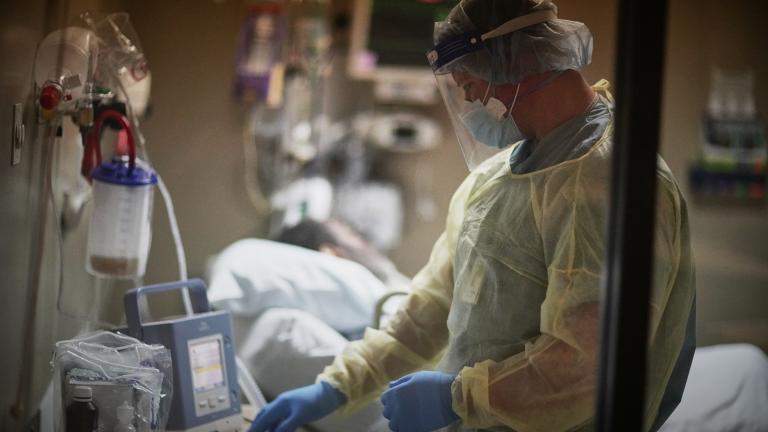
Lt. Cmdr. Michael Heimes checks on a patient connected to a ventilator at Baton Rouge General Mid City campus (CC BY 2.0 US Navy)
Here’s a summary Fr. Louis sent me that he thought would be more accessible to an average reader:
COVID-19 has sparked fears that hospitals could be critically short in essential resources, such as mechanical ventilators. Fortunately, up to now, critical shortages have been localized, but there are lingering ethical questions.
No one seriously argues that hospitals are in the wrong if they allocate their limited resources as best they can, even if some patients end up without it. Our article instead focuses on something else: could care that is already begun (say, mechanical ventilation) be withdrawn against the will of the patient, in order to give it to someone who would benefit more?
In asking that question, we are assuming that the patient being treated is benefiting from the care. Clearly, there is no particular problem in withdrawing care that is futile or counterproductive—and in fact, it might even be acceptable to override a patient’s unreasonable demands in an emergency.
Our conclusion is that, once care is started, the patient and his caregivers enter into a relationship that entails certain rights for the patient and certain obligations to the caregivers: including the continuing of care, so long as it is reasonably regarded as beneficial.
Deliberately withdrawing such care, and thus provoking the death of the patient, would be a form of direct (that is, intentional) killing and is therefore morally unacceptable—even if the care is withdrawn in favor of patients who would (according to medical personnel’s nest judgement) benefit more.
The Abstract of the Ventilator Paper
Here’s the abstract from the academic journal’s website.
The advent of COVID-19 has been the occasion for a renewed interest in the principles governing triage when the number of critically ill patients exceeds the healthcare infrastructure’s capacity in a given location. Some scholars advocate that it would be morally acceptable in a crisis to withdraw resources like life support and ICU beds from one patient in favor of another, if, in the judgment of medical personnel, the other patient has a significantly better prognosis. The paper examines the arguments for and against this approach from the point of view of natural law theory, especially using the principle of double effect. We conclude that it is inadmissible to withdraw life-saving medical interventions from patients who are still benefiting from them, on the sole grounds that other patients might benefit more. Those who are currently using such technology should only interrupt their treatment if, in the judgment of medical personnel and, if possible, taking into account the wishes and needs of the patient and his family, the treatment is deemed futile, burdensome, or disproportionate.
You can read the whole article for free if you want. I read the whole thing but can’t think of much not covered int he two summaries above.
Hopefully, this helps you understand one of the challenges we face with COVID patients overwhelming ICUs.
Note: Please support me via Patreon so I can keep writing content like this.
Previous Post
December 29, 2020
Fr. Nix Is More Confused About Vaccines Than I Thought
Next Post

January 7, 2021 Requiring Genetic Tests Violates Fundamental Human Rights
Browse Our Archives
Select a Category Autism Bioethics Book Review Business and Economics Catholic Social Teaching Culture Diocesan Life Disability Discipleship Euthanasia Family Life Genetics Global Politics History Immigration Inspiration Interview Liturgy Moral Theology My Life News Analysis Original Articles Prayer Privacy Pro-Life Science Sexual orientation or identity Social Media Sports Technology Theology Uncategorized US Politics Vatican
Select a Month March 2022 February 2022 January 2022 December 2021 November 2021 October 2021 September 2021 August 2021 July 2021 June 2021 April 2021 March 2021 February 2021 January 2021 December 2020 November 2020 October 2020 September 2020 August 2020 July 2020 June 2020 May 2020 April 2020 March 2020 February 2020 January 2020 December 2019 November 2019 October 2019 September 2019 August 2019 July 2019 June 2019 May 2019 April 2019 March 2019 February 2019 January 2019 December 2018 November 2018 October 2018 September 2018 August 2018 July 2018 June 2018 May 2018
Follow Us!
TAKE THE
Religious Wisdom Quiz
Who was the high priest when Jesus was crucified?
Select your answer to see how you score.
Annas Nicodemus Gamaliel Caiaphas
Support this
Column


Related posts from Through Catholic Lenses

Greg Locke, Autism Is not Demonic

The Church Cannot Change Teaching on Homosexuality (Hollerich...
21 of the Most Dynamic Signs at March...

Distinguishing Between Religious and Conscience Exceptions.
TRENDING AT PATHEOS Catholic

Rejecting Doom: Christian Hope And Human Action
Christianity is a religion of hope. We are to have hope and...

It’s What Comes From Within Which Matters
One of the most difficult things for us to understand is why...

Why I Choose the Eucharist Over the Sermon
Choose the Eucharist, Not the Sermon What are we supposed to get...

5 Design Elements Found in Spiritually Rooted Homes
Putting Spirituality Into Home Decor Our homes are more than our living...

Credo: A Story of God Told with the...
About 10 years ago, I began to imagine a personal "Credo" that...

The Anatomy of Divine Revelation in Catholic Thought
The claim that God has made Himself known to human beings is...
view all Catholic blogs
Ad-Free & Subscriber Log-In Subscription Support
- About Us
- 2026 Calendar
- Videos
- Podcasts
- Library of World Religions
- Faith In Media Tracker
- Advertise With Us
- Write for Us
- Privacy Policy
- Terms of Service
- Do Not Sell My Data
- Contact Us
- Radiant Digital
- Manage Newsletter Subscriptions
- Unsubscribe From Notifications
- Sitemap
Copyright 2008-2026, Patheos. All rights reserved.
Subscription Support Ad-Free & Subscriber Log-In
Follow Patheos