
BuddhistCatholicContemplativeEvangelicalGeneral ChristianHinduJewishLatter-day SaintMuslimNew VisionsProgressive Christian
Beliefs
- Buddhist
- Catholic
- Contemplative
- Evangelical
- General Christian
- Hindu
- Jewish
- Latter-day Saint
- More Voices
- Muslim
- New Visions
- Pagan
- Progressive Christian
Topics
- Religion News
- Food and Religion
- Sports and Religion
- Religious Art
- Religious Music and Entertainment
- Religious Events
- History and Religion
- Style and Religion
- Politics and Religion
- Women in Religion
- Recreation Outdoors and Religion
- Business Finance and Religion
- Careers Workplace and Religion
- Education and Religion
- Family Parenting and Religion
- Health Fitness and Religion
- Home and Religion
- Relationships and Religion
- Technology and Religion
- Travel and Religion
Columnists
- Buddhist Columnists
- Business Finance and Religion Columnists
- Careers Workplace and Religion Columnists
- Catholic Columnists
- Contemplative Columnists
- Education and Religion Columnists
- Evangelists Columnists
- Family Parenting and Religion Columnists
- General Christian Columnists
- Health Fitness and Religion Columnists
- Hindu Columnists
- History and Religion Columnists
- Home and Religion Columnists
- Jewish Columnists
- More Voices Columnists
- Latter Day Columnists
- Muslim Columnists
- New Visions Columnists
- Nonreligious Columnists
- Pagan Columnists
- Politics and Religion Columnists
- Progressive Columnists
- Recreation Outdoors and Religion Columnists
- Relationships and Religion Columnists
- Religion News Columnists
- Religious Art Columnists
- Religious Events Columnists
- Religious Music and Entertainment Columnists
- Sports and Religion Columnists
- Style and Religion Columnists
- Technology and Religion Columnists
- Travel and Religion Columnists
- Women in Religion Columnists
Resource Library
- 2026 Calendar
- Library of World Religions
- The 100 Most Holy Places on Earth
- Patheos Answers
- Podcasts
- Videos
- Faith Leaders Database
- Anglican Episcopalian
- Bahai
- Baptist
- Buddhism
- Christianity
- Confucianism
- Eastern Orthodoxy
- Hinduism
- Holiness and Pentecostal
- ISKCON
- Islam
- Judaism
- Lutheran
- Methodist
- The Church of Jesus Christ of Latter-day Saints
- New Age
- Paganism
- Presbytarian and Reformed
- Protestantism
- Religion Behind the Scenes
- Roman Catholic
- Scientology
- Shia Islam
- Sikhism
- Sufism
- Sunni Islam
- Taoism
- Zen
- See all religions
Research Tools
 Ad-Free & Subscriber Log-In Subscription Support
Ad-Free & Subscriber Log-In Subscription Support
Follow Patheos 

- Trending:
- Forgiveness
- |
- Marriage
- |
- Consciousness
- |
- Death Penalty
- |
- Election
- |
- Halloween
 Through Catholic Lenses
- Home
- Catholic
- Religion News
- Genetic Screening Might Kill Disabled Babies
Genetic Screening Might Kill Disabled Babies
Last updated on: August 1, 2020 at 10:33 am by Fr. Matthew P. Schneider, LC
Genetic Screening Might Kill Disabled Babies 2020-08-01T10:33:18-04:00 Fr. Matthew P. Schneider, LC
Patheos Explore the world's faith through different perspectives on religion and spirituality! Patheos has the views of the prevalent religions and spiritualities of the world.
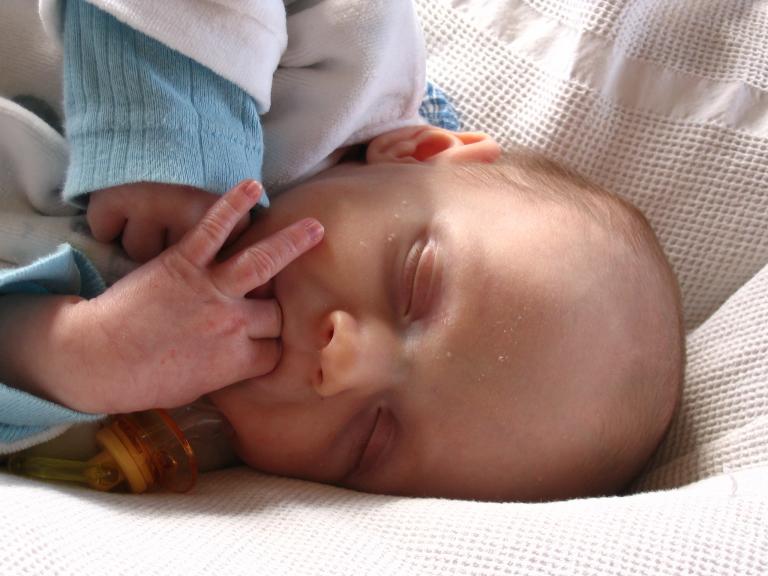
Baby sucking fingers (CC BY-SA 3.0 Florence Devouard [anthere])
![Florence Devouard [anthere]](http://commons.wikimedia.org/wiki/File:BabySuckingFingers.jpg)
Yes, you read that right. Most of you have probably heard about genetic testing on Down Syndrome Children that results in a very high percentage of them being aborted. The US doesn’t keep great statistics on this but the best research estimated 67% termination rate. In European countries, the termination rate is often over 90%. “Termination rate” here is the medical term: this means a baby is killed in utero after being diagnosed with Down Syndrome. This is a tragedy.
For a while, I’ve been seeing genetic testing drop dramatically in price while research is connecting more and more genes to conditions. We are approaching the terrifying moment that such a practice would move beyond Down Syndrome to other conditions.
I’ve seen this coming for a while. In 2018, I wrote about a company offering to test IVF babies and kill those who were more likely to have a low-IQ. In 2019, I wrote about a gel that would increase a couple’s chances of having a male baby. In January of this year, I wrote about how Chinese researchers were attempting to screen IVF babies to kill those more likely to develop certain behavioral tendencies.
Now, research by a regional health care system has done a large population study on genetic predispositions and psychological conditions. They found genes in nearly 1% of the population. This may be helpful for adults but we Catholics need to fight any attempt to use this in utero tooth and nail.
I’ll cover the research, then summarize Catholic teaching on this.
Geisinger’s Genetic Research
Geisinger, a Pennsylvania health provider got a bunch of patients’ DNA in a program called MyCode. A local paper reported, “Nearly one percent of the over 250,000 MyCode participants have a DNA change that is linked to learning disorders, the autism spectrum, epilepsy, or various psychiatric illnesses. By analyzing health record data, the research team discovered that up to 70% of these individuals had a related clinical symptom documented, but most were unaware of the underlying genetic diagnosis.”
The initial idea of screening adults seems like a decent idea. I am autistic and almost certain I have genes for it. Knowing about these genes, in general, helps me out as a kind of confirmation of my diagnosis. For those who are not diagnosed, it might be an initiative to consider a possible diagnosis. The researchers noted a generally positive response from adults regarding their own genetic test results.
One of the researchers, Karen E. Wain, noted, “These DNA results are likely to have had a large impact on health and wellbeing throughout life for these individuals.” If it is lifelong, the idea that testing move as early as possible. They do not specifically talk about prenatal genetic testing but that seems like an obvious extension in current medical ethics. If prenatal testing happens, it is inevitable some of these babies will be aborted based on those tests.
Wain also noted, “It is important to know how people feel about these results, for themselves and their family, so we can ensure they have access to their genetic information with appropriate support.” This adds in a different level of talking to one’s family, which takes it beyond the privacy of HIPAA.
Public knowledge of genetic tendencies often has negative effects. A 1997 Wired article mentioned the small Greek village of Orchemenos where a high number were sickle cell carriers. Carrying one copy is harmless but if you have two copies (25% of children if both parents are carriers) you get sickle cell anemia. So, researchers went and tested the townsfolk for this variant, hoping carriers and noncarriers would marry avoiding anyone with sickle cell anemia. “The noncarriers, however, refused to cooperate. Even though the gene was harmless on its own, carriers became stigmatized and noncarriers refused to marry them. In the end, the carriers became a shunned subclass who were forced to marry among themselves.”
Catholic Teaching on Genetic Screening
Obviously, abortion is always wrong. The Catechism (2271) makes this abundantly clear: “Since the first century the Church has affirmed the moral evil of every procured abortion. This teaching has not changed and remains unchangeable. Direct abortion, that is to say, abortion willed either as an end or a means, is gravely contrary to the moral law.”
However, when abortion is done for reasons of eliminating a specific condition like Down syndrome, autism, or epilepsy, there is an added evil of eugenics. Pope Francis has spoken about this on at least two occasions.
Pope Francis referred to aborting disabled children in June 2018, saying: “I’ve heard that it’s fashionable, or at least usual, that when in the first few months of pregnancy they do studies to see if the child is healthy or has something, the first offer is: let’s send it away.”
In this speech, Pope Francis pulls no punches, comparing this practice to Nazism: “the murder of children…to get a peaceful life an innocent [person] is sent away…We do the same as the Nazis to maintain the purity of the race, but with white gloves.” He then notes, “It’s an atrocity but we do the same thing.”
In April 2020, Pope Francis was answering a question about how countries could show respect for human life in their coronavirus response. He jumps to the throwaway culture pointing to abortion of babies with Down syndrome as a prime example:
In the world of finance it has seemed normal to sacrifice [people], to practice a politics of the throwaway culture, from the beginning to the end of life. I’m thinking, for example, of prenatal selection. It’s very unusual these days to meet Down’s Syndrome people on the street; when the tomograph [scan] detects them, they are binned. It’s a culture of euthanasia, either legal or covert, in which the elderly are given medication but only up to a point.
On top of Pope Francis, right after condemning abortion, the Catechism (2276) notes that we need to help the disabled live well: “Those whose lives are diminished or weakened deserve special respect. Sick or handicapped persons should be helped to lead lives as normal as possible.” This paragraph starts the section on euthanasia. The eugenic abortions based on prenatal tests would be both euthanasia and abortion at the same time.
I hope that situations like this can help forge cooperation between pro-life and disability rights groups who could be great allies on this and euthanasia.
Let’s fight for the disabled in our fight against abortion. When a baby is aborted based on prenatal diagnosis, it is doubly wrong. We Catholics must stand up against his throwaway culture.
Notes:
- Please support me on Patreon so I can keep writing articles like this.
- I’ll be mainly offline the next few weeks.
Previous Post

July 29, 2020
A Quick Blog Interview on Autism
Next Post
August 13, 2020 Video Shows the Need to Train Priests on Disability
Browse Our Archives
Select a Category Autism Bioethics Book Review Business and Economics Catholic Social Teaching Culture Diocesan Life Disability Discipleship Euthanasia Family Life Genetics Global Politics History Immigration Inspiration Interview Liturgy Moral Theology My Life News Analysis Original Articles Prayer Privacy Pro-Life Science Sexual orientation or identity Social Media Sports Technology Theology Uncategorized US Politics Vatican
Select a Month March 2022 February 2022 January 2022 December 2021 November 2021 October 2021 September 2021 August 2021 July 2021 June 2021 April 2021 March 2021 February 2021 January 2021 December 2020 November 2020 October 2020 September 2020 August 2020 July 2020 June 2020 May 2020 April 2020 March 2020 February 2020 January 2020 December 2019 November 2019 October 2019 September 2019 August 2019 July 2019 June 2019 May 2019 April 2019 March 2019 February 2019 January 2019 December 2018 November 2018 October 2018 September 2018 August 2018 July 2018 June 2018 May 2018
Follow Us!
TAKE THE
Religious Wisdom Quiz
In 1 Peter, what did the prophets search intently and with great care about?
Select your answer to see how you score.
The salvation of Israel The day of the Lord The sufferings of the Messiah and the glories that would follow The end times
Support this
Column


Related posts from Through Catholic Lenses

Sensory-Friendly Mass Directory Now Available

Greg Locke, Autism Is not Demonic

The Church Cannot Change Teaching on Homosexuality (Hollerich...
21 of the Most Dynamic Signs at March...
TRENDING AT PATHEOS Catholic

Rejecting Doom: Christian Hope And Human Action
Christianity is a religion of hope. We are to have hope and...

It’s What Comes From Within Which Matters
One of the most difficult things for us to understand is why...

Why I Choose the Eucharist Over the Sermon
Choose the Eucharist, Not the Sermon What are we supposed to get...

5 Design Elements Found in Spiritually Rooted Homes
Putting Spirituality Into Home Decor Our homes are more than our living...

Credo: A Story of God Told with the...
About 10 years ago, I began to imagine a personal "Credo" that...

The Anatomy of Divine Revelation in Catholic Thought
The claim that God has made Himself known to human beings is...
view all Catholic blogs
Ad-Free & Subscriber Log-In Subscription Support
- About Us
- 2026 Calendar
- Videos
- Podcasts
- Library of World Religions
- Faith In Media Tracker
- Advertise With Us
- Write for Us
- Privacy Policy
- Terms of Service
- Do Not Sell My Data
- Contact Us
- Radiant Digital
- Manage Newsletter Subscriptions
- Unsubscribe From Notifications
- Sitemap
Copyright 2008-2026, Patheos. All rights reserved.
Subscription Support Ad-Free & Subscriber Log-In
Follow Patheos