
BuddhistCatholicContemplativeEvangelicalGeneral ChristianHinduJewishLatter-day SaintMuslimNew VisionsProgressive Christian
Beliefs
- Buddhist
- Catholic
- Contemplative
- Evangelical
- General Christian
- Hindu
- Jewish
- Latter-day Saint
- More Voices
- Muslim
- New Visions
- Pagan
- Progressive Christian
Topics
- Religion News
- Food and Religion
- Sports and Religion
- Religious Art
- Religious Music and Entertainment
- Religious Events
- History and Religion
- Style and Religion
- Politics and Religion
- Women in Religion
- Recreation Outdoors and Religion
- Business Finance and Religion
- Careers Workplace and Religion
- Education and Religion
- Family Parenting and Religion
- Health Fitness and Religion
- Home and Religion
- Relationships and Religion
- Technology and Religion
- Travel and Religion
Columnists
- Buddhist Columnists
- Business Finance and Religion Columnists
- Careers Workplace and Religion Columnists
- Catholic Columnists
- Contemplative Columnists
- Education and Religion Columnists
- Evangelists Columnists
- Family Parenting and Religion Columnists
- General Christian Columnists
- Health Fitness and Religion Columnists
- Hindu Columnists
- History and Religion Columnists
- Home and Religion Columnists
- Jewish Columnists
- More Voices Columnists
- Latter Day Columnists
- Muslim Columnists
- New Visions Columnists
- Nonreligious Columnists
- Pagan Columnists
- Politics and Religion Columnists
- Progressive Columnists
- Recreation Outdoors and Religion Columnists
- Relationships and Religion Columnists
- Religion News Columnists
- Religious Art Columnists
- Religious Events Columnists
- Religious Music and Entertainment Columnists
- Sports and Religion Columnists
- Style and Religion Columnists
- Technology and Religion Columnists
- Travel and Religion Columnists
- Women in Religion Columnists
Resource Library
- 2026 Calendar
- Library of World Religions
- The 100 Most Holy Places on Earth
- Patheos Answers
- Podcasts
- Videos
- Faith Leaders Database
- Anglican Episcopalian
- Bahai
- Baptist
- Buddhism
- Christianity
- Confucianism
- Eastern Orthodoxy
- Hinduism
- Holiness and Pentecostal
- ISKCON
- Islam
- Judaism
- Lutheran
- Methodist
- The Church of Jesus Christ of Latter-day Saints
- New Age
- Paganism
- Presbytarian and Reformed
- Protestantism
- Religion Behind the Scenes
- Roman Catholic
- Scientology
- Shia Islam
- Sikhism
- Sufism
- Sunni Islam
- Taoism
- Zen
- See all religions
Research Tools
 Ad-Free & Subscriber Log-In Subscription Support
Ad-Free & Subscriber Log-In Subscription Support
Follow Patheos 

- Trending:
- Forgiveness
- |
- Marriage
- |
- Consciousness
- |
- Death Penalty
- |
- Election
- |
- Halloween
 Through Catholic Lenses
- Home
- Catholic
- Religion News
- Give Autistics Control: Don’t Push DNR Orders on Us
Give Autistics Control: Don’t Push DNR Orders on Us
Last updated on: April 11, 2020 at 2:16 pm by Fr. Matthew P. Schneider, LC
Give Autistics Control: Don’t Push DNR Orders on Us 2020-04-11T14:16:25-04:00 Fr. Matthew P. Schneider, LC
Patheos Explore the world's faith through different perspectives on religion and spirituality! Patheos has the views of the prevalent religions and spiritualities of the world.
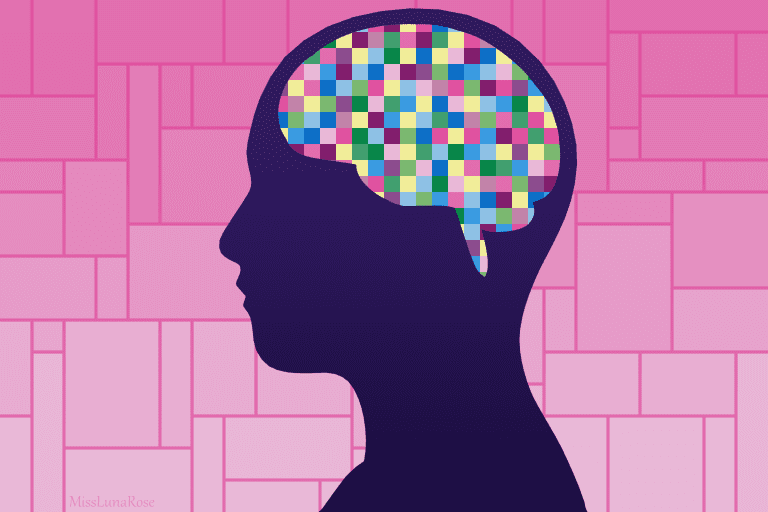
Graphic illustration of an autistic brain (CC BY-SA 4.0 MissLunaRose12)

In the UK, doctors put DNR (Do Not Resuscitate) orders on a bunch of autistic adults’ files. This was done without consulting them or their family. This means that a minor health hiccup could easily become fatal. DNR orders make sense when someone is at the end of their life but don’t make sense for working-age adults who have no fatal conditions. Also, this contradicts Catholic Bioethics.
The Autistic Adults Given DNR Orders in the UK
A GP surgery which said autistic adults should have plans to prevent them being resuscitated if they become critically ill has been criticised.
Voyage Care, which cares for the group, was sent the letter by a surgery in Somerset amid the coronavirus crisis.
On Twitter, the firm’s boss Andrew Cannon said there had been “no consultation with families” and most involved were “working age adults.” […]
The paperwork is known as a “do not resuscitate” (DNR) order or an advanced care plan.
It is sometimes used if someone is nearing the end of their life or have a complex medical condition.
The paperwork is usually drawn up by medical professionals with the co-operation of the patient in question, if they have capacity to do so, or with their family.
“We have reported our concerns to Somerset Clinical Commissioning Group that this has happened with our area and they are taking this matter very seriously.
“The CCG are investigating the reports that have been made and have assured us they will take appropriate action. Please do let us know if you come across this.”
Interestingly, back in 2013, a similar procedure was overruled by Britain’s high court. As the BBC stated then, “A ‘do not resuscitate’ (DNR) order put on a disabled man’s records without consulting his mother breached his human rights, the High Court has ruled.”
Giving These People DNR Orders Is Bad Medicine
The federal government (National Institute on Aging), explains the differences that may make a DNR order proper for someone. In doing so, they also point out why it would medically unwise for a middle-aged person without serious conditions (cancer, serious cardiovascular disease, not just autism).
What is CPR? Cardiopulmonary resuscitation might restore your heartbeat if your heart stops or is in a life-threatening abnormal rhythm. It involves repeatedly pushing on the chest with force, while putting air into the lungs. This force has to be quite strong, and sometimes ribs are broken or a lung collapses. Electric shocks, known as defibrillation, and medicines might also be used as part of the process. The heart of a young, otherwise healthy person might resume beating normally after CPR. Often, CPR does not succeed in older adults who have multiple chronic illnesses or who are already frail.
A secular guide on disability rights in Pennsylvania notes that these are not even allowed legally in situations like above. This indicates they are bad medicine.
Individuals can secure these DNR orders, necklaces, or bracelets from their attending physician only if: (1) the attending physician certifies that the individual either has an end-stage medical condition or is both permanently unconscious and has a living will that directs no CPR to be provided; (2) the individual requests the DNR order, necklace, or bracelet; and (3) the individual is 18 years old, has graduated from high school, has married, or is an emancipated minor.
I presume many other states have similar laws.
Catholic Bioethics and DNR orders
National Catholic Bioethics Center on DNR Orders
Fr. Tad Pacholczyk writes:
If a DNR order is chosen, the condition of the patient must be such that the intervention would be of no significant benefit to him or her. Sometimes out of a generalized fear of medical technology, people may decide to put a DNR in place many years before any serious medical situation arises. Without knowing the medical particulars of their own future situations, however, this would be an unwise and ill-advised step. […]
So when death is imminent, and disease states are very advanced (perhaps with multiple organ failure), and assuming other spiritual matters, such as last sacraments, have been addressed, a DNR order may not raise any moral problems. The key consideration in making the judgement will be to determine whether the benefits of resuscitation outweigh the burdens.
Thus, an order for all autistic adults in long term care is unwise and done in a blanket way like that is definitely immoral. There may be a few cases where those in such a care home might have a DNR after consultation.
Willaim May on DNR Orders
William May answered a question about DNR orders in Zenit. The whole answer is worth reading but here are a few highlights:
Both the Vatican Declaration on Euthanasia and the United States Conference of Catholic Bishops explicitly affirm that a person or, if the person is incompetent, his proxy health care decision-maker can rightly refuse treatments that do not offer a reasonable hope of benefit or entail an excessive burden, or impose excessive expense on the family or the community.
Excessive burdensomeness is perhaps the major criterion for determining whether a proposed treatment is “extraordinary/disproportionate.” […]
This principle can be expressed as follows: “A ‘do-not-resuscitate’ order is morally permissible if one can judge that CPR is excessively burdensome for this patient, taking into account his situation and his physical and moral resources, or that CPR imposes excessive expense on the family or community.”
CPR can be administered either in a hospital to a patient who suffers cardiac arrest or outside a hospital by a rescue team to a person who stops breathing because of cardiac arrest.
Taking these two together, there is no way the mere fact of being an autistic adult in fulltime home is sufficient for a DNR order to be moral.
Nothing About Us Without Us
In the autistic (& wider disability) community, a rallying cry has been “nothing about us without us.” This is usually about parents or caregivers making all the decisions and doing all the activism. I find this applies here a fortiori. It is not someone who cares about this autistic adult trying to make the best decision for them (even if slightly misguided); it is a faceless bureaucracy saying that our lives aren’t valuable enough to save. This is discrimination. This is indirect euthanasia. Indirect because these autistic individuals are left to die when their lives are likely able to be saved. A DNR order is something a person might decide with their family while late in a terminal illness, it is never something that should be applied to whole classes of people. Jesus weeps for the suffering of these people.
Previous Post

April 8, 2020
Pope Francis Condemns Eugenic Abortion, Again
Next Post
April 21, 2020 Including Autistics in Worship and Small Groups
Browse Our Archives
Select a Category Autism Bioethics Book Review Business and Economics Catholic Social Teaching Culture Diocesan Life Disability Discipleship Euthanasia Family Life Genetics Global Politics History Immigration Inspiration Interview Liturgy Moral Theology My Life News Analysis Original Articles Prayer Privacy Pro-Life Science Sexual orientation or identity Social Media Sports Technology Theology Uncategorized US Politics Vatican
Select a Month March 2022 February 2022 January 2022 December 2021 November 2021 October 2021 September 2021 August 2021 July 2021 June 2021 April 2021 March 2021 February 2021 January 2021 December 2020 November 2020 October 2020 September 2020 August 2020 July 2020 June 2020 May 2020 April 2020 March 2020 February 2020 January 2020 December 2019 November 2019 October 2019 September 2019 August 2019 July 2019 June 2019 May 2019 April 2019 March 2019 February 2019 January 2019 December 2018 November 2018 October 2018 September 2018 August 2018 July 2018 June 2018 May 2018
Follow Us!
TAKE THE
Religious Wisdom Quiz
In Revelation, how many lampstands does John see?
Select your answer to see how you score.
Four lampstands Seven golden lampstands Twelve lampstands Ten lampstands
Support this
Column


Related posts from Through Catholic Lenses

Sensory-Friendly Mass Directory Now Available

Greg Locke, Autism Is not Demonic
21 of the Most Dynamic Signs at March...
Australian Bishops Want Us to Include Those with...
TRENDING AT PATHEOS Catholic

Rejecting Doom: Christian Hope And Human Action
Christianity is a religion of hope. We are to have hope and...

It’s What Comes From Within Which Matters
One of the most difficult things for us to understand is why...

Why I Choose the Eucharist Over the Sermon
Choose the Eucharist, Not the Sermon What are we supposed to get...

5 Design Elements Found in Spiritually Rooted Homes
Putting Spirituality Into Home Decor Our homes are more than our living...

Credo: A Story of God Told with the...
About 10 years ago, I began to imagine a personal "Credo" that...

The Anatomy of Divine Revelation in Catholic Thought
The claim that God has made Himself known to human beings is...
view all Catholic blogs
Ad-Free & Subscriber Log-In Subscription Support
- About Us
- 2026 Calendar
- Videos
- Podcasts
- Library of World Religions
- Faith In Media Tracker
- Advertise With Us
- Write for Us
- Privacy Policy
- Terms of Service
- Do Not Sell My Data
- Contact Us
- Radiant Digital
- Manage Newsletter Subscriptions
- Unsubscribe From Notifications
- Sitemap
Copyright 2008-2026, Patheos. All rights reserved.
Subscription Support Ad-Free & Subscriber Log-In
Follow Patheos